
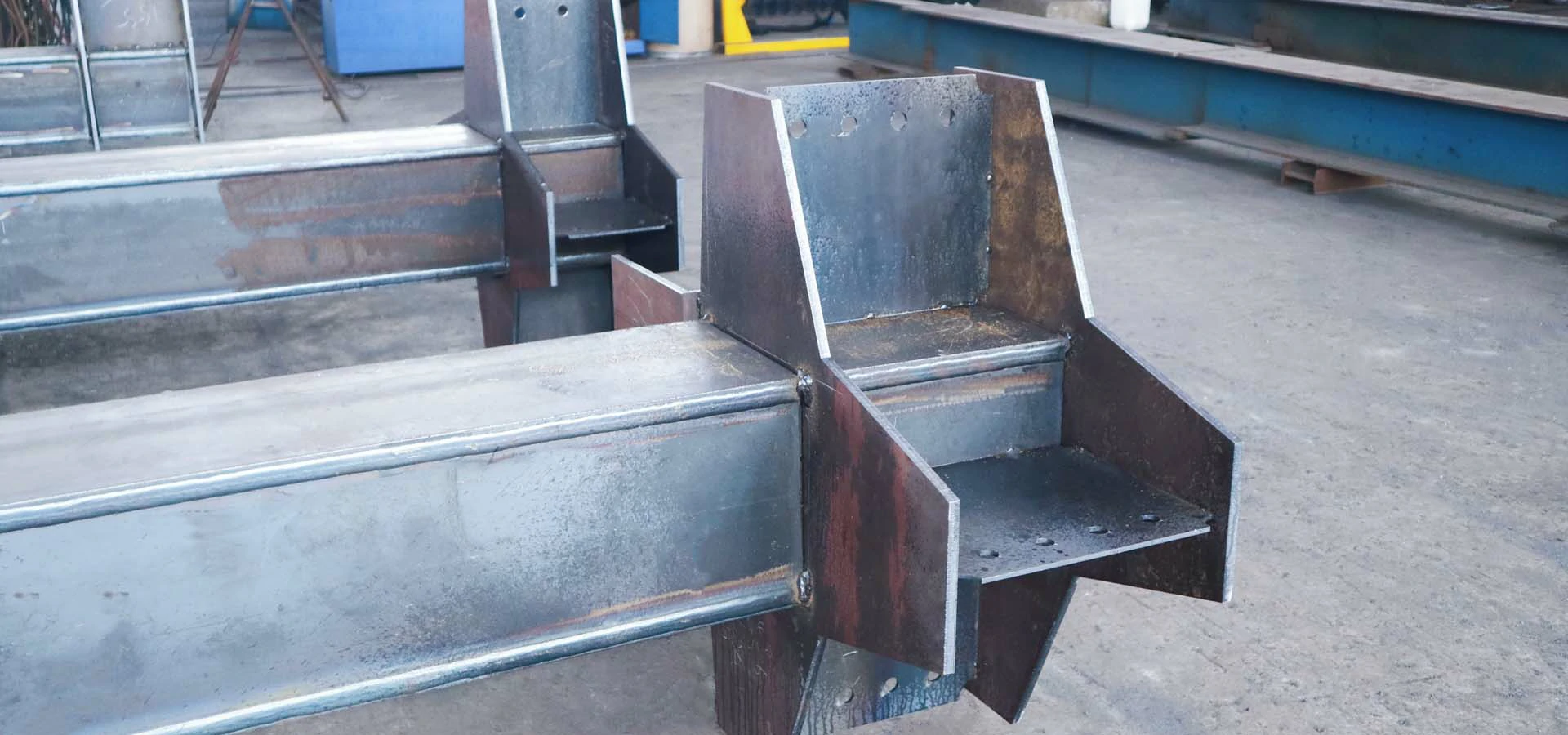
Welding Quality Control
for Industrial Steel Structure
Fabrication
Controlled welding procedures, in-process inspection, NDT coordination, and traceable quality records for petrochemical, refinery, oil & gas, chemical plant, and EPC steel structure projects.
Project Relevance
Why Welding Quality Control Matters in Industrial Steel Structure Projects
Welding quality affects structural integrity, dimensional reliability, service performance, and project acceptance. For industrial steel structures used in petrochemical, refinery, oil & gas, and process industry projects, welding quality control is important not only for fabrication quality, but also for inspection compliance, documentation, and traceability.
EN 1090 EXC3
Certified Quality
Structural Integrity
Welded connections must meet design and project requirements.
Defect Prevention
Controlled preparation, welding, and inspection help reduce defect risk.
Consistency
Quality control helps maintain consistent weld quality across fabricated members.
Traceability
Inspection records and documentation support project quality requirements.
Process Control
Our Welding Quality Control System
A structured, stage-by-stage approach covering pre-welding preparation through final inspection and repair re-verification.
Pre-Welding Control
- Material identification & traceability verified
- Joint preparation and fit-up dimensions checked
- Surface cleanliness confirmed before welding
- Consumables condition and storage controlled
Welding Procedure Control
- Welding performed per approved project specifications
- Applicable welding procedures referenced and followed
- Process suitability matched to material and joint type
- Preheat and interpass temperature controlled where required
Welder & Execution Control
- Personnel assigned based on process and joint requirements
- Welder qualifications verified where applicable
- Welding sequence planned to manage distortion
- In-process checks performed throughout execution
Inspection During & After Welding
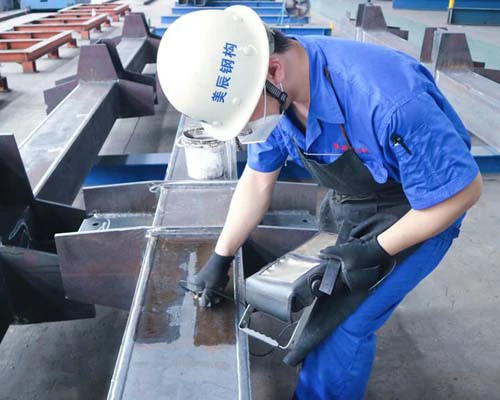
- Visual inspection of weld appearance and profile
- Weld size and geometry checked against drawings
- Dimensional verification of fabricated assembly
- Acceptance evaluated against project requirements
Repair & Re-Inspection
- Non-conforming welds identified and clearly marked
- Repair carried out per project-specific requirements
- Re-inspection performed after repair completion
- All repair records included in quality documentation
Repair records maintained and included in project quality documentation.
End-to-End QC Coverage
From material receipt to final documentation, each stage is controlled and recorded to meet project and client quality requirements.
Inspection Capability
Welding Inspection and Non-Destructive Testing
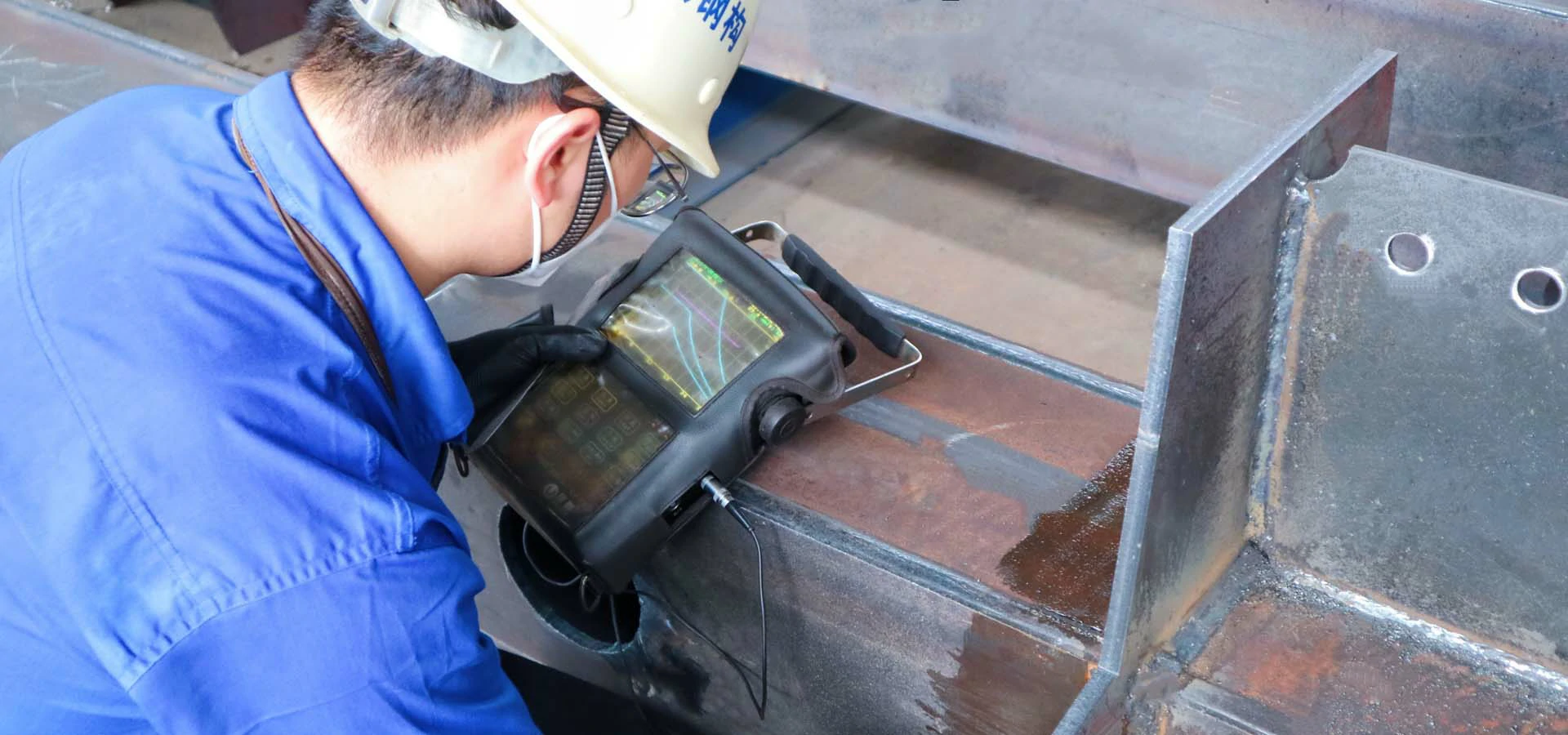
Depending on project specifications, weld type, and applicable standards, welding inspection may include visual inspection and non-destructive testing to evaluate weld quality and acceptance.
Visual Testing
Used for weld appearance, profile, and visible surface conditions.
Magnetic Particle Testing
Used for detecting surface and near-surface discontinuities in ferromagnetic materials.
Penetrant Testing
Used for detecting surface-breaking defects where applicable.
Ultrasonic Testing
Used for internal weld examination based on project requirements.
Radiographic Testing
Used where specified by project inspection requirements.
Inspection and NDT methods are applied according to project requirements, applicable standards, and client specifications.
Where required, inspection or NDT may be carried out by qualified internal personnel or coordinated with qualified third-party inspection resources.
Quality Records
Welding Quality Documentation
& Traceability
Welding quality control covers both fabrication execution and full documentation traceability throughout the process.

Traceable From Start to Finish
Every weld, every record -- documented and traceable throughout the full fabrication lifecycle.
Fabrication Traceability Flow
Material Receipt
Identification & certificate check
Component Fabrication
Cut, fit, assemble
Weld Joint Execution
Procedure & welder control
Visual Inspection
Weld appearance & dimensions
NDT (if required)
MT / PT / UT / RT per project spec
Repair Record (if required)
Documented & re-inspected
Final Documentation
Quality dossier per client requirements
Quality Document Checklist
Documentation requirements can be aligned with project specifications, inspection requirements, and client quality documentation needs.
Compliance
Welding Standards & Project Requirements
Welding quality control can be carried out according to applicable project specifications, client requirements, and relevant fabrication and welding standards required for the project.
Structural steel execution standard for European projects
Quality management system certification
Structural welding code for steel where required
Quality requirements for fusion welding of metallic materials
Applicable Chinese fabrication and welding standards
Welding controlled per client and EPC project specifications
Application Scope
Welding Quality Control Across
Different Industrial Steel Structures
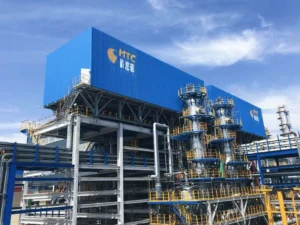
Steel Equipment Platforms
Welding control for platform frames, access structures, and support systems.
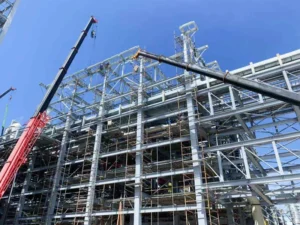
Pipe Rack Structures
Welding quality control for columns, beams, bracings, and connection assemblies.
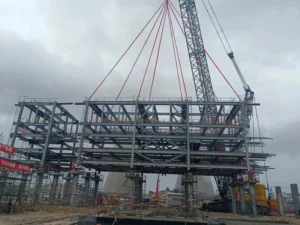
Module Support Structures
Fabrication quality control for modular industrial steel assemblies.
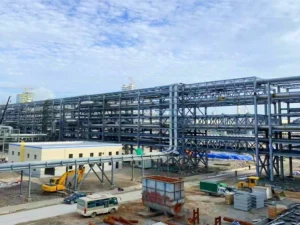
Industrial Pipe Bridges
Welding inspection and fabrication control for bridge-type support structures.
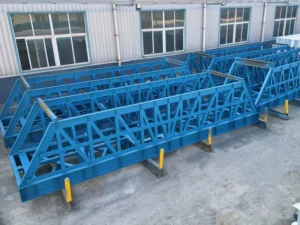
Steel Truss Structures
Welded truss members and node connection quality control.
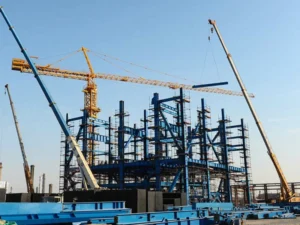
Equipment Support Structures
Controlled fabrication for welded support frames and industrial support members.
FAQ
Frequently Asked Questions
What is welding quality control in steel structure fabrication?
Welding quality control in steel structure fabrication refers to the systematic approach of managing and verifying welding processes, personnel, materials, and inspection activities to ensure that welded joints meet applicable design, project, and acceptance requirements. It covers pre-welding preparation, in-process controls, post-weld inspection, NDT where required, and documentation throughout the fabrication process.
What welding inspection methods are used for steel structures?
Welding inspection for industrial steel structures typically includes visual testing (VT) as the primary method, applied to all accessible welds. Depending on project specifications and weld type, non-destructive testing methods such as magnetic particle testing (MT), penetrant testing (PT), ultrasonic testing (UT), or radiographic testing (RT) may also be applied.
Is NDT available based on project requirements?
Yes. NDT methods including MT, PT, UT, and RT can be applied based on project specifications, applicable standards, and client requirements. Where required, NDT may be carried out by qualified internal personnel or coordinated with qualified third-party inspection resources.
Can welding quality documentation be provided for projects?
Yes. Welding quality documentation including inspection records, NDT reports, material certificates, welder qualification records, welding procedure documentation, and repair records can be provided according to project and client requirements. Documentation scope and format can be aligned with project specifications.
Can fabrication be carried out according to client drawings and specifications?
Yes. Fabrication is carried out according to client-supplied drawings, technical specifications, and applicable project requirements. Welding procedures, inspection requirements, and quality documentation are aligned with the project scope provided by the client or EPC contractor.
How are weld repairs handled if defects are found?
If a weld does not meet the applicable acceptance criteria, the affected area is identified and marked. Repair is carried out according to project requirements and applicable repair procedures. After repair, the affected weld is re-inspected and, where required, re-tested by NDT. Repair records are documented and included in the project quality documentation.
Get in Touch
Need Welding Quality Control for an Industrial Steel Structure Project?
Send us your drawings, technical specifications, or project requirements. Our team can review the fabrication scope and discuss applicable welding, inspection, and documentation requirements.