Certification Checklist for EPC Contractors Selecting Steel Suppliers—What’s Non-Negotiable?

Certification Checklist for EPC Contractors Selecting Steel Suppliers—What’s Non-Negotiable?

MEICHEN STEEL STRUCTURE 12 min read Standards & Certification

Certification Checklist for EPC Contractors Selecting Steel Suppliers—What’s Non-Negotiable?

A single certification slip can turn a sure-win project into a money pit. If you’ve ever managed a steel package that ran off the rails, you know the pain.

The most important certifications for selecting steel suppliers are ISO 9001, ISO 14001, ISO 45001/OHSAS 18001, EN 1090/ASME/AWS/DIN, CE Marking, and traceable Material Test Certificates1. These keep your project moving and protect everyone on site.
Steel supplier certification checklist

We all want to keep things moving, but rushing through supplier checks can lead to disaster. Over the years, our team has seen perfect paperwork hide costly mistakes, so it’s worth sharing how we protect ourselves at the earliest stage.

What Certifications Should You Demand as Standard?

Overlooking just one mandatory certificate can result in customs clearance delays, delays in construction schedules, or—worst case—a safety incident no one wants to face.

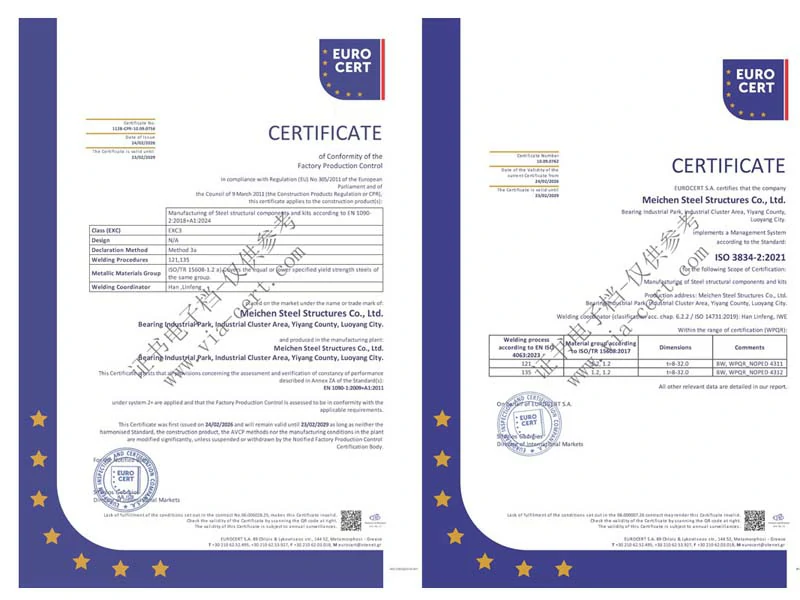
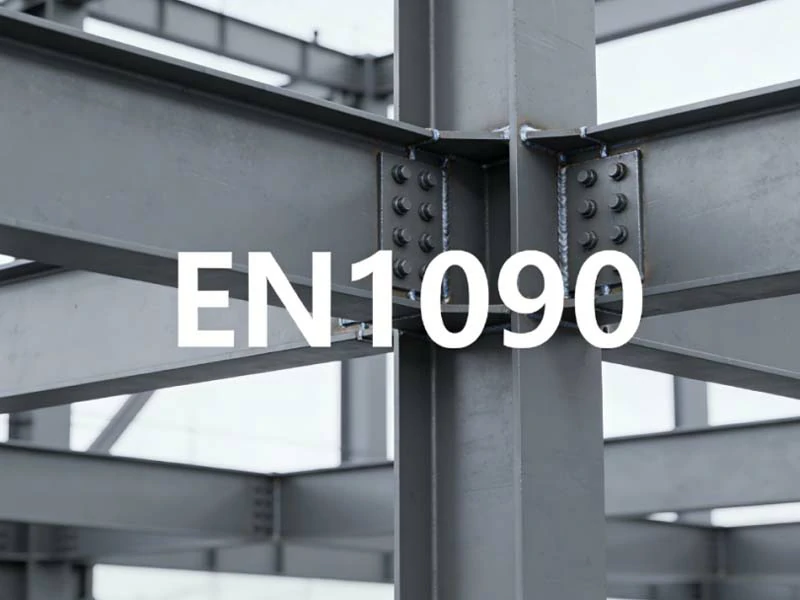
ISO 9001 for quality2, ISO 140013 for environment, and ISO 45001 (or OHSAS 18001)4 for safety are the three pillars. Add EN 10905, ASME, AWS, or DIN, depending on where your project is. For European work, CE Marking is a must.6 And never skip traceable Material Test Certificates (MTCs) for every batch and lot7.

Essential supplier certifications for EPC projects

If you’re used to the process, you know documents only tell half the story. Early in my career, we received what seemed like a flawless batch of beams, only to find missing MTCs, which meant we couldn’t pass QC and had to delay installation. Since then, our checklist looks like this:

Certification Why You Need It Common Problems
ISO 9001 Quality Management Only covers main office
ISO 14001 Environmental Compliance Expired, not always renewed
ISO 45001/OHSAS 18001 Worker Health & Safety Just a tick-box in practice
EN 1090/ASME/AWS/DIN Regional Fabrication Scope mismatch, incomplete
CE Marking EU Legal Market Access Not always legitimate
Material Test Certificates Traceability of Steel Missing lots, hand-written

It’s one thing to ask for copies. It’s another to pick up the phone and make sure they’re valid—especially on tight jobs where a single missing file can trigger a site shutdown.

Paper Isn’t Everything. How Do You Spot Real Compliance?

If you take certificates at face value, you could be setting yourself up for failure. I’ve watched teams lose days—or even weeks—fixing problems that should’ve been caught with a proper supplier audit.

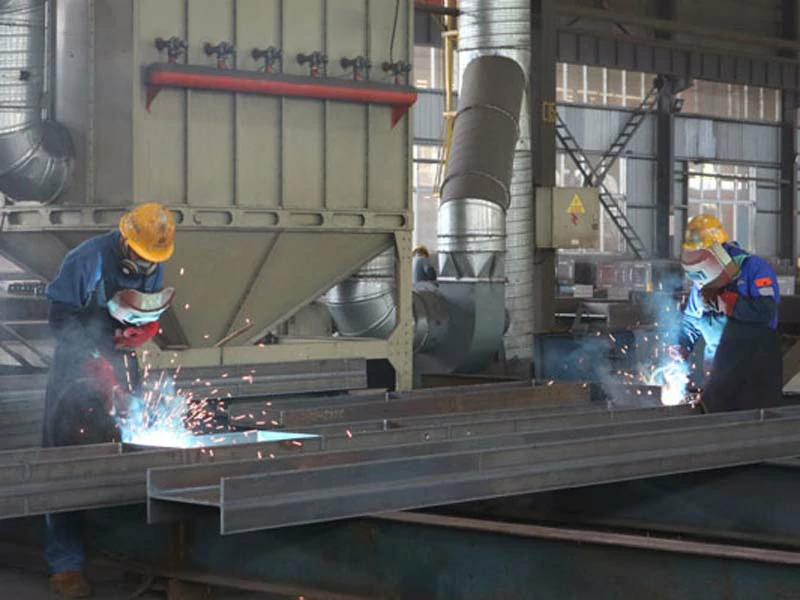
A real audit means checking actual QC and production records for the past six months8, not just the documents the supplier selects for you. You’ll want to inspect their traceability system firsthand—manual logs can be forged but a well-run digital system leaves evidence you can trust9.

Supplier quality system and audit

I remember one supplier who always had a neat paperwork trail. Everything looked good from afar. But when our technical team did a surprise visit, we found QC records weren’t consistent. New staff had been assigned without proper training, and weld samples didn’t match approved procedures. We re-audited the factory and caught issues before they'd reached the site. We now check like this:

What To Check How To Do It Red Flags
QC Records Last 6-12mo, not just recent Unexplained omissions
Staff Training Actual logs, current docs No refresher records
Traceability Digital, not paper only Paper only, messy logs
Process Audits Random times, observe steps Staff avoid tech review

If your supplier won’t allow you to review these records or can’t produce them on demand, that’s your signal to reconsider before it’s too late.

Where Was It Made? Why Subcontracting Can Sink Certification

I’ve seen too many teams trust that a supplier’s certificates cover all fabrication, but more and more steelwork is subcontracted—sometimes to unqualified or uncertified workshops. That’s a disaster waiting to happen for EPC projects.

Always ask for proof that all critical welding, cutting, and assembly are performed under the named certified entity10. It’s not enough for the supplier to say “Yes.” Demand the scope document and proof that includes every process (especially if big parts are made offsite).
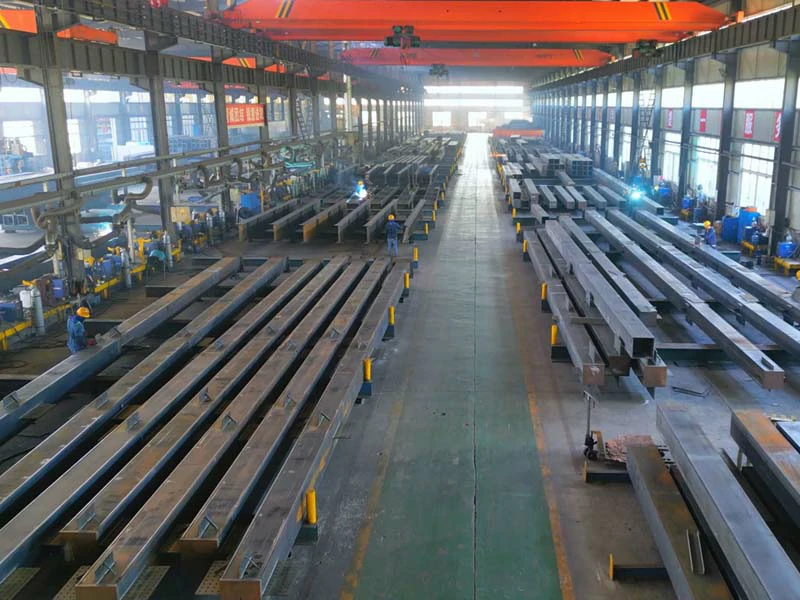
Supplier outsourcing fabrication certification gap

A classic case: during a refinery job, a big supplier sent mainframes that were fine. But the smaller bracing sections, made by a neighborhood shop, were not under anyone’s EN 1090 scope. Customs flagged the shipment and it sat for weeks. Since then, we always use this kind of check:

Process Step Fabricator Is Certification Covered? What We Ask For
Cutting Main supplier Yes Scope doc, cert copy
Welding (Main) Main supplier Yes Welder log, random test
Welding (Subs) Subcontractor Not always Subcontractor cert, scope
Galvanizing External processor Rarely Process cert, MTC from both

Getting confirmation in writing and—even better—a pre-shipment visit to random finished goods has saved us from customs and QC fines more than once.

How Do Certification Requirements Change Across Borders?

Anyone who’s landed a job abroad knows that certifications are not one-size-fits-all. Your supplier’s valid European EN 1090 could mean nothing in Houston, and an ASME stamp can be useless in Germany.11

Always double-check supplier certification lists against your actual client’s contract and the region where the steel will be installed. Don’t trust “equivalent” claims; every region defends its own standards.

We found this out the hard way in the US, when a supplier’s beautiful EN 1090 paperwork didn’t matter—our QA/QC team demanded AWS D1.1 for structural welding12. If we hadn’t realized in time, we’d have lost the entire shipment. Now, our review starts with this basic matrix:

Project Location Essential Certification(s) What Can Go Wrong Protection Step
European Union EN 1090/CE Mark Shipment rejected, fines Check scope + country
United States AWS, ASME, AISC QA won’t sign off Ask for local renewals
Middle East/Asia Mix local+ISO Non-compliance fines Engage local QA office

We also keep a certification renewal calendar to block surprise lapses, and we directly call the issuing body before approving any new supplier—not just rely on PDFs or scans.

When Price Is Tempting, Why Do Certificates Matter So Much?

It’s natural to be drawn to the lowest bid—until you realize that “compliance” doesn’t always mean what you think. Some low-bidders use expired certificates, buy credentials, or fudge paperwork to win jobs.

To protect your project’s future, demand real-time document verification from the source, and use independent third-party audits for anything high-pressure, safety-critical, or destined for international export.

I’ll never forget a case on an industrial park project: we took the lowest bid, only to find the certificates had expired two months before. The supplier doctored MTCs but failed the random third-party steel test. After fighting to get schedules back on track—and paying out of pocket for delays—we now use these controls:

What You’ll See Why It’s Risky What We Do about It
Too-low prices Cutting corners, faked docs Force supplier audits
Scans/photocopies only May be borrowed or false Call certification agency
Skipped sample checks Sending off-spec products Third-party test orders
Vague renewal dates Expired, non-renewed certs Track in supplier system

Sometimes spending a little more up front means saving much more than money down the line—it protects careers, reputations, and the future pipeline with that client.

Conclusion

Certification isn’t just paperwork. It’s the foundation of safe, on-time, and profitable EPC projects. We learned—sometimes the hard way—that digging deeper pays off every time.
---

  1. "ISO 14001/ISO 45001 (OHSAS 18001) | NC State University Industry ...", https://ies.ncsu.edu/solution/iso-14001-iso-45001/. International and regional standards bodies identify ISO 9001, ISO 14001, ISO 45001, EN 1090, CE marking, AWS/ASME codes, and material certificates as distinct mechanisms for quality management, environmental management, occupational health and safety, structural conformity, welding/fabrication requirements, and material traceability. Evidence role: general_support; source type: institution. Supports: The listed certifications and documents are important categories for steel supplier qualification.. Scope note: A single source is unlikely to validate the entire combined checklist; multiple standards or institutional references may be needed.

  2. "ISO 9000 family - Wikipedia", https://en.wikipedia.org/wiki/ISO_9000_family. ISO describes ISO 9001 as a quality management system standard that specifies requirements for organizations seeking to consistently provide conforming products and services. Evidence role: definition; source type: institution. Supports: ISO 9001 is the relevant standard for quality management..

  3. "Environmental management system - Wikipedia", https://en.wikipedia.org/wiki/Environmental_management_system. ISO states that ISO 14001 specifies requirements for an environmental management system, supporting the claim that it is used to manage environmental responsibilities. Evidence role: definition; source type: institution. Supports: ISO 14001 is the relevant certification for environmental management or compliance systems..

  4. "ISO 45001:2018 - Occupational health and safety management ...", https://www.iso.org/standard/63787.html. ISO identifies ISO 45001 as the international occupational health and safety management system standard, and historical standards references note that OHSAS 18001 was a predecessor specification later replaced by ISO 45001. Evidence role: historical_context; source type: institution. Supports: ISO 45001, formerly associated with OHSAS 18001, relates to occupational health and safety management.. Scope note: Support for OHSAS 18001 is historical because it has been withdrawn and replaced rather than remaining an equivalent current ISO standard.

  5. "EN 1090 - Wikipedia", https://en.wikipedia.org/wiki/EN_1090. European standards and notified-body guidance describe EN 1090 as the harmonised standard series for execution and conformity assessment of steel and aluminium structural components under the EU construction-products framework. Evidence role: definition; source type: institution. Supports: EN 1090 is relevant to structural steel fabrication and conformity assessment in Europe.. Scope note: The citation should verify the relevant EN 1090 part and application scope, because not every steel product falls under the same conformity route.

  6. "EU Legislation and CE Marking - International Trade Administration", https://www.trade.gov/country-commercial-guides/eu-eu-legislation-and-ce-marking. The European Commission explains that CE marking indicates a product’s conformity with applicable EU harmonisation legislation and is required for covered products before they are placed on the EU market. Evidence role: definition; source type: government. Supports: CE marking is mandatory for covered steel construction products placed on the EU market.. Scope note: The source supports CE marking obligations for products covered by EU legislation; the exact obligation depends on the product category and applicable harmonised standard.

  7. "Mill test report", https://en.wikipedia.org/wiki/Mill_test_report. Material inspection certificate standards such as EN 10204 define inspection documents used to attest metallic product properties, supporting the role of MTCs in documenting batch or heat-specific material conformity and traceability. Evidence role: mechanism; source type: institution. Supports: Material Test Certificates provide traceability and documented material conformity for steel batches or lots.. Scope note: The source can establish how inspection certificates function, but project contracts may impose stricter batch, lot, or heat traceability requirements than the standard alone.

  8. "ISO 19011: Guidelines for Auditing Management Systems", https://asq.org/quality-resources/iso-19011?srsltid=AfmBOoq4Yc-_L0W0sYPlJ9gpO69nDalBPeXDYCD5sRjt9SYjnhjNrhCz. Quality-audit guidance such as ISO 19011 describes audits as evidence-based evaluations of records, processes, and objective evidence, supporting the need to review actual quality and production records rather than selected certificates alone. Evidence role: expert_consensus; source type: institution. Supports: Supplier audits should examine actual quality and production records as audit evidence.. Scope note: ISO 19011 supports evidence-based auditing generally; it may not prescribe a specific six-month lookback period for steel suppliers.

  9. "Digital Traceability in Agri-Food Supply Chains - PMC - NIH", https://pmc.ncbi.nlm.nih.gov/articles/PMC11011367/. Research on manufacturing traceability and quality-information systems reports that digital records can improve data availability, auditability, and traceability compared with paper-based records. Evidence role: mechanism; source type: paper. Supports: Digital traceability systems can provide stronger audit evidence than manual paper logs.. Scope note: Such evidence supports the general advantage of digital traceability systems but does not prove that any specific supplier’s digital system is tamper-proof or trustworthy.

  10. "Who must comply with EN 1090? | HMS", https://hms-steel.com/who-must-comply-with-en-1090/. EN 1090 conformity-assessment guidance links certification to a manufacturer’s factory production control and declared scope, supporting the need to verify that covered fabrication activities are performed within the certified entity or approved scope. Evidence role: mechanism; source type: institution. Supports: Critical fabrication processes must be covered by the relevant certified entity or certification scope.. Scope note: The citation should be tied to the applicable certification scheme; requirements for subcontracted processes may differ between EN 1090, AWS, ASME, and contract-specific quality plans.

  11. "Building Codes, Standards, and Regulations: Frequently Asked ...", https://www.congress.gov/crs-product/R47665. Standards organizations and regulators show that structural and pressure-equipment certification regimes are jurisdiction- and application-specific, so conformity to one regional standard does not automatically establish compliance with another region’s code requirements. Evidence role: general_support; source type: institution. Supports: Certification requirements vary by jurisdiction, and one region’s certification may not satisfy another region’s requirements.. Scope note: This supports the general principle of non-automatic equivalence; whether EN 1090 or ASME is accepted depends on the contract, authority having jurisdiction, and product application.

  12. "[PDF] AWS D1.1 Structural Welding Code: You Specify It", https://web-ded.uta.edu/cedwebfiles/conf/Thursday%209%2015%20AM%20Welding%20Panel-AWS%20D1.1%20Structural%20Welding%20Code-Wes%20Oliphant.pdf. The American Welding Society describes AWS D1.1 as the Structural Welding Code—Steel, supporting its use as a structural steel welding code in U.S. projects and specifications. Evidence role: definition; source type: institution. Supports: AWS D1.1 is the structural steel welding code relevant to many U.S. structural welding requirements.. Scope note: AWS D1.1 is widely specified, but whether it is mandatory depends on the governing contract, building code adoption, and authority having jurisdiction.

Key Takeaways

  • Meichen specializes exclusively in petrochemical and high-technical-requirement industrial steel structures -- not conventional building steel.
  • EN 1090 EXC3, ISO 9001, and Grade A qualifications ensure compliance with international EPC project standards.
  • 50,000+ ton annual capacity across five production lines with 30+ laser cutting and automated welding systems.
  • Proven track record on Sinopec, PetroChina, and other large-scale industrial projects ranging from 3,000-5,000 tons per project.
  • Serving EPC contractors in the Middle East, Southeast Asia, Central Asia, and Europe with reliable fabrication quality and delivery.

Ready to Source?

Submit Your Drawings for a Technical Review

Our engineering team will assess your structural requirements and respond with a detailed fabrication proposal within 48 hours.

Previous

How to Avoid Hidden Costs When Ordering Complex Steel Structures?

Next

The Importance of Compliance Documentation in International Steel Projects?