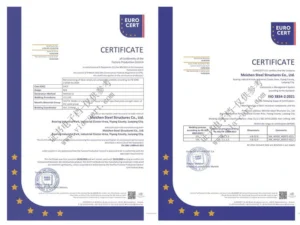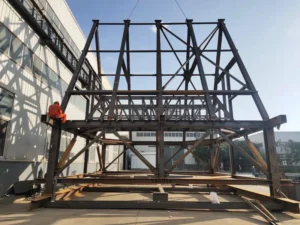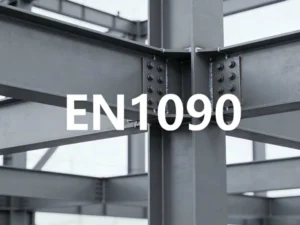
EN1090 certification can feel like a looming challenge, especially when project deadlines are tight and regulations seem impossible to navigate.
EN1090 is a European standard required for steel and aluminum structural products in construction.1 Since 2014, without EN1090 certification and CE marking, manufacturers cannot legally sell or install their products in most European countries.
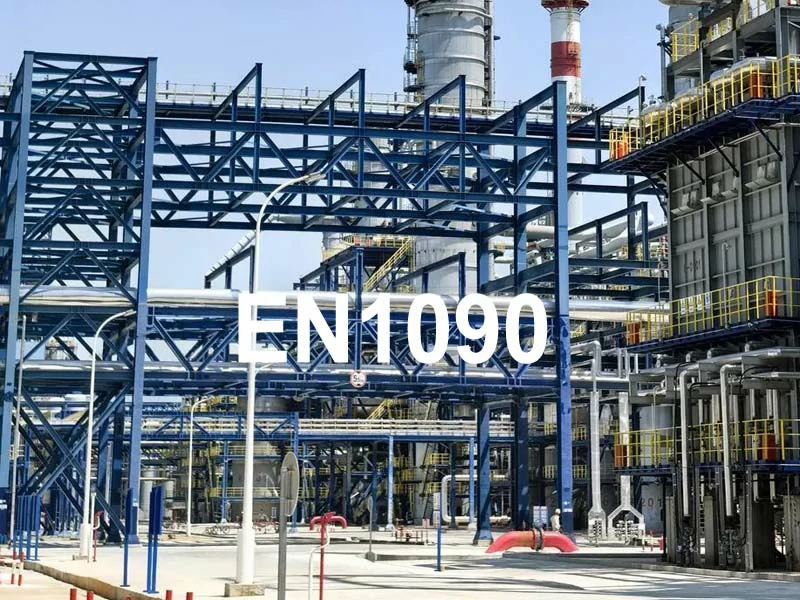
I remember one of our early European projects, when a simple CE stamp turned into weeks of setbacks because we didn’t understand EN1090. Now, we always advise fabricators and project leaders: Treat EN1090 like your passport to the European market, not just another paperwork hurdle. If you know what’s required and prepare early, doors open instead of closing.
What Does EN1090 Actually Cover and What Steps Matter Most?
The complexity of EN1090 goes way beyond a checklist—it changes how you plan, track, and build steel structures from start to finish.
EN1090 certification requires compliance across manufacturing, assembly, documentation, training, and quality control.2 The standard covers everything from cutting and welding to supervisor qualifications and non-destructive testing.3
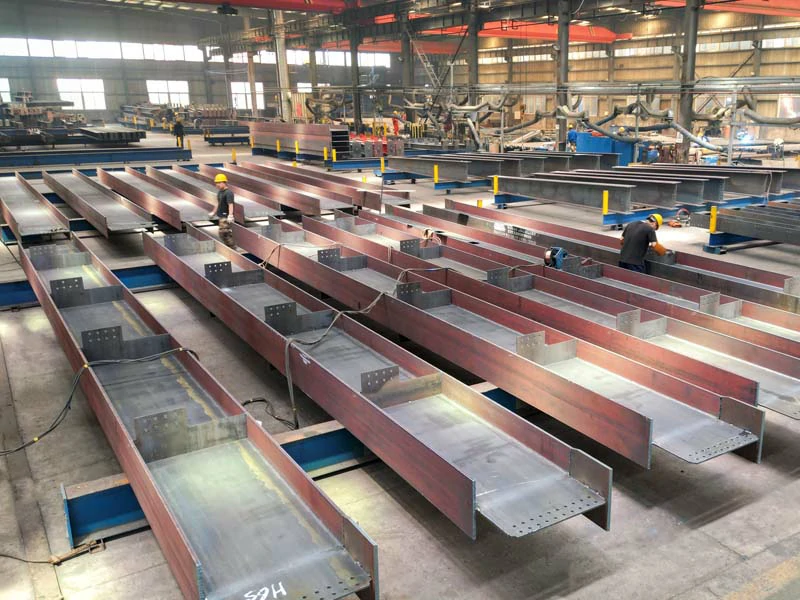
I have seen how even small gaps in record-keeping can block a project. With EN1090, every stage needs careful tracking—from material certificates to welding logs. You need:
- Factory Production Control (FPC) system4
- Certified welders and qualified supervisors
- Full records for material traceability5
- Non-destructive testing procedures
- Proper documentation and digital systems
EN1090 breaks into three main sections:
| EN1090 Section | What It Controls | Impact for Fabricators |
|---|---|---|
| [EN 1090-1 | Conformity assessment, CE marking](https://european-accreditation.org/sp_accordion_faqs/question-41-10-regulation-eu-305-2011-cpr-1090-x-standard-set/)%%%FOOTNOTE_REF_6%%% | Ensures legal market access |
| [EN 1090-2 | Technical requirements for steel](https://www.boutique.afnor.org/en-gb/standard/nf-en-10902/execution-of-steel-structures-and-aluminium-structures-part-2-technical-req/fa186613/81807)%%%FOOTNOTE_REF_7%%% | Requires controlled processes, documentation |
| [EN 1090-3 | Technical requirements for aluminum](https://en.wikipedia.org/wiki/EN_1090)%%%FOOTNOTE_REF_8%%% | Applies similar rules for aluminum |
One lesson I learned quickly: You cannot skip staff training. Unqualified welders are the most common reason for failed EN1090 certification.9 Investing in digital FPC tools takes the headache out of traceability, and that pays off when an auditor asks for a six-month-old heat number and you can deliver it in seconds, not days.
What Happens If You Don’t Have EN1090 When Delivering Steel?
Losing a project—or facing heavy sanctions—because of certification gaps is a risk we never want our partners to face again.
Without EN1090, your steel or aluminum products cannot be legally used in many European construction projects.10 The consequences are real: Delivery delays, rejected shipments, lost contracts, and financial penalties.11
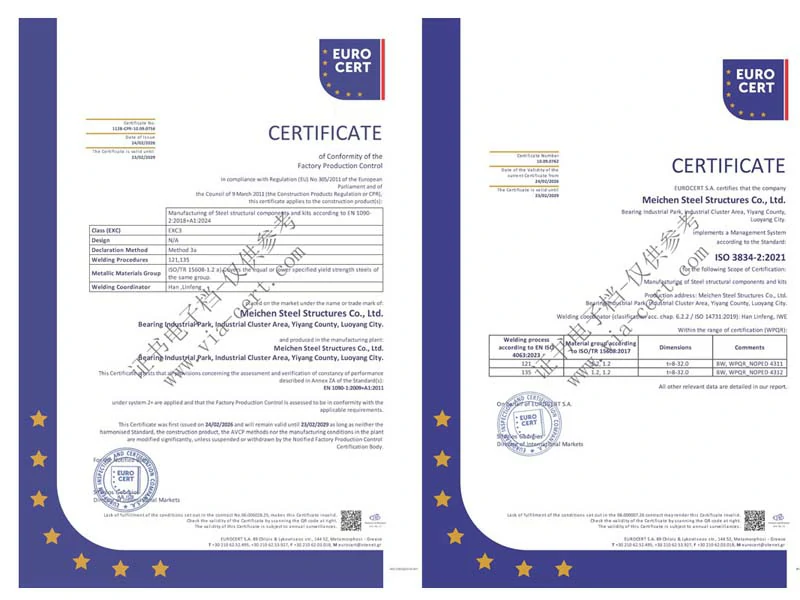
We have seen clients forced to strip out already-installed steel because their supplier lacked EN1090 and CE marks. That kind of delay not only eats into your project schedule, it crushes profit margins and reputation.
Legal compliance isn’t just a bureaucratic box. European buyers and construction authorities want to see that you meet recognized standards. When you can show EN1090 status, client trust goes up, and so do repeat orders. When you don’t, you risk looking unreliable.
Here’s a breakdown of the legal and business impacts:
| Risk Type | EN1090 Status | Impact |
|---|---|---|
| Project Delays | Not Certified | Shipment refusal, delays |
| Legal Compliance | Not Certified | Fines, contract termination |
| Client Confidence | Certified | Repeat business, higher trust |
| Brand Reputation | Certified | Market access, premium pricing |
| Cost Control | Not Certified | Unexpected replacement costs |
When we explain this to new clients, most realize EN1090 isn’t just paperwork—it’s the backbone of risk control and schedule certainty.
Why Is EN1090 Implementation Tough and What Mistakes Do Fabricators Make?
Trying to meet EN1090 with unprepared teams and patchy documents almost always leads to wasted effort. We learned this the hard way and now share those lessons every time.
EN1090 is tough because it demands discipline, documentation, and qualified staff. The biggest roadblocks we have faced are incomplete welding procedure qualification, poor material tracking, and chaotic paperwork.
Many factories start with good intentions but underestimate the detail needed. For example, EN1090 wants evidence for every weld, every batch of steel, and every supervisor’s qualification. Setting up a robust ERP system or FPC database before the audit makes it all smoother. Training welders early is critical. We always tell shop leaders: Even one missing certificate can cost a whole audit.
From experience, here’s a common implementation timeline:
| Stage | Estimated Time | Common Pitfalls |
|---|---|---|
| Consultant engagement | 1-2 weeks | Choosing inexperienced advisors |
| Staff training | 2-4 weeks | Skipping supervisor training |
| Process upgrade | 2-6 months | Using paper-based FPC |
| Audit/Certification | 2-3 weeks | Missing weld or material docs |
EN1090 isn’t about passing a single audit. It’s about building habits so that every batch, every weld, every record is ready for inspection and traceable. We remind clients: If your documentation is digital and your staff is well trained, you will breeze through certification.
How Do We Use EN1090 Certification to Gain a Sales Advantage?
We stopped treating EN1090 as just a hurdle. Now, we use it as our secret weapon to win bigger contracts and show clients we are serious about quality.
EN1090 certification is a sales badge. Buyers and project leaders often filter suppliers by EN1090/CE status before anything else. With certification, you gain access to premium clients and justify higher prices. It signals reliability and commitment.
We always highlight EN1090 in technical bids, proposals, and on our website. This lets buyers know at a glance they can trust our products. Many of our best clients now insist on EN1090, so skipping it means missing out on top projects.
A tip from our experience: Avoid over-specifying Execution Classes. EN1090 uses EXC1 to EXC4. Most projects are EXC2, which is suitable for commercial buildings, factories, and infrastructure. If the certification body pushes EXC3/4, question it—those are more complex and expensive.
Here’s our checklist for using EN1090 as a business tool:
| Action | Benefit |
|---|---|
| Website showcase | Fast client filtering, credibility |
| Proposal mention | Increases win rate in bidding |
| Trade show badges | Attracts higher-level buyers |
| Sales presentations | Shows investment in quality |
By focusing on EN1090, we moved from feeling blocked by compliance to opening opportunities and boosting our reputation.
Conclusion
EN1090 is more than a legal stamp—it is a practical tool for risk management, quality assurance, and business expansion. Invest in preparation, training, and documentation to unlock European project success.
"Declaration of Performance and CE marking", https://single-market-economy.ec.europa.eu/sectors/construction/construction-products-regulation-cpr/declaration-performance-and-ce-marking_en. CEN and construction-products references identify EN 1090 as the harmonised European standard series for execution and conformity assessment of structural steel and aluminium components used in construction. Evidence role: definition; source type: institution. Supports: EN1090 is a European standard required for steel and aluminum structural products in construction.. Scope note: The source should distinguish between the EN 1090 series generally and specific parts such as EN 1090-1, EN 1090-2, and EN 1090-3. ↩
"Who must comply with EN 1090? - hms-steel", https://hms-steel.com/who-must-comply-with-en-1090/. EN 1090 implementation guidance and the standard’s conformity-assessment framework describe certification as requiring factory production control, documented procedures, personnel competence, and production controls for structural components. Evidence role: general_support; source type: institution. Supports: EN1090 certification requires compliance across manufacturing, assembly, documentation, training, and quality control.. Scope note: A public guidance source may summarize rather than reproduce the full standard, which is normally copyrighted. ↩
"EN 1090-2 Structural Steel Welding: Execution Classes ...", https://www.therness.com/blog/en-1090-2-structural-steel-welding-execution-classes-requirements/. Technical descriptions of EN 1090-2 explain that the execution standard for steel structures covers fabrication operations, welding coordination, inspection, and testing, including non-destructive testing provisions. Evidence role: general_support; source type: institution. Supports: EN1090 includes technical controls for fabrication, welding coordination or supervision, and inspection/testing such as non-destructive testing.. Scope note: The source may not list every fabrication activity in the same wording as the article, so it should be used as contextual confirmation of the standard’s breadth. ↩
"EN 1090-1 Factory Production Control Manual | PDF", https://www.scribd.com/document/922451588/ManualFPC-EN1090-1example. Under the Construction Products Regulation and EN 1090-1 conformity assessment, factory production control is the documented internal production-control system used to ensure declared product performance is consistently achieved. Evidence role: definition; source type: government. Supports: An EN1090-certified manufacturer needs a Factory Production Control system.. Scope note: The source should define FPC generally for construction products or EN 1090-1 specifically; it may not prescribe a particular software or database method. ↩
"Everything You Need to Know About EN 1090", https://www.testcoo.com/en/blog/en1900-steel-standard-guide. EN 1090 execution guidance describes traceability and inspection documentation as part of controlling structural steel and aluminium components, including records that link materials to production and conformity evidence. Evidence role: mechanism; source type: institution. Supports: EN1090 implementation requires records that support material traceability.. Scope note: Traceability levels can depend on execution class, material type, and project specification, so the citation should not imply identical record depth for every component. ↩
"Question 41.10 Regulation (EU) 305/2011 CPR: 1090-x ...", https://european-accreditation.org/sp_accordion_faqs/question-41-10-regulation-eu-305-2011-cpr-1090-x-standard-set/. Public summaries of EN 1090-1 describe it as the harmonised part of the EN 1090 series that specifies requirements for conformity assessment of structural components and supports CE marking under the Construction Products Regulation. Evidence role: definition; source type: institution. Supports: EN 1090-1 controls conformity assessment and CE marking for structural components.. Scope note: The citation should not substitute for the full text of the standard, which contains the legally precise requirements. ↩
"Standard NF EN 1090-2", https://www.boutique.afnor.org/en-gb/standard/nf-en-10902/execution-of-steel-structures-and-aluminium-structures-part-2-technical-req/fa186613/81807. Standards catalogues and technical institutions identify EN 1090-2 as the part of the EN 1090 series specifying technical requirements for the execution of steel structures. Evidence role: definition; source type: institution. Supports: EN 1090-2 sets technical requirements for steel structures.. Scope note: The source will usually provide only a catalogue abstract or summary rather than the complete technical clauses. ↩
"EN 1090", https://en.wikipedia.org/wiki/EN_1090. Standards catalogues identify EN 1090-3 as the part of the EN 1090 series specifying technical requirements for the execution of aluminium structures. Evidence role: definition; source type: institution. Supports: EN 1090-3 sets technical requirements for aluminium structures.. Scope note: The source will likely confirm scope at the title or abstract level and may not include detailed clause requirements. ↩
"EN 1090 Audit Checklist: 5 Mistakes That Delay Certification", https://pzvar.in/en-1090-audit-checklist/. Welding-quality guidance for EN 1090 notes that welder qualification and welding coordination are core elements of compliance and common audit focus areas for certification bodies. Evidence role: expert_consensus; source type: institution. Supports: Unqualified welders are a major reason EN1090 certification can fail.. Scope note: This would support the importance of qualified welders but may not prove they are statistically the single most common cause of certification failure unless an audit-data study is found. ↩
"CE Marking- BS EN1090 Structural Steel & Aluminium", https://www.isocertification.uk.com/product-compliance/ce-marking/. The Construction Products Regulation requires CE marking for products covered by harmonised standards when placed on the EU market, and EN 1090-1 is the harmonised standard for many structural steel and aluminium components. Evidence role: general_support; source type: government. Supports: Covered steel or aluminium structural products without EN1090/CE compliance may be excluded from many European construction projects.. Scope note: This supports market placement and regulatory compliance for covered products; whether a product can be used in a specific project also depends on national rules, product scope, and project specifications. ↩
"CE Marking for Construction Products: A Complete Guide", https://ecochain.com/blog/ce-marking-for-construction-products/. EU construction-product market-surveillance rules and national enforcement guidance indicate that non-compliant CE-marked or unmarked construction products can be subject to corrective action, withdrawal, prohibition, or penalties. Evidence role: general_support; source type: government. Supports: Non-compliance with EN1090/CE requirements can lead to enforcement and commercial consequences such as rejection, delay, or penalties.. Scope note: The source can substantiate regulatory enforcement mechanisms, but specific commercial outcomes such as lost contracts or delivery delays are contextual consequences rather than guaranteed results. ↩