Every refinery relies on steel structures, but choosing the right type determines efficiency, safety, and longevity. Many professionals overlook the subtle engineering details that make the difference.
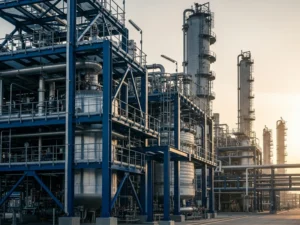
Industrial steel structures in refineries include pipe racks, equipment platforms, substation buildings, control rooms, storage supports, and cooling tower frameworks1. Each type supports critical operations, and proper engineering ensures reliability and compliance.
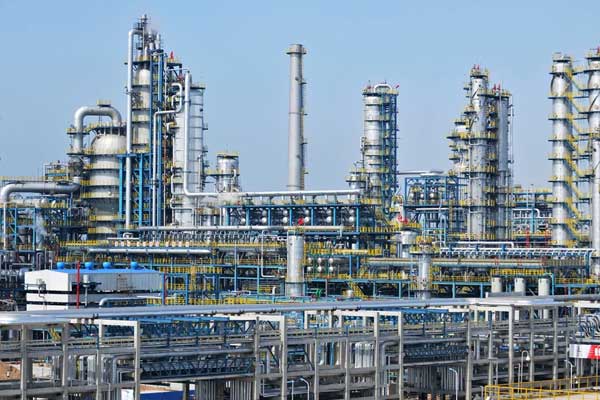
Steel structures carry the soul of the refinery. When we specify, fabricate, and install, we need to balance safety, cost, and flexibility. Let’s dig into each structure type and share hands-on tips from years in the field.
Pipe Racks: How Do They Support the Lifelines of a Refinery?
Pipe racks are often underestimated—but mistakes here can disrupt flow, maintenance, or future expansion. In the field, I’ve seen poor racks cause shutdowns, leaks, delays, and arguments.
Pipe racks support pipes, cables, and trays2. Designers must plan for dead weight and thermal movement3. Always consider dynamic loads and future pipe routing to reduce upgrade risks.
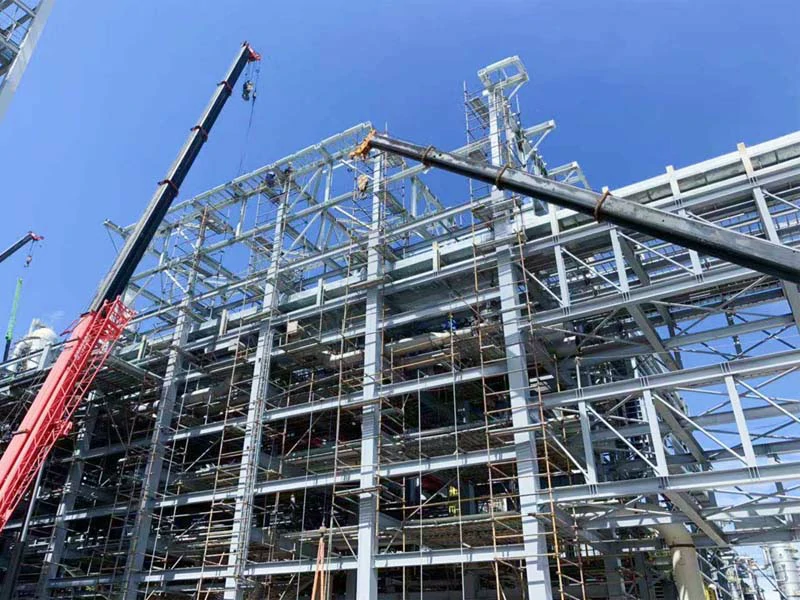
When we design pipe racks, we account for not only the immediate load but also future modifications. This means leaving “spare” space, thinking about line expansion, and even anticipating vibration and pressure surges. Expansion joints often get forgotten; this is a mistake. In high-temperature units, like kerosene processing, failure to accommodate line movement causes ruptures4. I advise always specifying joint flexibility and discussing it with your contractor—don’t let shortcut culture creep in.
| Key Considerations | Details |
|---|---|
| Load Type | Dead load, thermal expansion, dynamic surge |
| Expansion Provisions | Expansion joints, spare space for future lines |
| Corrosion Protection | Galvanizing or proper coatings—don’t skimp |
| Contractor Coordination | Clarify all tolerances, specify full-penetration welds |
| Safety | Proper height, access, and clearance for maintenance |
Process Equipment Platforms: How Does Good Platform Design Improve Safety and Maintenance?
In daily operation, platforms are where people walk, repair, and monitor. Bad design leads to accidents or slowed maintenance, and most platforms get crowded during emergencies.
Process equipment platforms must meet standards for access, stability, and anti-slip surfaces5. I always suggest building for more than just routine load—true test comes during shutdowns and emergencies when extra personnel crowd the platforms.
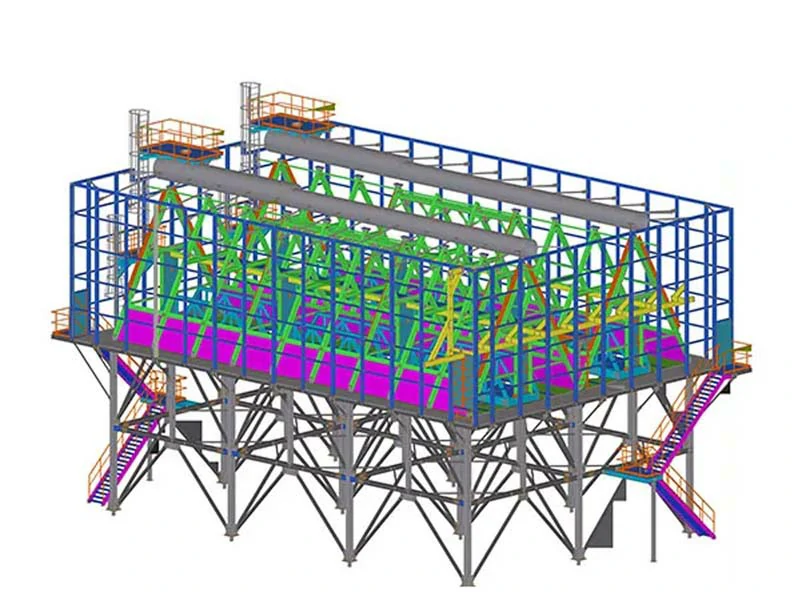
It’s tempting to follow drawings blindly, but real world means adding handrails, toe boards, and enough access space. Platform height matters; in China, I use 1.1 meters as standard for handrail6. I recommend anti-slip grating, not just painted checker plate, because spills are common and “slippery when oily” is not a joke. When you plan for platform load, include human surge: in shutdowns, many rush to troubleshoot and repair. Make sure the platform can handle unexpected crowding.
| Feature | Practical Tip |
|---|---|
| Handrail Height | ≥1.1m (industry standard) |
| Walking Surface | Anti-slip grating preferred |
| Load Capacity | Add personnel surge for emergencies |
| Access Design | Clear stairs and ladders, avoid bottlenecks |
| Safety Details | Toe boards, mid-rails, visible signage |
Electrical Substation Buildings: What Are the Critical Design Elements for Safety and Reliability?
Electrical substations control power for the whole refinery. If the steel frame is not engineered properly, there’s risk of fire, equipment failure, or maintenance headaches.
Electrical substation buildings require fireproofing, EMF shielding7, and durable structure. I always choose intumescent paint over cement-based coatings for fire zones, and check client specs for electromagnetic protection—especially for export jobs, where standards vary.
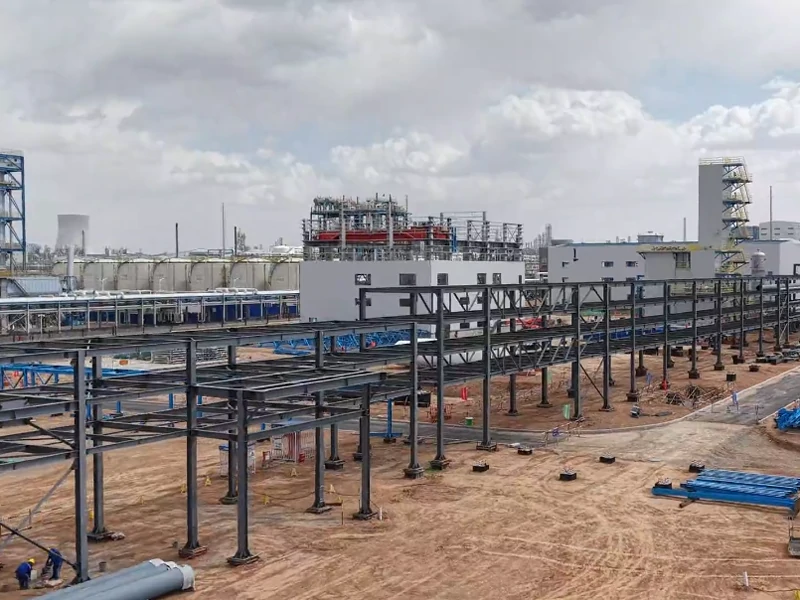
In my projects, fireproofing is top concern. Intumescent coatings swell to protect steel during heat8. Cement-based fireproofing looks cheaper but is less reliable. EMF shielding often gets missed. I learned the hard way, once retrofitting substation walls after commissioning—prevention is easier. Also, review backup systems. Make sure your structure can support not just primary but secondary power and future upgrades.
| Element | Why It Matters |
|---|---|
| Fireproofing | Intumescent paint for active flame zones |
| EMF (Electromagnetic) | Shielding for sensitive electronics |
| Structural Durability | Withstands vibration, maintenance loads |
| Backup Systems | Easy access, future extension |
| Compliance | Export projects: check host country codes |
Control Rooms: How Should We Build for Both Security and Flexibility?
Control rooms are the brains of the refinery. They need to survive blasts, protect staff9, and adapt to evolving digital systems.
Modern control rooms benefit from modular, blast-proof steel frames10. Clarifying specifications with clients is crucial—adding blast panels later is costly and complicates audits.
Blast resistance is often misunderstood. I always push clients to define needed protection levels. Steel panels and reinforced frames matter, but modularity is the trend. Fast installation and flexibility help during upgrades. We use prefab modules to speed up build, and relocate control rooms as needed. This is vital for schedule optimization. When audits come, you want to be ready.
| Feature | Tip for Success |
|---|---|
| Blast Resistance | Client-defined spec—never assume |
| Modular Design | Fast installation, easier relocation |
| Access Controls | Secure doors, layered security |
| Comfort | Insulate from noise and temp extremes |
| Upgrade Flexibility | Plan for digital system changes |
Storage Tanks & Vessel Supports: What Are the Best Practices for Safe and Stable Foundations?
Storage tank supports must handle heavy loads, tank settlement, and seismic forces11. Mistakes here can cause cracked bottoms or dangerous leaks.
Vessel supports need flexible connections, extra bracing, and steel ring beams under tanks for load distribution. In seismic areas, anchor bolts can yield if not properly designed.
I never underestimate foundation settlement. Flexible connections save tanks from uneven sinking, and bracing helps vessels stand strong in earthquakes. Ring beams under tanks keep the load even and stop banana-shaped bottoms—a trick I learned after seeing tanks deform in Oklahoma. You need to check tolerances for every bolt and brace.
| Support Feature | Practical Approach |
|---|---|
| Flexible Connections | Absorb foundation movement |
| Seismic Bracing | Extra reinforcement, thorough testing |
| Steel Ring Beams | Even load distribution under tanks |
| Anchor Bolt Checking | Test for yielding and stretching |
| Tolerance Management | Allow for real-world imperfections |
Cooling Towers and Air Fin Structures: How Do We Protect Against Vibration and Corrosion?
Cooling towers operate in harsh, high-humidity zones. Fan vibration and chemical exposure test the limits of steel.
Cooling tower structures must be overdesigned for dynamic loads and always protected against corrosion. Hot-dip galvanizing beats paint alone, especially where chemicals and moisture combine.
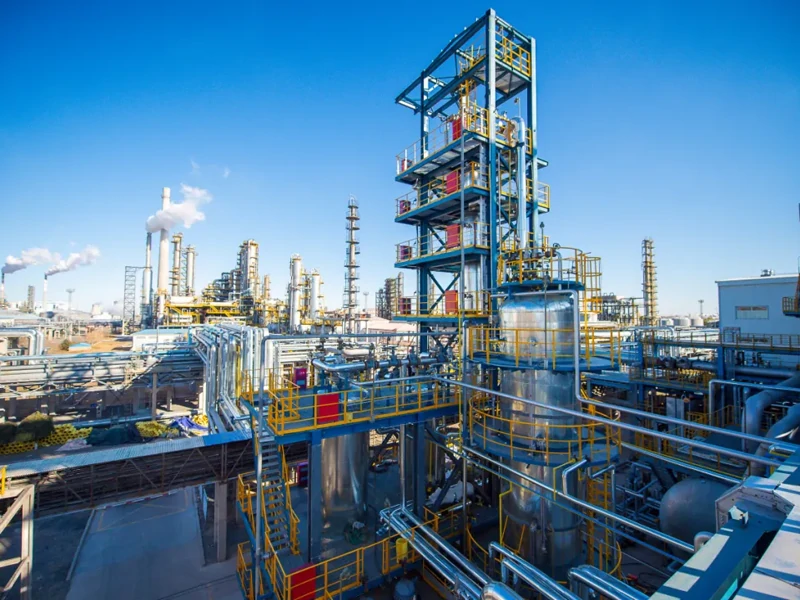
Fan vibration is real. I always overdesign supports, not just for static load but for repeated cycles. Corrosion is inevitable. I insist on hot-dip galvanizing for key parts—it prevents rust in the wettest areas. Coating alone is not enough. Consider extra inspection and maintenance in these locations.
| Key Requirement | Real-World Solution |
|---|---|
| Dynamic Load | Overdesign for vibration, regular checks |
| Corrosion Protection | Hot-dip galvanizing in wet areas |
| Maintenance Access | Clear walkways for inspection |
| Chemical Resistance | Choose steel grades wisely |
| Schedule Efficiency | Prefabricated modules speed up delivery |
Conclusion
We build refineries to last. The right steel structure choices make operations safer, smoother, and more flexible. Many costly problems are preventable with solid engineering, practical experience, and attention to detail.
"Cooling tower", https://en.wikipedia.org/wiki/Cooling_tower. A refinery engineering reference or encyclopedia entry should document that refinery infrastructure commonly includes pipe racks, equipment access structures, electrical/control buildings, storage tank supports, and cooling-related structures. Evidence role: definition; source type: encyclopedia. Supports: Industrial steel structures in refineries include pipe racks, equipment platforms, substation buildings, control rooms, storage supports, and cooling tower frameworks.. Scope note: Such a source would support the general categorization of refinery structures, not the completeness of this list for every refinery configuration. ↩
"(PDF) Design-of-Structural-Steel-Pipe-Racks", https://www.academia.edu/10731266/Design_of_Structural_Steel_Pipe_Racks. An engineering reference on process plant pipe racks should state that pipe racks carry process and utility piping and often support cable trays or instrumentation/electrical runs. Evidence role: definition; source type: education. Supports: Pipe racks support pipes, cables, and trays.. Scope note: The source would describe typical pipe-rack functions; individual refinery layouts may assign cable trays or utilities to separate structures. ↩
"Industrial Steel Pipe Rack", https://projects.eng.uci.edu/sites/default/files/2020%20WDR%20Poster%20Team%20S-6.pdf. A process piping or structural design source should explain that pipe-rack design accounts for gravity loads from piping and contents as well as thermal expansion or contraction of hot and cold lines. Evidence role: mechanism; source type: institution. Supports: Designers of refinery pipe racks must plan for dead weight and thermal movement.. Scope note: The source would support the design considerations in general, while project-specific load combinations are governed by applicable codes and owner standards. ↩
"Pipe Failure Analysis - Mechanical Stresses ...", https://www.facebook.com/ismail.saad.18/posts/pipe-failure-analysis-mechanical-stressespipe-failure-analysis-focusing-on-mecha/26246420771727320/. A piping stress-analysis reference should support that restrained thermal expansion in process piping can generate high stresses at anchors, nozzles, or bends and may contribute to leakage or rupture. Evidence role: mechanism; source type: paper. Supports: Failure to accommodate thermal line movement can cause pipe ruptures.. Scope note: The source would establish the failure mechanism, not verify the specific kerosene-processing example mentioned in the article. ↩
"Access Platforms & Stair Systems: Safety Guide", https://flexdecks.com/mobile-access-platforms-stair-systems-guide/. OSHA walking-working surface regulations or equivalent industrial access standards should show that platforms, stairs, guardrails, and walking surfaces are regulated for safe access, fall prevention, and slip resistance. Evidence role: expert_consensus; source type: government. Supports: Process equipment platforms must meet standards for access, stability, and anti-slip surfaces.. Scope note: A U.S. OSHA source would support the safety principles but may not match the jurisdictional code used for every refinery project. ↩
"Guardrail height requirements for construction activities in ...", http://www.osha.gov/laws-regs/standardinterpretations/2006-04-17. A Chinese industrial platform safety standard such as GB 4053.3 should be cited if it specifies guardrail or handrail height requirements around 1.1 m for fixed industrial platforms. Evidence role: expert_consensus; source type: government. Supports: In China, 1.1 meters is used as a standard handrail height for industrial platforms.. Scope note: This would support the Chinese-code reference only; other jurisdictions may require different guardrail dimensions. ↩
"Electromagnetic interference", https://en.wikipedia.org/wiki/Electromagnetic_interference. A technical source on electromagnetic compatibility should show that shielding and grounding are used to reduce electromagnetic interference affecting sensitive electronic or control equipment. Evidence role: mechanism; source type: institution. Supports: Electrical substation buildings may require EMF shielding for sensitive electronics.. Scope note: The source would support the general need for electromagnetic compatibility measures, not establish that every refinery substation building requires dedicated EMF shielding. ↩
"Intumescent coatings swell and form a thick, insulating char ...", https://www.facebook.com/apluspaintsPH/posts/intumescent-coatings-swell-and-form-a-thick-insulating-char-barrier-when-exposed/1477895084376563/. A fire-protection engineering source should explain that intumescent coatings expand when heated to form an insulating char layer that delays temperature rise in structural steel. Evidence role: mechanism; source type: research. Supports: Intumescent coatings swell to protect steel during heat.. Scope note: The source would support the mechanism of intumescence, not prove that it is the best fireproofing choice for all refinery substation buildings. ↩
"Facility Siting Overview for Projects", https://engineering.purdue.edu/P2SAC/presentations/documents/1.FacilitySitingforProjects.pdf. Guidance such as API RP 752/753 or CCPS material on occupied buildings in process plants should support that control rooms in petrochemical facilities are evaluated for explosion hazards and may require blast-resistant design to protect occupants. Evidence role: expert_consensus; source type: institution. Supports: Refinery control rooms may need blast-resistant design to protect staff.. Scope note: The source would support blast-risk assessment and protective design principles, not confirm that all refinery control rooms must be blast-resistant. ↩
"Blast Resistant Modular Buildings for the Petroleum and Chemical ...", https://oaktrust.library.tamu.edu/items/78d63e2f-6060-49c8-b9fd-34b01de38408. A blast-resistant building standard or process-safety guidance should document the use of blast-resistant structural systems for occupied buildings in hazardous process areas; terminology should preferably use “blast-resistant” rather than “blast-proof.” Evidence role: expert_consensus; source type: institution. Supports: Modern refinery control rooms can use modular blast-resistant steel frames.. Scope note: The evidence would support blast-resistant steel framing as an engineering approach, while “blast-proof” is stronger than most standards claim because design is based on specified overpressure and duration. ↩
"API 653 Inspection Report Internal ...", https://www.csb.gov/assets/1/20/api653_internal_inspection_freedom_industries_tank_395_rev_0.pdf?15760. API 650/653 guidance or seismic tank-design literature should show that storage tanks are designed or assessed for foundation settlement and seismic actions because these can affect shell, bottom, anchorage, and leak integrity. Evidence role: expert_consensus; source type: institution. Supports: Storage tank supports must account for heavy loads, tank settlement, and seismic forces.. Scope note: The source would support the relevance of settlement and seismic loading, not prove that every settlement case results in cracked bottoms or leaks. ↩