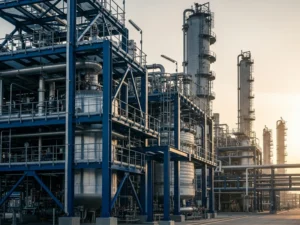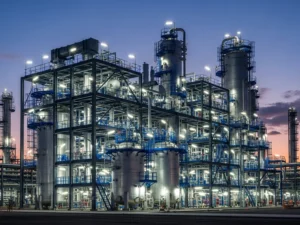
A support frame may look minor on a drawing. On site, one wrong detail can slow installation, raise piping stress, and push a whole area off schedule.
Equipment support structures affect project success by keeping equipment stable, reducing piping and installation conflicts, improving maintenance access, and extending service life. When we treat them as part of the whole plant system, we cut rework, delay, and hidden lifecycle cost.
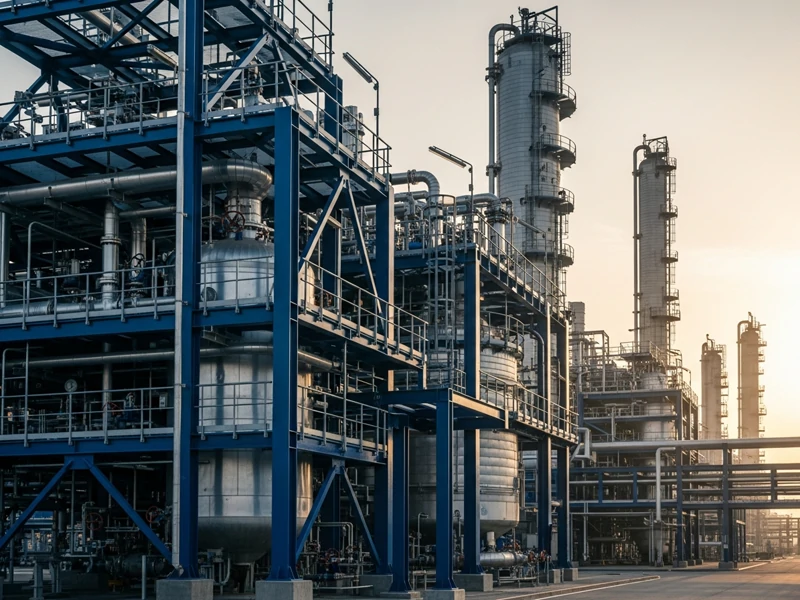
In many chemical plant projects, we see teams spend a lot of time on major equipment and main process lines. That makes sense. Those items are critical. But in real execution, equipment support structures often decide whether installation goes smoothly or turns into constant field adjustment. We have seen this many times. On paper, the structure looks simple. In the field, it becomes the meeting point of civil work, steel, piping, access, coating, and maintenance. That is why we never see it as “just support steel.”
What Are Equipment Support Structures in Chemical Plants?
It is easy to underestimate support structures at the early stage. Many people think they only hold weight. In actual plant work, their job is much bigger than that.
*Equipment support structures are steel or concrete systems that carry, stabilize, elevate, and give access to process equipment such as vessels, pumps, exchangers, columns, and skids. They also resist wind, seismic force, piping load, thermal movement, vibration, and maintenance load.
When we explain this to owners or EPC teams, we usually start with one practical idea: the support is part of the operating system. It is not only there to carry dead load. It must keep the equipment in the right position. It must control movement. It must work with piping. It must allow people to reach valves, instruments, and maintenance points. It must also survive the real plant environment.
We have worked on projects where a small elevation error caused piping misalignment across several connected lines. We have also seen platforms that looked acceptable in drawings but became awkward once operators tried to move through them. These are not rare problems. They happen when support design is treated too late or too simply.
A good support structure must answer several questions at once. Can it carry all the real loads? Can it fit actual vendor data? Can it resist corrosion? Can it be fabricated and erected without trouble? Can operators and maintenance crews use it safely? When we ask those questions early, the structure becomes a tool that supports the whole project, not a source of site trouble.
| Main function | Why it matters in real projects |
|---|---|
| Carry equipment load | Keeps the plant safe under operating and occasional conditions |
| Control position and movement | Helps protect nozzles, piping, and alignment |
| Provide elevation | Supports process flow, drainage, and access needs |
| Support operations | Gives room for inspection, valve access, and daily use |
| Resist plant environment | Extends service life in corrosive or coastal areas |
| Match site interfaces | Reduces field modification and installation delay |
Why Do Equipment Support Structures So Often Cause Delay and Extra Cost?
Many support structure problems do not start in fabrication. They start much earlier, when disciplines work in parallel but not closely enough together.
*Equipment support structures often cause delay and extra cost because they sit between many interfaces. If equipment data, anchor bolts, piping routes, access space, and fabrication tolerances do not match, the result is usually rework, waiting time, and costly site changes.
This is one of the most common lessons we have learned from project execution. A support frame can be fabricated exactly to drawing and still fail at site fit-up. That sounds strange at first, but it happens often. The reason is simple. The structure may be right by itself, but wrong in relation to equipment, civil work, piping, or access needs.
For example, we have seen anchor bolt layouts drift from the latest equipment base detail. We have seen maintenance platforms block exchanger bundle removal. We have seen stairs that looked fine until cable trays were added later. None of these problems are dramatic in isolation. But when several happen in the same area, the schedule starts slipping and site teams lose time every day.
This is why we believe support steel needs stronger early coordination than many teams expect. We prefer to review vendor loads, nozzle orientation, maintenance clearance, and model interfaces before fabrication starts. We also pay attention to local stiffness around anchor zones and platform connections. Global strength is important, of course. But local constructability matters just as much. A frame that is strong in calculation can still create alignment problems during erection if the detail is not practical.
| Typical interface issue | What usually happens on site |
|---|---|
| Late vendor drawing change | Shop revision, material waste, or field modification |
| Anchor bolt mismatch | Delay in equipment setting and grouting |
| Platform or stair clash | Unsafe access, redesign, or relocation work |
| Weak tolerance control | Bolt-up difficulty and fit-up failure |
| Poor maintenance clearance | Future shutdown problems and operator frustration |
| Loose revision management | Wrong fabrication, document confusion, and claims |
What Design Checks Matter Most for Reliable Support Structures?
A support structure should never be judged only by steel weight or basic strength. In chemical plant work, the details around movement, environment, and use often matter more.
The most important design checks are real load combinations, piping interaction, vibration behavior, corrosion protection, fireproofing needs, access arrangement, and constructability. We get far better results when we review these items together, not as separate boxes to tick.
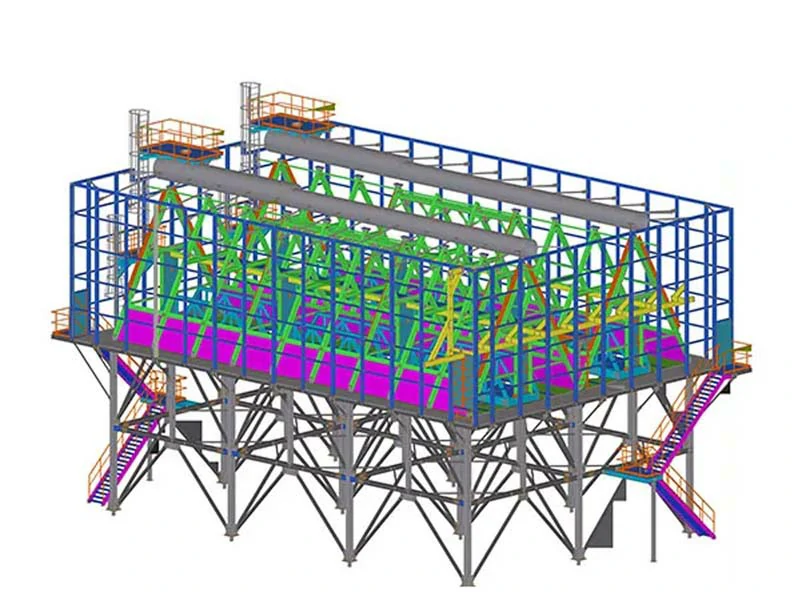
When we review support design, we start with the load cases that really happen in the plant. Dead load alone is never enough. We check empty weight, operating weight, hydrotest weight, internals, insulation, attached piping, and maintenance loads. If the project is in a seismic area, we check that early. If wind is severe, we include that from the beginning. If the unit may require blast resistance, we confirm it before the steel package is too far along. We have seen late blast review increase steel tonnage and force redesign, and that is the kind of issue that hurts both budget and schedule.
Then we look at movement and vibration. This matters a lot for pumps, compressors, fans, and other rotating equipment. In these cases, the support frame cannot be reviewed alone. The real behavior comes from the full chain: equipment, skid, baseplate, anchor bolts, foundation, and support structure. If one part of that chain is based on a wrong assumption, the problem may only show up during commissioning, which is the worst time to find it.
We also put a lot of focus on corrosion and fireproofing. In harsh plant areas, corrosion protection is not just a paint spec. It is a lifecycle choice. Drainage, trapped water, crevice detail, bolt protection, and access for future touch-up all matter. Fireproofing is similar. It affects member size, weight, detail, and erection sequence. If it is considered too late, redesign usually follows.
| Design check | What we ask in practice |
|---|---|
| Load combinations | Have we included all operating and occasional loads? |
| Piping interaction | Will support stiffness or movement increase nozzle stress? |
| Vibration | Does the full system behave safely during operation? |
| Corrosion protection | Does the detail suit the real plant environment? |
| Fireproofing | Was it built into the design from the start? |
| Access and maintenance | Can people work safely and remove equipment when needed? |
| Constructability | Can the frame be fabricated, shipped, and erected without trouble? |
How Should Buyers Evaluate a Steel Structure Supplier for Chemical Plant Support Work?
The cheapest steel package often looks good in procurement. In actual project delivery, it can become the most expensive choice if the supplier does not understand plant interfaces.
Buyers should evaluate suppliers by engineering ability, chemical plant experience, fabrication accuracy, QA/QC control, corrosion knowledge, documentation discipline, and installation thinking. A capable supplier often saves much more in execution than the initial price difference suggests.
When we look at a supplier, we first want to know whether the team understands chemical plant reality. Can they read equipment loads correctly? Can they work with piping stress requirements? Do they understand corrosion class, fireproofing, and modular transport limits? These are basic questions, but the answers tell us a lot. A supplier may have strong production capacity and still struggle badly on process plant work if the engineering side is weak.
After that, we look at fabrication control. We check welding procedures, welder qualification, NDT capability, coating inspection, traceability, and dimensional control. In our experience, many site headaches come from tolerance build-up, not from obvious fabrication defects. This is even more important in modular or export projects, where one mismatch can affect a whole erection sequence.
We also care a lot about documents. This sounds less exciting than engineering or production, but it matters just as much. Weak revision control can create customs issues, wrong shipment sequence, site confusion, and claim disputes. A strong supplier usually gives us clean shop drawings, clear packing lists, traceable material records, and inspection files that match actual erection needs.
Good suppliers also think one step ahead. They do not just fabricate what is drawn. They may suggest better splice locations, easier lifting points, or a smarter shipping split. Those ideas are valuable because they reduce work on site, where every hour costs more.
| Evaluation area | What we look for |
|---|---|
| Engineering capability | Understanding of loads, piping, seismic, corrosion, and fireproofing |
| Fabrication quality | Welding control, NDT, tolerance management, and coating quality |
| Industry experience | Refinery, petrochemical, LNG, fertilizer, and coastal plant background |
| Installation mindset | Smart splice planning, transport logic, and erection efficiency |
| Documentation control | Clear drawings, revision tracking, certificates, and packing records |
| Communication | Fast response to design change and field issue feedback |
Conclusion
When we treat equipment support structures as part of the process system, not just a steel package, we reduce site risk, protect schedule, and create much better long-term value.