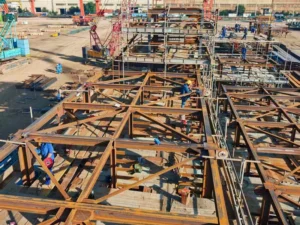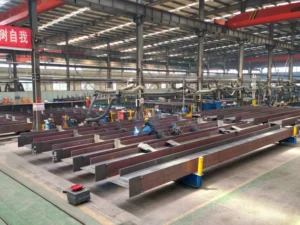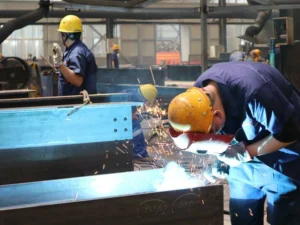
A steel package can look fine on paper and still become a problem on site. We have seen projects lose time and money because the fabricator met the drawing size but missed the real standard behind the job.
Heavy industrial steel structure fabrication standards are the rules that control material, welding, tolerances, coating, inspection, and documentation so the steel can be installed safely, perform well, and last in harsh service conditions.
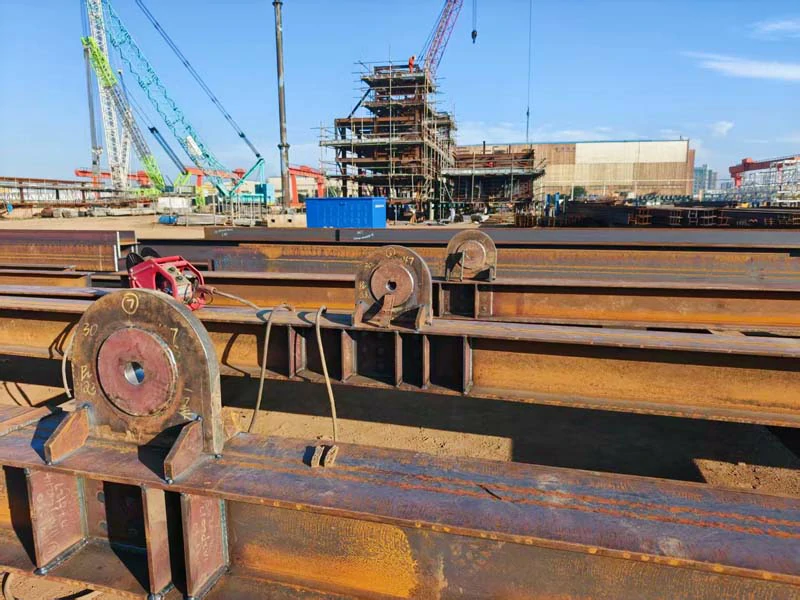
When we talk with EPC teams, plant owners, and procurement managers, one thing comes up again and again. Most serious problems do not begin during erection. They begin much earlier in the workshop. That is why we never treat standards as a stack of papers for audit only. We treat them as the daily control system that keeps a project on track. If you are buying heavy industrial steel, this is one of the most practical things to understand before you place an order.
Why Do Fabrication Standards Matter So Much in Heavy Industry?
A steel structure may stand upright and still be wrong. We have seen hidden fabrication issues show up only when the site team starts bolting, aligning, or coating touch-up under schedule pressure.
Fabrication standards matter because heavy industrial steel must carry real loads, resist corrosion, fit accurately, and support fast installation. Good standards reduce rework, delay, safety risk, and lifecycle cost.
We do not see heavy industrial steel as ordinary building steel. A pipe rack in a refinery, a transfer tower in a mining plant, or an equipment support frame in a power station lives a much harder life. These structures carry equipment, piping, platforms, and cable trays. They deal with vibration, repeated loading, heat change, moisture, chemicals, and sometimes salt air. They also need to fit with civil foundations, anchor bolts, mechanical systems, and site erection plans. That means even a small workshop error can grow into a very expensive field problem.
We have seen cases where the steel looked acceptable during shop inspection, but bolt holes did not align at site. We have seen welding distortion affect fit-up. We have seen poor blasting lead to coating failure much earlier than expected. None of these issues are rare. In fact, they are exactly the kinds of problems that standards are meant to prevent.
| Risk area | What can go wrong | What it causes on site |
|---|---|---|
| Material control | Wrong grade, mixed batches, missing traceability | Approval issues, safety concerns |
| Cutting and fit-up | Inaccurate bevels, poor alignment, bad edge quality | Welding defects, assembly stress |
| Welding execution | Cracks, lack of fusion, poor repair control | Rework, inspection rejection |
| Dimensional tolerance | Hole mismatch, base plate issues, member deviation | Slow erection, field modification |
| Surface treatment | Poor blasting, contamination, low DFT | Early corrosion, repaint work |
| Documentation | Missing MTCs, unclear reports, weak traceability | Delayed inspection and payment |
From our side, the lesson has always been simple. In heavy industry, standards are not there to make life harder. They are there to keep small mistakes from becoming big losses.
Which Fabrication Standards Should Buyers Know First?
The list of standards can look complicated at first. We understand that. Many buyers are not trying to become code specialists. They just want to know which standards actually affect production and project risk.
Buyers should focus first on standards for material, welding, fabrication, coating, and quality systems, such as ASTM, AWS, AISC, EN, ISO, and project-specific technical specifications.
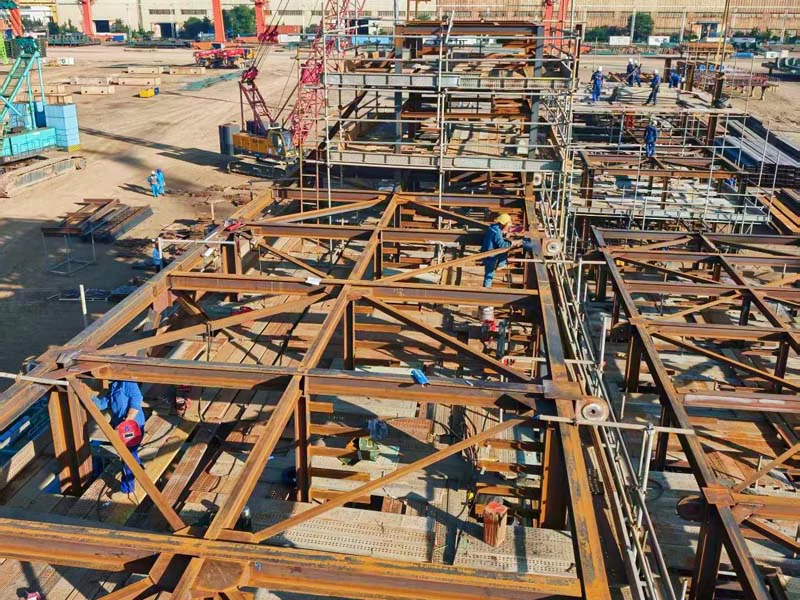
When we review a heavy industrial steel inquiry, we usually sort the standards into practical groups. The first group is material. This includes standards like ASTM A36, ASTM A572, ASTM A992, or EN 10025. These tell us what steel grade, strength, and product type should be used. The second group is welding. AWS D1.1 is one of the most common references. It covers weld procedure qualification, welder qualification, inspection limits, and repair rules. For many international projects, this is one of the most important standards in the whole package.
Then we look at fabrication and execution standards. AISC 360 and AISC 303 are common in many projects. For European work, EN 1090 often becomes central. After that, we move to coating and quality system standards. ISO 8501 helps define surface preparation. ISO 12944 helps define corrosion protection systems. ISO 9001 shows whether the supplier has a structured quality system, though we always say that a certificate alone is not enough.
The key point is this: a real project rarely follows one standard only. One project may combine ASTM material, AWS welding, SSPC or ISO surface preparation, and owner-specific coating requirements all at once. A good supplier needs to handle that full mix, not just recognize the names.
| Standard group | Common examples | What we expect a fabricator to control |
|---|---|---|
| Material | ASTM A36, A572, A992, EN 10025 | Grade, certificates, traceability |
| Welding | AWS D1.1, ISO 3834, ISO 9606 | WPS, PQR, welder qualification |
| Fabrication | AISC 360, AISC 303, EN 1090 | Tolerances, execution quality |
| Coating | ISO 8501, ISO 12944, SSPC | Blasting, profile, paint application |
| Quality system | ISO 9001, ISO 14001, ISO 45001 | Process control, records, safety |
We often tell buyers not to be impressed by a long certificate list alone. What matters is whether the factory can apply these standards under real production pressure.
What Do These Standards Control in Real Production?
Some buyers think a standard only tells us what steel grade to buy. In real fabrication, that is just the beginning. The deeper value of standards is that they control the whole path from raw material to final shipment.
In daily production, standards control traceability, cutting, fit-up, welding, inspection, dimensional accuracy, surface treatment, packing, and the final quality dossier.
We like to explain this in a practical way. The process starts with incoming material. A serious workshop checks the material certificate, grade, thickness, size, and heat number. It also marks the material clearly so it can still be identified later after cutting. This is basic traceability, and it matters a lot more than some people think. Once blasting and painting are done, it becomes much harder to confirm what plate was actually used if records are weak.
Next comes cutting and fit-up. This is where many later problems are born. If the cut edge is poor, the bevel angle is wrong, or the fit-up gap is not controlled, welding quality suffers right away. Then comes welding itself. This is not just about having skilled welders. It is about using the right WPS, matching the procedure to the joint type and thickness, controlling consumables, and following preheat and interpass rules where needed.
After welding, dimensional checks become very important. We need to know that member length, hole spacing, plate location, and assembly geometry all stay inside tolerance. Then we move to blasting and coating. In harsh environments, coating life often depends more on surface preparation and application control than on the paint brand alone.
| Production stage | What standards influence | Why it matters |
|---|---|---|
| Incoming inspection | Material specs and traceability rules | Prevent wrong material use |
| Cutting | Edge quality and dimensional tolerance | Support fit-up and welding |
| Fit-up | Joint prep and assembly requirements | Reduce weld defects and distortion |
| Welding | WPS, PQR, welder qualification, acceptance criteria | Ensure structural integrity |
| NDT and inspection | VT, UT, MT, PT, RT requirements | Verify weld quality |
| Dimensional control | Tolerance standards and drawings | Avoid site mismatch |
| Blasting and painting | ISO, SSPC, project specs | Protect service life |
| Packing and marking | Shipping and traceability requirements | Help site identification and handling |
From our experience, the best factories are the ones where standards are visible in each work step. You can feel the discipline in the workshop. It is not just something the QA manager says during an audit.
What Should Buyers Really Check Before Placing an Order?
A low price can be attractive at the inquiry stage. We understand that. Every project has budget pressure. But in heavy industrial steel, the cheapest offer often becomes expensive later.
Before placing an order, buyers should check real workshop capability, welding control, traceability, NDT scope, tolerance management, coating process, trial assembly ability, and document quality.
If we were evaluating a supplier for an important project, we would start with real capacity, not marketing language. We would ask what member sizes they can handle, what their monthly fabrication volume is, whether they can do thick plate welding, and what equipment they actually use for cutting, welding, blasting, and painting. Then we would ask about similar projects. Have they supplied steel for a refinery, power plant, LNG terminal, mining plant, or cement line before? Experience in similar service conditions saves a lot of explanation later.
We would also look carefully at the QC system in practice. How do they track material from receipt to shipment? How do they manage nonconforming work? Who signs off dimensional checks? How are welding consumables stored and issued? Can they support third-party inspection without confusion? We would also confirm the NDT scope early. This matters because some suppliers leave NDT vague during quotation and only clarify the cost later.
For complex structures, we strongly value trial assembly. Buyers sometimes remove it to cut shop cost. We understand the reason. Still, we have seen a modest trial assembly cost save far more money at site by preventing crane delay, fit-up trouble, and rushed field modification.
| Buyer checkpoint | What to ask | Why it matters |
|---|---|---|
| Workshop capability | Capacity, max size, key equipment | Confirms fit for project scale |
| Similar project record | Refineries, power, mining, petrochemical work | Shows practical experience |
| Material control | Heat number tracking, MTC management | Protects traceability |
| Welding management | WPS, PQR, welder records, repair control | Reduces weld risk |
| Inspection scope | NDT methods, percentages, ITP hold points | Avoids surprise cost and delay |
| Dimensional control | In-process inspection, final reporting | Supports erection speed |
| Surface treatment | Blasting grade, DFT checks, humidity control | Improves corrosion resistance |
| Trial assembly | Available or not for complex structures | Reduces field adjustment |
| Documentation | MTC, NDT, dimensional and paint reports | Supports approval and payment |
If we can give one piece of advice here, it is this: do not ask only, “Can this supplier make the steel?” Ask, “Can this supplier help the whole project go more smoothly?” That is the better buying question.
Conclusion
We believe good fabrication standards turn steel supply into project risk control. They protect quality, schedule, installation efficiency, and long-term performance in the environments that matter most.