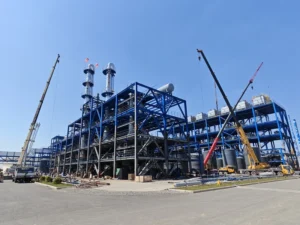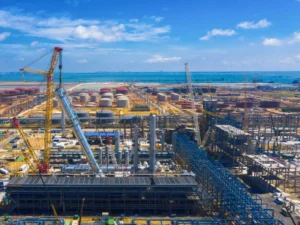
Many teams see these structures every day, but still treat them as basic steel frames. We have seen that mistake turn into site clashes, slow erection, and avoidable cost very quickly.
Pipe racks are steel structures that support process pipes, cable trays, instrument trays, and utility lines. Equipment support structures carry vessels, pumps, exchangers, skids, tanks, and other units. In real projects, both are not just steel frames. They are interface structures that must fit design, fabrication, transport, and site installation.
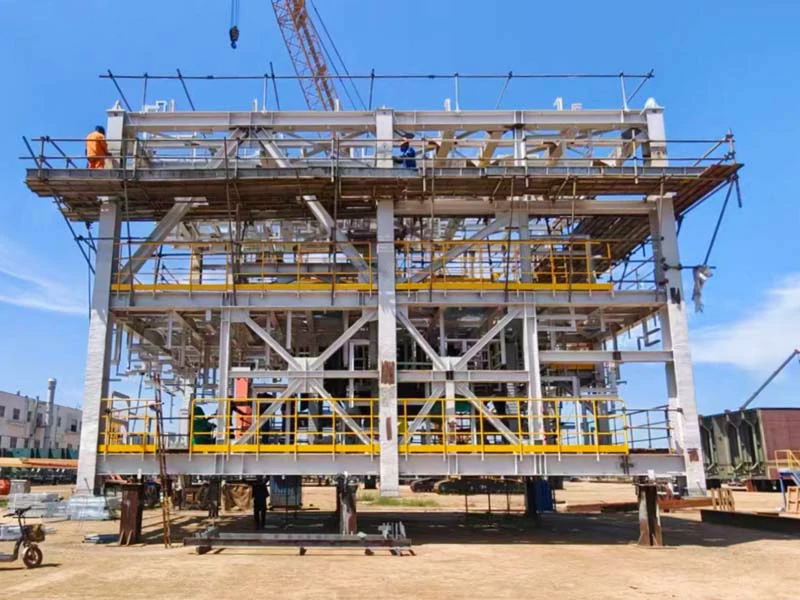
When we talk with EPC teams, procurement managers, and project engineers, one pattern comes up again and again. Most people know what pipe racks and equipment supports are in a general sense. But fewer people fully see why these structures can either help a project move smoothly or quietly create trouble in the background. From our side, the real issue is rarely just steel tonnage. The real issue is whether the structure works with the whole project around it.
What Is a Pipe Rack?
A lot of people describe a pipe rack as columns and beams that hold pipes. That is not wrong, but it is far from complete. In our experience, that simple definition hides most of the real work.
A pipe rack is a steel structural system in petrochemical and industrial plants that supports process pipelines, cable trays, instrument trays, utility lines, and sometimes small-bore support systems. It usually includes columns, beams, bracing, cantilever arms, platforms, ladders, and maintenance walkways.
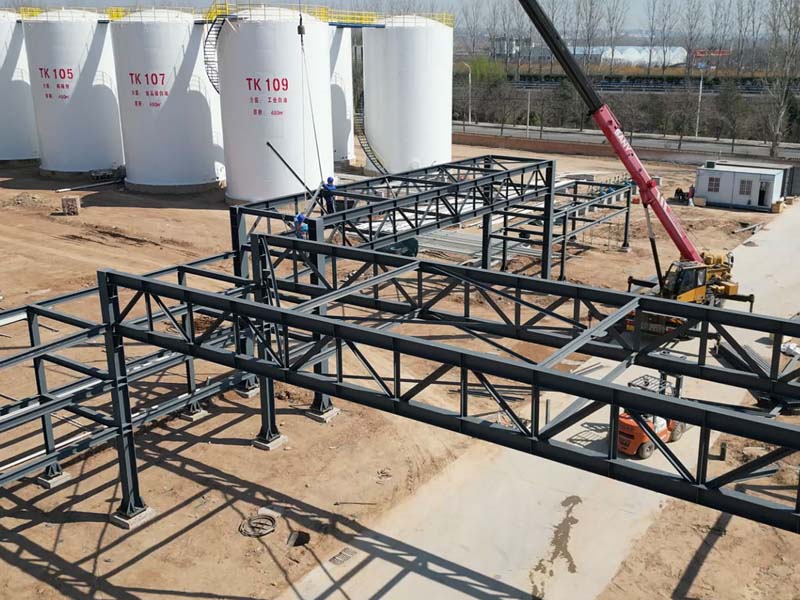
We usually tell clients that a pipe rack is not just a steel frame. It is a shared corridor for several disciplines. Process piping wants space. Cable trays want a clean route. Operators need access. Maintenance teams need headroom. Supports need the right position. Platforms must not block nozzles or interfere with line routing. Once you look at a pipe rack this way, you stop judging it by weight alone.
This is also why many pipe rack problems do not come from “big errors.” They come from many small decisions that do not fit together well. A late piping revision adds a line. An electrical team changes tray load. A support location moves. A platform opening shifts. Each change looks manageable on its own. But together they can make the rack crowded, awkward, and hard to install.
We have seen factory deviations that looked minor on paper become painful on site. A few millimeters in one bay may not matter much. A few millimeters repeated across several bays and levels can turn into bolt mismatch, blocked access, or extra field welding.
| Pipe Rack Part | Main Job | What Can Go Wrong |
|---|---|---|
| Columns | Carry vertical loads to foundation | Alignment issues during erection |
| Beams | Support pipes, trays, and platforms | Accumulated level deviation |
| Cantilever arms | Extend support outside main frame | Clash with piping or trays |
| Bracing | Keep the frame stable | Block access if poorly placed |
| Platforms and walkways | Support operation and maintenance | Interfere with nozzles or supports |
| Ladders | Provide access between levels | Wrong direction or poor clearance |
In simple words, a pipe rack is often the place where different systems are forced to live together. That is why it deserves more respect than people first assume.
What Is an Equipment Support Structure?
Equipment support structures look smaller in many cases, so buyers sometimes assume they are easier. We would be careful with that assumption. Smaller steel does not always mean simpler work.
An equipment support structure is a steel support built for vessels, air coolers, pumps, exchangers, skids, tanks, filters, package units, and similar equipment. It must be designed and fabricated for concentrated loads, vibration resistance, anchor bolt accuracy, nozzle orientation, and installation sequence compatibility.
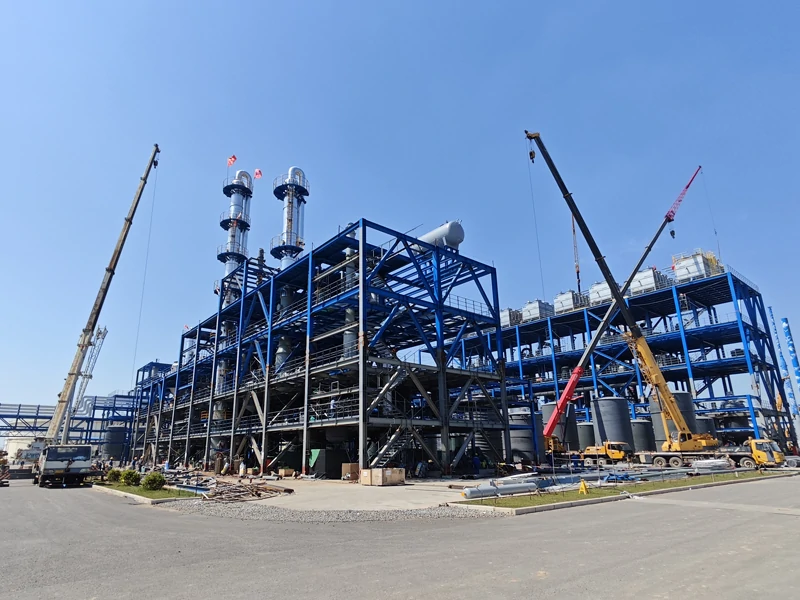
From what we have seen, equipment supports ask for a different kind of precision. A pipe rack may tolerate certain small adjustments. An equipment support often will not. If the top level is wrong, the equipment may not sit correctly. If the anchor bolt hole group is off, installation becomes a fight. If the support frame does not respect the nozzle direction, piping will suffer later.
This is one point that many buyers underestimate. The value of an equipment support is not that the steel can be fabricated. Most factories can fabricate steel. The value is whether the equipment can be installed on the first attempt without a chain of corrections, delays, and excuses. That is where good fabrication really shows its worth.
We have seen projects where the support itself looked clean and well-made in the yard, but once the equipment arrived, the fit was poor. Then everyone started losing time. The steel team blamed the equipment data. The site team blamed the fabrication. The schedule paid the price.
| Equipment Type | Main Structural Concern | Why It Matters |
|---|---|---|
| Vessels | Concentrated vertical load | Base and support levels must match |
| Air coolers | Vibration and wide framing | Stability and geometry are critical |
| Pumps | Dynamic load and vibration | Poor support can affect operation |
| Exchangers | Nozzle and maintenance access | Layout must stay workable |
| Skids and package units | Anchor and interface accuracy | Fast installation depends on fit |
| Tanks and filters | Base support and orientation | Small misalignment can spread downstream |
In our view, equipment support fabrication is not judged by how it looks before shipping. It is judged by how little drama it creates on site.
Why Does Fabrication Quality Matter More Than Many Buyers Expect?
Buyers often compare steel grade, unit price, coating cost, and delivery time. We understand that. These are visible items, and they are easy to put into a comparison sheet. But the biggest project cost is often hidden somewhere else.
Fabrication quality affects dimensional fit, coating life, erection speed, and total installed cost. Small shop errors can create major site problems such as bolt mismatch, base plate seating issues, field welding, coating damage, and schedule loss.
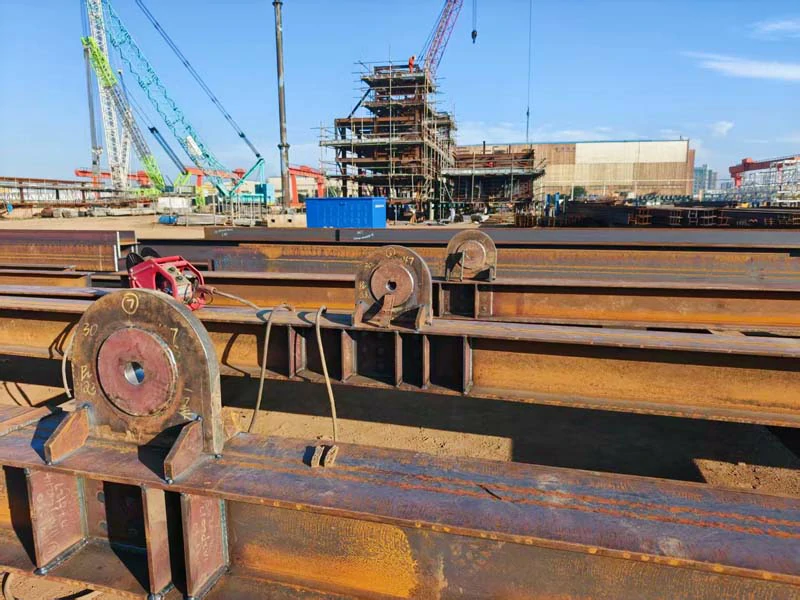
We have learned this lesson many times. In the shop, a 1 to 3 mm deviation may not look serious. On site, across several connections and levels, that same deviation can become real trouble. Bolt holes stop matching. Base plates do not sit cleanly. Handrails clash with piping. Platforms interfere with nozzles. Then the field team starts cutting, welding, grinding, and waiting.
And site cost is never small. One more day on site means more crane time, more labor, more supervision, more scaffolding, and more project stress. On overseas work, that cost can rise even faster.
Coating is another area where expectations and reality often do not match. Many buyers ask which paint system is used. Fewer ask about surface preparation, edge treatment, weld spatter cleaning, DFT consistency, holiday repair, or packing protection. But coating life depends on all of these together. A structure may leave the workshop looking fine and still arrive with damage or begin rusting too early.
We also see hidden schedule risk in poor detailing. Reversed plates, missing lugs, vague shipping marks, and bad split logic all seem like small things. They are not. They interrupt installation rhythm, and once that rhythm breaks, productivity drops fast.
| Hidden Fabrication Issue | What Happens Later | Typical Result |
|---|---|---|
| Dimensional inaccuracy | Holes or supports do not line up | Site rework and delay |
| Weak coating control | Paint damage or early rust | Maintenance and dispute |
| Poor detailing | Wrong orientation or missing interfaces | Slow installation |
| Confusing marking | Hard to find or identify members | Erection inefficiency |
| Bad packing logic | Early-use parts buried in shipment | Crew waiting on site |
If we had to put it simply, low fabrication quality almost never stays inside the workshop. It always travels to the site, and site problems are much more expensive.
What Should Be Confirmed Before Fabrication Starts?
A surprising number of steel problems begin before cutting, welding, or painting. We have seen many cases where the root cause was weak input control, not weak workmanship.
Before fabrication starts, we should confirm design basis, code requirements, actual loads, equipment data, support loads, revision status, connection details, and transport limits. Early review helps avoid building steel that is correct to the wrong information.
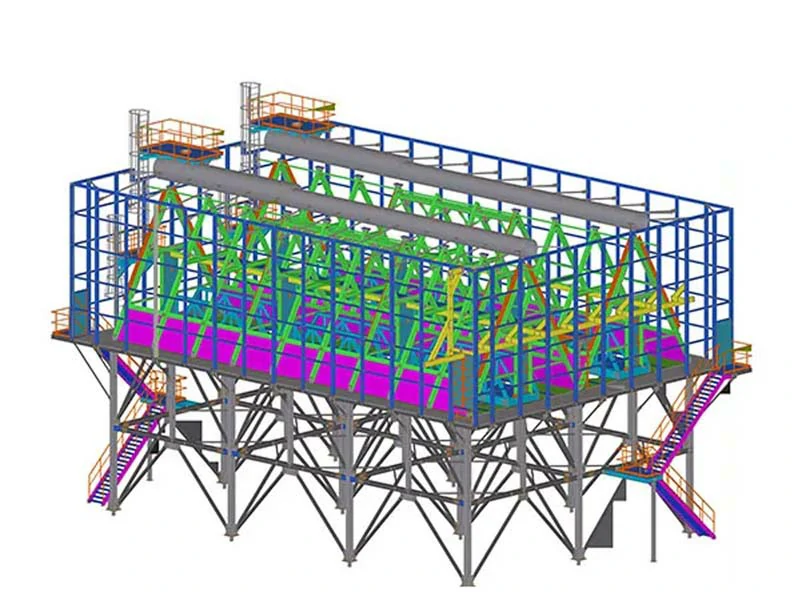
We always start with the design basis. That means checking codes, load assumptions, wind and seismic data, thermal movement, fireproofing needs, corrosion assumptions, and vendor information. In petrochemical work, late changes are normal. New piping gets added. Cable tray weights are updated. Equipment vendor loads change. Maintenance criteria increase. None of this is rare.
The real danger is when these changes do not flow cleanly into detailing and fabrication. If revision control is weak, a shop may produce steel exactly as drawn, but from an old issue. That is one of the most frustrating failures in project work because the steel can look “correct” and still be wrong.
Connection design also deserves more attention than it often gets. Good connection detailing affects fabrication ease, erection speed, bolting space, and future maintenance access. A capable supplier does not only copy the drawing. A capable supplier asks whether the connection can be improved for installation.
Transport planning matters just as much, especially for export work. Some suppliers split structures in the way that saves them labor in the factory. Experienced suppliers split them in the way that makes transport safer and site assembly easier. Those are not always the same thing.
| Pre-Fabrication Check | Why We Check It | Common Risk If Missed |
|---|---|---|
| Code and design basis | Confirms correct project rules | Wrong design assumptions |
| Load data | Ensures frame supports actual service | Underdesigned or mismatched steel |
| Equipment vendor data | Aligns support with real equipment | Fit-up and nozzle problems |
| Revision control | Keeps shop on latest issue | Fabrication to old drawings |
| Connection details | Improves erection and access | Slow bolting or site welding |
| Transport limits | Matches shipping conditions | Over-size pieces or risky splits |
Our practical advice is simple. Spend more time before fabrication, and you will spend less time explaining problems later.
How Does Fabrication Workflow Affect Final Project Results?
When people hear “fabrication quality,” they often think about welding first. Welding matters, of course. But from our side, quality is the result of the whole chain, not one step.
Fabrication quality depends on the full workflow: drawing review, material receiving, cutting, fit-up, welding, dimensional inspection, surface preparation, coating, trial assembly when needed, and packing for shipment. A weak step anywhere in the chain can damage the final result.
We usually judge a fabricator by process discipline. Good shops review drawings carefully before work starts. They check base plate hole direction, platform openings, top elevations, grating support details, and possible clashes. That kind of review is not glamorous, but it saves real money.
Material receiving is another quiet but important step. If plates arrive warped, if sections are twisted, or if grade identification is weak, the trouble has already begun. Good fabrication gets much harder when raw material control is poor.
Then comes cutting, marking, and fit-up. We pay special attention to orientation control here. Pipe rack and equipment support pieces are often very directional. A small bracket or stiffener in the wrong direction can create a major site interface issue. We would never rely only on workers remembering by experience. The system has to make orientation clear.
Welding also needs to be viewed in a broader way. A nice NDT report does not always mean a good member. We want proper WPS control, managed gaps, sensible weld sequence, and distortion control. The final geometry matters just as much as internal weld soundness.
Surface preparation and coating deserve the same seriousness. Sharp edges, weld spatter, dirty surfaces, and poorly treated repair zones can shorten coating life quickly. We have seen this more times than we would like.
| Fabrication Step | What We Focus On | Why It Matters |
|---|---|---|
| Drawing review | Interface details and approval status | Prevents repeated errors |
| Material receiving | MTC, heat number, straightness, damage | Supports traceability and fit |
| Cutting and marking | Accuracy and part identification | Reduces mismatch risk |
| Fit-up | Alignment and orientation | Prevents wrong assembly |
| Welding | Procedure and distortion control | Protects geometry and strength |
| Dimensional inspection | Levels, hole spacing, projections | Critical for site fit-up |
| Surface preparation | Cleanliness and edge condition | Supports coating life |
| Painting or galvanizing | DFT, curing, repair quality | Improves durability |
| Packing and shipping | Marking and sequence logic | Helps smooth erection |
If we are honest, many serious site problems are not caused by one dramatic mistake. They are caused by small weaknesses at several steps that stack up.
How Should Buyers Evaluate a Fabricator?
Price matters. We all know that. But in our experience, buyers who focus only on price often end up paying more somewhere else. The trick is to judge whether the supplier is reducing project risk or quietly moving it downstream.
We believe buyers should evaluate a fabricator by engineering ability, manufacturing control, QC discipline, traceability, export experience, communication speed, and problem prevention mindset. A strong supplier does more than make steel. A strong supplier helps the project avoid trouble.
We usually begin with engineering capability. Can the supplier review constructability? Can they spot likely clashes? Can they optimize split logic and connection details? That matters because many steel problems can be prevented before production starts.
Then we look at manufacturing capability. Does the shop have CNC cutting and drilling? Does it have proper fit-up control, qualified welders, blasting and coating facilities, and enough handling equipment for larger members? These are not just checklist items. They tell us whether the supplier can deliver consistently or only under ideal conditions.
The quality system also has to be real. We look for traceability, inspection discipline, calibrated tools, document control, and closed-loop corrective action. We prefer to see sample QC records, not just framed certificates on the wall.
Communication is often underestimated, but we would say it is one of the clearest signs of project pain ahead. A supplier may fabricate well and still become difficult if technical clarifications move slowly, revisions are not managed tightly, or document submission is chaotic.
| Evaluation Area | What We Like to See | Warning Sign |
|---|---|---|
| Engineering review | Constructability and clash awareness | Blind production from drawings only |
| Manufacturing | Stable equipment and workflow | Limited control under pressure |
| Quality system | Traceability and usable records | Paper system with weak execution |
| Project delivery | Export packing and inspection support | No real experience with project logistics |
| Communication | Fast and clear response | Slow clarification and revision confusion |
If we had to give one rule from experience, it would be this: a supplier should make your site work easier, not harder. If they cannot do that, the “cheap” price is often not cheap at all.
Conclusion
We see pipe racks and equipment support structures as delivery tools, not just steel products. When they are designed and fabricated well, the whole project moves with less risk, less rework, and much more confidence.