Reactor Support Structures: Why Are They So Challenging in Industrial Projects?
Reactor support structures are the backbone of petrochemical, refining, and fertilizer plants—any error here can set off a costly chain reaction that slows the entire project and exposes safety risks.
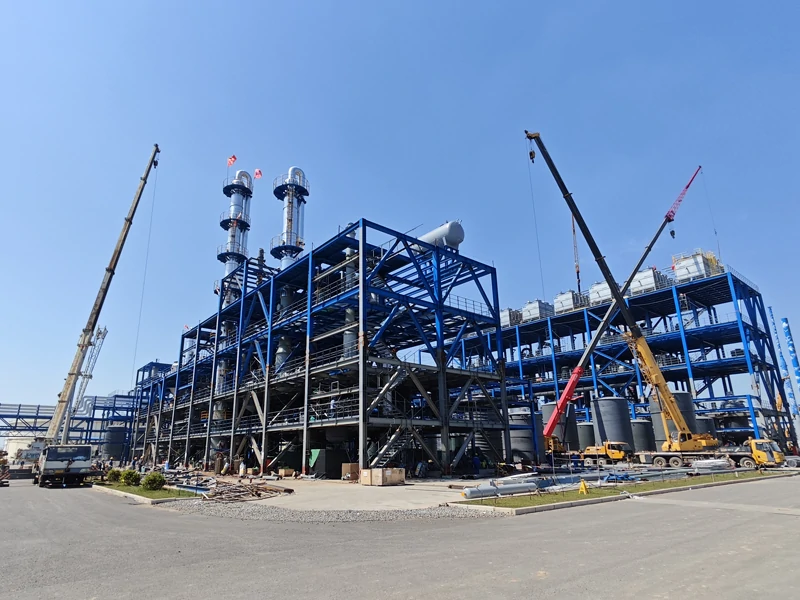
Reactor support structures are uniquely engineered steel frameworks that anchor heavy reactors, piping, and access systems. Unlike typical beams and columns you find in basic warehouses, these structures demand tight control over load, fit, and movement. They have to survive stress from heavy equipment, hot and cold cycles, wind, operations, and even earthquakes—all while providing safe access for maintenance crews.
I often say: if your supports are off by even a few millimeters, your entire plant can suffer days or even weeks of delay. Let’s break down what really makes these structures so tough to get right—and how experience can save you from the most common pitfalls.
What Actually Makes Reactor Support Structures Different from Standard Steelwork?
Put simply, reactor support structures take on loads and challenges that standard industrial steel just does not face. Every connection, platform, and anchor must work in sync to avoid fit-up surprises at site.
Reactor support structures are custom-built to manage the massive, ever-changing loads from process vessels, piping, and platforms. They must predict and manage the way metal stretches and moves as reactors heat and cool. And with so many interfaces—anchor bolts, platform elevations, pipe supports—a misstep anywhere can leave crews unable to connect piping, align nozzles, or reach critical valves. Unlike building a warehouse, you cannot “just make it work” with filler plates and site welds.
Let’s compare their main features:
| Feature | Standard Steelwork | Reactor Support Structures |
|---|---|---|
| Equipment Loads | Uniform, low | Highly concentrated, very heavy |
| Thermal Movement | Usually minor | Significant; must be designed for |
| Interface Points | Simple connections | Must match exact nozzles, bolts |
| Fabrication Tolerances | Moderate tolerance allowed | Tight, strict—often <3mm |
| Welding Demands | Basic joints | Heavy, full-penetration welds |
| Coordination Required | Minimal | High: piping, mechanical teams |
When we started fabricating these years ago, I quickly learned that cost-cutting or using generic building standards spells disaster. It really takes a mature partnership between engineer, fabricator, and installer.
How Do Heavy Loads and Unpredictable Forces Get Managed?
We’ve seen that weight is only part of the story. True risk comes from understanding load combinations—operational weight, water-filled testing, attached piping, wind, and even earthquakes.
It’s a mistake to size your support on the “nameplate” reactor weight alone. In my experience, no two projects have the same load case, so we always insist on reviewing the actual load matrix. For example, during hydrotest, your vessel could weigh almost double its operating weight, while wind or seismic events create overturning forces most people overlook.
| Load Type | Description | Why It Matters |
|---|---|---|
| Operating Load | Reactor, catalyst, insulation | Everyday service; baseline |
| Hydrotest Load | Vessel filled with water | Maximum vertical/lateral force |
| Attachments | Piping, platforms, valves | Extra weight not always listed |
| Upset/Emergency | Process upset or vibration | Cyclic load; risk of fatigue |
| Seismic/Wind | Site-specific, unpredictable | High lateral/shear force |
We always ask for the worst-case scenario and check every load path. I’ve had clients who relied on “safe” numbers, only to rebuild their supports after the fact—a painful, expensive lesson. You cannot shortcut this process.
Handling Thermal Expansion: Why Movement Is a Hidden Danger
In high temperature projects, steel wants to move. If you do not allow for expansion, something will fail—often silently—until the first startup or temperature swing.
Reactors and their piping can grow or contract by centimeters as temperature cycles. Supports must let this happen smoothly; otherwise, the stress shifts to nozzle welds, anchor bolts, or critical piping joints. I worked on a job where minor thermal growth—unaccounted for in the support design—crushed pipe gaskets and cracked a nozzle. It took weeks to investigate and delayed the whole project handover.
Thermal movement is a classic example of a “hidden problem.” You won’t see it at the design table or even during a cold site walk. Only experience, and close teamwork between structural, mechanical, and piping engineers, solves this. We often use slotted or guided connections, special base plates, and even sliding shoes. The key is to predict movement—and prove the design handles it right from the start.
Why Is Dimensional Accuracy So Critical—And So Hard To Achieve?
We’ve all had that nightmare: on site, after months of planning, things just don’t line up. For reactor supports, even a centimeter off can make platforms unusable and foundation bolts impossible to fit.
The reality is that fabrication is not perfect—every millimeter of error adds up from cutting, welding, drilling, and fitting. On the floor, we live this every day. That’s why we use laser trackers or total station systems for layout and pre-assemble complex joints right in our shop. We also insist on marking and recording every match-point and interface during assembly.
A simple summary of where tolerances matter most:
| Critical Dimension | Why It's Important | How We Check |
|---|---|---|
| Anchor Bolt Holes | Must match site foundation | Layout with template, laser |
| Base Plate Flatness | Ensures even support/load | Precision machining, level gauge |
| Vertical Plumbness | Tall supports, stability | Survey tools, plumb line check |
| Platform Elevations | Operator access, nozzle alignment | Shop trial fit-up |
| Splice Joint Fit | Safe lifting/erection | Pre-fit in workshop |
I remember a project where just two missed bolt holes, 12mm off, led to site re-drilling—delaying crane usage and pushing everything back. That is when accuracy shifts from “nice to have” to “critical path.”
How Do We Guarantee Welding Quality That Stands Up to Real-World Stress?
Reactor supports see some of the thickest plates and biggest welds in the industry. One missed flaw, and you could face not just repairs, but outright replacement of the structure.
We take welding as seriously as any process plant owner does. Our shop starts every major project with a full procedure qualification (WPS and PQR), followed by welder testing specific to thickness, position, and weld type. For many joints, full penetration is required. We use phased-array UT, radiography, and MPI—not just because it’s required, but because later rework costs ten times more than shop inspection.
If you want a quick sense of a fabricator’s reliability, ask these four questions:
- Can you provide a full welding log by welder and joint number?
- What NDT percentage is standard for reactor supports in your shop?
- How do you prevent and record repair welds and distortion?
- Can I visit while you perform a multipass, full-penetration weld?
I’ve seen too many suppliers “hide” weak practice behind low tonnage rates—until rejected welds force service calls and NDT retesting at site, hurting everyone’s bottom line.
What Special Coating and Surface Protections Do Reactor Areas Require?
Standard shop paint might look fine at delivery, but in a real plant, it won’t last six months. Weather, chemicals, and high temperatures push coatings to their limit.
Our philosophy is to treat coating as a separate craft—starting from abrasive blasting, then working up through specialized primers and finish coats. In some plants, we use high-build epoxy systems, zinc-rich primers, or intumescent fireproofing, depending on risks. The process must be fully documented—at every stage, we check blast cleanliness, measure dry film thickness, inspect edges, and patch holidays.
Key coating factors we track:
| Coating Step | Outcome Needed |
|---|---|
| Surface Profile | Adhesion and primer performance |
| Primer Application | Base protection, prevents flash rust |
| Intermediate Coat | Builds chemical/UV resistance |
| Topcoat/Finish | Color, weather, fire performance |
| Quality Record | Traceability for warranty and future fix |
I cannot count the projects where “hidden” savings on blast grade or DFT ended up doubling my site maintenance time. Always ask for coating system sheets, inspection logs, and batch reports.
The Real Lessons on Selecting a Supplier—And Common Mistakes I’ve Seen
Choosing the cheapest steel fabricator is a gamble. The difference between a general fabricator and a true process-industry supplier is what you discover on the hardest day of your project, not on the first day.
Price is just one factor. We learned quickly to judge suppliers on their willingness (and ability) to challenge unclear specifications, coordinate with other trades, and provide proof of quality through documentation and test certificates.
Common mistakes:
| Mistake | How It Hurts the Project |
|---|---|
| Buying by ton price only | Hidden costs emerge, site rework |
| Vague/Inexact RFQs | Many “surprises” after award |
| Ignoring fabrication track record | Warehouse experience ≠ process plant |
| Underestimating QC & documentation | Delays final handover, customs |
In one of our EPC jobs, a “bargain” supplier shipped structure that fit the drawings—but not the process equipment. That led to thousands in air-freight repairs and months added to the schedule. Since then, we weigh all offers not just for price, but for completeness, clarity, and accountability.
Conclusion
Reactor support structures demand deep experience, painstaking accuracy, and constant communication between trades. Every detail counts. Cutting corners may shrink the upfront quote, but it risks the plant, the project, and your credibility. Work with people who understand the real challenges—because you cannot afford to learn these lessons the hard way.