Big capacity claims comfort buyers. Hidden bottlenecks burn money. Meichen Steel Structures turn numbers into steady flow by sizing real constraints, freezing designs early, and proving the door-to-door path for every piece.
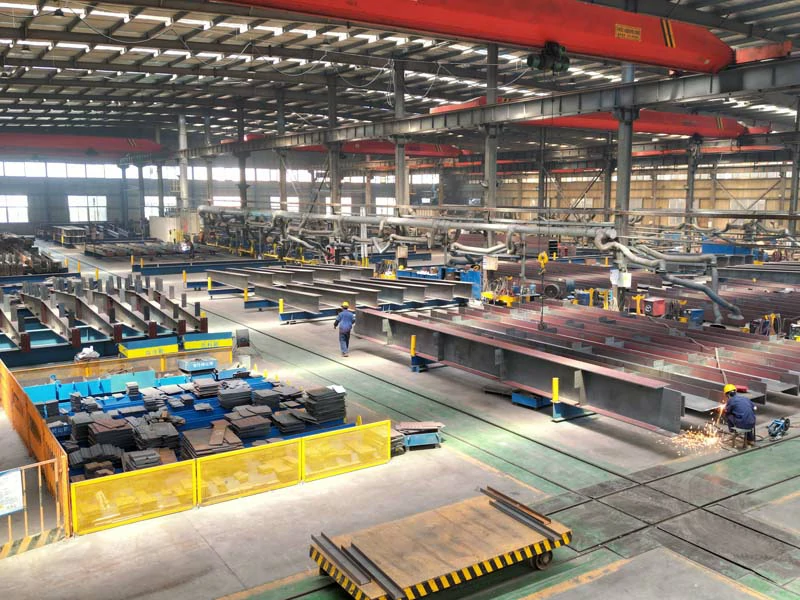
50,000 t/year equals about 4,200 t/month and 200 t/day, but only with mix control and fast blast/paint. We publish rates by product family, set takt at paint/galv, cap WIP, and tie drawings to shop load.
You want predictability, not slogans. We show the math, the line-of-balance, and the audit trail from steel mill to site bolt-up. We share the exact questions that expose weak links fast. We learned them on real refinery, mining, and power jobs.
How do we convert 50,000 t/year into daily, shift-level flow?
Big annual targets hide risk. Mix swings and curing queues break plans. We protect flow by planning to bottlenecks, not averages, and by locking the daily product mix.
Daily throughput depends on the slowest step.1 We set takt on blast and paint, cap WIP, size booths to the peak week, and publish capacity by family and shift.
Throughput math, mix rules, and WIP control
We start with hours. 50,000 t/year needs about 700–1,000 shop hours per day across cut, drill, fit, weld, blast, coat, and load. We never load to the average. We load to the peak week, because paint and galvanizing set the pace2. Simple racks move fast. Box girders and thick plate nodes move slow. We lock a daily mix window before we accept dates. On a 12,000 t pipe-rack job, we gained three weeks by feeding booths like a clock and by limiting rework at blast.
| Family | Typical rate per line | Notes |
|---|---|---|
| H/I beams | 8–12 t/hour | Minimal prep, fast coating |
| Box/plate girders | 2–4 t/hour | Heavy weld, longer cure |
| Trusses/nodes | 3–5 t/hour | Complex fit, more NDT |
| Stairs/handrails | 1–2 t/hour | High part count |
Daily plan example
We plan 200 t/day as two shifts. Shift A pushes rolled sections and small modules. Shift B clears heavy plate and long pieces. We cap blast and paint queues to less than one day of WIP. We measure booth takt (45–60 minutes/load) and log airflow, temperature, humidity, and profile.
What equipment and handling prove heavy-industrial readiness?
Weak cranes, short booths, or slow bevels create chaos. We size machines and paths to your heaviest and longest pieces. We simulate the travel from stockyard to truck.
We match grade and thickness to the right cut/edge process. We verify single-piece limits through doors, booths, kettles, and transport. We use jigs and laser checks for repeat accuracy.
Materials, machines, and single-piece path
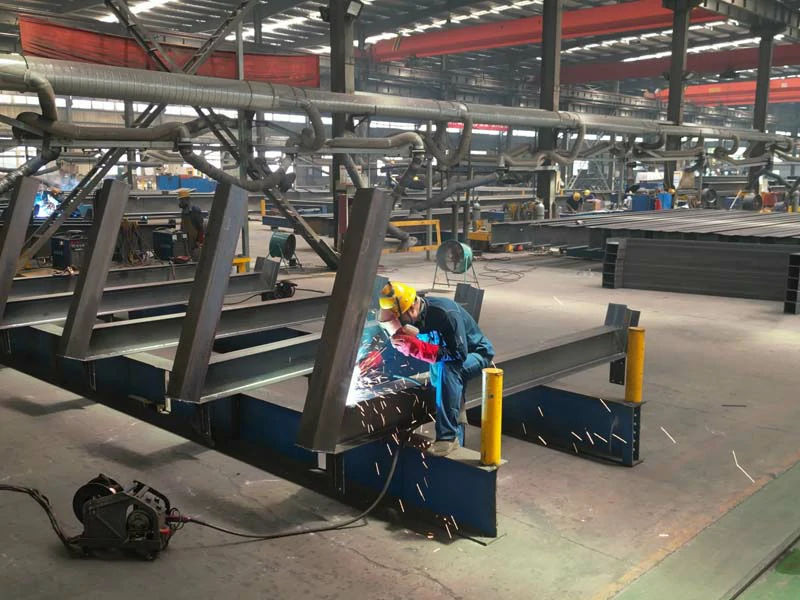
We process S355/S460, Q345/Q460, A36/A572/A709, and weathering steel. We cut plate up to 120 mm with oxy-fuel and HD plasma. We bevel automatically for full-pen welds. We roll plates up to 3 m wide by 40 mm thick. We bend sections to common radii for racks and bridges. We handle 30–60 t pieces and up to 30 m length using tandem cranes. We blast to Sa 2.5 with a 50–75 μm profile3 and coat in enclosed booths with climate control. We run CNC beam lines with DSTV/NC direct from Tekla. We fit with jigs and confirm with laser tracking. After one door-clearance scare years ago, we now do a “piece travel” check on day one.
| Capability | Spec | What to verify |
|---|---|---|
| Plate cutting | To 120 mm | Bevel quality, heat input |
| Rolling/bending | 3 m x 40 mm | Min radius vs design |
| Piece limit | 60 t, 30 m | Door/booth/kettle fit |
| Accuracy | Holes ±1 mm | Jig plan and laser logs |
| Coating | ISO 12944 C5-M4 | DFT and climate logs |
Handling details that save time
We place removable saddles and balance points at the detailing stage. We design lifting lugs for repeated handling. We tag every component with QR codes that link MTC, NDT, and coating records. We plan the galvanizing dip angle and we detail vents and drains from standard libraries.
Which quality and NDT controls keep welds and documents audit-proof?
Heavy steel fails when paperwork lags the weld. Auditors dig deep. We keep code, people, and records in lockstep, so an audit feels like a formality.
We run ISO 9001/14001/450015 and EN 1090-2 EXC3/46 or AISC. We hold ISO 3834-27. We tie heat numbers to piece marks, NDT, and coating logs, then deliver a clean MDR.
Codes, procedures, and traceability in practice
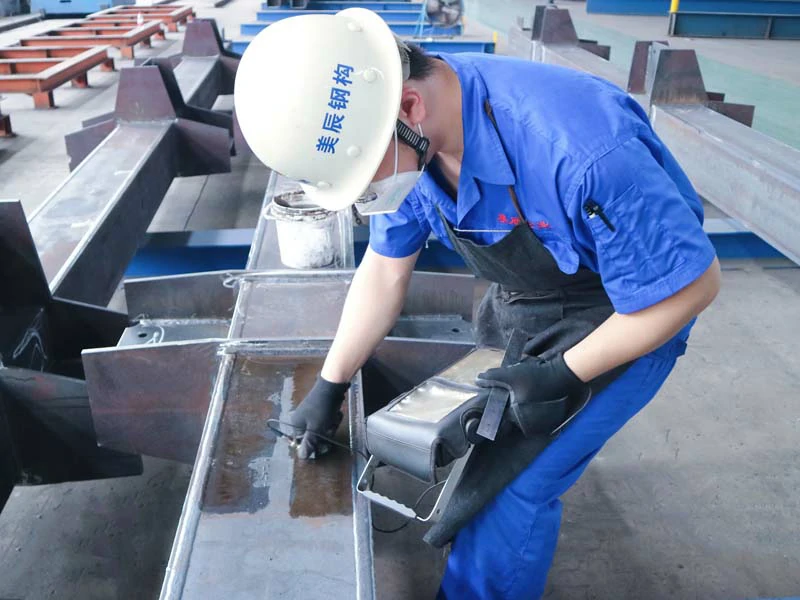
We qualify welds to AWS D1.1/D1.5 and ASME IX/EN ISO 15614.8 We keep WPS/PQR/WPQ packs ready for thick-section, full-pen welds in S460/Q460 with low-temperature impact values. We plan preheat, interpass, heat input, and hydrogen bake-out for high-strength steels.9 We set NDT by risk: UT/RT on full-pen butt welds, MT/PT for fillets and attachments, and phased-array UT where geometry is complex10. We log DFT for each coat, check salts, and run holiday tests on zinc-rich primers. We align PFP specs and measure thickness consistently. We learned that a clean MDR cuts customs delays and site RFIs.
| Area | Standard | Proof we share |
|---|---|---|
| Welding | ISO 3834-2, AWS D1.1 | WPS/PQR/WPQ, heat logs |
| NDT | UT/RT/MT/PT | Maps, ratios, repairs <1% |
| Coating | ISO 12944 C5-M | DFT, profile, climate logs |
| Traceability | EN 10204 3.1 | Heat-to-piece linkage |
Repair prevention beats repair speed
We cut repairs by planning access for NDT, by sequencing welds to reduce distortion, and by using fixtures that hold repeat geometry. We stop over-blast, because it wastes paint and delays cure. We use profile gauges every shift and record the readings.
How do we protect schedule when the mix swings or weather hits?
Schedules slip at bottlenecks. The paint shop sets the pace. We size to peak, govern flow weekly, and keep maintenance off the critical path.
We split heavy plate and rolled-section streams, cap WIP, run weekly S&OP, and add shifts on bottlenecks. We schedule predictive maintenance on weekends. We keep dehumidified booths for wet seasons.
Line balance, S&OP, surge, and season plans
We plan two main streams: box/plate and rolled sections. We size shared blast and paint to the peak week, not the average. We run a weekly S&OP that links drawing release, material arrivals, and shop load. We limit WIP at blast and paint to visible slots. We use two to three shifts where takt demands it. We plan predictive maintenance on weekends. We keep pre-qualified partners for stairs and secondary steel and route overflow through fixed QA gates. We use dehumidified booths in monsoon seasons and winter-curing protocols in cold months. One booth stall can lose a week. We guard that heartbeat.
| Risk | Trigger | Mitigation |
|---|---|---|
| Paint queue spike | Mix swing | WIP caps, extra shift |
| Weather humidity | Seasonal | Dehumidified booths |
| Machine downtime | Wear | Weekend maintenance |
| Drawing slip | Late IFC | Release curve governance |
Lead-time framework we use
Detailing 6–10 weeks. Procurement 2–6 weeks. Fabrication and coating 8–24 weeks. Shipping 2–6 weeks export. We release sequences matched to erection areas to smooth site flow.
How does design-for-fabrication and modularization save months on site?
Late changes cost more in paint than in CAD. Field rework ruins lifts. We push work into the shop and keep lifts clean and repeatable.
We freeze connection families early, standardize plate thickness and bolt diameters, align splices to shop and transport limits, pre-assemble modules, and kit bolts by joint to match your lift plan.

Early choices, modules, and bolt strategy
We ask for early models, coating/PFP specs, and connection standards. We reduce plate and bolt variety. We align splice elevations with crane reach and road limits. We pre-assemble modules within transport envelopes, with pipe supports integrated where possible. We mark pieces with color codes and QR tags. We kit bolts by joint and seal kits against moisture. We lock bolt grades early (A325/A490 or 8.8/10.9) and confirm tensioning method. We manage hole strategy for galvanizing growth and site tolerance. We smooth edges and weld beads to help intumescent paint meet DFT. On one pipe-rack job, bolt kits cut lifts by 12 minutes each.
| Design choice | Shop impact | Site impact |
|---|---|---|
| Standard bolt families | Faster picking | Fewer misfits |
| Rationalized plates | Fewer NC edits | Cleaner QA |
| Splices at shop limits | Easier handling | Faster lifts |
| Shop PFP share | Stable DFT | Less weather risk |
Detailing rules that prevent rework
We prefer Tekla-native workflows. We enforce NC file handoff and model-based approvals. We add drain/vent holes in the model, not at the kettle. We place lifting lugs in the model with load cases checked.
What logistics and export controls prevent last-mile failure?
A perfect beam is useless if it cannot pass a door, a booth, a kettle, a bridge, or a crane hook. We plan that path on day one.
We validate transport envelopes, port cranes, and galvanizing bath size. We design repeat-lift lugs, pack seaworthy, and prepare clean customs documents tied to piece marks and HS codes.
Movement, packaging, customs, and ESG
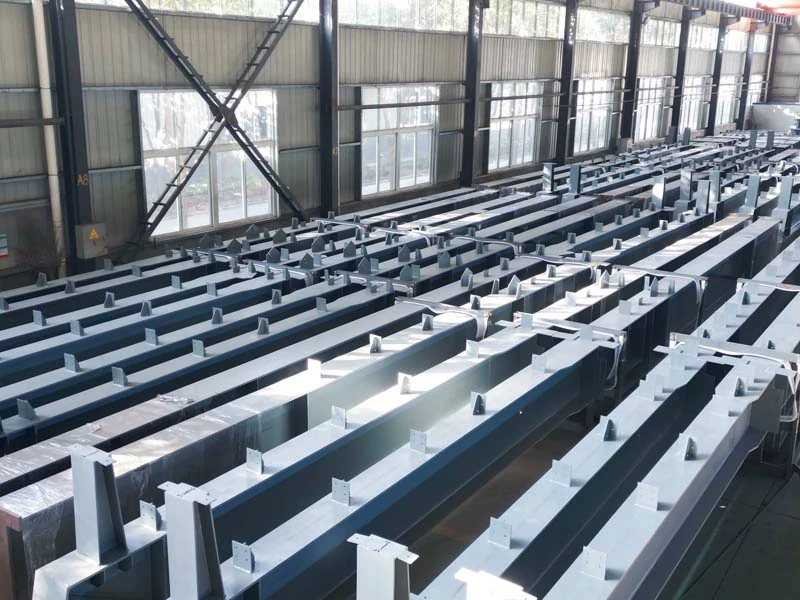
We check max length, width, height, and weight at bid stage. We simulate the route through doors, booths, galvanizing, and trucks. We design lifting lugs for repeated handling. We use saddles, spacers, shrink-wrap on machined faces, and desiccants. We select corrosion inhibitors that match your paint and PFP. We prepare HS codes, packing lists by piece mark, fumigation certificates, and origin and recycled content declarations. We report EAF shares and provide EPDs when available. We control VOCs in booths, recover zinc, and manage acid baths. We publish TRIR/LTI and run fume extraction at weld bays.
| Constraint | Check | Evidence |
|---|---|---|
| Galvanizing bath | Dip plan fit | L/W/D and vent details |
| Port crane limit | Max lift | Route and lift study |
| Transport route | Height/width | Survey and permits |
| Customs | Clean packs | Pre-audit of docs |
Small details that prevent big delays
We color-code loads by erection area. We load in lift order. We protect contact faces and mark no-paint areas. We include DFT and climate logs in packing sleeves, so inspectors clear loads fast.
Which cost levers and supplier questions cut risk before award?
Material drives cost. Changes after paint drive pain. Weak drawings drive RFIs. We de-risk price and time before we start.
We use index-linked steel clauses, pre-approved alternates, and early bolt orders. We freeze IFC and connection families early. We enforce Tekla-native NC handoff and ask hard questions on paint takt and OTIF.
Price structure, change control, and the hard questions
On heavy packages, 60–75% of cost is steel.11 We link price to indices and hedge when needed. We pre-approve alternates like S355J2 vs A572 Gr50 if codes allow. We freeze IFC, connections, and bolts early, because late changes cost 3–5x more in paint/galv than in detailing. We test suppliers with simple checks. We want booth counts, airflow, curing capacity, and seasonal controls. We want galvanizing bath size and standard vent details. We want blast profile logs. We want bolt lead plans. We want PQRs for thick S460 before award.
| Question | Why it matters | Good answer |
|---|---|---|
| Capacity by family? | Mix truth | Monthly, last 12 months |
| Paint/galv takt and WIP? | Schedule heartbeat | Takt map and WIP caps |
| Single-piece path? | Handling risk | End-to-end proof |
| NDT ratios and repairs? | Weld quality | <1% repairs |
| OTIF on >3,000 t jobs? | Delivery proof | >95% OTIF |
| Digital traceability? | Audit speed | Heat-to-piece logs |
Insider tips that pay back
The paint shop sets your schedule. Galvanizing bath length is a hard limit. Over-blast wastes paint and time. Bolt lead times bite. Drawing release makes or breaks the plan. We check these five first.
What lead times and outcomes should you expect on major packages?
Unclear expectations cause friction. Clear windows and sequence plans keep everyone calm. We share realistic ranges and we hold them with visible controls.
We plan detailing 6–10 weeks, procurement 2–6, fabrication/coating 8–24, shipping 2–6. We target OTIF above 95%, repairs below 1%, rework below 0.3%, and clean galvanized fits without reaming.
Windows, sequences, and benchmarks
We align sequences with erection areas and system priorities. We send a line-of-balance chart and a risk register with alternates. We flag surge plans for stairs and secondary steel. We design for bolt acceptance first-pass above 98% and DFT within ±10 μm bands. For a 10,000–15,000 t pipe-rack program, we target 5–7 months from IFC release, with rolling deliveries by area. We hold coating holidays below 1% of inspected surface.
| Phase | Typical window | What we share |
|---|---|---|
| Detailing/model | 6–10 weeks | Release curve and RFIs |
| Procurement | 2–6 weeks | Grade alternates and hedges |
| Fab/coating | 8–24 weeks | Line-of-balance and takt |
| Shipping/buffer | 2–6 weeks | Load plan by area |
Quick capacity check we can run now
Send tonnage by family, max piece length/weight, coating system, target windows, and codes. We will map a realistic throughput plan, show risks, and propose where we can save weeks.
Conclusion
True 50,000 t/year means controlled flow, not slogans. We size bottlenecks, publish mix rates, lock designs early, and prove audits. You get reliable tonnage, clean fits, and on-time lifts.
"(PDF) The theory of constraints as a manufacturing strategy", https://www.academia.edu/63540038/The_theory_of_constraints_as_a_manufacturing_strategy_a_case_study_in_a_small_manufacturing_company. Operations-management literature on the theory of constraints states that overall system throughput is governed by the capacity of the limiting or bottleneck operation. Evidence role: mechanism; source type: paper. Supports: Daily throughput depends on the slowest step in the fabrication process.. Scope note: This supports the production-planning principle generally, not the specific capacity of the named factory. ↩
"Venting and Drainage Hole Design for Square and Circular ...", https://www.hotdipgalvanizing.com/technical-resources/venting-and-drainage-hole-design-for-square-and-circular-tubular-assemblies-in-hot-dip-galvanizing. Coating and galvanizing technical guidance describes process constraints such as surface preparation, application conditions, curing time, bath size, and drainage/venting requirements that can limit production flow. Evidence role: mechanism; source type: institution. Supports: Paint and galvanizing operations can determine the pace of steel fabrication work.. Scope note: This provides contextual support that finishing operations can become bottlenecks; it does not prove they are always the bottleneck in every fabrication shop. ↩
"Surface Prep Standards - A Quick Summary", https://blogs.ampp.org/protectperform/surface-prep-standards-a-quick-summary. Surface-preparation standards define Sa 2.5 as very thorough blast-cleaning, and coating guidance commonly specifies surface-profile ranges that affect coating adhesion and performance. Evidence role: definition; source type: institution. Supports: Sa 2.5 blast cleaning and a controlled 50–75 μm profile are recognized surface-preparation criteria for protective coating work.. Scope note: The source would verify the meaning and relevance of Sa 2.5 and profile control, not that the factory consistently achieves the stated profile. ↩
"Evaluation of Protective Coatings for High-Corrosivity Category ...", https://pmc.ncbi.nlm.nih.gov/articles/PMC6515464/. ISO 12944 classifies atmospheric corrosivity categories for protective paint systems on steel structures, including high-marine C5 environments and coating-system durability considerations. Evidence role: definition; source type: institution. Supports: ISO 12944 C5-M is an established corrosion-protection classification for coated steel structures in severe marine-type environments.. Scope note: This supports the standard’s relevance to corrosion protection; it does not validate a particular coating system or inspection result. ↩
"ISO 9001 explained", https://www.iso.org/home/insights-news/resources/iso-9001-explained.html. The ISO 9001, ISO 14001, and ISO 45001 standards define management-system requirements for quality, environmental management, and occupational health and safety, respectively. Evidence role: definition; source type: institution. Supports: ISO 9001, ISO 14001, and ISO 45001 correspond to quality, environmental, and occupational health and safety management systems.. Scope note: This verifies the scope of the standards, not the company’s certification status or audit performance. ↩
"Specifying the right Execution Class", https://www.newsteelconstruction.com/wp/specifying-the-right-execution-class/. EN 1090-2 specifies technical requirements for execution of steel structures and uses execution classes, including EXC3 and EXC4, to scale quality and control requirements to structural risk. Evidence role: definition; source type: institution. Supports: EN 1090-2 EXC3/4 refers to higher execution-class requirements for steel structures.. Scope note: This supports the meaning of EN 1090-2 execution classes generally; it does not show that a particular project requires EXC3 or EXC4. ↩
"ISO 3834-2:2021 - Quality requirements for fusion welding ...", https://www.iso.org/standard/81651.html. ISO 3834-2 sets comprehensive quality requirements for fusion welding of metallic materials, including control of welding procedures, personnel, inspection, and records. Evidence role: definition; source type: institution. Supports: ISO 3834-2 is a recognized comprehensive welding-quality standard for metallic materials.. Scope note: This verifies the standard’s scope; it does not prove that any specific welds or documents conform to it. ↩
"AWS D1.1: Structural Welding Code--Steel", https://law.resource.org/pub/us/cfr/ibr/003/aws.d1.1.2000.pdf. AWS D1.1 and D1.5 address structural and bridge welding, while ASME Section IX and EN ISO 15614 define qualification of welding procedures for pressure-related or metallic-material welding applications. Evidence role: definition; source type: institution. Supports: AWS D1.1/D1.5, ASME IX, and EN ISO 15614 are recognized welding codes or procedure-qualification standards.. Scope note: This supports the relevance of the cited codes and qualification standards, not project-specific acceptance of any procedure. ↩
"Field Weldability And Hydrogen Assisted Cracking In Hsla ...", https://preserve.lehigh.edu/system/files/derivatives/coverpage/426051.pdf. Welding metallurgy guidance identifies preheat, interpass-temperature control, heat-input control, and hydrogen management as measures used to reduce cracking risk in welds, especially in higher-strength steels. Evidence role: mechanism; source type: education. Supports: Preheat, interpass, heat-input, and hydrogen controls are important for welding high-strength steels.. Scope note: The source would support the metallurgical rationale, not the adequacy of any specific project’s welding parameters. ↩
"What is Phased Array Ultrasonic Testing (PAUT) and How Does it ...", https://www.twi-global.com/technical-knowledge/faqs/what-is-phased-array-ultrasonic-testing. Nondestructive-testing references describe ultrasonic and radiographic testing as volumetric methods for internal weld discontinuities, while magnetic-particle and penetrant testing are surface methods; phased-array ultrasonic testing is used for more detailed ultrasonic inspection of complex geometries. Evidence role: definition; source type: education. Supports: Different NDT methods are used for different weld types and discontinuity-detection needs.. Scope note: This supports the general suitability of the NDT methods, not the inspection plan required for any particular code or joint. ↩
"An Analytical Method to Estimate the Total Installed Cost of ...", https://stacks.stanford.edu/file/druid:yb503ws4475/TR220.pdf. Construction-cost and structural-steel estimating references identify material steel as a major cost component in fabricated structural steel packages, often dominating total package cost relative to labor, coating, and logistics. Evidence role: statistic; source type: research. Supports: Steel material commonly represents the largest share of cost in heavy structural steel packages, plausibly in the 60–75% range.. Scope note: The 60–75% range is likely project- and market-dependent; a source may support the general magnitude rather than the exact range for all heavy packages. ↩