
Deadlines slip, costs climb, and audits bite. We lived that on a 5,000‑ton piperack. We turned it by moving work to industrialized partners and tightening our controls.
EPCs choose Chinese fabricators because the best shops mix scale, modular assembly, advanced NDE, and disciplined documentation1. That mix shortens schedules, reduces rework2, and delivers bolt‑up fits without trading quality or safety.
We will walk through what top shops do better, where time and money are saved, and which controls matter most. We will also share checklists we use in selection, execution, and handover so you can repeat the wins.
What do Chinese fabricators do better for complex steel work?
Tolerance drift, hidden weld defects, and site hot work create chaos. We saw crews shim for days. We stopped that by proving fit in the shop and shipping modules that install clean.
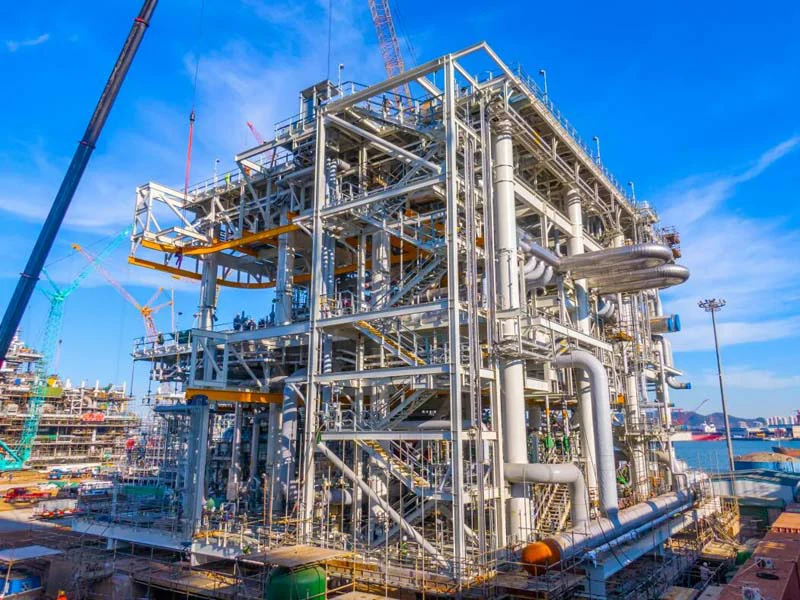
Top shops run integrated lines, build with big jigs, verify geometry with laser trackers, and trial‑assemble critical interfaces. They preinstall access and hardware, then coat under control. Modules arrive marked, dry, and ready. We match factory lines to our scope. For wide flange and box work, we want CNC saw‑drill lines, plate processors with beveling, and narrow‑gap SAW with automatic flux recovery. We check large datum jigs that hold within 2–3 mm/m. We ask for laser tracker checks on node geometry and splice faces3. We require shop trial assemblies on trusses, heavy nodes, and first‑of‑kind modules4. We watch torque checks for friction‑grip joints with calibrated tools. We look at blast and paint halls. We expect SA 2.5, profile 50–75 µm, heated cure, and DFT recorded by layer5. We use hot‑dip galvanizing only when vents, drains, and straightness control exist. We read the ITP like a contract. We need weld maps, welder continuity, WPS/PQR coverage, and 3.1 or 3.2 MTRs. We like QR traceability heat‑to‑part. This feels strict. It removes drama at site.
Shop capabilities and fit outcomes
| Capability | Typical setup | Target tolerance | Field result |
|---|---|---|---|
| CNC beam/plate lines | Saw‑drill, plasma, bevel | Hole position ±1.0 mm | Faster bolt‑up |
| Narrow‑gap SAW | Auto tracking, flux recovery | Heat input within WPS | Fewer repairs |
| Large jigs/fixtures | Datum frames, clamps | Straightness ≤3 mm/m | Minimal shimming |
| Laser tracker | FARO/Leica points | Node within ±2 mm | First‑time fit |
| Trial assembly | Bolt/torque checks | Slip test verified | No rework at height |
| Coating hall | SA 2.5, heated cure | DFT per layer ±10% | Fewer touch‑ups |
Where do EPCs gain schedule and cost advantages?
Time loss starts with design handoffs, plate waits, and bad packing. We lost weeks this way. We now bring the shop in early and plan the exit on day one.
Real gains come from DFMA reviews, early mill slots, capacity flex, and export discipline. You move hours offsite, you cut scaffolding and hot work6, and you land steel in erection order. We hold a DFMA session before IFC freeze7. We place splices at trailer lengths. We standardize hole sizes, slot rules, and connection families. We rationalize members to reduce unique cuts. This takes half a day. It saves weeks. We reserve heavy plate and Z‑plate rolling slots at bid. The bottleneck is the mill, not the shop. We saw 6–8 week plate lead times with slots, and 14–16 without8. We ask shops to flex capacity. A strong shop can add shifts or move bays to protect the path. We have seen throughput jump from 400 to 650 tons/week for four weeks. We front‑load logistics. We pre‑sling. We edge‑protect. We pack by erection sequence and color‑code with QR labels. We preload bolt kits with certs into each pack. We pre‑clear export paperwork. Customs flows. Laydown stays clean. Rework drops, so the cost per ton drops without cutting quality.
Schedule and cost levers we use
| Lever | Early action | Typical gain | Field pain avoided |
|---|---|---|---|
| DFMA workshop | Splice and connection rules | 10–20% fewer site welds | Overtime hot work |
| Rolling slots | Reserve plate/Z‑plate at bid | 6–8 weeks saved | Idle crews |
| Capacity flex | Extra shift, bay reassign | +200–300 t/week | Critical path slip |
| Pack by sequence | Color/QR + kit bolts | 1–3 days/module | Bolt hunting |
| Export prep | Full docs, HS codes | 2–5 days at customs | Yard overflow |
What quality and compliance details actually matter?
Code logos on brochures do not protect you. Clause‑level compliance and the right tests do. We learned this on low‑temperature steel and never forgot it.
Write a clause‑by‑clause matrix, set MDMT toughness, specify Z‑quality where strain exists, and define NDE methods and acceptance. Control heat input, preheat, and welder continuity. Tie it all into the ITP. We start with execution class. We state EN 1090‑2 EXC3 or EXC49 as needed. We add AWS D1.1 or D1.5 when the owner requires. We build a clause matrix with owner supplements. We set MDMT and the test. We ask for Charpy at MDMT or CTOD for fracture‑critical joints10. We mark through‑thickness strain zones, like thick base plates with heavy fillets, and call Z25 or Z35 to EN 1016411. We add HIC/SSC when sour service applies. We review WPS/PQR ranges, heat input, preheat, and interpass for thick SAW welds. We pick PAUT or TOFD for heavy joints because coverage and speed beat RT there12. We define acceptance. We require slip‑factor tests to the governing standard for friction‑grip joints. We specify 3.1 or 3.2 MTRs per heat‑to‑part. We check welder continuity monthly. We check calibration on ovens, gauges, and torque tools. We write hold and witness points into the ITP and relax only after stable yield.
Compliance map and why it matters
| Topic | What we require | Reference | Problem it prevents |
|---|---|---|---|
| Execution class | EXC3/EXC4 written | EN 1090‑2 | Systemic quality gaps |
| MDMT toughness | Charpy/CTOD at temp | Project spec annex | Brittle fracture |
| Z‑quality plate | Z25/Z35 zones | EN 10164 | Lamellar tearing |
| Thick‑section NDE | PAUT/TOFD main | AISC/Code | Missed lack of fusion |
| Slip factor | Project tests | EN 1090‑2 / RCSC | Joint slip |
| Traceability | 3.1/3.2 + weld maps | ISO 9001 practice | Audit NCRs |
Which insider controls cut risk and rework?
Small misses cause big losses. Bolt slip, galvanizing twist, winter coating failures. We block these with simple, written steps and proof.
Lock mill slots, require Z‑plate and UT on T‑joints, run slip tests on your actual coating stack, plan vents and straightening for galvanizing, and enforce winterized coating with DFT and salt tests. We treat plate as the first gate. We reserve rolling slots for thick and Z‑quality plate. We set UT acceptance for through‑thickness defects on base plates. We change details or butter to reduce strain when needed. For slip‑critical joints, we test the actual surface pair. We do not use catalog µ values. We record the slip factor and lock the blast profile and primer. For galvanizing, we add vent and drain holes on drawings. We agree weld sequence and a heat‑straightening procedure with temperature limits. We approve any flame straightening. For winter or marine air, we use tents or heated cure. We extend cure time per spec. We require Bresle salt tests, profile checks, and DFT by layer with calibrated gauges. We run a packaging summit. We agree erection sequence packs, color codes, QR labels, and bolt kits with certs. These steps look small. They save days and prevent claims.
Risk controls, acceptance, and records
| Risk | Control | Acceptance | Record |
|---|---|---|---|
| Plate delay | Mill slot reservation | Slot ID confirmed | Mill letter |
| Lamellar tearing | Z‑plate + UT + detail | UT per spec | UT report |
| Bolt slip | Project slip tests | µ ≥ code target | Test report |
| Galv distortion | Vents + sequence + heat limits | Trial check | Straightening log |
| Winter coating | Heated cure + DFT + salt | DFT within spec | Coating dossier |
| Site chaos | Pack by sequence + kits | Scan match | Packing list |
How should I select the right Chinese fabrication partner?
The spread is wide. We saw tier‑one factories and also garage‑style floors. A simple score with proof keeps us safe and fast.
Score credentials, systems, in‑house NDE/coating, mills, fixtures, evidence, logistics, and HSE. Ask for live samples: ITP, MDR index, weld maps, NDE reports, and a complete MDR from a similar job. We run a paper screen, then a walk. On paper, we need EN 1090 EXC3/4, AWS/ASME history, ISO 9001/14001/45001, and export track to our region. We match mills to client approvals and Z‑plate needs, with 3.2 when required. On site, we look for in‑house UT/MT/PT and PAUT/TOFD. We check blast rooms, ovens, humidity control, and gauges. We open a live weld map and ERP traceability. We sample welder continuity and calibration logs. We ask for references with tonnage, complexity, NDE pass rates, and rework. We read a full MDR from a similar project. We review logistics muscle: breakbulk, lifting plans, sea fastening, port proximity, and transit times. We ask for HSE KPIs and VOC/zinc waste management. We score and share the numbers with the team before award.
Partner scorecard (example)
| Area | Weight | Pass signal | Red flag |
|---|---|---|---|
| Credentials | 20% | EXC3/4, AWS history | Expired certs |
| Systems | 15% | ITP/MDR samples, ERP | Paper‑only control |
| In‑house NDE/coating | 15% | PAUT/TOFD, SA 2.5 | Outsourced basics |
| Mills/materials | 10% | Z‑plate, 3.2 access | No approved mills |
| Fixtures/jigs | 10% | Modular jigs, fit bay | Floor build only |
| People | 10% | English PM/QC | Slow RFIs |
| Evidence | 10% | Similar MDR, <2% rework | High repair rate |
| Logistics | 5% | Breakbulk plans | No export history |
| HSE/ESG | 5% | KPIs, VOC control | Poor housekeeping |
How do we work together for best results?
Good shops still need clear rules. We set a simple rhythm, tie money to data, and keep weekly visuals. Progress stays real and visible.
Engage early on modules and splices. Release long‑leads first. Freeze details. Use a risk‑based ITP. Tie payments to documents and yield. Front‑load logistics with weights and CoG, then track visually each week.
We begin with a kickoff workshop on modules, splices, and transport. We release plate, Z‑plate, bolts, and coating systems early. We issue one controlled spec book. We freeze hole and connection details. We write an ITP that starts strict. We put hold points on first‑of‑kind items, then relax to surveillance after stable yield. We tie payments to earned value and data: MDR sections, weld maps, NDE completion, coating dossiers. We add weekly video walkdowns and laser‑tracker snapshots. We approve remote FAT when it saves time. We front‑load logistics. We approve packing lists, module weights and centers of gravity, lifting lugs, and sea fastening early. We align with site cranes and laydown. This cadence kept a piperack bridge on track even when a vendor slipped.
Execution rhythm and proof
| Phase | Primary action | Owner | Evidence |
|---|---|---|---|
| Week 0–1 | Module/splice rules | EPC + Fabricator | Minutes + updated GA |
| Week 1–2 | Mill slot PO | Fabricator | Mill slot letters |
| Week 2–3 | ITP freeze | QC teams | Signed ITP |
| Week 3–6 | WPS/PQR + mockups | Fabricator | PQR reports |
| Weekly | Progress + NDE/DFT | Fabricator | Dash + videos |
| Pre‑ship | Pack plan/weights/CoG | Fabricator | Approved lists |
| Handover | MDR + punch close | Both | Signed MDR |
What pitfalls should I avoid, and when is local still better?
We have seen MDR gaps, wrong plate, and late changes sink plans. We block these early. We still choose local in a few clear cases.
Define the MDR at bid. Lock MDMT and Z‑quality. Control changes. Do not galvanize by default. Choose local for small urgent scopes, strict local‑content, or risky site retrofits.
We write the MDR index into the RFQ. We attach templates and delivery timing. We set MDMT toughness with temperature and energy. We mark Z‑plate zones on drawings. We create a variation order workflow in the contract. We stop informal changes. We pick coating by environment and interface. We avoid galvanizing where precision fits or later fireproofing will suffer. We state dimensional and flatness tolerances by code clause. We require trial assemblies where interfaces are tight. We pack by erection sequence and add bolt kits with certs to each pack. We go local for scopes under 50–100 tons with urgent interfaces, when policy demands local content, or when a retrofit needs site‑measured welds that carry high risk.
Pitfalls, fixes, and local triggers
| Pitfall | Fix at bid | On‑job check | Local trigger |
|---|---|---|---|
| Vague MDR | Full index + templates | Rolling MDR reviews | <100 t urgent scope |
| Toughness miss | MDMT + test method | Mill cert + test | Local‑content rules |
| Lamellar tear | Z‑plate + UT + detail | UT reports | Retrofit with site welds |
| Late changes | Formal VO workflow | Change log | Tight interface window |
| Over‑galvanizing | System by environment | Mockup fit check | Precision fits needed |
Conclusion
Pick top shops, integrate early, and enforce simple controls. You will bank schedule, cut rework, and pass audits—without paying a quality tax.
"Industrialized Construction: The Case for Modular", https://www.energy.gov/sites/default/files/2024-02/bto-abc-industrialized-construction-022624.pdf. World Steel Association production data and international project-delivery literature provide contextual support that China has unusually large steelmaking capacity and that modularized fabrication with formal inspection/documentation systems is associated with improved constructability control. Evidence role: general_support; source type: institution. Supports: Leading Chinese fabricators combine scale, modular assembly, advanced NDE, and disciplined documentation.. Scope note: This supports the industry context and delivery mechanisms, but it does not prove that every Chinese fabricator has these capabilities. ↩
"Benefits and Barriers of Offsite Construction in Hospital Projects", https://digital.lib.washington.edu/researchworks/items/1b5332fa-b425-4647-99d5-495c054d5c06. Peer-reviewed construction-management studies report that off-site prefabrication and modular construction can reduce project duration and rework by shifting controlled production tasks away from site conditions. Evidence role: expert_consensus; source type: paper. Supports: Industrialized fabrication and modular assembly can shorten schedules and reduce rework.. Scope note: The evidence is generally about prefabrication/modular construction and may not isolate Chinese steel fabricators specifically. ↩
"Laser Trackers for Large Scale Dimensional Metrology: A Review", https://www.nist.gov/publications/laser-trackers-large-scale-dimensional-metrology-review. Metrology literature describes laser trackers as high-accuracy instruments for large-volume dimensional inspection, supporting their use in verifying fabricated steel geometry and interface alignment. Evidence role: mechanism; source type: research. Supports: Laser trackers can be used to verify geometry and splice-face alignment in large fabricated assemblies.. Scope note: This supports the measurement capability of laser trackers, not the specific tolerances achieved by the shop described in the article. ↩
"Fabrication Inspection of Structural Steel Products", https://www.codot.gov/programs/bridge/bridge-manuals/fabrication_inspection_of_structural_steel_final-3_18_19.pdf. Structural steel execution guidance recognizes trial assembly or fit-up verification as a quality-control measure for complex connections and first-of-kind assemblies where interface accuracy is critical. Evidence role: expert_consensus; source type: institution. Supports: Trial assembly helps verify fit-up for complex steel trusses, heavy nodes, and first-of-kind modules.. Scope note: The source would support the practice generally; the need for trial assembly depends on project tolerance, connection complexity, and contractual requirements. ↩
"ISO 8503-5:2003 - Preparation of steel substrates before ...", https://www.iso.org/standard/28622.html. ISO surface-preparation and protective-coating standards define blast-cleaning grades, surface profile measurement, dry-film thickness verification, and curing controls as part of coating quality assurance. Evidence role: definition; source type: institution. Supports: Blast standard, surface profile, curing conditions, and layer-by-layer DFT records are relevant controls for steel coating quality.. Scope note: The exact 50–75 µm profile and cure conditions must still be matched to the coating manufacturer’s data sheet and project specification. ↩
"Influence of Prefabricated Construction on the Mental Health ...", https://pmc.ncbi.nlm.nih.gov/articles/PMC9955843/. Construction safety and modularization studies indicate that shifting work from site to controlled off-site environments can reduce exposure to work-at-height activities and field welding or cutting operations. Evidence role: mechanism; source type: paper. Supports: Moving work offsite through modularization can reduce scaffolding and hot-work exposure on site.. Scope note: The magnitude of scaffolding or hot-work reduction varies by module size, site layout, and the extent of preinstallation. ↩
"Design-for-Manufacturing-and-Assembly (DfMA) for the ...", https://www.academia.edu/93051417/Design_for_Manufacturing_and_Assembly_DfMA_for_the_construction_industry_A_review. Design-for-manufacture-and-assembly literature states that early design reviews can reduce part variation, simplify interfaces, and improve downstream fabrication and assembly efficiency. Evidence role: mechanism; source type: paper. Supports: Holding DFMA reviews before design freeze can improve manufacturability and assembly efficiency.. Scope note: The evidence supports the DFMA principle generally and does not quantify the exact time saving for the project described. ↩
"How to Read a Steel Rolling Schedule: Beam Mill Example", https://nucor.com/article/how-to-read-the-nucor-yamato-steel-rolling-schedule/. Steel market and supply-chain reports document that plate mill lead times can vary materially with booked rolling capacity, product grade, and market conditions, giving contextual support to the article’s lead-time comparison. Evidence role: statistic; source type: institution. Supports: Securing rolling slots can materially affect heavy plate lead times.. Scope note: The stated 6–8 and 14–16 week figures are project- and market-specific; an external source may support comparable ranges rather than the exact numbers. ↩
"EN 1090", https://en.wikipedia.org/wiki/EN_1090. EN 1090-2 defines execution classes for steel structures, with higher classes applying more stringent execution and inspection requirements according to structural consequence and service conditions. Evidence role: definition; source type: institution. Supports: EN 1090-2 EXC3 or EXC4 are recognized execution-class requirements for demanding structural steel work.. Scope note: The standard defines the framework, but the correct execution class must be selected from the project’s risk, use, and jurisdictional requirements. ↩
"Temperature-Dependent Charpy Impact Toughness ... - PMC", https://pmc.ncbi.nlm.nih.gov/articles/PMC12195355/. Fracture-mechanics and structural steel guidance use Charpy impact testing and CTOD testing to assess material toughness and resistance to brittle fracture under low-temperature or fracture-critical conditions. Evidence role: mechanism; source type: institution. Supports: Charpy and CTOD tests are relevant methods for assessing toughness where MDMT or fracture-critical service is specified.. Scope note: The appropriate test temperature, energy requirement, and CTOD criterion depend on the governing code and project-specific fracture assessment. ↩
"Guidance Note Through thickness properties No. 3.02", https://www.steelconstruction.info/images/b/b7/GN_3-02.pdf. EN 10164 specifies through-thickness properties for steel products, including Z-quality classes such as Z25 and Z35, which are used where lamellar tearing risk is associated with through-thickness strain. Evidence role: definition; source type: institution. Supports: Z25 and Z35 plate designations under EN 10164 are used for through-thickness properties in lamellar-tearing risk areas.. Scope note: Specifying Z-quality reduces susceptibility but does not eliminate lamellar tearing risk without suitable joint detailing, welding procedure control, and inspection. ↩
"Development of Phased-Array Ultrasonic Testing Acceptability ...", https://www.fhwa.dot.gov/publications/research/infrastructure/structures/bridge/14074/14074.pdf. Nondestructive-testing guidance describes phased-array ultrasonic testing and time-of-flight diffraction as ultrasonic methods suited to volumetric examination of welds, with practical advantages over radiography for some thick-section geometries. Evidence role: expert_consensus; source type: institution. Supports: PAUT and TOFD are often suitable alternatives to radiography for heavy welded joints because of coverage and inspection-efficiency advantages.. Scope note: Technique selection remains code- and geometry-dependent; radiography may still be required or preferable for certain weld types and acceptance regimes. ↩