One choice shapes EPC outcomes. Pick the wrong assembly path and cost, schedule, and safety all slip. Pick the right path and site hours drop fast. We learned it the hard way.
Pre-assembly cuts total installed cost when routes and cranes allow and interfaces are stable. On-site assembly works better when transport is tight, cranes are small, or brownfield uncertainty demands flexibility. Decide using route, lift, interface, and site-hour math.
We will walk you through how we decide at Meichen Steel Structures. We will share module sizes that work, checks that matter, and traps we avoid. Use these steps on your project tomorrow.
What is pre-assembly, and how far should we go?
Many teams hear “pre-assembly” and go big. Bigger is not the goal. The goal is moving the hardest work into a stable yard and keeping transport and lifts simple.
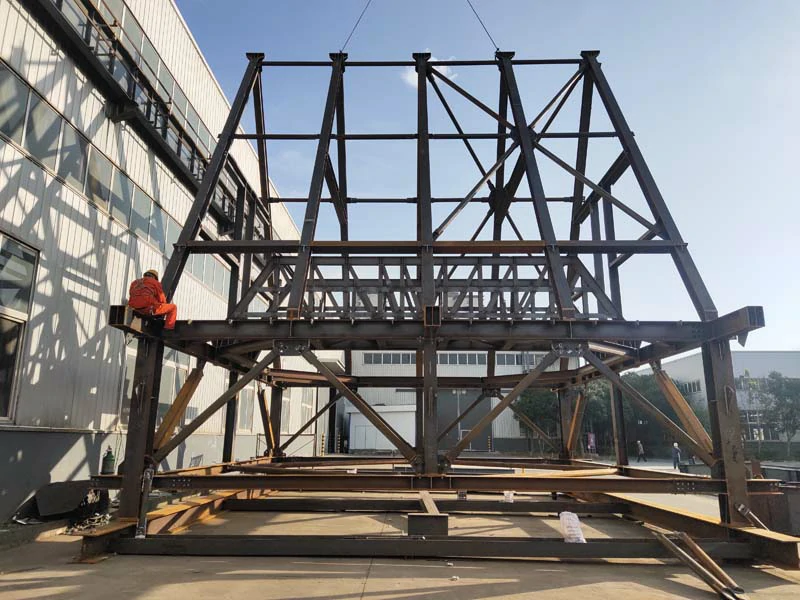
We build liftable sub-assemblies in the workshop, prove critical fit, and ship within route and crane limits. We reduce site lifts, control dimensions, and speed mechanical completion. We keep modules only as large as the risk allows.
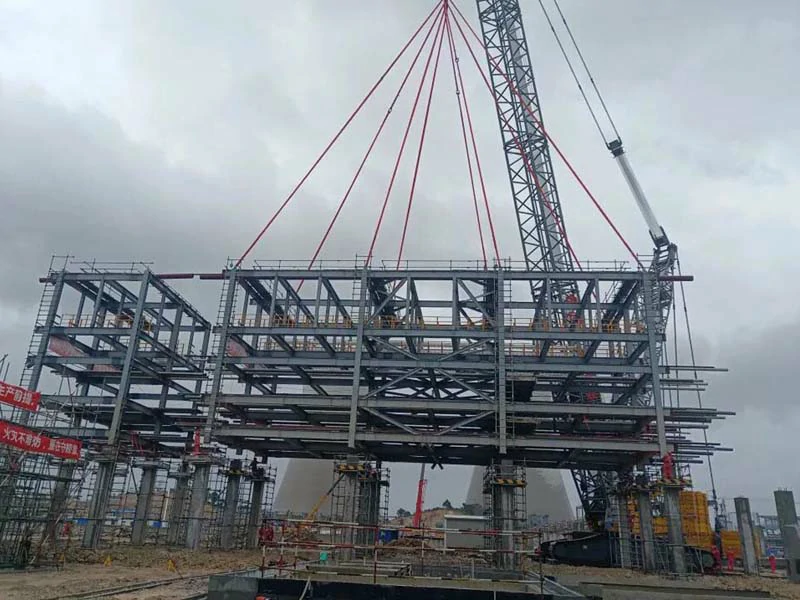
Scope levels we use
- Level 1: Pre-fit only. Match-mark, hole checks, and QC sign-off.
- Level 2: Sub-assemblies. Frames with bracing and connection plates.
- Level 3: Modules. Frames plus stairs, rails, and grating, if transport allows.
Typical inclusions and limits
| Item | Yard Completion We Target | Limits We Watch | Why It Pays |
|---|---|---|---|
| Pipe rack bays | 1–3 bay modules, braced, tray stubs fitted | Width/height with rails, bridge loads, CoG | Fewer lifts, better line and hole fit |
| Stair/platform towers | Tower sections with rails and grating | Road curves, wind during lift, landing space | Safer, faster elevated work |
| Equipment skids | Steel + base plates + vendor supports | Axle loads, lift radius, vibration in transit | Alignment and quick hook-up |
| Substation frames | Frames with embeds and tray supports | Tie-down points, port gear limits | Offsite QA, quicker energizing |
Sizing rules we trust
- We size to the tightest envelope: road width, bridge class, port gear, and site crane radius.
- We lock a weight and center-of-gravity register early and update it with every design change.
- We pre-fit anchors, base plates, stair landings, and tray stubs. This stops field drilling and hot work.
- We add lifting lugs and temporary bracing and get them NDT-tested in the yard.
When does on-site assembly beat pre-assembly?
We have pushed modules too far and paid for it. A convoy stopped at a narrow bridge. A crane could not reach. Civil pads were off. Cutting and repainting ate the savings.
On-site assembly wins when routes are tight, cranes are small, designs are moving, or brownfield tie-ins need flexibility. Small pieces pass anywhere and absorb late changes without rework cascades.
Triggers that push us to the field
- Route limits: Mountain roads, weak bridges, narrow towns, low wires.
- Lifts: Only 100–200 t cranes available, long radii, poor pads.
- Interfaces: Revamps with unknown as-builts, tight shutdown windows.
- Civil: Foundations with variable tolerances or settlement risk.
Field-first planning and avoided costs
| Constraint | Field Action We Take | Cost/Pain We Avoid |
|---|---|---|
| Route restrictions | Ship loose frames and small bundles | Module cutting and coating repair |
| Low crane capacity | Plan many light lifts with short cycles | Heavy-lift rental and standby charges |
| Moving design/interfaces | Keep holes free for final fit-up | Yard rework and shipment delays |
| Brownfield congestion | Build around live services and cables | Access scaffolds and re-handling waste |
We once split refinery rack frames into small lifts because the route capped width at 3.2 meters. Crews made more picks, but we met the shutdown and skipped a month of rework. Flexibility won that job.
How do cost and schedule change under each strategy?
Many bids compare workshop tonnage only. That is not the truth. Site hours carry heavy overhead. Weather hits. Cranes wait. Permits slow crews. One smart shift to the yard beats a small unit rate.
Pre-assembly often lowers total installed cost on large, repeatable steel because it shifts hours upstream. On-site assembly can win on small or constrained scopes where logistics and flexibility dominate.
What we actually count
- Yard hours vs site hours. Site hours include supervision, HSE, permits, scaffolds, and idle cranes.
- Rework risk. Field fixes, coating touch-ups, access delays, and congestion add real cost.
- Schedule exposure. Weather and multi-trade conflicts slow field progress more than plans show.
Simple comparison model
| Cost Element | Pre-Assembly (Yard) | On-Site Assembly |
|---|---|---|
| Fabrication + pre-fit | Higher | Lower |
| Transport | More complex | Simpler |
| Lifting | Fewer, heavier lifts | Many, lighter lifts |
| Site labor | Lower | Higher |
| Coating repair | Lower | Higher |
| Rework probability | Lower with pre-fit | Higher with field fit |
| Schedule risk | Lower site exposure | Higher site exposure |
Worked example we use
| Item | Value/Assumption |
|---|---|
| Added yard work | $80/ton on 1,500 tons = $120,000 |
| Site hour reduction | 12,000 hours |
| Loaded site hour rate | $90/hour |
| Site labor saving | $1,080,000 |
| Net before crane/permit deltas | $960,000 saving |
If route permits force module cuts, that saving can vanish. We test logistics first, then decide. We never approve module splits without a permitted route and a crane plan.
How do we size modules and plan lifts without surprises?
The worst pain arrives late. A good module becomes a field headache because we missed one limit. We now stop that with early envelopes and hard numbers, not hope.
We freeze transport and lift envelopes before module splits. We keep a live weight/CoG register, run lift studies, and pre-fit interfaces. We do not ship until the foundation survey is in.
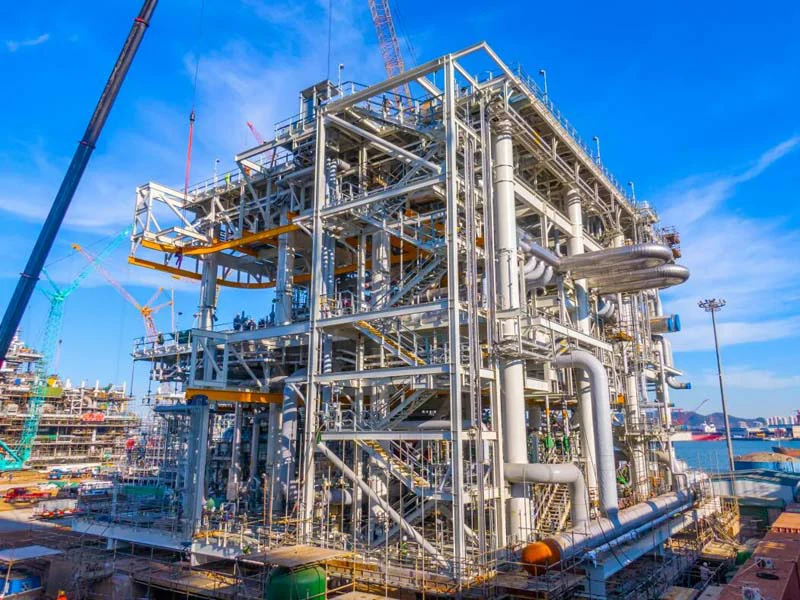
Envelope checks and gates
| Check | Metric We Use | Gate We Require |
|---|---|---|
| Transport width/height | Route survey, bridge clearances, port gear | Permit approved, mock swing cleared |
| Transport weight | Axle loads vs bridge class | Haul plan signed by authority |
| Lift capacity | Crane chart at radius + 20% margin | Lift study and method statement signed |
| CoG and pick points | CoG within 5% of geometric center | Lug design, NDT, proof lift completed |
| Wind during lifts | Surface area vs site wind curves | Wind limits in method statement |
Steps that save time on site
- We issue a weight and CoG register at every IFC revision. Any change triggers a lift re-check.
- We design and test lifting lugs in the yard. We add braces to control torsion during lifts.
- We pre-fit holes and base plates. We mark orientation and set-down sequences on the steel.
- We survey foundations before shipment. If civil is off, we agree a shim or slot plan. Cranes land once, not twice.
A simple pre-fit of stair landings once saved us three days. The crew set the tower and walked away. No grinding, no drilling, no overtime.
What risks can sink pre-assembly, and how do we control them?
Pre-assembly fails when logistics or interfaces arrive late. Then we pay twice: cut, weld, repaint, and explain. We treat a few controls as non-negotiable, and they keep us out of trouble.
The main risks are transport limits, heavy-lift gaps, and interface mismatches. We control them with route surveys, module weight control, shop trial fits, coating protection, and interface freeze gates with clear change rules.
Risks, controls, and proof
| Risk | Control We Apply | Evidence We Keep |
|---|---|---|
| Route/permit limits | Path sweep, escorts, dry runs | Route model and authority sign-offs |
| Crane shortfalls | Alternate cranes, radii scenarios | Method statements and contingency plans |
| Dimensional mismatch | Shop pre-fit and survey reports | Photos, as-built scans, tolerance maps |
| Vendor late changes | Interface freeze and impact rules | Interface matrix and approval logs |
| Coating transit damage | Dunnage, wraps, bolt and flange guards | Packing lists and QC hold points |
| Shipping deformation | Temporary bracing and transport frames | Structural calcs and inspection logs |
Packaging choices that avoid chaos
- We crate by work pack, not by trade. Crews find parts fast.
- We protect machined and bearing faces. We keep coatings off areas that need friction.
- We include touch-up kits by pack. We mark paint systems for quick QC.
- We label pick-up and set-down sides. Crews do not guess in wind and pressure.
We once avoided a full recoat by adding simple edge protectors and felt pads on a 600 km haul. The owner noticed the unchanged gloss. Small things matter.
Conclusion
We move the hardest hours offsite when logistics allow and keep only real uncertainties for the field. That balance lowers total installed cost, protects schedule, and reduces exposure every time.