Deadlines slip, and budgets get squeezed when we choose the wrong approach. Deciding between modular steel structures and traditional fabrication goes way beyond cost—it shapes how well, how quickly, and how safely our projects are delivered.
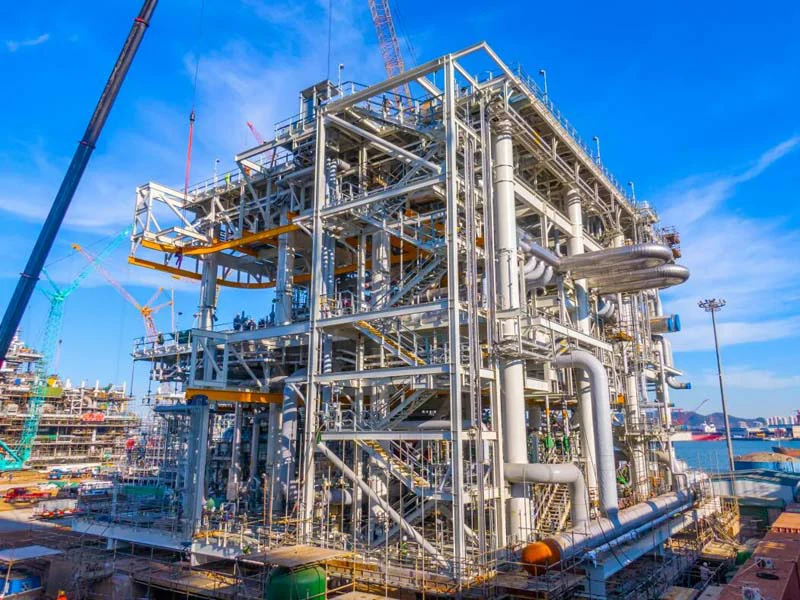
Modular steel structures, assembled from factory-made units1, almost always deliver faster construction2, fewer onsite headaches3, and easier maintenance4 than traditional steel fabrication. For most industrial and energy projects, modular solutions usually lead the pack in cost efficiency, speed, and quality.
Time is tight, especially when your operation depends on upgrades or new builds. We’ve seen what happens when delays stretch on: every extra day can cut profits and strain relationships. Having worked with clients who juggle complex timelines in refineries and energy plants, I know that the choice between modular and traditional fabrication affects far more than the construction phase. Let’s dig into where each method shines—and where it falls short.
Does modular steel structure dramatically reduce construction time?
When your facility needs upgrading or expansion, every extra week offline can mean huge costs. Speed is critical.
We’ve repeatedly found that modular steel structures—factory-made, then assembled onsite—can cut construction time by 30% to 50%5, far outpacing traditional onsite fabrication. This reduces shutdown periods and keeps you on schedule.
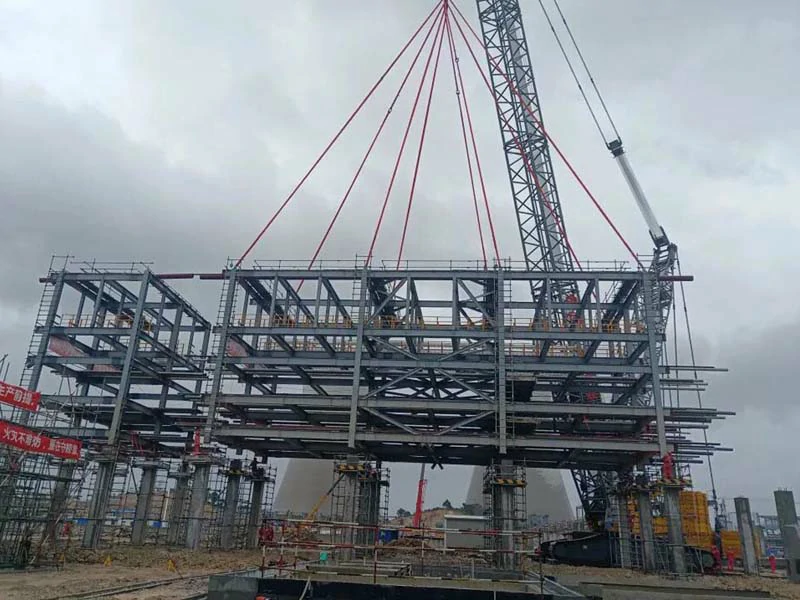
The secret is factory control6. We build precise modules in a stable environment, shielded from weather7 or manpower shortages. One project stands out: an energy plant shutdown for major steel upgrades. Modular units arrived ready to bolt together. Compared to the old way, where rainy weather, weld errors, and material shipments caused delay after delay, modular let us finish weeks ahead and cut outage costs. Clients often tell us that rapid, predictable timelines reduce not just direct construction costs but also losses from stopped production.
| Step | Modular Steel Structure | Traditional Fabrication |
|---|---|---|
| Design Finalization | Fast (standard modules) | Slow (custom details) |
| Offsite Prefab | High (factory) | None |
| Onsite Work | Short (assembly only) | Long (build & finish) |
| Overall Timeline | 1-2 months | 3-6 months |
| Weather Impact | Minimal | Significant |
Is quality control higher, and is rework lower with modular steel structure?
Every project manager fears the call: “We found a weld crack; we need to redo a section.” Quality issues can wreck a schedule or put lives at risk.
Our experience shows that modular fabrication, with factory-based quality checks and standardized processes8, delivers far more reliable results than traditional onsite methods. We see fewer defects and less rework.
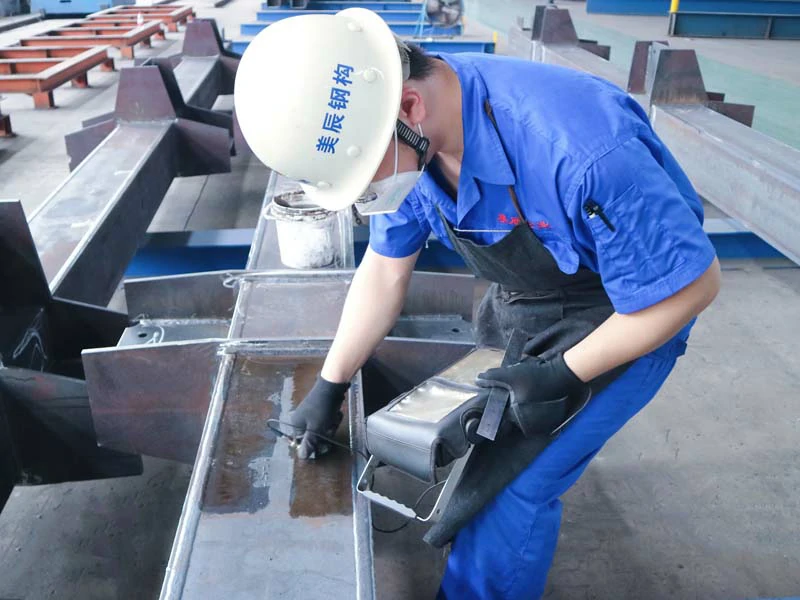
It’s not just theory. We’ve seen it firsthand. Factory QC teams inspect each module before it leaves. Automated welding systems keep tolerances tight9. We once worked on a chemical plant requiring strict safety and quality certifications. With modular, all modules passed inspection the first time; with traditional onsite work, we had to redo 25% due to weather and human error. After that, our clients started asking for factory-prepared units even on small projects. They liked that serial numbers and inspection certificates let them track every piece.
| Quality Area | Modular Steel Structure | Traditional Fabrication |
|---|---|---|
| Inspection | Automated & documented | Manual, sometimes inconsistent |
| Material Use | Consistent | Variable |
| Rework | Rare | Frequent |
| Traceability | High | Low |
Does modular steel structure make future changes, expansions, and upgrades easier?
When the market shifts, clients often ask for quick site expansions or upgrades. Adaptability can keep your business ahead of the competition.
Modular steel structures are much more flexible10. We can add new units, shift layouts, or swap modules quickly—whereas traditional builds often require costly rework or demolition.
Recently, a client in a petrochemical park asked us to double storage capacity mid-project. With modular, we could respond in weeks. We simply ordered more modules, then assembled them onsite like giant building blocks. Traditional fabrication would have needed new engineering, custom materials, and months more work. Our modular approach helped them meet market demand without a lengthy shutdown.
| Adaptability Factor | Modular Steel Structure | Traditional Fabrication |
|---|---|---|
| Expansion Speed | Fast | Slow |
| Change Order Impact | Low | High |
| Standardization | High | Limited |
| Upgrade Cost | Lower | Higher |
Are there special cases where traditional fabrication is still better?
Some jobs need one-off shapes or rare materials, and the modular approach just won’t fit. Custom fabrication still has a role.
Traditional fabrication offers more flexibility for unique designs or tough site conditions11. It often works best for smaller jobs or projects needing non-standard steel.
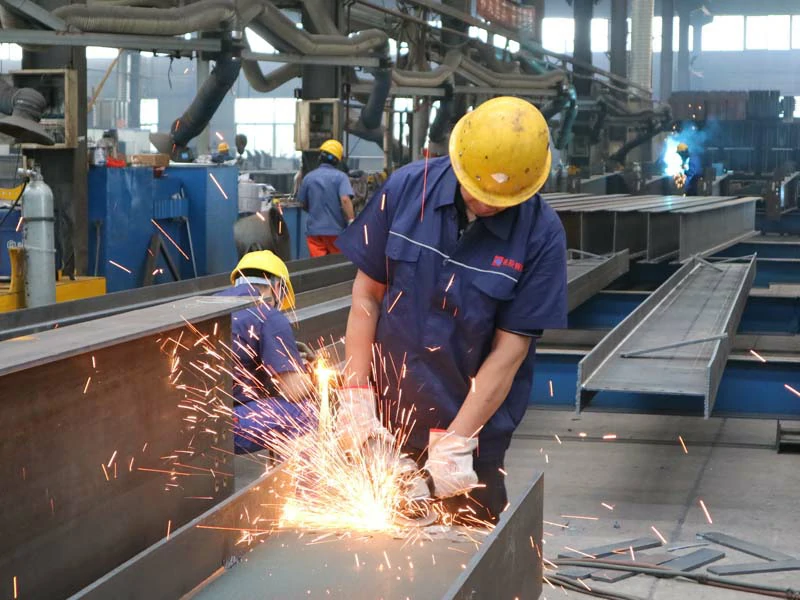
We worked on a site with oddly-shaped machine platforms and special alloy requirements that standard modules couldn’t handle. Traditional methods let us build exactly what was needed. Small projects with tight budgets also benefit from lower upfront investment. But we warn every client: cost savings at the start are often outweighed by higher maintenance, repair difficulties, or expensive upgrades later. If you need truly custom solutions, traditional fabrication is still your friend—but make sure you plan for future costs.
| Suitability | Modular Steel Structure | Traditional Fabrication |
|---|---|---|
| Custom Shapes | Limited | Unlimited |
| Special Materials | Limited | Unlimited |
| Upfront Cost | Medium/High | Low |
| Maintenance | Easy (module swap) | Difficult (site fixes) |
| Future Upgrades | Simple | Complex |
Is modular steel structure easier to maintain and upgrade?
No one wants to shut down a plant for weeks just to replace a few beams. Maintenance needs can be a hidden pain point.
Modular steel structures use standardized parts, making both repairs and upgrades much faster, simpler, and cheaper12 than traditional fabrication.
We've seen this difference up close. At an industrial park, when a tank wall corroded, the modular build allowed us to replace the damaged units in a single weekend, avoiding a major shutdown. Traditional projects often see repairs drag on, with custom orders and long waits on specialty labor. The standardized approach of modular means spare parts are ready, instructions are clear, and the downtime is minimal. This reliability is why many facilities now ask for modular—even on projects where custom fabrication would once have been the default.
| Maintenance Aspect | Modular Steel Structure | Traditional Fabrication |
|---|---|---|
| Spare Parts | Standardized | Custom/variable |
| Repair Speed | Fast | Slow |
| Upgrade Difficulty | Easy | Complex |
| Downtime | Minimal | Significant |
What do industry insiders know about choosing the right approach?
Decision-makers too often focus on upfront price, not realizing the impact of ongoing costs. Yet lifecycle budgets matter.
“Modular wins on lifecycle cost, speed, and flexibility,” we tell clients, but the supplier’s abilities are key. The hidden risks come when small factories lack the precision, skills, or equipment for real modular builds. We have seen clients burned by poor suppliers: rushed jobs, module misfits, and future maintenance headaches. For any project, we recommend you always check your partner’s track record, equipment, and past projects—especially for modular jobs.
Procurement leaders who look beyond price—to lifecycle cost, speed, and supplier competence—are the ones who deliver successful projects that stay profitable for years.
| Decision Factor | Modular Steel Structure | Traditional Fabrication |
|---|---|---|
| Lifecycle Cost | Low | High |
| Supplier Dependence | Critical (high skill) | Moderate |
| Project Control | High | Medium |
| Future Trends | AI/IoT & smart modules | Rare |
Conclusion
If you want speed, quality, easy upgrades, and future-proof investment, modular steel structure is usually the best choice. Custom fabrication works for unusual needs, but don’t forget the hidden costs.
"Modular building", https://en.wikipedia.org/wiki/Modular_building. A reference source on modular construction defines the method as producing volumetric or component units off site in a factory and then transporting them for on-site assembly. Evidence role: definition; source type: encyclopedia. Supports: Modular steel structures are assembled from factory-made units.. ↩
"The Evolution from Traditional Construction to Modular 2.0 | Build ...", https://blogs.nyit.edu/build_ahead/the_evolution_from_traditional_construction_to_modular_2.0. Research on modular and off-site construction commonly attributes schedule savings to parallel factory fabrication and site preparation; the finding supports faster delivery in general, though project-specific savings depend on design standardization, logistics, and permitting. Evidence role: general_support; source type: paper. Supports: Modular steel structures generally deliver faster construction than traditional steel fabrication.. Scope note: Contextual support only; it does not prove that every modular steel project is faster than every traditionally fabricated project. ↩
"Key Factors Affecting Labor Productivity in Offsite Construction ...", https://scholarsmine.mst.edu/cgi/viewcontent.cgi?article=3251&context=civarc_enveng_facwork. Studies of off-site construction describe reduced on-site labor intensity, congestion, weather exposure, and site disruption because more work is completed in controlled factory settings; these findings support the claim in a general operational sense. Evidence role: mechanism; source type: paper. Supports: Modular construction can reduce on-site coordination and disruption compared with traditional fabrication.. Scope note: The phrase is informal, so the evidence would support measurable site-management factors rather than the subjective term “headaches.” ↩
"Pre-Purchasing to Increase Modular Construction Capacity", https://nationalhousingcrisis.org/app/uploads/2025/06/Modular-Construction.pdf. Technical literature on modular building systems notes that standardized and replaceable components can simplify maintenance and future alterations; this supports the maintenance rationale but may not quantify savings for steel industrial structures specifically. Evidence role: mechanism; source type: paper. Supports: Modular steel structures can be easier to maintain because standardized components are replaceable.. Scope note: Support is likely system-level and may not directly measure maintenance outcomes in every industrial steel application. ↩
"Exploring the Benefits, Barriers, and Breakthroughs Needed to ...", https://ternercenter.berkeley.edu/wp-content/uploads/pdfs/offsite_construction.pdf. Industry and academic reviews of modular construction report schedule reductions often cited in the range of roughly 20–50% due to concurrent off-site fabrication and on-site work; the figure should be treated as a reported range rather than a guaranteed outcome. Evidence role: statistic; source type: research. Supports: Modular steel structures can reduce construction time by 30% to 50% compared with conventional approaches.. Scope note: The exact 30–50% range varies by sector, project complexity, and source methodology. ↩
"Industrialized Construction: The Case for Modular", https://www.energy.gov/sites/default/files/2024-02/bto-abc-industrialized-construction-022624.pdf. Research on prefabrication and modular construction identifies factory-controlled production as a mechanism for improved consistency, reduced weather exposure, and better process control compared with site-based work. Evidence role: mechanism; source type: paper. Supports: Factory control is a key reason modular construction can improve schedule predictability and quality consistency.. Scope note: The source would support the mechanism generally, not the specific company’s factory practices. ↩
"Modular Construction: Energy-Efficiency Field Study in ...", https://www.energy.gov/cmei/buildings/articles/modular-construction-energy-efficiency-field-study-commercial-and. Construction research notes that off-site fabrication reduces exposure of production activities to adverse weather, which can improve schedule reliability compared with outdoor site fabrication. Evidence role: mechanism; source type: paper. Supports: Factory-made modular units are less exposed to weather-related disruption during fabrication.. Scope note: Weather-risk reduction depends on how much of the work is actually moved off site and on transport or installation conditions. ↩
"Challenges to Offsite Construction Due to Jurisdictional ...", https://www.huduser.gov/portal/periodicals/cityscape/vol27num1/ch15.pdf. Studies of off-site manufacturing in construction describe how standardized production processes and factory inspection regimes can improve quality control relative to variable on-site conditions. Evidence role: mechanism; source type: paper. Supports: Factory-based quality checks and standardized processes can improve quality control in modular fabrication.. Scope note: This supports the quality-control mechanism but does not verify the article’s specific claim of “far more reliable” results in all cases. ↩
"An innovative approach to welding robot operator reliability analysis ...", https://pmc.ncbi.nlm.nih.gov/articles/PMC12595067/. Engineering literature on automated and robotic welding reports improved repeatability and process control compared with manual welding, which supports the claim that automation can help maintain dimensional or weld-quality tolerances. Evidence role: mechanism; source type: paper. Supports: Automated welding systems can improve repeatability and help maintain tighter tolerances in steel fabrication.. Scope note: The evidence supports automated welding generally and may not address every tolerance requirement in modular steel structures. ↩
"Development of affordable steel-framed modular buildings for ...", https://pmc.ncbi.nlm.nih.gov/articles/PMC8046965/. Research on modular building systems discusses adaptability through repeatable units, demountable assemblies, and reconfiguration or expansion potential; this supports flexibility as a design characteristic, though practical flexibility depends on interface design and structural constraints. Evidence role: general_support; source type: paper. Supports: Modular steel structures can offer greater flexibility for expansion and reconfiguration than conventional construction.. Scope note: The support is contextual because not all modular steel systems are designed for easy reconfiguration or expansion. ↩
"STEEL CONSTRUCTION MANUAL - nysdot", https://www.dot.ny.gov/divisions/engineering/structures/manuals/scm/repository/SCM_3rd_Addm_2_2013.pdf. Sources on steel construction and custom fabrication describe site-specific fabrication as suitable for bespoke geometries, unusual connection details, and non-standard project requirements; this supports the claim but does not imply traditional fabrication is superior for all complex projects. Evidence role: expert_consensus; source type: education. Supports: Traditional fabrication can be more suitable for unique designs, non-standard steel requirements, or difficult site conditions.. Scope note: The support is qualitative and depends on project design, fabrication capacity, and transport constraints. ↩
"How Modular Construction Is Solving Modern Building ...", https://www.evergladesuniversity.edu/blog/modular-construction-solving-building-challenges/. Literature on modular design and standardization indicates that interchangeable components can reduce repair complexity and facilitate upgrades; cost and speed benefits are plausible but vary with inventory, access, and interface compatibility. Evidence role: mechanism; source type: paper. Supports: Standardized modular parts can make repairs and upgrades faster, simpler, and potentially cheaper.. Scope note: The evidence would support the mechanism of standardization, not necessarily prove lower costs for every repair scenario. ↩