What’s the Real Difference Between H-Beam and Box Column in Steel Structures?
Steel structure decisions in petrochemical and industrial projects keep me up at night. Choosing between H-Beam and Box Column impacts safety, schedule, and budget—yet it’s often rushed or left up to convention.
The core distinction is this: H-Beams have an open H-shaped profile that handles bending loads best, while Box Columns (square or rectangular hollow sections, HSS) distribute compressive and lateral forces efficiently thanks to their closed, hollow design.1 This fundamental difference affects everything from structural performance to fabrication and long-term maintenance.
I have seen too many colleagues grapple with unexpected problems because the steel profile wasn’t carefully matched to the project’s needs. Let’s unpack the differences using real examples and practical advice so you can avoid costly surprises.
What Should We Know About H-Beam Function and Fabrication?
If you walk through most workshops or warehouses, you’ll see the familiar H-Beam everywhere. It seems like the “default” choice—but why?
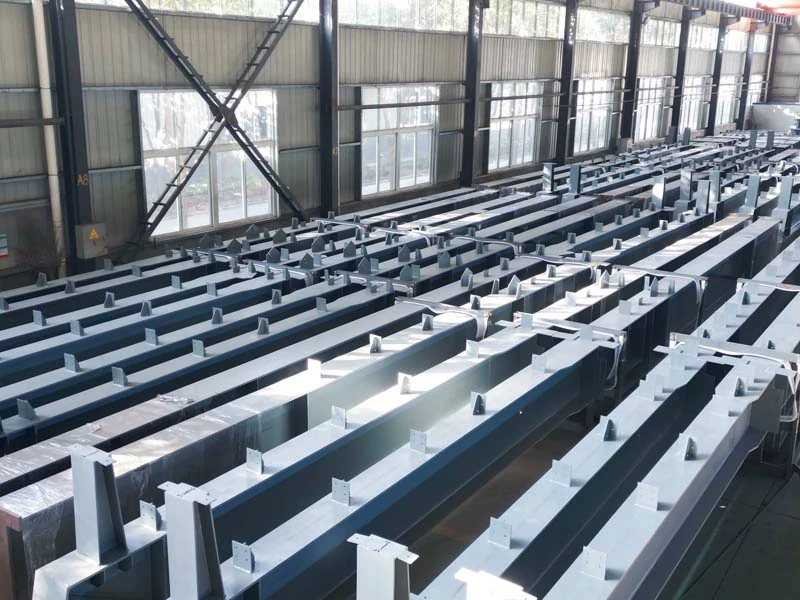
H-Beam, also called wide flange beam, is made by hot rolling or welding plates.2 Its long, parallel flanges and straight web make it perfect for beams and girders. The open shape means it's built to resist bending loads3, which is why it's the backbone of most simple frame structures. We often recommend H-Beams for straightforward projects where quick fabrication and easy assembly matter most.
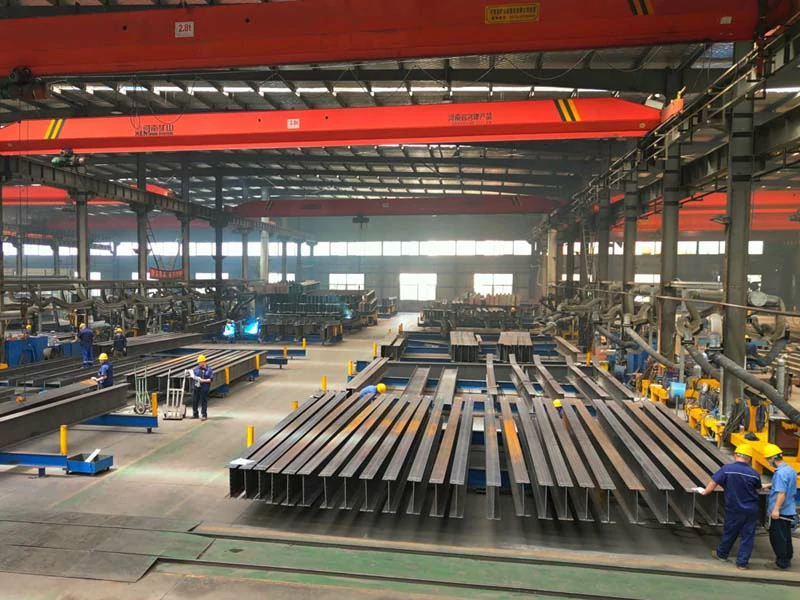
H-Beams are flexible. When clients need to retrofit or expand their plants, custom welded H-Beams can be spliced and adapted to take heavier, non-standard loads4. Cutting and joining is basic compared to box shapes, making field changes much easier. However, the open section means less weight efficiency when used as columns5, and extra fireproofing is needed because the coatings don’t stick inside the profile—something many clients forget until later.
| Feature | Details |
|---|---|
| Shape | H-shaped, open profile |
| Best Use | Beams, girders, simple columns |
| Manufacturing | Hot-rolled/welded plates |
| Load Strength | Bending loads |
| Fabrication | Simple cutting and joining |
| Customization | Easy to splice, adapt in retrofit |
| Fireproofing | Needs external coating |
| Efficiency | Less efficient as column |
| Appearance | Standard, industrial look |
| Price | Usually lower cost per unit |
When we recommend H-Beams, it is often for projects with clear, uncomplicated load paths. They shine where the schedule is tight and the stakes are lower. Still, they can fall short where compression, torsion, or architectural demands are high.
Why Do Box Columns Excel in Cleanrooms and High-Performance Facilities?
Box Columns, or HSS (Hollow Structural Sections), are often overlooked until something goes wrong—in high wind zones, cleanrooms, or places where airtightness and torsional strength matter6. It pays to know their hidden strengths.
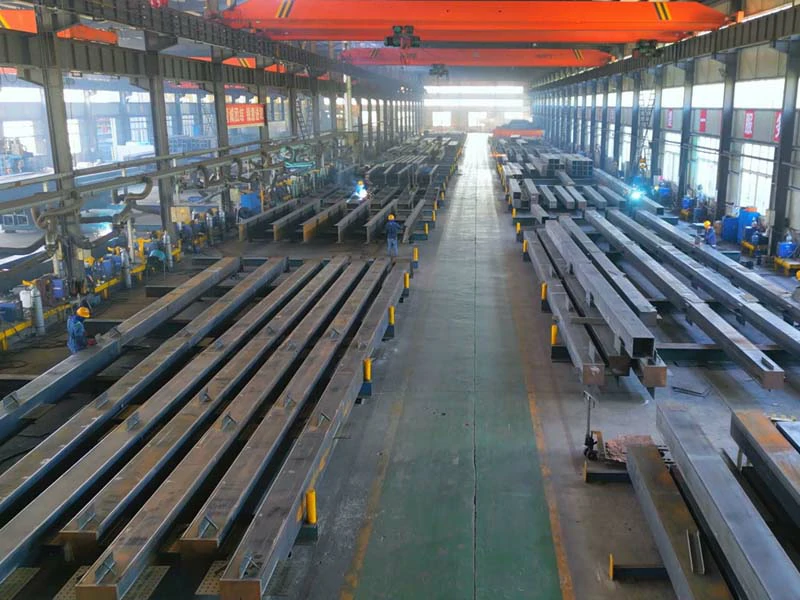
Box Columns offer a closed, square or rectangular profile. They stand out when you need columns to handle heavy compression, lateral forces, or seismic loads.7 Their hollow core means you can fill them with insulation or fireproofing material8, a huge advantage in cleanrooms or chemical plants where air sealing and safety are critical.
From my experience, Box Columns are more than just structural supports—they help solve environmental and safety challenges. When clients chose box columns for new labs, filling them with fire-resistant foam gave the project airtightness and extra fire protection in one shot. Painting is smoother and sandblasting is more uniform; that means maintenance costs go down9 and the columns keep a sleek, modern look. Still, precision welding is needed because access for inspection or repairs inside the column can be limited10. Early connection detailing and checking the supplier’s credentials become must-do tasks.
| Feature | Details |
|---|---|
| Shape | Closed (box), hollow rectangular/square |
| Best Use | Columns in cleanrooms, exposed structures |
| Manufacturing | Cold-formed/Welded steel sheets |
| Load Strength | Compression, torsion, and lateral loads |
| Efficiency | Very efficient, less total steel used |
| Fireproofing | Can fill core with insulation |
| Fabrication | Requires specialist welding, inspection |
| Maintenance | Even sandblasting/painting, lower cost |
| Appearance | Sleek, modern finish |
| Price | Higher per unit, offsets in total tonnage |
We tell B2B clients: Box Columns may cost more, but you get more lifecycle value and resilience. They’re the best choice for structures facing wind, seismic, or environmental challenges.
What Factors Matter When Comparing H-Beam and Box Column for Project Decisions?
Making the right steel profile choice is more than checking unit prices. I learned that the hard way—when pushed to cut costs, you can end up spending more down the line.
H-Beams and Box Columns behave differently. H-Beams are easier to source and fabricate but require more steel and external coatings. Box Columns carry loads more efficiently and help architects deliver modern designs. The closed shape means fireproofing goes inside and stays protected. For large projects, weight and steel tonnage often favor box sections, helping offset their higher processing costs.11
Surface treatments on Box Columns are easier, which makes maintenance simpler and cheaper. But Box Columns require precise fabrication. Not every supplier can handle the welding and quality control—especially for critical facilities. Subpar welds or missed inspections mean big risks.
| Comparison Area | H-Beam | Box Column (HSS) |
|---|---|---|
| Section Shape | Open (H-profile) | Closed (box/hollow) |
| Load Capacity | Bending | Compression/torsion |
| Weight Efficiency | Less efficient | More efficient |
| Fireproofing | Needs external coating | Can fill internal core |
| Fabrication | Basic, easier | Specialist, precise |
| Maintenance | Uneven paint/coating | Uniform treatment |
| Architectural Value | Standard look | Sleek, modern |
| Price | Lower/unit, higher total | Higher/unit, lower total |
We see that for high-risk, high-performance projects—like new refineries or energy plants—Box Columns make a stronger investment. For fast builds with tight budgets, H-Beams are still a solid choice.
What Practical Tips Can We Share for Purchasing and Engineering Teams?
Missing supplier certifications or connection details has cost me hours of delay—and plenty of late-night phone calls. Here’s what works best in real projects.
First, involve your steel supplier early while you’re still planning. This avoids costly rework and catches design errors before they hit the fab shop. Look beyond per-meter price. Consider maintenance, lifecycle costs, and how easy the columns are to inspect and upgrade later.
Experience counts. Always check for welding and quality certifications, especially with Box Columns. Ask your supplier about previous similar projects—they should have proven records in complex or high-risk builds. Don’t assume your usual fabrication crew can handle box profiles; see their credentials and demand proof. Balance cost and performance, and think long-term—especially in markets where project delays hit revenue hard.
| Strategy | Why It Matters |
|---|---|
| Early Consultation | Prevents mistakes, speeds up schedule |
| Lifecycle Analysis | Uncovers true total cost |
| Certifications Check | Ensures safe welds and fabrication |
| Supplier Track Record | Finds reliable partners |
| Custom Detailing | Adapts to site needs and changes |
We have learned these lessons by watching projects succeed and fail. Sharing these tips, we hope you avoid the same pitfalls and choose the right steel profile for your unique requirements.
Conclusion
Selecting between H-Beam and Box Column isn’t simple, but knowing their distinct features, advantages, and potential risks lets us build safer, more cost-effective structures. Start early, check credentials, and look beyond the price tag—your project’s success depends on it.
"Manual of Steel Construction", https://user.eng.umd.edu/~ccfu/ref/LRFD-Dimensions&Properties_Fu_NA.pdf. Structural steel design references distinguish open wide-flange sections from hollow structural sections and explain that section geometry governs bending, compression, and torsional resistance. Evidence role: mechanism; source type: institution. Supports: H-beams and box columns differ structurally because their open or closed cross-sections affect how they resist bending, compression, and lateral forces.. Scope note: This supports the general mechanical distinction; project-specific capacity still depends on dimensions, steel grade, bracing, and connection design. ↩
"Applicability of Hybrid Built-Up Wide Flange Steel Beams", https://www.mdpi.com/2075-4701/10/5/567. Steel construction references describe wide-flange beams as hot-rolled structural shapes and also describe built-up welded I- or H-sections fabricated from plates. Evidence role: definition; source type: institution. Supports: H-beams or wide-flange beams are commonly produced as hot-rolled shapes or as welded built-up plate sections.. Scope note: The source may describe common production routes rather than every regional manufacturing practice or proprietary product line. ↩
"the behavior of beams subjected to concentrated loads", https://fsel.engr.utexas.edu/pdfs/82-51.pdf. Beam design literature explains that wide-flange sections place much of their material in the flanges away from the neutral axis, increasing flexural efficiency for bending about the strong axis. Evidence role: mechanism; source type: education. Supports: The geometry of an H-beam or wide-flange beam makes it well suited to resisting bending about its strong axis.. Scope note: This does not mean H-beams are optimal for every bending case; lateral-torsional buckling, weak-axis bending, and bracing conditions can control design. ↩
"Steel Bridge Design Handbook", https://rosap.ntl.bts.gov/view/dot/49753/dot_49753_DS1.pdf. Steel connection and rehabilitation guidance discusses welded or bolted splices and reinforcement of steel beams as methods for modifying members to meet revised strength demands. Evidence role: general_support; source type: institution. Supports: Custom welded H-beams can be spliced or modified for retrofit conditions and non-standard loading requirements.. Scope note: The source would support the feasibility of splicing and strengthening in principle; actual retrofit capacity requires engineering analysis and code-compliant detailing. ↩
"Hollow Section vs I Beam Building: Structural Guide", https://xtdsteel.com/steel-structure-building/hollow-section-vs-i-beam-building/. Column design references show that closed hollow sections generally provide favorable radius of gyration about both principal axes compared with many open shapes, improving compression efficiency where buckling governs. Evidence role: mechanism; source type: education. Supports: Open H-sections can be less weight-efficient than hollow sections when used as compression columns, especially where buckling about multiple axes matters.. Scope note: This is a general geometric comparison; a particular H-section may be efficient in a braced column or where axis-specific buckling is not critical. ↩
"Mechanics of Materials: Torsion", https://www.bu.edu/moss/mechanics-of-materials-torsion/. Structural mechanics references explain that closed thin-walled sections have substantially higher torsional stiffness than comparable open sections, which supports their use where torsion is a governing design concern. Evidence role: mechanism; source type: education. Supports: Closed box sections are advantageous where torsional strength is important, and sealed fabrication may help in airtight applications.. Scope note: This directly supports torsional strength but only contextually supports airtightness, which depends on weld continuity, penetrations, and enclosure detailing. ↩
"Design of One-Story Hollow Structural Section (HSS) Columns Subjected ...", https://vtechworks.lib.vt.edu/handle/10919/94024. Seismic and steel design references identify hollow structural sections as common column members because their closed geometry provides efficient compression resistance and balanced properties about both principal axes. Evidence role: expert_consensus; source type: institution. Supports: Box columns or HSS are well suited for columns subjected to compression and lateral or seismic demands.. Scope note: This supports HSS suitability, not automatic superiority; seismic performance also depends on member slenderness, ductility, connection detailing, and system design. ↩
"(PDF) Achieving fire resistance in steel columns through ...", https://www.academia.edu/19662611/Achieving_fire_resistance_in_steel_columns_through_composite_construction. Fire engineering literature on concrete-filled or protected hollow steel sections documents that hollow cores can be filled or otherwise treated to improve fire resistance or thermal performance. Evidence role: mechanism; source type: paper. Supports: The hollow interior of box columns can be used for fire-protection or insulation strategies.. Scope note: The source may discuss concrete or specific fire-protection systems rather than all insulation materials; compatibility and code approval must be checked for each project. ↩
"STRUCTURAL STEEL SHOP COATINGS PROGRAM", https://connect.ncdot.gov/resources/Materials/MaterialsResources/Structural%20Steel%20Shop%20Coatings%20Program.pdf. Corrosion-protection guidance notes that surface geometry and accessibility affect abrasive blasting, coating uniformity, and maintenance of structural steel protective systems. Evidence role: mechanism; source type: institution. Supports: The simpler exterior geometry of box columns can make surface preparation and coating more uniform, which may reduce maintenance burden.. Scope note: This supports the maintenance mechanism but not a quantified cost reduction for every project; cost outcomes depend on coating system, exposure class, labor, and inspection requirements. ↩
"Structural Steel: Fabrication and Inspection", https://ctt.mtu.edu/sites/default/files/resources/bridge/2026/02.03_Otrembra_Steel_Fabrication.pdf. Welding inspection standards and HSS connection guidance emphasize weld quality control and note that closed sections can restrict access to interior welds or backing, making detailing and inspection planning important. Evidence role: expert_consensus; source type: institution. Supports: Box columns require careful welding and inspection planning because their closed geometry can limit internal access.. Scope note: The degree of access limitation varies with member size, fabrication sequence, connection type, and whether nondestructive testing is specified. ↩
"Experimental behaviour of thin-walled hollow structural steel (HSS ... - HERO", https://hero.epa.gov/reference/6862947/. Comparative steel design resources show that hollow structural sections can achieve required compression capacity with efficient material distribution, which can reduce tonnage in some column-dominated designs. Evidence role: general_support; source type: research. Supports: Box sections can reduce steel tonnage in some large projects because of their efficient compression performance, potentially offsetting higher processing costs.. Scope note: This only supports the possibility of tonnage savings; whether savings offset higher fabrication cost requires project-specific cost estimation and local pricing. ↩