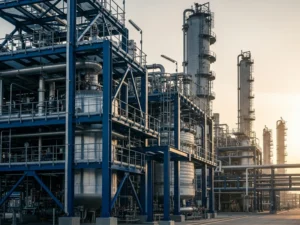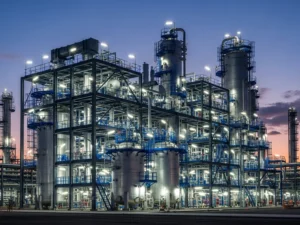
Equipment support structures are critical interfaces between process equipment and civil foundations in industrial projects, especially in petrochemical, refining, and energy applications. Unlike building steel structures, they demand precise fabrication tolerances, load analysis expertise, and corrosion resistance tailored to demanding environments. Without these considerations, suppliers risk costly rework and project delays.
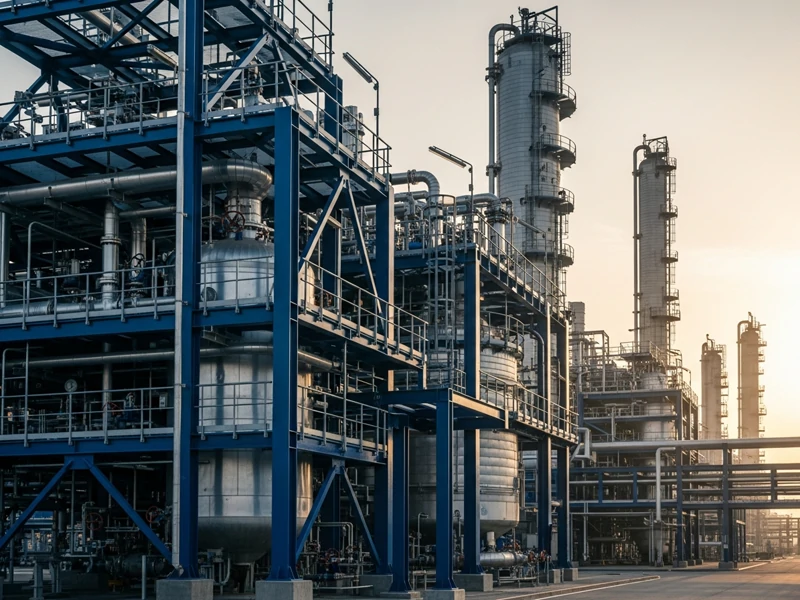
Equipment support structures are custom-engineered steel frames designed to bear equipment weight, accommodate dynamic loads (e.g., vibration), and integrate piping, valves, and instrumentation. They’re used in petrochemical plants, LNG facilities, refineries, and modular process projects requiring exact interface coordination and long-term durability.
Recognizing the nuances between general construction steel and fabricated equipment platforms is critical for procurement managers. In this post, I’ll share what we’ve learned from helping EPC companies correct RFQ gaps and prevent avoidable change orders.
Why are equipment support structures different from building steel?
Building steel structures are designed for distributed live loads like roofing, flooring, and occupancy, while equipment support structures bear concentrated loads from heavy process equipment. This fundamental distinction often goes unnoticed in RFQ specs.
Equipment support structures are purpose-built to handle static loads (equipment weight), dynamic forces (thermal movement, vibration), and accessory systems (piping and instrumentation)—creating load combinations that traditional building steel fabricators might overlook.
Critical load types in equipment support
Let me highlight three main sources of loading that differentiate these structures:
- Static loads: Large equipment units, often exceeding several tons, resting on small mounting points.
- Dynamic loads: Continuous mechanical vibration and thermal expansion impact structural integrity over time.
- Accessory system loads: Piping, valves, maintenance walkways, and instrumentation often constitute supplementary weight.
When procurement managers delegate these platforms to general construction steel fabricators, critical load combinations may get missed—leading to post-delivery reinforcement requests. In our fabrication experience, missing dynamic load specs is the #1 driver of rework orders in petrochemical platforms.
Real-world example: vibration-induced cracks
One of our clients initially treated their equipment platforms as standard building steel. The fabricator failed to account for equipment vibration frequency at operating temperatures. Within weeks of installation, critical stress cracks appeared, requiring emergency reinforcement welding—increasing project costs by over 15%. We’ve since developed stronger protocols for validating load specs upfront.
Why is interface precision critical?
Precision is the backbone of all equipment support structures. However, the tolerances needed for equipment mounting interfaces are far stricter than for general building steel components. This gap often creates project bottlenecks.
Equipment support structures require precision tolerances down to ±2mm—compared to ±10mm tolerances typical in building steel fabrication. Misaligned anchor bolts or nozzle interfaces mean costly rework during installation.
RFQ blind spots: missing interface dimensions
Here’s where we see gaps in most EPC RFQ packages:
- Anchor bolt patterns: RFQs often specify only equipment outlines but skip anchor bolt dimensions—critical for fabrication and installation.
- Nozzle orientations: Oil and gas equipment has precise piping entry points; fabricators need these to accurately space supports.
- Maintenance lift point positioning: Clients often overlook specifying crane lifting zones needed for serviceability.
Without this information, fabricators can only guess interface compatibility, which cascades into installation delays when adjustments are required onsite.
Our corrective approach: tolerances that match application
In our projects for clients like Sinopec, we implemented interface verification protocols that ensure bolt patterns, flanged joint alignment, and auxiliary pipe routes are precisely fabricated. This drastically reduces site corrections, saving EPC contractors tens of thousands in downtime costs.
How do corrosion environments affect structure specs?
Refinery and petrochemical applications involve harsh C4/C5 corrosion environments that building steel paint systems simply cannot withstand. Using mismatched coating systems on equipment support structures leads to premature failures and unexpected shutdowns.
Petrochemical support structures often require multi-layer anti-corrosion systems such as zinc-rich primer + epoxy intermediate + polyurethane topcoat to achieve 240μm dry film thickness (DFT). Building steel coatings typically involve single-layer systems that fail much faster in industrial conditions.
Coating system mismatches: a preventable error
We once received a client order specifying single-coat systems used for basic building steel. When we illustrated how these systems fail under acidic and saline refinery conditions, they reissued specifications matching ISO paint tolerances. While this delayed production slightly, it saved them from larger coating failures during plant operation.
Our proactive solutions for corrosion control
To ensure durability in harsh environments, we apply shot blasting to SA2.5 followed by multilayer systems specifically engineered for petrochemical plants. Our fabrication process prioritizes long-term protection, preventing system-wide corrosion risks.
Why is modular assembly essential for equipment structures?
Unlike building steel, equipment support structures need modular transport and field assembly due to complex site constraints. These constraints include refinery access, crane rigging zones, and heavy equipment installation sequences.
Modular equipment platforms often include bolted connections for on-site assembly rather than welded seams, simplifying transport over narrow plant access roads and accommodating installation schedules.
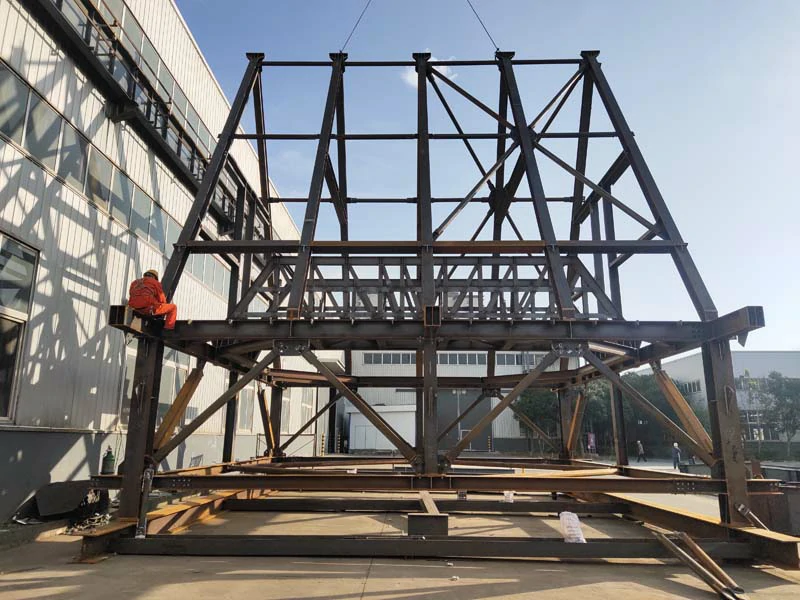
Typical assembly challenges in petrochemical projects
A common oversight involves designing one-piece, weld-assembled platforms that can’t fit within field crane capacities or rigging zones. This leads to cutting, rewelding, and assembly adjustments onsite—a costly and time-consuming scenario.
Design-for-transport considerations
We recommend fabricating platforms as smaller modules with pre-drilled bolted connections for easy transportation and installation. These units optimize field assembly efficiency and avoid costly delays tied to restrictive site constraints.
Frequently Asked Questions
What materials are commonly used for equipment support structures?
Steel grades like Q345B or ASTM A572 are widely used due to their high-strength properties. Additional anti-corrosion coatings or galvanization may be applied based on application environments.
How can I ensure my RFQ meets petrochemical spec requirements?
Include details such as anchor bolt patterns, dynamic load specifications (e.g., vibration frequencies), maintenance crane zones, and multi-layer coating requirements for refinement upfront. Work closely with experienced fabricators who understand petrochemical demands.
Why are modular designs preferred for equipment support platforms?
Modular designs simplify transport, assembly, and installation within restricted industrial site layouts. They also reduce risks associated with heavy-duty rigging and crane capacities during final positioning.
Conclusion
Equipment support structures play a vital role in industrial projects, especially refining, petrochemical, and LNG applications. Unlike building steel, they demand load combination expertise, high-tolerance interface precision, and environment-specific durability. At Meichen Steel Structures, we help EPC contractors overcome RFQ blind spots, ensuring accurate fabrication for critical equipment projects.
If you're looking for a fabricator who understands petrochemical application needs, contact Meichen Steel Structures at info@meichensteel.com or visit www.meichenfabrication.com. Let’s discuss your project’s unique requirements.