I have seen promising steel projects derailed by a single missing form or certificate. Neglecting compliance documentation can cost far more than just paperwork—it can halt progress, freeze payments, and trigger avoidable disputes.
Compliance documentation is not just an administrative process; it is the foundation for smooth customs clearance, timely payments, insurance protection, and successful dispute resolution1 in international steel projects. Proper documents prevent costly penalties and set your project up for success.
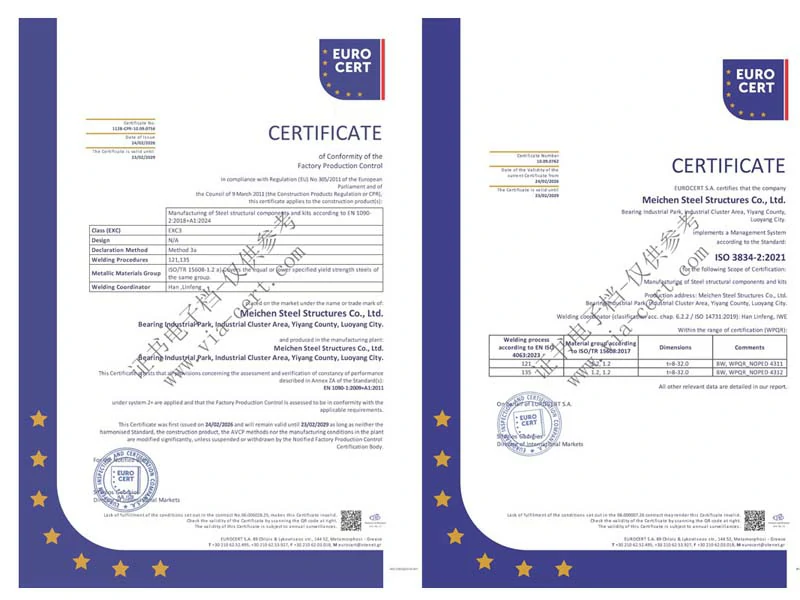
I have seen too many project teams underestimate the value of compliance files in the rush to ship product out the door. The pain caused by incomplete documentation is rarely visible upfront, but it hits hard when it arrives. Let me walk you through why we have learned, sometimes the hard way, that you should never treat compliance as a formality.
Why Is Compliance Documentation More Than Just Administrative Formality?
Too many in our industry view compliance paperwork as something you “tick off” for inspectors. The reality is that each file you prepare is a key to the next door: customs, payments, and the ability to keep working overseas.
I have worked with clients who assumed design drawings and a test certificate were enough, only to discover a missing CE marking in Europe or a missing SASO certificate for Saudi Arabia held up their shipments for weeks. Different regions mean different rules; a universal approach does not work.2

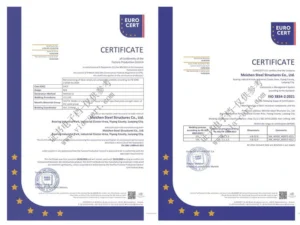
To avoid painful surprises, our team starts every project with a targeted compliance checklist. We list all required certificates—like ISO 9001 for quality3, WPS for welding4, third-party inspection reports, and even languages for product labels—by country. We make it someone’s job to keep up with every regulation change. This small up-front investment pays huge dividends in time and money saved later.
| Country/Region | Required Certifications | Key Documents | Our Best Practice |
|---|---|---|---|
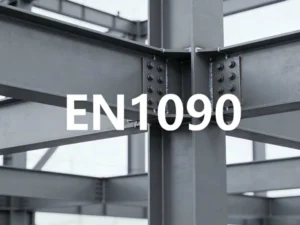
| EU | CE, EN10905 | Material Cert, Welding Records | Initial review with legal team |
| Saudi Arabia | SASO, SABER6 | ISO certs, SASO Conformity Report | Pre-bid checklist & local agent |
| USA | AWS, AISC7 | Welder Licenses, NDT Reports | Regular audit w/ QA managers |
| Global | ISO 9001 | QA Manual, Full Traceability Logs | Digital backup in cloud system |
When everyone knows what papers matter, and who is responsible, we avoid most last-minute emergencies and expensive project delays.
How Can Documentation Make or Break Your Insurance and Claims?
Insurance companies do not just trust your word. If something goes wrong—a coating failure, a damaged shipment—they want complete, traceable files before they pay out8. Missing even one test report can turn a minor incident into a huge financial loss.
I have lived through a project where a missing anti-corrosion report meant the insurer denied a claim for hundreds of thousands of dollars in damages. It only happened once, but once was enough for us. Now, we digitize every document, from welding qualifications to environmental testing. Everything is organized and backed up securely, so we can prove our case if there’s ever a dispute.
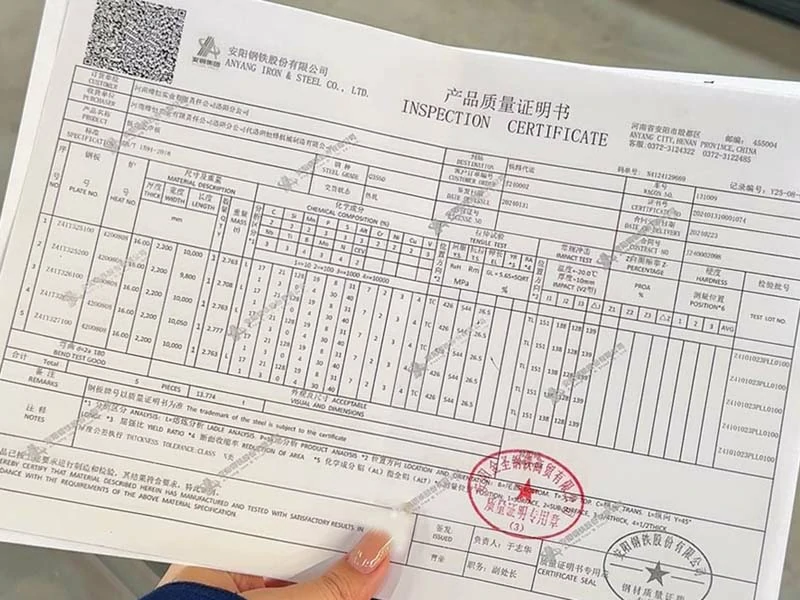
By making compliance a habit, not an afterthought, we avoid desperate searches for paperwork when under pressure. Here is how we manage it now:
| Project Stage | Key Documents Required | Where We Store It | How Fast We Can Find It |
|---|---|---|---|
| Material Sourcing | Mill test, Batch certs | Cloud & hard copy | Instantly |
| Production/Assembly | Welder logs, Inspection records | Cloud folders by date | Minutes |
| Coating & Finish | Test reports, Photo evidence | Quality system database | Minutes |
| Logistics | Packing lists, Export certs | Shared server folders | Instantly |
| Delivery/Claims | Insurance docs, Acceptance tests | Project close-out file | Instantly |
When we faced a client challenge about a shipment’s quality, we showed every backing file within minutes. We resolved the argument fast and kept the business relationship strong, rather than debating over “he said, she said.”
How Does Complete Documentation Help Win Tenders and Reassure Customers?
Winning international bids is not just about price and steel weight. Many times, customers judge you by your professionalism in compliance. Detailed, clear documentation builds more trust than glossy brochures ever could.
I learned this after seeing how decision-makers reacted when we presented binders of organized compliance reports at sales meetings. When other companies waffled or claimed “the documents are coming,” we showed full traceability from steel batch to final weld9. Our clients felt reassured. For many, it tipped the scales in our favor during the tender process.
We now prepare a specific “compliance file set” for every big project, including:
| Document | Why It Matters | When We Present It |
|---|---|---|
| Material certificates | Show steel source & quality | Pre-bid & during tender |
| Welding records | Prove qualified personnel | Technical review |
| Third-party reports10 | Independent quality proof | Bid submission/review |
| Full traceability | Reassures owner’s risk team | Site visits/final talks |
| NDT & coating reports | Lower QC risk | With project proposal |
Being ready at every review stage makes decision-makers feel safe. It also closes the gap between our promises and project delivery, strengthening trust before a shovel ever hits the ground.
In What Ways Does Documentation Strengthen Global Supply Chain Performance?
Every part of a supply chain needs proof: customs, warehouse, forwarder, and final customer. Any missing link—like an invoice or product certificate not matching up—can halt your project far from home11. We have faced this with our own shipments stuck in ports due to something as minor as a missing packing list.
Now, we track every required document in a digital management system. Each product batch, shipment, and inspection gets a barcode.12 Anyone who needs proof—customs, third-party warehouse, or even a project manager on site—can pull up the right record on their phone or laptop, wherever they are in the world.
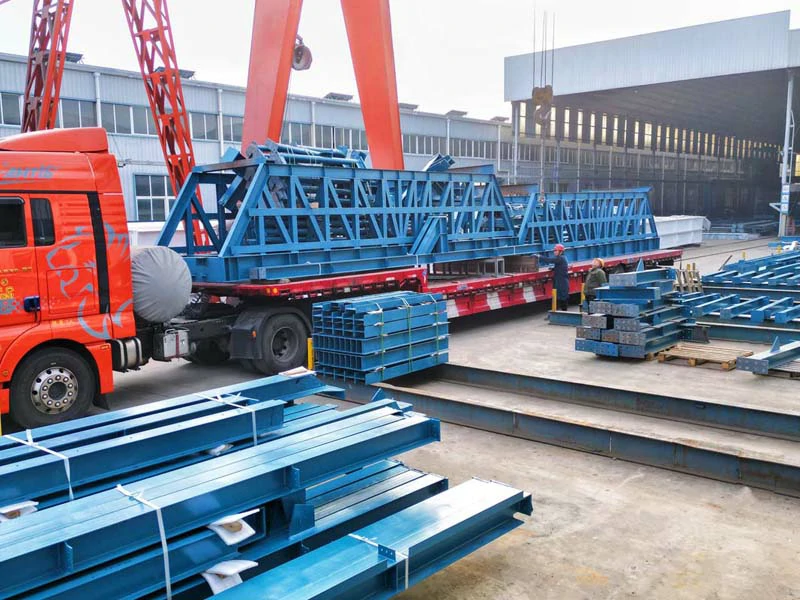
Here is how our supply chain document flow works in practice:
| Workflow Step | Key Documents | Who Uploads/Checks | When Available |
|---|---|---|---|
| Order Release | Design & Contracts | Sales & project admin | Instantly (online) |
| Manufacturing Start | Raw material certs | QA team | Before cutting begins |
| In-Process Checks | Inspection logs | QC inspector | Same day as inspection |
| Packing & Shipping | Packing slips, Certs | Shipping coordinator | On shipping date |
| Customs/Delivery | Invoices, Release docs | Export team | Before port arrival |
If there’s ever an inspection or customs stop, we answer with full records—never an excuse. This reputation for thoroughness has won us repeat business with some of the world’s largest EPCs and owners.
Conclusion
We treat compliance documentation as a competitive tool, not just a chore. Preparing, tracking, and sharing the right files has helped us prevent costly mistakes, win more work, and build client trust—even in the most demanding steel projects.
---"Special Documents - International Trade Administration", https://www.trade.gov/special-documents. Trade and project-governance guidance from institutions such as the World Customs Organization, ICC, or UNCITRAL supports that accurate commercial, transport, and conformity documents are central to customs processing, payment administration, insurance claims, and dispute records. Evidence role: general_support; source type: institution. Supports: Compliance documentation supports customs clearance, timely payments, insurance protection, and dispute resolution in international steel projects.. Scope note: This would support the importance of documentation across these functions, but not prove that documentation alone guarantees smooth clearance, payment, insurance recovery, or dispute success. ↩
"[PDF] International Regulatory Co‐operation and Trade | OECD", https://www.oecd.org/content/dam/oecd/en/publications/reports/2017/05/international-regulatory-co-operation-and-trade_g1g7a8f2/9789264275942-en.pdf. WTO technical-barriers guidance and national conformity-assessment systems show that product standards, labeling, and certification requirements vary by market, supporting the need for country-specific compliance planning. Evidence role: expert_consensus; source type: institution. Supports: International steel projects require region-specific compliance planning because certification and documentation rules vary across markets.. Scope note: The source would establish regulatory variation generally, not the specific delay history of any individual steel shipment. ↩
"ISO 9000 family - Wikipedia", https://en.wikipedia.org/wiki/ISO_9000_family. ISO describes ISO 9001 as an international standard specifying requirements for a quality management system, supporting its use as evidence of organized quality processes. Evidence role: definition; source type: institution. Supports: ISO 9001 is a recognized quality-management standard relevant to project compliance files.. Scope note: ISO 9001 certification indicates a quality-management system; it does not by itself certify the quality of any specific steel component. ↩
"[PDF] AWS D1.1 Structural Welding Code: You Specify It", https://web-ded.uta.edu/cedwebfiles/conf/Thursday%209%2015%20AM%20Welding%20Panel-AWS%20D1.1%20Structural%20Welding%20Code-Wes%20Oliphant.pdf. Welding standards and technical guidance define a Welding Procedure Specification as a documented procedure that sets welding variables and supports consistent, qualified weld production. Evidence role: definition; source type: institution. Supports: WPS documents are important welding compliance records in steel fabrication projects.. Scope note: The specific WPS format and qualification requirements depend on the governing welding code, such as AWS, ASME, or ISO standards. ↩
"Question 41.10 Regulation (EU) 305/2011 CPR: 1090-x standard set", https://european-accreditation.org/sp_accordion_faqs/question-41-10-regulation-eu-305-2011-cpr-1090-x-standard-set/. European Commission and harmonized-standard materials explain that structural steel and aluminium components placed on the EU market may require CE marking under the Construction Products Regulation when covered by EN 1090-1. Evidence role: definition; source type: government. Supports: CE marking and EN 1090 are relevant compliance requirements for certain structural steel products in the EU.. Scope note: Applicability depends on the product’s intended use and whether it falls within the scope of the harmonized standard. ↩
"Saudi Arabia Testing, Inspection and Certification", https://www.trade.gov/saudi-arabia-testing-inspection-and-certification. Saudi standards and conformity-assessment materials describe SABER as the electronic platform used to obtain product and shipment conformity certificates for regulated products entering Saudi Arabia, under SASO-related requirements. Evidence role: definition; source type: government. Supports: SASO and SABER are relevant conformity systems for exporting regulated steel-related products to Saudi Arabia.. Scope note: Exact certificate requirements vary by product category and HS code, so the source would support the framework rather than every steel-product case. ↩
"[PDF] Specification for Structural Steel Buildings", https://user.eng.umd.edu/~ccfu/ref/a360-16-spec-and-commentary.pdf. AISC and AWS standards are widely referenced in U.S. structural steel design, fabrication, and welding practice, including in building-code and project-specification contexts. Evidence role: expert_consensus; source type: institution. Supports: AWS and AISC standards are commonly relevant to U.S. steel fabrication and welding compliance.. Scope note: These are not universal legal certificates for every U.S. steel project; applicability depends on the governing code, contract, and authority having jurisdiction. ↩
"[PDF] ' Loss/Damage Claim Form - OhioLINK", https://www.ohiolink.edu/sites/default/files/uploads/PDI%20Loss%20or%20Damage%20Claim%20Form%20%20ver%204%20%28004%29.pdf. Insurance claim guidance for marine cargo and commercial losses commonly requires claimants to provide documentary evidence such as invoices, transport documents, inspection reports, photographs, and proof of loss before settlement. Evidence role: mechanism; source type: institution. Supports: Insurance claims for damaged goods or project losses often depend on complete and traceable supporting documentation.. Scope note: The exact documents required depend on the insurance policy wording, type of loss, jurisdiction, and insurer procedures. ↩
"[PDF] EN 1090 Guideline. - BOC", https://www.boconline.co.uk/en/images/EN_1090_White_paper_tcm410-119019.pdf. Structural steel and welding quality standards, including EN 1090 and ISO 3834 contexts, emphasize identification, traceability, and retained welding-quality records, supporting batch-to-weld traceability as a quality-control practice. Evidence role: expert_consensus; source type: institution. Supports: Steel projects may require traceability records linking materials, batches, welding activity, and final fabricated components.. Scope note: The exact traceability depth required varies by execution class, contract specification, applicable code, and risk category. ↩
"[PDF] Understanding ISO IEC 17020 Handbook", https://www.iasonline.org/wp-content/uploads/2021/01/Tab-1-01-Understanding-ISOIEC-17020-Handbook.pdf. ISO/IEC 17020 describes requirements for bodies performing inspection, supporting the role of independent inspection reports as documented evidence from an assessed inspection process. Evidence role: expert_consensus; source type: institution. Supports: Third-party inspection reports can provide independent quality evidence in steel project documentation.. Scope note: A third-party report’s evidentiary value depends on the inspection body’s competence, accreditation status, scope, and independence in the specific project. ↩
"Special Documents - International Trade Administration", https://www.trade.gov/special-documents. Customs guidance from organizations such as the World Customs Organization explains that customs clearance relies on accurate declarations and supporting commercial documents, and discrepancies can lead to holds, requests for correction, or further inspection. Evidence role: mechanism; source type: institution. Supports: Mismatched invoices, certificates, or other trade documents can delay customs clearance and disrupt international project logistics.. Scope note: The source would support the customs-risk mechanism generally; whether a mismatch halts a specific project depends on the country, product, and severity of the discrepancy. ↩
"FSMA Final Rule on Requirements for Additional Traceability Records", https://www.fda.gov/food/food-safety-modernization-act-fsma/fsma-final-rule-requirements-additional-traceability-records-certain-foods. GS1 and supply-chain traceability standards describe barcodes and unique identifiers as tools for linking physical items, batches, logistics events, and digital records across supply chains. Evidence role: mechanism; source type: institution. Supports: Barcode identification can help connect product batches, shipments, inspections, and compliance records in a digital supply-chain system.. Scope note: Barcode use enables traceability only when paired with reliable data capture, database controls, and disciplined process governance. ↩