How to Avoid Hidden Costs When Ordering Complex Steel Structures?
Every purchasing manager has heard stories of projects going over budget because of hidden costs that came out of nowhere. The truth is, these surprises can happen to anyone unless we proactively manage every detail, especially when it comes to complex steel structures. Over my years in the industry, I have learned that being ahead of the game—asking the tough questions upfront—saves both money and stress later. Let me share how we’ve learned to spot, address, and eliminate these hidden issues before they become a problem.
You can avoid most hidden costs in complex steel projects if you make sure everything is clear and agreed upon at the start1—nothing left to assumption, and no room for maybe.
Understand the Scope—Don’t Underestimate Complexity?
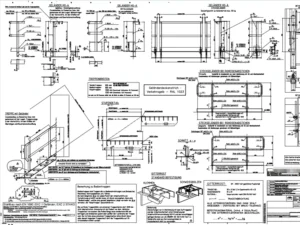
We’ve all faced that moment: something small gets missed early and later balloons into major rework and cost. I'll never forget when a client only provided a general elevation drawing for a complicated pipe rack. We didn’t realize a few bolt connections needed reinforcing until the steel was already on-site. That cost everyone time, money, and patience.
To prevent this, we always hold a full technical clarification meeting with the supplier before orders are placed. We go through all the drawings, talk through every interface, and clearly lay out what is and isn’t included. We use a “responsibility matrix2” to put this down on paper so nobody can argue later. Here is an example:
| Deliverable | Supplier | Client | Comments |
|---|---|---|---|
| Main steel fabrication | Yes | No | Supplier builds per approved drawings |
| Connection design3 | Yes | Review | Client’s engineer must review and approve |
| Shop drawings | Yes | Yes | Supplier prepares, client reviews/approves |
| Calculation reports | Yes | Yes | Client provides third-party checker |
| Erection on site | No | Yes | By client unless otherwise agreed |
| As-built documents | Yes | Yes | Confirmed on site by client, signed off |
This habit of drilling down into the gritty details has saved us from confusion and expensive negotiation later. We always encourage junior buyers: don’t be shy, ask questions—even the ones that seem basic!
Be Clear About Material Specifications and Quality?
Have you ever heard a supplier say, "We used steel of equivalent quality4"? That usually means something got substituted, and sometimes that’s a serious headache. We experienced this firsthand: we once received beams labeled “S355” but which failed strength tests—they were actually a mixed batch from an unknown mill.
Now, we detail everything. We don’t just say “galvanized”—we specify "EN 10346 DX51D, hot-dip galvanized, minimum 85 microns," and we require mill test certificates for every batch5. Here’s what we write directly into contracts:
| Material Aspect | Our Standard | Why It Matters |
|---|---|---|
| Steel grade | S355J2 (EN), ASTM A572 Gr 50 (US), or both | Confirms structural safety and quality |
| Coating | Hot-dip galvanized, 100 microns, to ISO 14616 | Key to long service life |
| Country of origin | EU, Japan, or US only—no exceptions | Avoids poor traceability |
| Tolerances | EN 1090 or AWS D1.17, always defined in millimeters | No guessing, smoother installation |
| Documentation | Certified mill test certificates and sample test bars | Proof of what actually arrives on site |
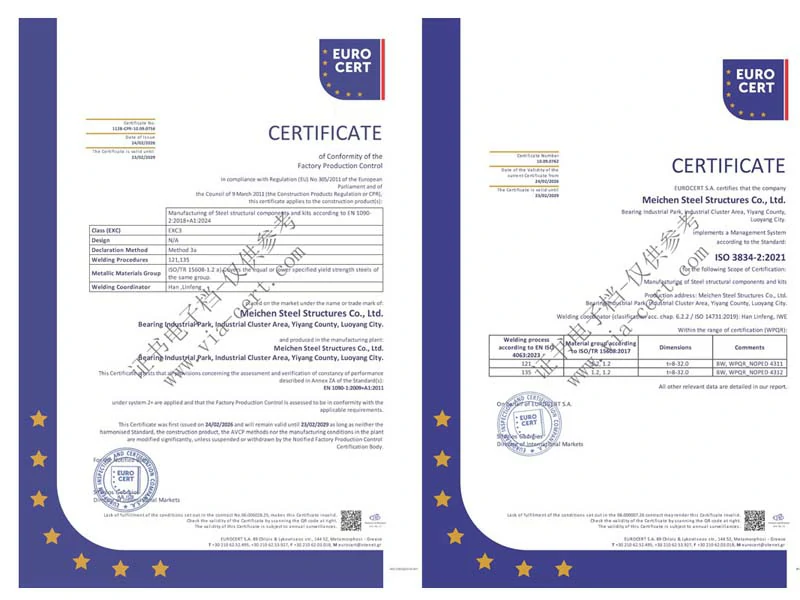
We even insist on visiting the fabricator’s plant or arranging a third-party witness8 for critical jobs. It might seem little, but one failed weld or bolt connection can snowball costs fast.
Factor in Logistics and Site Conditions?
I'll be honest: we once agreed to “delivery to site” for a bulkhead project, not even thinking about the access road width. When the truck arrived, it couldn’t make the turn. A last-minute crane rental and temporary road construction cost more than the steel itself.
Now logistics is always mapped out, not just priced but explained step by step by the supplier. We ask the following:
| Logistics Concern | What We Specify | Pitfalls We Avoid |
|---|---|---|
| Shipping method | Containerized, flatbed, project cargo | Partial loads, lost components |
| Oversize permits | Supplier arranges, all costs and time included | Permits missed, deliveries halted |
| Unloading means | Who’s arranging the crane and riggers | Last-minute rentals, site chaos |
| Site access | Full route and entry check9 (width, turning, ground) | Trucks get stuck, added costs |
| Protection/packing | Individual beams tagged, waterproof, damage recorded | Hidden rust, repair on arrival |
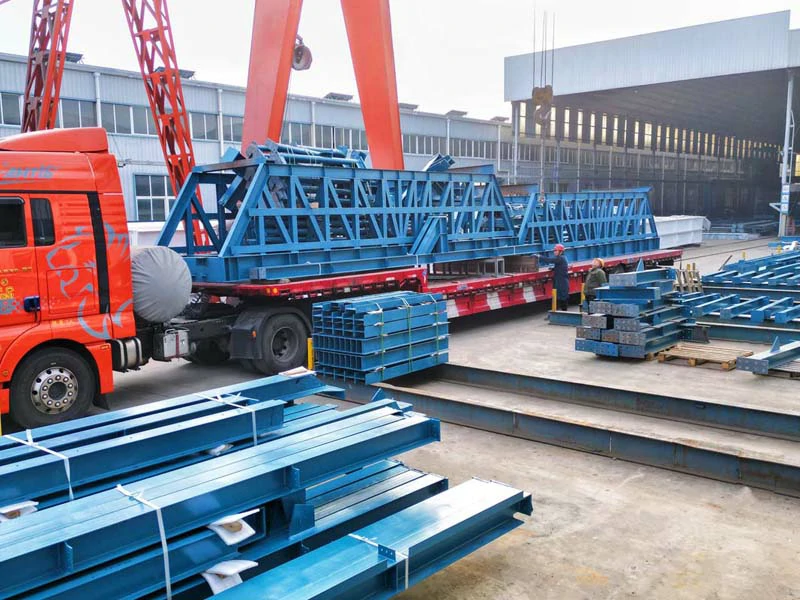
When we visit the supplier’s yard, we look at how loads are packed, if parts are properly marked, and if spare fasteners are included. These are small things, but each visit has paid off—it's easier to fix mistakes at the yard than on site when the clock is ticking.
Don’t Overlook Installation & Erection Costs?
Many of us learned the hard way how “perfect” shop-fabricated steel can still go wrong on site. There was a chemical plant job where every beam measured correctly, but the connections clashed with cable trays because nobody had called cross-trade coordination meetings10. The result? Two months of overtime, rework, and blame games.
What works for us now is assembling everyone—steel fabricator, civil team, MEP, and site supervisor—before the first bolt goes in. We review the erection manual, check timelines, and schedule a dry run or partial pre-assembly11.
| Erection Topic | What We Do | Value Added |
|---|---|---|
| Coordination | Regular interface meetings—blueprint and field | Avoids last-minute design changes |
| Erection sequencing | Supplier submits, we check fit with site reality | Reduces congestion, delays |
| Mock-up/pre-assembly | Do this in supplier yard if possible | Catches fit issues before shipping |
| Skill checks | Confirm crews have project/formwork experience | Improves safety and installation |
| Final tolerances | All in contract and shop drawings | No room for costly “adjustments” |
Every hour spent clarifying who does what, when, and in what order saves us days on the project. And the goodwill built among teams really shows when things get tight.
Hidden Costs in Change Orders and Project Delays?
The lowest-bidder trick is real: quote low and make up the difference with costly extras. I remember being burned by a vendor who charged double for added gusset plates and painted touch-ups because they weren't “in the base scope.” That project kept me up at night.
Now, we price out all common change scenarios up front and build them into the contract as unit rates12. If it can happen, it’s on the list.
| Extra Item | What We Pre-Price | How This Helps |
|---|---|---|
| Added welding | $/kg or $/meter, all-in | Puts limit on extras |
| Additional bolts | Price per bolt, installed | No surprise markup |
| Extra painting | $/sqm for every coat over base | Easy to audit |
| Delay penalties | $/day deducted for late delivery | Encourages on time |
| Overtime/night work | Pre-agreed shift premium | No blank checks |
We request that all possible scope adjustments—bracing, anchors, secondary supports—are clarified as “included” or “excluded” before signing. When variables do arise, we already have rates to reference. That means fair play for everyone and fewer long phone calls.
Always Request Transparent Payment Terms & Warranty?
One of my greatest headaches was paying nearly all up front only to find half the shop drawings were incomplete—and we had no leverage left. We learned it the hard way.
Our golden rule now is: pay for real progress, not just the passage of days. Each payment correlates with a deliverable, verified preferably by a third party. Warranties are written down, not verbally promised.
| Payment/Warranty Item | How We Structure It | Effect |
|---|---|---|
| Advance payment | Small, only for real startup costs | Safety if project stops early |
| Drawing approval | Pay only when work is approved, never before | Assures design quality |
| Fabrication milestones | Each tied to inspection and your written go-ahead | Motivates full delivery |
| Delivery/erection | Final batch on-site, after checked at site | You hold supplier accountable |
| Warranty | Years, named exclusions, after-sales cost presented | Avoids future disputes |
We also request after-sales support pricing upfront. Knowing what parts, repairs, or responses cost in years two and three keeps clients happy—and keeps maintenance from eating up project profits.
Conclusion
Our team’s real advantage in avoiding hidden costs has always been preparation and clear communication. The earlier and clearer you get on scope, materials, logistics, erection, changes, and payment, the smoother your project—and your budget—will run. By practicing these habits, we’ve turned painful lessons into dependable successes, and you can too.
---"[PDF] 17R-97: Cost Estimate Classification System - Covered Actions", https://coveredactions.deltacouncil.ca.gov/services/download.ashx?u=b69a3e04-eff8-4d5b-b84a-5336b009fcfa. Project management guidance identifies early scope definition and documented requirements as controls that reduce ambiguity, rework, and cost growth in project delivery. Evidence role: expert_consensus; source type: institution. Supports: Clear agreement on project scope at the beginning helps avoid hidden costs in complex steel projects.. Scope note: This supports the general project-control principle rather than proving outcomes for this specific steel-fabrication workflow. ↩
"Responsibility assignment matrix - Wikipedia", https://en.wikipedia.org/wiki/Responsibility_assignment_matrix. Project management references describe responsibility assignment matrices as tools for assigning deliverables and accountabilities among project participants, helping define who is responsible for specific work packages. Evidence role: definition; source type: institution. Supports: Using a responsibility matrix documents what each party owns and reduces ambiguity over deliverables.. Scope note: The source would define and contextualize the tool; it would not demonstrate that this specific matrix prevents disputes in every steel project. ↩
"[PDF] Transfer Forces in Steel Structures - Engineering Journal", https://ej.aisc.org/index.php/engj/article/download/987/986/986. Structural steel design standards and guidance treat connection design as a critical part of structural performance because connections transfer forces between members and must satisfy strength and serviceability requirements. Evidence role: mechanism; source type: institution. Supports: Connection design must be explicitly assigned and reviewed because it affects structural safety and project execution.. Scope note: The evidence supports the technical importance of connection design generally, not the allocation of responsibility in a particular contract. ↩
"[PDF] Mechanical properties of structural steel - GovInfo", https://www.govinfo.gov/content/pkg/GOVPUB-C13-8620f9e60cbfd1c3ac9e0bf55ba3770c/pdf/GOVPUB-C13-8620f9e60cbfd1c3ac9e0bf55ba3770c.pdf. Material standards distinguish steel grades by specified chemical composition, mechanical properties, and test requirements, so substituting an allegedly equivalent grade requires documented verification rather than informal equivalence. Evidence role: mechanism; source type: institution. Supports: Unverified claims of “equivalent quality” steel can create quality and compliance risks.. Scope note: This supports the need for verification of substitutions; it does not assess any specific supplier’s material claim. ↩
"What is the Difference Between EN 10204 3.1 and 3.2 Inspection ...", https://hollandapt.com/what-is-the-difference-between-en-10204-3-1-and-3-2-inspection-certificates/. Inspection-document standards describe mill test certificates as records reporting material identification, test results, and compliance with the specified product standard, supporting traceability of delivered steel batches. Evidence role: definition; source type: institution. Supports: Requiring mill test certificates for each batch helps verify the identity and properties of supplied steel.. Scope note: This supports the traceability function of certificates; it does not guarantee that certificates are authentic or that all quality defects will be detected. ↩
"[PDF] DoD 2013-3557", https://www.waru.edu/sites/default/files/Migrated/CopDocuments/Examination%20of%20Zinc%20Galvanized%20Steel%20Corrosion%20Rates%20in%20Various%20Atmospheric%20and%20Soil%20Exposure%20Conditions.pdf. ISO 1461 specifies requirements for hot-dip galvanized coatings on fabricated iron and steel articles, including coating characteristics and thickness-related inspection requirements. Evidence role: definition; source type: institution. Supports: Specifying hot-dip galvanizing by ISO 1461 and coating thickness provides a measurable quality requirement.. Scope note: The standard supports specification and inspection of galvanizing; actual service life also depends on environment, exposure, and maintenance. ↩
"[PDF] AWS D1.1 Structural Welding Code: You Specify It", https://web-ded.uta.edu/cedwebfiles/conf/Thursday%209%2015%20AM%20Welding%20Panel-AWS%20D1.1%20Structural%20Welding%20Code-Wes%20Oliphant.pdf. EN 1090 and AWS D1.1 are widely used structural steel fabrication and welding frameworks that specify execution, welding, and acceptance requirements for steel structures. Evidence role: definition; source type: institution. Supports: Referencing EN 1090 or AWS D1.1 helps define fabrication and welding acceptance criteria instead of leaving tolerances ambiguous.. Scope note: The standards establish recognized requirements, but the applicable code depends on project jurisdiction, contract, and structural design basis. ↩
"[PDF] Phase 1 Facility Site Work Construction: Hudson River PCBs ... - EPA", https://www3.epa.gov/hudson/012607_cqap_ph1-fswc.pdf. Construction quality assurance guidance recognizes independent inspection and witness testing as methods for verifying that work and materials conform to specified requirements before acceptance. Evidence role: expert_consensus; source type: institution. Supports: Third-party witnessing or inspection can reduce the risk of accepting nonconforming fabricated steel.. Scope note: This supports independent verification as a quality-control practice; it does not prove that third-party witnessing is cost-effective for every project size. ↩
"[PDF] special hauling route survey for over dimensional vehicles - nysdot", https://www.dot.ny.gov/nypermits/repository/perm85.pdf. Heavy-haul and oversize-load transport guidance commonly requires route surveys to evaluate clearances, turning radii, road geometry, and access constraints before moving large components. Evidence role: mechanism; source type: government. Supports: Checking route and site access before delivery helps prevent transport delays and unexpected logistics costs.. Scope note: The evidence supports the general need for route checks; permit rules and survey requirements vary by jurisdiction. ↩
"Avoid Costly Rework! The Role of Clash Coordination in BIM", https://www.united-bim.com/how-revit-clash-coordination-reduces-costly-rework-in-construction-projects/. Construction coordination research identifies clashes among architectural, structural, and building-services systems as a source of rework and schedule disruption, and describes coordination meetings or model-based clash detection as mitigation methods. Evidence role: mechanism; source type: paper. Supports: Cross-trade coordination meetings help prevent clashes between structural steel and other building systems.. Scope note: This supports coordination as a risk-control practice; the scale of benefit depends on project complexity and coordination quality. ↩
"[PDF] Aisc Steel Construction Manual 14th Edition - extnag.tacc.utexas.edu", https://extnag.tacc.utexas.edu/default.aspx/u15BH9/242134/aisc_steel__construction-manual-14th_edition.pdf. Structural steel fabrication guidance and case literature describe trial assembly or fit-up checks as methods for verifying that fabricated components align before shipment or final erection. Evidence role: mechanism; source type: institution. Supports: Dry runs or partial pre-assembly can reveal fit-up problems before components reach the site.. Scope note: The evidence supports the practice for complex assemblies; it may not be necessary or economical for simple repetitive members. ↩
"[PDF] Guide to contract change orders", https://ftp.txdot.gov/pub/txdot-info/cst/tips/change-order.pdf. Standard construction contract and cost-control references use pre-agreed unit prices to value additions or omissions where quantities vary, providing a documented basis for pricing change work. Evidence role: expert_consensus; source type: institution. Supports: Pre-agreed unit rates help control the pricing of common change-order items.. Scope note: This supports unit rates as a valuation mechanism; fair outcomes still depend on accurate scope descriptions and contract administration. ↩