
How Can We Avoid Costly Mistakes in Heavy Custom Steel Structure Procurement for Energy Projects?
When I think back to my first big energy project, what really kept me awake at night wasn’t just the money on the line—it was the fear of hearing, “We’ve hit a delay.” Delays lead to angry clients, safety concerns, and a domino effect that can throw an entire project off course.1 Over the years, I’ve learned that the secret to success is in the choices we make during procurement, especially when dealing with massive, non-standard steel structures.
The best way we’ve found to keep our projects on track is to involve experienced suppliers as early as possible2, demand detailed technical reviews, rigorously check their quality management, plan logistics with care, clarify time frames, and lock all of it down in clear contracts. This practical checklist helps us stay ahead of overruns, missed deadlines, and unexpected problems that chew through budget and morale.

It took painful lessons to learn that heavy steel procurement is never just about “buying a product.” It’s about preventing the endless problems that come from cutting corners or skipping steps—mistakes that can haunt everyone on the project. Here is how we break down what actually works, based on real project experience.
How does early involvement of experienced suppliers help avoid costly mistakes?
We’ve all seen missed details or design gaps turn into big, expensive headaches later in the process. Sometimes these problems only show up on-site, when it’s too late and too costly to change anything easily—and the schedule starts slipping away. I used to think we could “fix” everything in the field, but I was wrong.
Bringing experienced suppliers into the conversation right at the design phase is one of the best moves we can make. They point out design elements that won’t work in real-world fabrication3, catch tricky lifting issues, and help us spot risks we wouldn’t see without decades of hands-on experience. For example, on a recent power plant support project, our supplier saw a lifting issue no one else had noticed. We were able to redesign connection points before any steel was manufactured, preventing a costly crane rental and major site delay.
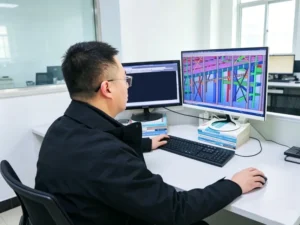
Involve your suppliers in joint design reviews—don’t just send them drawings and hope for the best. I always ask for examples of similar energy projects they’ve done, encourage feedback, and open the door for them to suggest changes. This can lead to smart choices, such as modularizing steel sections for easier shipment and faster site assembly4.
| Early Supplier Engagement | Practical Outcome |
|---|---|
| Joint design review | We catch faults and optimize plans for lifting and installation |
| Sharing reference projects | We confirm their experience & avoid beginner’s mistakes |
| Modularization input | We find ways to reduce shipping time and make site work easier |
Why is a detailed technical review essential for quality and compliance?
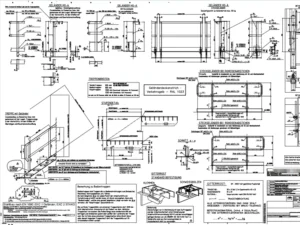
I’ll never forget one technical review meeting when an engineer at the table suddenly stopped the discussion—a crucial weld specification was missing from the drawings. If we hadn’t caught that, site welding would have halted for days. Moments like this remind me why technical reviews are more than just a box to tick.
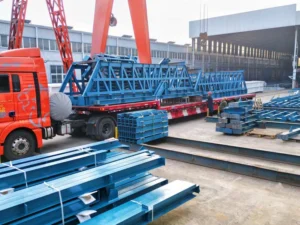
A good technical review means we’re not only checking drawings, but also carefully reviewing material grades, weld procedures, coating requirements, and testing plans5. We insist suppliers provide material traceability—that way, if there’s a problem, we can trace every beam, bracket, or plate back to its mill batch and original testing certificate. I also require the review team to include engineers, QA staff, and sometimes the client, so everyone’s concerns get addressed and nothing falls through the cracks.
| Review Item | What We Look For | Why It Matters |
|---|---|---|
| Material grade | Mill certificates & heat numbers | Prevents site rejections and rework |
| Welding procedures | Qualified welders & QA records6 | Keeps structural integrity |
| Corrosion protection | Real paint specs & salt spray tests | Protects against early failures |
| Inspections | NDT & visual check reports7 | Catches defects before shipping |
We’ve avoided design compliance issues, stopped the use of the wrong paint system, and even prevented unsafe lifting methods—all because we slow down and get the technical review right.
How do we validate real-world supplier QA/QC systems?
It’s easy for a supplier to show off a wall of certificates, or boast about their “ISO” credentials, but paperwork alone never tells the real story. We always dig deeper. If you’ve ever toured a fabrication shop, you know the difference a hands-on quality process makes. One time, a shop with impressive credentials had beams collecting rust outdoors and missing weld records. That was a red flag for us—not a chance we’d take for a critical project.
So, we look for more than just certificates. We ask for recent audit reports, check real QA and inspection logs, and talk to operators on the shop floor. The materials should be clearly labeled, stored properly, and fully traceable8—down to the batch number etched on each major piece.
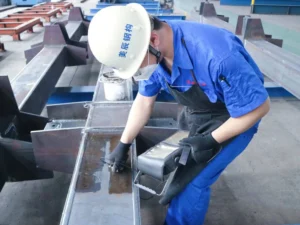
When a supplier welcomes a shop visit and shows us their live logs and testing reports, we know they have nothing to hide. For demanding projects, we regularly return for spot audits and sometimes pick steel at random for traceability checks. Real QA/QC is visible, consistent, and transparent—it’s not just about passing the audit once.
| QA/QC Check | How We Confirm | Why It Matters |
|---|---|---|
| Certifications | Actual audit reports & project logs | Trust, but verify evidence |
| Shop QA practices | By seeing logs & labeled stock | Stops hidden defects early |
| Traceability | Original heat/batch numbers | Prevents catastrophic mistakes |
What logistics and lifting pitfalls must we plan for in heavy steel procurement?
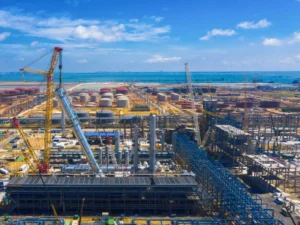
Even with perfect fabrication, we’ve seen heavy steel delayed, damaged, or impossible to lift safely because of poor logistics planning9. I’ve worked on projects where misjudged shipping routes or inadequate cranes turned a straightforward delivery into a multi-week headache.
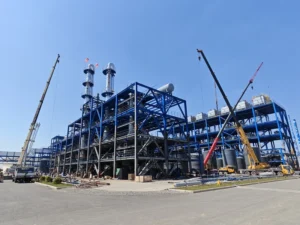
So, now we always check the supplier’s handling and lifting equipment, proximity to site, record of moving abnormal loads, and expertise with custom permits and insurance. If a supplier has successfully shipped and installed 60-meter pipe racks—like we needed on a petrochemical project—I know they’ll understand the details: specialized trucks, port handling, last-mile crane lifts, you name it.
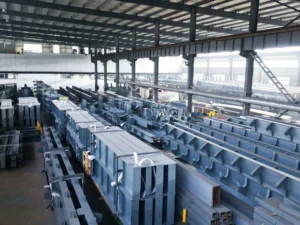
We ask our suppliers to show their logistics maps, past examples, site-specific plans, and how they’ll handle customs or overtime labor if unexpected problems arise. There’s always a dedicated logistics coordinator, not a generic “project manager.” These checks aren’t extra—they’re how we avoid lost time, surprises, and damaged steel.
| Logistics Factor | How We Check | What It Solves |
|---|---|---|
| Crane/lifting capacity | Available equipment & plans | Prevents lifting/fit delays |
| Shop proximity | Route analysis, permit needs | Cuts down transport risk |
| Modularization strategies | Proposals and site sequence | Simplifies assembly & safety |
| Customs/insurance | Proof of export/import experience | Avoids regulatory fines |
How can we clarify lead time and adapt to schedule changes?
If you’ve ever watched a ship with your steel delayed by a week (or a month), you know how stressful that feels—especially with crews waiting and the clock ticking. To guard against that, we do more than ask for a deadline. We require the supplier to break down the schedule with detailed Gantt charts, show their supply chain, provide backup plans, and give us real-time reporting.
If a supplier can’t show specific steps and past on-time deliveries for similar projects, I take that as a risk. Live updates make a huge difference: once, a batch delayed at sea was recovered and rerouted with fast reporting, so site work hardly skipped a beat. Having flexible options—like extra shifts or approved alternate materials—turns a schedule threat into a manageable hiccup.
| Schedule Tool | What We Require | Why This Matters |
|---|---|---|
| Gantt chart | Project timeline & dependencies | Foresees potential bottlenecks |
| Real-time tracking | Online production and shipping log | Early warning for issues |
| Contingency plans | Backups for late materials | Allows quick responses |
Which contract clauses do we always include to avoid disputes?
Nothing ruins momentum—and relationships—like a contract dispute late in the game. Early in my career, I saw how a lack of clarity on acceptance criteria turned a minor weld issue into a full-blown delay. Because of that, I insist on spelling out what “done” means in plain terms, not just checklists.
We include very clear acceptance specs, transparent payment milestones, strict but fair procedures for approving changes, and penalty clauses for quality or schedule failures. This way, both sides know exactly what is expected, how to adjust if needed, and how delays or problems will be handled.
| Contract Clause | How We Define It | What Problem It Prevents |
|---|---|---|
| Acceptance criteria | Exact specs, tests, and paperwork | No quality debates after delivery |
| Payment terms | Milestone payment based on progress | Motivates supplier, fair to both |
| Change procedures | Owner approval, documentation rule | No confusion on scope changes |
| Penalty clause | Clear fines for delay or poor quality | Drives accountability |
Conclusion
After years in the field, one thing is always true: when we engage the right partners early, review everything in detail, check and trust real quality, control logistics, manage schedules, and put it all in clear contracts, our projects succeed—on time, on budget, and safely. That’s the foundation I count on, every time.
---"Weather-related Construction Delays in a Changing Climate", https://scholar.afit.edu/cgi/viewcontent.cgi?article=1740&context=facpub. Project-management literature identifies schedule delay as a common driver of cost overruns, contractual disputes, and cascading effects on dependent activities in construction projects. Evidence role: general_support; source type: paper. Supports: Project delays can create broader project disruption, cost pressure, and safety or stakeholder concerns.. Scope note: The source would support the general relationship between delay and project impacts, not the author’s specific project experience. ↩
"Early contractor involvement", https://en.wikipedia.org/wiki/Early_contractor_involvement. Constructability and early supplier involvement research indicates that input from fabrication and construction specialists during design can reduce later rework and improve buildability. Evidence role: expert_consensus; source type: research. Supports: Early involvement of experienced suppliers can help avoid procurement and execution mistakes in heavy steel projects.. Scope note: The evidence is contextual because outcomes vary by project complexity, contract model, and supplier capability. ↩
"Design-for-Manufacturing-and-Assembly (DfMA) for the ...", https://www.academia.edu/93051417/Design_for_Manufacturing_and_Assembly_DfMA_for_the_construction_industry_A_review. Design-for-manufacture and constructability literature describes how fabrication input can identify impractical details before production, reducing rework and field changes. Evidence role: mechanism; source type: paper. Supports: Experienced suppliers can detect design details that are difficult or impractical to fabricate.. Scope note: The source would explain the mechanism generally rather than verify any single fabrication issue in the article. ↩
"Prefabrication and Modular Construction:", https://digitalcommons.calpoly.edu/cgi/viewcontent.cgi?article=1720&context=cmsp. Modular construction studies report that prefabrication and modularization can shift work off site and may shorten site installation time, while requiring careful transport and interface planning. Evidence role: general_support; source type: paper. Supports: Modularizing steel sections can make shipment and site assembly easier or faster.. Scope note: The support is conditional; modularization can improve assembly speed only when module size, logistics, and site interfaces are properly managed. ↩
"Fabrication Inspection of Structural Steel Products", https://www.codot.gov/programs/bridge/bridge-manuals/fabrication_inspection_of_structural_steel_final-3_18_19.pdf. Structural steel standards and fabrication specifications treat material grade verification, welding procedure qualification, protective coating specification, and inspection planning as core controls for compliance and structural performance. Evidence role: expert_consensus; source type: institution. Supports: A technical review should cover material grades, welding procedures, coating requirements, and testing plans.. Scope note: A standards source would establish accepted practice, not prove that every omitted review item causes failure. ↩
"AISC Versus an ICC-ES approved shop", https://app.aws.org/forum/topic_show.pl?tid=18777. Welding codes such as AWS D1.1 require welding procedure qualification and welder qualification records to demonstrate that structural welds are made under controlled, verified conditions. Evidence role: expert_consensus; source type: institution. Supports: Qualified welders and QA records are important for maintaining structural welding quality.. Scope note: The source would support the role of qualification records generally; project-specific acceptance requirements may vary by governing code. ↩
"Explore Nondestructive Testing (NDT) Methods for Industry ...", https://www.asnt.org/what-is-nondestructive-testing/methods/. Non-destructive testing and visual inspection are recognized inspection methods for detecting surface and internal discontinuities in welded or fabricated steel components before service. Evidence role: mechanism; source type: institution. Supports: NDT and visual inspection reports help detect defects before steel components are shipped.. Scope note: Inspection effectiveness depends on the method selected, inspector competence, acceptance criteria, and defect type. ↩
"The Risk of MTRs: A Guide to Material Traceability & PMI", https://northernmfg.com/the-risk-of-mtrs-a-guide-to-material-traceability-pmi/. Manufacturing quality-control guidance links material identification, controlled storage, and traceability records to prevention of mix-ups, deterioration, and nonconforming product use. Evidence role: mechanism; source type: institution. Supports: Clear labeling, proper storage, and traceability are important QA/QC controls for steel materials.. Scope note: The source would support these controls as accepted quality practices rather than establish a universal failure rate when they are absent. ↩
"Best Practices in Construction Logistics for Large-Scale ...", https://pinnacleinfotech.com/construction-logistics/. Construction logistics research identifies transport planning, route constraints, lifting coordination, and site delivery sequencing as factors that can affect schedule, safety, and material damage risk. Evidence role: general_support; source type: paper. Supports: Poor logistics planning can delay, damage, or complicate the safe lifting of heavy steel components.. Scope note: The citation would support the general risk mechanism, not the article’s specific examples of delayed or damaged steel. ↩