Designing Multi-Level Pipe Bridges: What Must You Know for Structural Success and Safety?
Working on a multi-level pipe bridge always seems exciting at first, but reality can bring unplanned surprises that cost much more than budgets and schedules allow. Teams often realize too late what they missed at the start, and fixing these mistakes eats up precious time and resources.
The key to successful multi-level pipe bridge design is involving all related teams from the very first planning steps1, building in flexibility for future modifications2, and using smart safety buffers to protect your investment and schedule3.
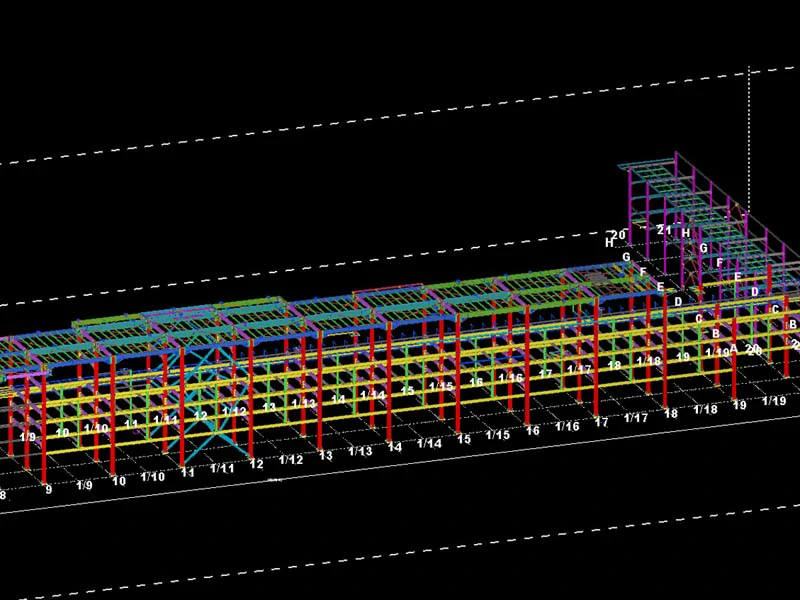
I remember my first major pipe rack project in a large petrochemical plant. The structure went up fast—and right after completion, the process team changed the equipment list. Our elegant bridge needed extra bracing and reinforcement, doubling the expected costs and delaying handover by an entire quarter. That taught me to never trust that “scope freeze” means no changes will come. I started reaching out to the equipment and piping teams right from scheme design, asking simple questions: “Will we need space or capacity for the next five years?” That one move saved us from rework on future jobs. If you learn just one thing from my experience: Build in extra room and talk across disciplines early.
What Are the Hidden Pitfalls at the Initial Stage of Multi-Level Pipe Bridge Design?
Excitement often drives us to finish the layout quickly, but we usually miss the real challenges—equipment loads change and pipe routes shift, sometimes right up till construction finishes4.
Failing to design with redundancy for future changes is the single most costly mistake. I always add at least 50% spare space and loading above the minimum code for this reason.
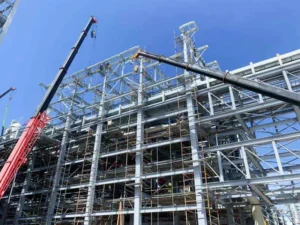
Let me put this into perspective: Regulations and standards get us started, but refinery reality is different. Almost every plant project I have seen gets revised right after initial steelwork. If we only design for current needs, any new pipe or heavier vessel means last-minute changes, late delivery, and lost trust. Here’s what we do now—
| Challenge | Typical Solution | What We Learned to Do |
|---|---|---|
| Equipment upgrades | Design as current | Add spare capacity (50%) |
| Pipe rerouting | Match piping plan | Reserve modular bay space |
| Expansion phase | Future phase | Plan columns for extra loads |
| Last-minute design change | Add more steel later | Bake in redundancy early |
The more we planned for the “unknowns,” the fewer headaches we faced on site. If you manage or buy these projects, please demand those early workshops across civil, equipment, and piping teams. It is always money well spent.
Which Steel Materials and Joint Details Should You Choose for Harsh Environments?
We all know cost cutting is tempting, especially when budgets are tight, but material choices can make or break the project just a few years later. Corrosion and failure almost always trace back to low-cost choices.
I always specify Q345B steel with a hot-dip galvanized finish in tough conditions and design secondary locking in all critical connections5. This extra level of detail saves on endless repairs and safety worries down the line.
I’ve seen projects in high-temperature or acidic environments fall apart within three years of opening—rusted frames, flaking paint, and bolts so loose you could tighten them by hand. Those jobs always started with Q235 steel and basic paint, maybe to save a few percent. In contrast, when we paid more for Q345B and insisted on hot-dip galvanizing, those bridges lasted—minimal repairs and no “midnight call” maintenance. Connection details matter just as much. Multi-level joints carry heavy loads at strange angles, and we always install secondary angle brackets or back-up bolts at the most important nodes. That single step has prevented disasters after earthquakes, storms, and even dropped equipment. For layout, we now favor “shared-column, independent-beam” frameworks. This lets you minimize steel use and still keep the flexibility for changes. American refineries use this all the time, but many local teams still stick with rigid independent frames.
| Decision Area | Default Practice | Our Best Practice |
|---|---|---|
| Steel grade | Q235 + paint | Q345B + hot-dip galvanized |
| Joint method | Single connection | Double locking/backup elements |
| Structure layout | Rigid 1:1 frames | Shared columns/independent beams |
| Maintenance cost | Rising over time | Steady, minimal |
Switching to higher-quality steel and better connections has made clients far more loyal. They remember reliability long after they forget the bid price.
How Can You Guarantee Long-Term Safety and Quality for B2B Clients?
Invisible weak spots—unseen weld cracks, loose bolts, and hidden corrosion6—cause the most expensive and dangerous failures. Picking them up early is critical for anyone managing large steelwork on live sites.
We verify torque tension and weld health at all key joints every six months, and we carry out annual manual touch-up anti-corrosion work, focusing especially on hidden corners.
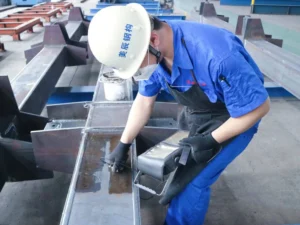
The biggest lessons in my career came not from design, but from maintenance walkdowns. In one memorable audit, two main beams had almost completely detached due to bolt loosening—nobody noticed for months because the bolts were on the “backside” of a node. From then on, I insisted on a strict checklist: measure torque on all main connections, and get independent non-destructive testing for all critical welds7. Corrosion is another slow killer. Pipe bridges tend to hide rust—the more layers we add, the harder it becomes to inspect. So we bring a corrosion team for a day or two every year, walking each level and hand-brushing primer back onto any weak spots. For bridges carrying high-temperature, acid, or salt gas pipes, we specify an extra-thick epoxy undercoat and double galvanizing, even if the initial bid rises by 10-15%. The payoff is clear: both emergency repairs and costly shutdowns become rare, and end clients see a longer, smoother plant life.
| Critical Risk | Minimum Industry Approach | What Works Best |
|---|---|---|
| Loose fasteners | Occasional torque checks | Scheduled 6-mo. recheck |
| Weak welds | General site inspection | Annual NDT at all nodes |
| Hidden corrosion | General spray paint | Annual walkdown & hand brush |
| High-risk lines | Standard paint system | Extra epoxy + dual galvanizing |
Simple, regular checks can save millions and could just as easily save lives.
How Do You Design for Easy Future Operation and Upgrades?
Most clients want the lowest cost “today,” but the second the process changes, old bridges become obstacles, not assets. Making changes painless pays off for years and prevents schedule crises.
We design for swap-out from day one by using modular beams, detachable connections, and by reserving wide walkways and future corridors. This makes retrofits and repairs much easier during operations.
I made my share of mistakes early on. We built bridges with welded joints and tight walkways because “nothing would change.” Three years later, a process upgrade needed two new pipelines, and we had to cut out half the bridge—costly, slow, and frustrating for both sides. These days, we always plan for what comes next. Modular, bolted beams let us add or replace segments with cranes and power tools, not torches. Removable panel joints let maintenance teams swap out old pipes without closing the entire bridge. We leave larger corridors and headroom—a bit more steel up front, but every plant manager I know is glad for this flexibility in year five. Clients who invest in monitoring with sensors (to track stress and corrosion) can see and fix wear before something critical fails8.
| Upgrade Factor | “Typical” Approach | Our Approach |
|---|---|---|
| Maintenance access | Narrow, fixed zones | Extra-wide modular corridors |
| Pipeline replacement | Extensive demo needed | Quick, partial swaps with modules |
| Adding new lines | No reserved space | Reserve bays and blank beam slots |
| Monitoring | Visual walkdowns only | Add sensors for continuous feedback |
The bridge you build today should be easy to adapt tomorrow. Our clients now ask for—and gladly pay for—options that keep their costs down for the life of the plant.
Conclusion
We design multi-level pipe bridges with a focus on built-in flexibility, future growth, top-grade materials, and preventative safety—because the best steel structure is one that stands strong and adapts for decades.
---"Front End Planning", https://www.construction-institute.org/front-end-planning. Research on front-end planning in capital projects reports that early scope definition and cross-functional participation are associated with improved cost and schedule performance. Evidence role: expert_consensus; source type: research. Supports: Early involvement of all related teams improves the likelihood of successful multi-level pipe bridge design.. Scope note: The evidence is contextual to capital-project planning and does not prove results for this specific pipe-bridge project. ↩
"Assessing-the-Influence-of-Manufacturing-Flexibility-on- ...", https://cpdlab.dcp.ufl.edu/wp-content/uploads/2020/08/Assessing-the-Influence-of-Manufacturing-Flexibility-on-Facility.pdf. Lifecycle engineering literature describes design flexibility and adaptability as methods for reducing future retrofit disruption when facility requirements change. Evidence role: general_support; source type: paper. Supports: Designing pipe bridges with flexibility for future modifications improves long-term usefulness and reduces retrofit difficulty.. Scope note: The source would support the general design principle rather than quantify savings for this article’s specific bridge configuration. ↩
"Structural Robustness | NIST", https://www.nist.gov/el/mssd/structural-robustness. Structural-engineering guidance on robustness and redundancy explains that reserve capacity and alternative load paths can reduce the consequences of unforeseen loads or local damage. Evidence role: mechanism; source type: institution. Supports: Safety buffers and redundancy can improve structural robustness and reduce the impact of unforeseen loads.. Scope note: The source would support the engineering rationale for safety buffers, not the commercial claim that they protect a particular investment or schedule. ↩
"Strategies to Reduce Cost Overruns and Schedule Delays in ...", https://scholarworks.waldenu.edu/cgi/viewcontent.cgi?article=5866&context=dissertations. Studies of construction change orders identify design changes, scope changes, and late information as common causes of cost and schedule impacts during project execution. Evidence role: general_support; source type: paper. Supports: Equipment loads and pipe routes can change late in construction, creating project risk.. Scope note: The evidence would support the prevalence and impact of late changes in construction generally, not the exact frequency in pipe-bridge projects. ↩
"m Experimental Analysis of Thread Movement in Bolted ...", https://ntrs.nasa.gov/api/citations/19950008490/downloads/19950008490.pdf. Bolted-joint engineering literature notes that vibration, cyclic loading, and loss of preload can contribute to loosening, and that locking or secondary retention features are used to reduce this risk in critical joints. Evidence role: mechanism; source type: paper. Supports: Secondary locking can reduce loosening risk in critical bolted connections subject to demanding service conditions.. Scope note: The appropriate locking detail depends on joint design, load type, inspection practice, and applicable structural standards. ↩
"Influence of Corrosion on Fatigue of the Fastening Bolts - PMC", https://pmc.ncbi.nlm.nih.gov/articles/PMC8003002/. Structural failure and maintenance literature identifies weld defects, connection deterioration, bolt-preload problems, and corrosion as common degradation mechanisms affecting steel structures. Evidence role: expert_consensus; source type: research. Supports: Weld cracks, loose bolts, and hidden corrosion are significant safety risks in steel structures.. Scope note: The source would support these as recognized hazards, not rank them as the most expensive or dangerous in every facility. ↩
"What is nondestructive evaluation? - Ohio State Online", https://online.osu.edu/content-hub/blogs/what-is-nondestructive-evaluation/. Nondestructive testing references explain that methods such as ultrasonic, radiographic, magnetic-particle, and dye-penetrant testing are used to detect surface or internal weld discontinuities without damaging the component. Evidence role: definition; source type: education. Supports: Non-destructive testing is an appropriate method for checking the health of critical welds.. Scope note: The source would support the capability and purpose of NDT, while inspection frequency and acceptance criteria must come from the project code or specification. ↩
"Embedded Sensors for Structural Health Monitoring - PMC - NIH", https://pmc.ncbi.nlm.nih.gov/articles/PMC9654583/. Structural-health-monitoring literature reports that sensors can track parameters such as strain, vibration, corrosion, or environmental exposure to support condition-based maintenance and early damage detection. Evidence role: mechanism; source type: paper. Supports: Sensor-based monitoring can help identify stress or corrosion trends before they become critical failures.. Scope note: Sensor monitoring improves detection capability but does not guarantee prevention of failure without appropriate thresholds, inspection follow-up, and maintenance action. ↩