I've been through dozens of factory audits over the past decade, and I can tell you one thing: the procurement managers who show up at our facility asking the right questions are the ones who've already been burned by a bad supplier. They're not browsing through catalogs anymore. They're trying to figure out if we can actually deliver what we say we can deliver. Equipment support structure procurement for petrochemical projects isn't about finding the cheapest fabricator with the right certificates—it's about identifying manufacturers who won't become your biggest project risk.
Equipment support structures for petrochemical projects require manufacturers with proven experience in handling non-standard geometries, special material requirements, and engineering coordination.[^1] Unlike standard building steel structures, these components demand tight tolerances, frequent design iterations, and interface management across multiple contractors. The procurement process should focus on validating fabrication capability through factory audits, project references, and quality system implementation rather than relying solely on certifications and bid prices.
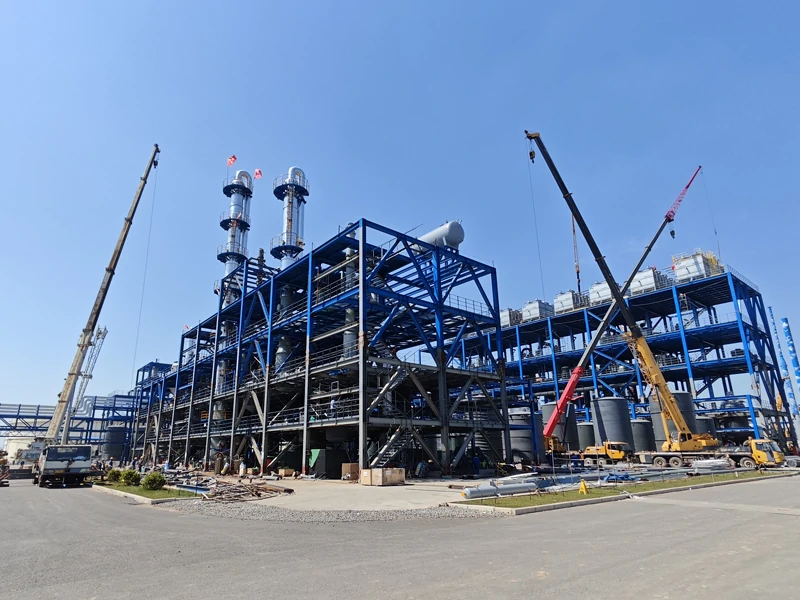
Here's what most procurement teams don't realize until it's too late: the factory that looks perfect on paper can still collapse under the pressure of a real petrochemical project. The certification wall looks impressive. The reference list includes big names. But when the design revisions start flooding in at week six, and the installation team discovers that bolt holes don't line up, you're already behind schedule. Let me walk you through what I've learned from completing projects like the Guangzhou Sinopec Refining & Chemical Project and the Jingmen Petrochemical Project—and what you should be looking for when you're evaluating suppliers.
What Makes Equipment Support Structures Different from Standard Steel Structures?
I've had procurement managers walk through our facility expecting to see the same production setup as a building steel structure factory. They're surprised when I explain that the work is actually more complicated, not less.
Equipment support structures for petrochemical projects might involve smaller total tonnage than a high-rise building frame, but the manufacturing complexity is significantly higher. These structures must accommodate process equipment with strict alignment requirements, interface with piping systems at precise elevations, and often include penetrations and attachments that aren't finalized until late in the design process.
The Precision Problem
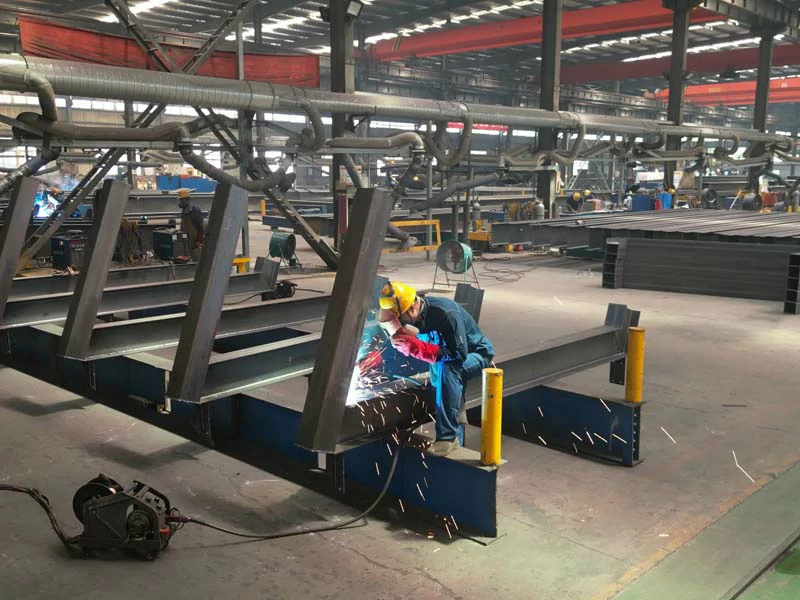
Building steel structures typically work with tolerances of ±5mm. Equipment support structures often require ±2mm or tighter[^2]. Why? Because the process equipment sitting on top of your structure costs millions of dollars and needs to align with piping connections, electrical interfaces, and instrumentation access points that don't have much room for error.
I remember a heating furnace platform project in Guangdong where the tolerance specification was ±1.5mm for the main beam levelness. The engineering consultant explained it simply: if the furnace tilts even slightly, the refractory lining cracks prematurely[^3] and you're looking at unplanned shutdowns. That's when I realized equipment support structures aren't really "structures" in the traditional sense—they're precision foundations for process systems.
The Non-Standard Geometry Challenge
Standard steel structures use catalog sections and repetitive connections. Equipment support structures rarely repeat the same detail twice. One platform might include:
- Cantilever beams projecting beyond columns to support pipe racks
- Multi-level access platforms with stair towers at odd angles
- Equipment pads with embedded anchor bolts at non-standard spacing
- Vibration isolation interfaces requiring special connection details
- Thermal expansion provisions because process equipment operates at elevated temperatures
These aren't modifications to standard designs. They're custom fabrications from the beginning. The manufacturers who only produce standard building frames don't have the engineering support or shop experience to handle these variations efficiently.
The Interface Coordination Reality
Here's what makes equipment support structures particularly demanding: you're not fabricating in isolation. Your structure has to work with:
| Interface Type | Coordination Requirement | Why It Matters |
|---|---|---|
| Process Equipment | Anchor bolt locations, baseplate elevations | Equipment vendor provides final dimensions late in schedule |
| Piping Systems | Pipe support locations, penetration sizes | Piping design changes frequently during engineering phase |
| Electrical & Instrumentation | Cable tray routing, junction box mounting | Must accommodate conduit runs not shown in early drawings |
| Civil Foundations | Anchor rod locations, grout pad elevations | Field conditions often differ from design assumptions |
| Adjacent Structures | Connection details, expansion joints | Must coordinate with other contractors' work |
I've watched inexperienced manufacturers treat these interfaces as fixed parameters. Then the piping team sends a revision moving a support point by 800mm, and suddenly the fabricator is stuck with partially completed work that no longer matches the updated design.
Why Factory Audits Matter More Than Certifications?
Every supplier competing for your project will present ISO 9001 and EN 1090 certifications[^4]. These documents confirm that the manufacturer has implemented quality management systems and structural steel fabrication standards. But here's what they don't tell you: whether this particular factory can actually execute your specific project requirements.
Factory audits reveal operational reality. Certifications prove that paperwork exists. The gap between those two things is where project failures happen.
What to Look for During Factory Audits
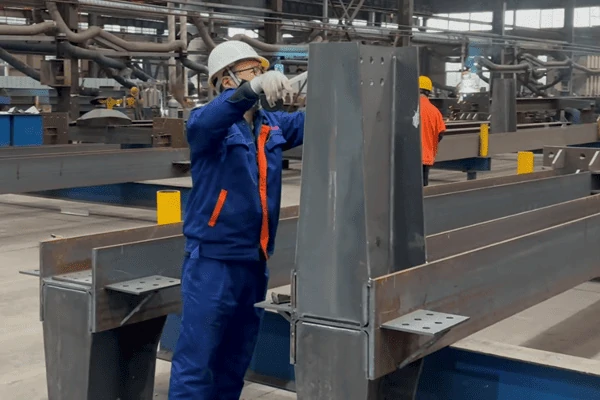
When I host audit teams from EPC contractors, I can immediately tell which procurement managers understand manufacturing and which ones are just checking boxes on a compliance form. The experienced auditors spend most of their time on the shop floor asking about specific scenarios. The inexperienced ones stay in the conference room reviewing certificate copies.
Here's what the smart auditors focus on:
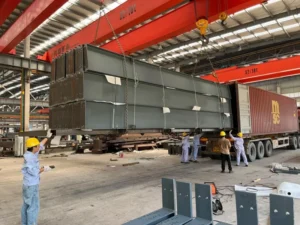
Production line capability for heavy sections. Can the factory handle welded H-beams up to H1000×400 or larger? Do they have overhead cranes with sufficient capacity to move assemblies weighing 15+ tons? I've seen manufacturers bid on projects requiring heavy columns, then struggle because their facility physically cannot manipulate those sections during fabrication.
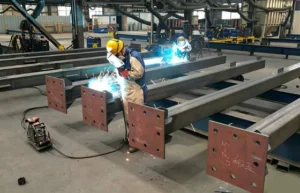
Welding qualification and procedures. Ask to see WPS (Welding Procedure Specifications) for the material grades specified in your project. Request welder qualification records. Check if they regularly perform ultrasonic flaw detection on full-penetration welds[^5], or if they only use visual inspection. For petrochemical projects, the welding quality requirements are significantly stricter than standard building structures.
Quality control testing equipment. Does the factory own ultrasonic testing equipment, or do they hire third-party inspectors only when required? Can they perform magnetic particle inspection in-house? The difference matters because manufacturers who own UT equipment tend to catch welding defects during production, while those who only arrange third-party inspection after completion often face costly rework delays.
Project management and engineering support. Who handles drawing reviews and RFI responses? Do they have engineers who can coordinate with your design team in English? What's their typical turnaround time for responding to design changes? These questions expose whether the manufacturer has a project management system or just a production scheduling board.
The Shop Floor Tells the Truth
Certifications confirm that procedures exist. The shop floor shows whether workers actually follow them. During audits, I always encourage visitors to observe:
-
Material identification systems – Are steel plates clearly marked with heat numbers and material specifications? Can traceability be maintained from raw material receipt through final assembly?
-
Welding process controls – Are welders using preheat procedures on thick sections? Is inter-pass temperature being monitored? These details aren't visible in a certificate.
-
Dimensional accuracy practices – How do they verify that bolt hole patterns match the design? What inspection methods do they use before assemblies leave the shop?
-
Surface preparation quality – If your project requires SA 2.5 blast cleaning[^6], can you see examples of recently blasted components? Is the shop organized to prevent re-contamination after blasting?
I remember an audit where the procurement manager noticed that our shop supervisors were marking chalk notes directly on fabricated sections—recording dimensional checks, weld sequence, and quality holds. He commented that this level of in-process tracking gave him more confidence than the formal inspection reports, because it meant quality control was happening continuously, not just at final inspection.
How Project Experience Reveals True Manufacturing Capability?
Reference lists look similar across competing suppliers. Everyone includes major company names. But not all project experience is equivalent, and procurement teams need to understand what questions actually expose capability differences.
When I review inquiries from EPC contractors, I can usually tell whether their procurement team understands steel structure manufacturing. The generic RFQ asks for certifications, capacity statements, and unit prices. The experienced RFQ asks about specific projects: tonnage, timeline, design complexity, interface coordination requirements, and lessons learned.
Tonnage Alone Doesn't Define Complexity
I've completed projects ranging from 3,000 to 5,000 tons, and here's what I learned: a 3,500-ton equipment support structure project with 200 unique connection details is far more demanding than a 6,000-ton warehouse with repetitive framing.
Ask suppliers about their project complexity, not just tonnage:
-
How many unique structural sections did the project include? Repetitive designs are easier to execute than custom geometries.
-
What was the heaviest single piece they fabricated and transported? Heavy lifts require specialized equipment and procedures.
-
How many design revisions occurred during fabrication? Projects with frequent changes test a manufacturer's engineering coordination and change management systems.
-
What was the interface coordination requirement? Did they need to coordinate with equipment vendors, piping contractors, and civil teams? Interface-heavy projects demand better project management.
For example, our Guangzhou Sinopec project involved equipment support structures for multiple process units across a refining complex. The total tonnage was around 4,200 tons, but the project included more than 180 different structural assemblies, each requiring custom connection details. We received over 60 design revision notices during a six-month fabrication period. That level of complexity teaches you things that a straightforward building frame project never will.
Petrochemical Experience Versus General Industrial Experience
There's a meaningful difference between manufacturers who have completed petrochemical projects and those whose experience is primarily general industrial structures or building frames. Petrochemical projects involve:
Special material requirements. ASTM A36 is common in building structures. Petrochemical equipment supports might require ASTM A572 Grade 50, SA516 pressure vessel steels, or low-temperature carbon steels[^7] depending on process conditions. Does your supplier understand material selection implications?
Stricter welding standards. Welds on building structures typically meet AWS D1.1 structural welding code[^8]. Petrochemical projects may require ASME Section VIII pressure vessel welding standards[^9] for certain connections, or API 650 tank welding procedures. These aren't minor variations—they require different welder qualifications and inspection protocols.
More rigorous quality documentation. Building projects usually require mill test reports and final inspection records. Petrochemical projects demand full material traceability, weld maps, NDE reports for every critical weld, coating thickness records, and dimensional verification documentation that meets third-party inspection requirements.
I don't say this to suggest that building structure manufacturers are unqualified—many are excellent at what they do. But petrochemical project execution involves different requirements, and switching from one to the other isn't automatic. The learning curve is steep, and your project schedule isn't the best time for a supplier to figure that out.
What Are the Hidden Risks in Equipment Support Structure Procurement?
Most procurement failures don't announce themselves during supplier selection. They emerge slowly during execution, often becoming visible only after recovery becomes expensive. After completing multiple large petrochemical projects, I've identified several risk patterns that procurement teams consistently underestimate.
Design Documentation Delays Are Inevitable
Here's a reality that surprises many procurement managers: your fabrication schedule will experience delays that have nothing to do with manufacturing capacity. Design documentation for equipment support structures rarely arrives complete and frozen at the start of fabrication.

Typical delays include:
Equipment vendor information arrives late. The process equipment sitting on your support structure is being designed and procured in parallel with your steel fabrication. Final anchor bolt locations, baseplate dimensions, and load distributions often aren't confirmed until the equipment vendor completes their detailed engineering—which may be weeks or months after you wanted to start fabrication.
Piping design changes ripple through structural requirements. Pipe routing decisions affect where your structure needs penetrations, reinforcement, and support attachments. When the piping team revises a line routing to avoid a clash, your structural drawings need updates to match.
Interference checks reveal coordination problems. Modern projects use 3D modeling to identify clashes between disciplines[^10]. But interference checking happens in phases, and late-stage clash resolution often requires structural modifications.
Experienced manufacturers build timeline buffers and maintain flexible production scheduling to accommodate these inevitable delays. Inexperienced manufacturers treat late documentation as an excuse for missed deadlines rather than a manageable reality.
Communication Gaps Multiply in International Projects
If your EPC contractor is based in Europe or North America and your steel structure manufacturer is in Asia, you're managing coordination across time zones, languages, and business cultures. These gaps create friction that slows decision-making and increases error risk.
I've learned to structure communication protocols explicitly:
- Regular weekly coordination calls at overlapping business hours, with structured agendas distributed in advance
- Documented RFI procedures with response time commitments and escalation paths
- Drawing revision tracking systems that prevent version confusion
- Quality hold notification protocols so that inspection findings trigger immediate engineering review rather than waiting for the next scheduled meeting
Manufacturers without international project experience often underestimate these coordination challenges. They assume that email communication and occasional video calls will suffice. Then they discover that a three-day question-and-answer cycle for a minor design clarification cascades into week-long delays when multiple issues accumulate.
Small Design Changes Can Trigger Large Rework Costs
Design changes happen on every project. The cost impact depends on when the change arrives and how far fabrication has progressed.
A connection detail revision that arrives during the drawing review phase costs almost nothing—just engineering time to update the drawings. The same revision arriving after welding is complete might require cutting out finished work, re-fabricating components, and repeating quality inspections. The cost multiplies by 10x or more.
Procurement teams should evaluate how manufacturers handle change management:
- Do they have formal change notification procedures that flag when a revision will impact completed work?
- Can they provide cost and schedule impact assessments within 48 hours of receiving a design change?
- Do they maintain WIP (work in progress) tracking detailed enough to identify exactly which assemblies are affected?
I've seen projects where poor change management turned minor design tweaks into major schedule overruns because the manufacturer couldn't quickly determine what work needed to be reworked.
How to Structure a Risk-Reducing Procurement Process?
Smart procurement isn't about finding the perfect supplier. It's about structuring your selection and contracting process to reduce execution risk and create accountability mechanisms that keep problems from escalating.
Here's how experienced procurement teams approach equipment support structure sourcing for petrochemical projects:
Pre-Qualification Before Price Competition
Instead of sending RFQs to every manufacturer who claims petrochemical experience, narrow the field first through technical pre-qualification:
Request detailed capability statements including:
- Production line descriptions with equipment capacity specifications
- Quality system certifications with audit dates and scope
- Recent project references with verifiable tonnage and complexity metrics
- Engineering support capabilities and language competencies
- Typical lead times from PO receipt to first shipment
Conduct preliminary factory audits for manufacturers who pass document review. A one-day site visit reveals more about capability than a hundred-page brochure. Bring someone from your engineering team who understands fabrication requirements—procurement specialists alone often miss critical technical red flags.
Check references with specific questions. Don't just ask if the manufacturer delivered successfully. Ask about responsiveness to design changes, accuracy of progress reporting, quality of as-built documentation, and how they handled problems when they occurred.
Only after pre-qualification should you issue formal RFQs to the short-listed manufacturers. This approach takes more upfront effort, but it dramatically reduces the risk of awarding a contract to a supplier who can't execute.
Build Quality Gates Into the Contract
Your fabrication contract should include defined hold points where work cannot proceed without formal approval:
| Hold Point | Approval Required | Purpose |
|---|---|---|
| Material Procurement | Mill test report review | Verify correct material grades and properties |
| Shop Drawing Approval | Engineering sign-off | Confirm fabrication details match design intent |
| First Article Inspection | Dimensional and welding verification | Validate manufacturing processes before full production |
| Pre-Shipment Inspection | Third-party or customer inspection | Confirm completed work meets specifications |
These hold points create checkpoints where you can catch problems before they compound. Yes, they add coordination steps. But they also prevent the scenario where you discover quality issues after 80% of fabrication is complete and recovery options are limited.
Define Progress Reporting Requirements Clearly
"The structure is 60% complete" doesn't tell you much. What does 60% mean? Material procurement? Cutting and drilling? Welding? Surface preparation? Assembly?
Experienced manufacturers provide progress reports broken down by work package and activity:
- Material procurement percentage by tonnage and critical long-lead items
- Fabrication completion by major assembly or shipping lot
- Quality inspection status showing completed tests versus total required
- Painting and surface preparation completion by square meters
This granular reporting lets you identify bottlenecks early. If welding is falling behind schedule but cutting is ahead, you can address the welding resource issue before it delays shipment.
I've found that manufacturers who resist detailed progress reporting are usually the ones who don't actually track their work at that level—which means they can't manage their own production effectively, much less communicate reliable delivery commitments to you.
Frequently Asked Questions
What is the typical lead time for equipment support structure fabrication?
Lead time depends on project complexity and quantity, but for petrochemical equipment support structures in the 2,000-5,000 ton range, expect 4-6 months from purchase order to final shipment[^11]. This includes engineering review (3-4 weeks), material procurement (4-6 weeks), fabrication (8-12 weeks), surface preparation and painting (2-3 weeks), and inspection/documentation (1-2 weeks). Projects with special material requirements or tight tolerances may need longer lead times.
How do I verify a manufacturer's welding quality capability?
Request copies of their WPS (Welding Procedure Specifications) and welder qualification records. Ask about their ultrasonic testing procedures and whether they own UT equipment or hire external inspectors. During factory audits, observe active welding operations and ask to see examples of completed welds with UT inspection records. Check whether they maintain weld maps that track every critical weld joint through fabrication, inspection, and acceptance.
Should I use a local manufacturer or source internationally?
This decision depends on your project location, timeline, and total quantity. International sourcing (particularly from Asian manufacturers) often provides cost advantages for quantities above 1,500 tons, but requires more intensive coordination and longer lead times. Local manufacturers may offer faster delivery and easier communication but at higher unit costs. For critical path items or projects with uncertain design status, local sourcing reduces risk. For well-defined, large-quantity requirements with adequate schedule buffer, international sourcing can deliver significant cost savings.
What documentation should I require with the finished structures?
At minimum, require material test reports (MTRs) for all structural steel, welding consumable certificates, weld maps with NDE inspection records, dimensional inspection reports, surface preparation and coating thickness records, and final inspection certifications. For petrochemical projects, you may also need positive material identification (PMI) reports[^12], impact test results if required by design codes, and full traceability documentation linking each fabricated piece to its source material heat number.
Conclusion
Equipment support structure procurement for petrochemical projects succeeds or fails based on your ability to identify manufacturers with genuine execution capability, not just impressive certificates and reference lists. The lowest bid from a supplier without relevant project experience becomes the most expensive choice when schedule delays and quality failures force costly interventions. Focus your procurement process on validating fabrication capability through factory audits, asking specific questions about previous project complexity, and structuring contracts with quality gates that create accountability checkpoints throughout fabrication.