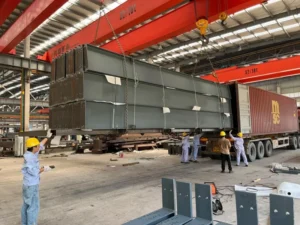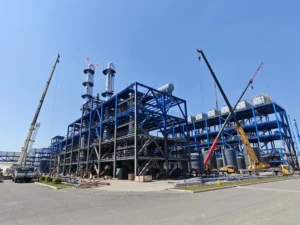
I've been in too many meetings where procurement teams ask me this question expecting a simple checklist. They want me to say "ISO certification, capacity over 10,000 tons, ten years' experience—check, check, check." But here's the problem with that approach: I've seen suppliers with perfect credentials deliver pipe racks that needed major rework during field installation. And I've seen the delays that caused. The real question isn't what credentials a supplier has on paper—it's whether they can actually execute your specific project without creating schedule risks or forcing engineering changes after fabrication starts.
EPC contractors should look for pipe rack fabrication suppliers who can demonstrate execution capability beyond basic certifications: heavy section handling equipment for beam sizes up to W36, documented dimensional tolerance records from previous modular projects, and proven coordination experience with piping contractors for interface accuracy. The critical differentiator isn't manufacturing capacity—it's whether the supplier understands the post-fabrication consequences of tolerance stack-up, transport constraints, and field assembly sequencing for your specific project delivery model.
Most procurement guidelines focus on what suppliers should have. But after handling customer inquiries for years, I've learned that the suppliers who cause problems usually pass initial qualification. The issues appear later—during drawing reviews, after steel procurement, or worse, during third-party inspection. Let me walk you through what really separates capable suppliers from ones who will cost you schedule time and contractor relationships.
Why Do Standard Supplier Qualifications Miss Critical Risks?
Clients send me RFQs with qualification matrices all the time. They score suppliers on certification status, annual capacity, number of employees, and years in business. Everything looks rational on paper.
Here's what happens in reality: supplier scores high on the matrix, wins the contract, then three months into fabrication we discover they've never handled beam sections heavier than W24. Your project needs W36 columns for a 12-meter pipe rack span. Now they're trying to figure out lifting procedures and weld sequencing for sections they don't normally produce.
RFQ scoring matrices evaluate administrative capability, not manufacturing execution capability. A supplier can have EN1090 certification and still lack the overhead crane capacity to safely handle heavy pipe rack beams. They can have 20 years of experience in building structures and zero experience with the dimensional tolerances required for modular pipe rack systems that ship as completed assemblies.
Standard qualifications tell you a supplier runs a functioning steel fabrication business. They don't tell you whether that business is set up for your project type. I've talked to engineering managers who awarded contracts based on ISO certification, only to find out during production that the supplier's blast cleaning equipment couldn't consistently achieve SA2.5 standard across large surface areas. The certificate existed. The execution capability didn't match project requirements.
The Real Risk Pattern
Post-award problems follow a pattern I've seen repeatedly:
- Week 4-6: Supplier requests clarification on tolerances they should have questioned during bid review
- Week 8-12: First dimensional check reveals systematic deviation outside acceptable range
- Week 16-20: Third-party inspector flags weld quality issues requiring rework
- Week 24+: Delivery delays cascade into module assembly schedule or site erection timeline
These aren't random failures. They happen because qualification criteria screened for business legitimacy instead of manufacturing fit. The supplier isn't incompetent—they're just executing a project type outside their normal operational range.
Does Certification Really Confirm Execution Quality?
Let me be direct about this: EN1090 certification and ISO 9001 matter. They confirm a supplier has documented quality systems. But I've reviewed enough non-conformance reports to know that certification doesn't predict execution quality.
Certification tells you a supplier can produce evidence of their quality process. It doesn't tell you whether their equipment can consistently execute to your tolerance requirements.
EN1090 confirms a manufacturer has documented welding procedures, welder qualifications, and inspection protocols. It does not confirm they have experience with pipe rack-specific challenges: maintaining vertical alignment across multi-story frames, controlling camber in long-span beams under self-weight, or achieving the interface accuracy needed when pipe racks connect to process equipment foundations with strict elevation tolerances.
Here's what I actually check when a customer asks about our certifications:
- Can they show completion records from pipe rack projects with similar beam sizes and span lengths?
- Do they have equipment that handles the required section weights without excessive handling steps?
- Can they demonstrate how they maintain dimensional control during assembly and welding of large frames?
Equipment Capability Reveals More Than Certificates
A supplier might be certified to fabricate structural steel. But pipe racks for petrochemical or LNG projects have specific demands that general structural steel experience doesn't cover.
During factory audits, I look at:
Lifting equipment: Do they have overhead cranes rated for the actual beam weights after welding? Can they rotate heavy box columns safely during multi-pass welding? I've seen suppliers struggle with W30+ beams because their crane capacity was marginal.
Assembly fixtures: How do they hold multi-tier pipe rack frames during fabrication? Temporary tack welds and manual alignment create dimensional drift. Purpose-built fixtures or adequate floor space for full-frame assembly indicates they've handled similar work before.
Blast cleaning capacity: Can they blast large assembled frames to SA2.5 standard? Or do they only have equipment sized for individual beam sections? Post-assembly blast quality directly affects coating adhesion and long-term corrosion protection.
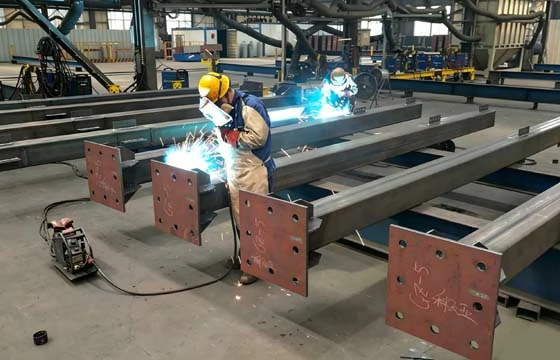
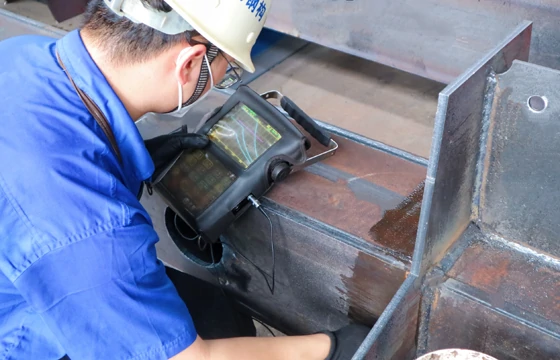
Welding equipment and procedures: Do they have welding procedures qualified for the specific steel grades and joint configurations in your design? Can they produce welds that meet ultrasonic testing requirements if specified?
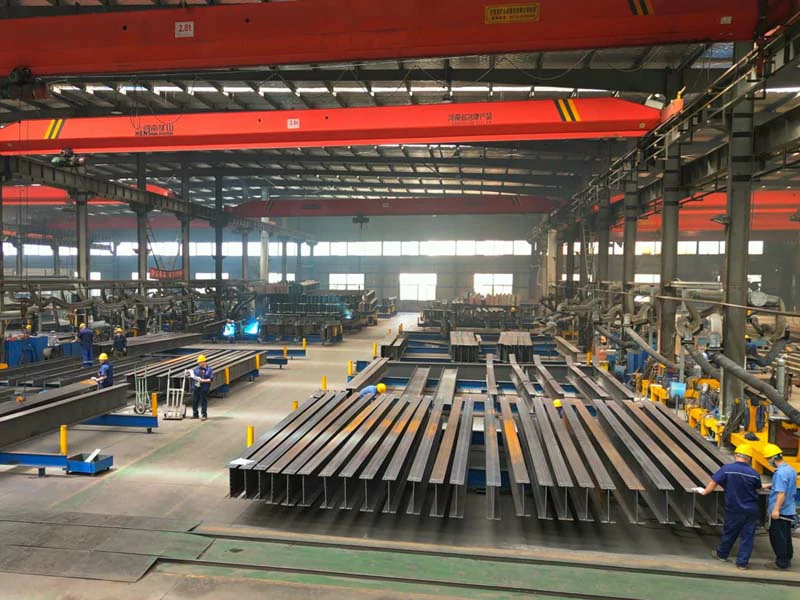
These capabilities don't appear on certification documents. But they determine whether a supplier can physically produce what your drawings specify.
How Should You Evaluate Dimensional Accuracy Capability?
This is where most supplier evaluations get vague. Everyone claims they maintain tight tolerances. Few suppliers can show you evidence of how they achieve it on large, complex frames.
Dimensional accuracy isn't about craftsmanship—it's about process control. I've worked with highly skilled welders who produced beautiful beads but couldn't prevent distortion accumulation across a 15-meter pipe rack frame. Skill matters, but systematic process control matters more.
Dimensional accuracy for pipe racks depends on three factors: fabrication sequence planning, distortion compensation calculations, and verification measurement at critical stages. Asking a supplier "what tolerances can you hold" produces optimistic answers. Asking "show me how you verified dimensional accuracy on your last pipe rack project" reveals actual capability.
What Dimensional Records Actually Tell You
When I review a supplier's past projects, I'm not looking for perfect measurements. I'm looking for evidence they measure systematically and correct proactively.
Good dimensional control documentation includes:
- Foundation interface verification: Did they check base plate bolt hole patterns against foundation drawings before welding plates to columns?
- Elevation control records: Can they show how they verified column heights and beam elevations during assembly?
- Final as-built dimensions: Do they provide marked-up drawings showing actual dimensions, not just theoretical design dimensions?
Suppliers who don't have this documentation either didn't measure systematically, or they measured but didn't record. Either situation creates risk. If dimensional issues appeared during installation, you'd have no baseline to determine where the problem originated.
Module Projects Demand Different Tolerance Thinking
If you're building pipe racks for modular construction, dimensional accuracy requirements change. You're not just meeting structural tolerances—you're ensuring the completed module fits within transport envelopes and connects to adjacent modules during site assembly.
This requires suppliers who understand:
- Transport frame coordination: Pipe rack dimensions must account for the structural transport frame that protects the module during shipping
- Interface surface accuracy: Connection points between modules need tighter tolerances than typical field-bolted structural steel
- Pre-assembly verification: Modules should be trial-fitted before final welding if connection geometry is complex
I've seen suppliers bid confidently on modular work, then struggle because they approached it like conventional structural steel fabrication. The dimensional thinking is different. Conventional structures get adjusted in the field. Modules need to be correct before they leave the factory.
What Questions Expose Real Experience with Pipe Racks?
Most suppliers know how to fabricate structural steel. Fewer suppliers understand pipe rack-specific constraints. The difference shows up in how they respond to project-specific questions.
These aren't trick questions—they're scenarios that routinely occur during pipe rack fabrication. How a supplier answers tells you whether they've encountered these situations before.
Ask suppliers about revision management during engineering progression: "How do you handle drawing changes after steel procurement but before fabrication?" Experienced pipe rack suppliers have procedures for material tracking and WIP verification because design changes during detailed engineering are normal in process plant projects. Suppliers without these procedures either haven't done many EPC projects, or they've created expensive rework situations for past clients.
Questions That Reveal Process Understanding
Here are the inquiries that help me assess whether a supplier has real pipe rack experience:
"How do you coordinate pipe support attachment locations with the piping contractor?"
Pipe racks aren't standalone structures—they support piping systems designed by separate contractors. Attachment points need to match piping layout. Experienced suppliers have processes for reviewing piping drawings and confirming attachment locations before welding support clips or lugs.
Weak answer: "We fabricate according to your structural drawings." Strong answer: "We cross-check piping isometric drawings against structural details and flag any conflicts before fabricating support attachments."
"What's your process if third-party inspection identifies a weld that doesn't meet UT acceptance criteria?"
Weld repairs happen. How a supplier handles them shows their quality system maturity.
Weak answer: "We'll repair any rejections." Strong answer: "We have qualified repair procedures. Repairs require engineering evaluation of heat-affected zone impact, re-inspection after repair, and updated traceability documentation. Our average repair rate on recent projects has been X%, mostly in root pass areas."
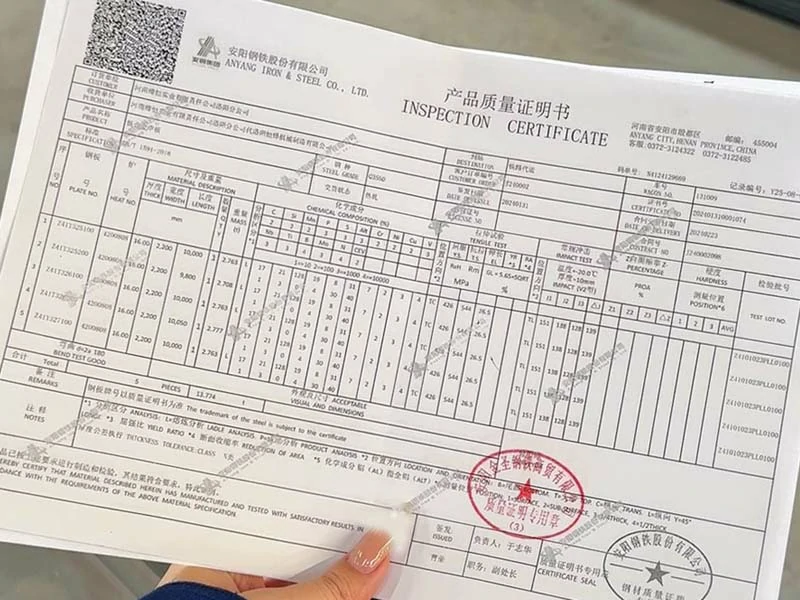
"Can you provide material traceability for all structural steel to mill certificates?"
This should be standard, but implementation varies widely.
Weak answer: "Yes, we maintain all mill certificates." Strong answer: "We track heat numbers from material receipt through cutting and assembly. Each major component gets marked with heat number and position reference so third-party inspectors can verify material identity against mill certs."
Project-Specific Risk Questions
Different project types create different risk profiles. Your questions should target the specific risks your project faces.
For modular projects: "Have you fabricated pipe racks that shipped as fully assembled modules? What was the largest module dimension you've produced and transported?"
For LNG projects: "Can you demonstrate experience with cryogenic piping support structures? How do you handle weld inspection requirements for low-temperature service?"
For revamp projects: "How do you handle interface measurements when new pipe racks connect to existing structures with as-built dimensions that differ from original drawings?"
The supplier's comfort level answering these questions tells you whether they're working within familiar territory or taking on a project type they haven't handled before.
Why Does Supplier Communication Style Matter?
This sounds soft compared to technical qualification criteria. But I've learned that communication patterns during the quotation phase predict project execution problems.
A supplier who asks detailed questions before bidding is showing you how they'll handle project execution. A supplier who bids quickly with minimal clarification questions is either highly confident or hasn't thought through project-specific risks.
Supplier communication style during RFQ response reveals their project risk assessment capability. Suppliers who request clarification on tolerance requirements, coating specifications, inspection hold points, and delivery sequencing are demonstrating systematic project planning. Suppliers who provide quick quotes without questions may be under-pricing because they haven't identified project-specific scope elements.
Red Flag Communication Patterns
After reviewing hundreds of customer inquiries and supplier interactions, certain communication patterns consistently correlate with project problems:
Vague timeline commitments: "Delivery in 12-16 weeks depending on project specifics." Experienced suppliers provide detailed timeline breakdowns: engineering review period, material procurement lead time, fabrication duration, inspection and coating time, packing and shipping allowance.
Generic quality assurance descriptions: "We maintain strict quality control throughout fabrication." This tells you nothing. Specific QA descriptions include inspection hold points, testing frequency, documentation requirements, and third-party inspection accommodation.
Resistance to factory audits or inspection visits: Confident suppliers welcome factory audits. They view it as an opportunity to demonstrate capability. Suppliers who discourage site visits often have legitimate capacity or capability gaps.
Defensive responses to technical questions: When you ask about dimensional verification procedures or past project challenges, defensive answers ("We've never had any problems") suggest lack of systematic problem-solving experience. Good suppliers acknowledge challenges and explain their resolution processes.
Communication That Indicates Capability
Conversely, these communication patterns usually indicate experienced, capable suppliers:
- They ask about your delivery model (stick-built vs. modular) before finalizing their quote
- They request your third-party inspection requirements upfront
- They provide detailed fabrication sequence descriptions showing they've thought through your project's complexity
- They flag potential issues during bid review rather than after contract award
- They ask about interface coordination with other contractors (piping, equipment, electrical)
What Manufacturing Details Separate Capable Suppliers from Risky Ones?
Once you've narrowed candidates based on credentials and communication quality, you need to evaluate actual manufacturing capability. This requires factory visits or detailed capability questionnaires.
I'm looking for evidence the supplier has manufacturing processes scaled to pipe rack requirements—not just general structural steel capability.
Manufacturing capability assessment should focus on process control systems, not just equipment lists. A supplier might have adequate welding machines but lack systematic procedures for weld sequence planning, distortion control, and dimensional verification. These process gaps don't show up until fabrication starts, when correcting them causes schedule delays and cost increases.
Critical Manufacturing Process Indicators
Pre-fabrication planning documentation: Do they produce detailed fabrication sequence drawings before starting work? Or do they rely on shop floor decisions during production?
Pipe racks have complex weld sequencing requirements to minimize distortion. Suppliers who plan sequences in advance demonstrate systematic process control. Suppliers who "figure it out during fabrication" create dimensional drift and rework.
Material handling and storage: How do they prevent steel distortion during storage? Are beam sections stored on level racks with adequate support points? Is material protected from moisture and contamination before blasting?
This seems basic, but I've seen material handling create problems. Long beam sections stored on uneven supports develop camber before fabrication even starts.
Assembly area organization: Can they assemble complete pipe rack frames in their facility? Or do they fabricate components individually and rely on field assembly for final fit-up?
Full-frame assembly in the factory allows dimensional verification before shipping. Component-only fabrication pushes fit-up risk to the field, where corrections cost more and take longer.
Blast and coating facilities: What's their blast cleaning capacity? Can they handle fully assembled frames, or only individual components? What coating systems are they equipped to apply?
Post-weld blast cleaning and coating application significantly impact schedule. If a supplier must disassemble frames for blasting, you're adding handling steps that increase cost and distortion risk.
Equipment Configuration Tells You Their Typical Work
A supplier's equipment configuration reveals what types of projects they normally handle. You can assess whether your project fits their operational sweet spot or pushes them outside normal capacity.
Look at:
- Crane capacity and coverage: Can they lift and position your heaviest beam assemblies safely? Or will they need special rigging and multiple handling steps?
- Welding equipment quantity and type: Do they have enough welding stations to maintain reasonable production flow? Are machines appropriate for your required weld procedures?
- Cutting equipment precision: Do they have CNC plasma or oxy-fuel cutting systems? Or manual cutting processes that introduce dimensional variation?
- NDT equipment availability: Can they perform required ultrasonic testing in-house? Or must they schedule external inspection services that could delay production?
These equipment factors directly impact production efficiency and quality consistency.
How Do You Verify Claims During Factory Audits?
Factory visits are your best opportunity to verify supplier capability beyond what they claim in proposals and presentations. But you need to know what to look for.
I've conducted factory audits where everything looked impressive during the formal tour, but observation of actual work-in-progress revealed concerning practices. The formal tour shows what the supplier wants you to see. Actual WIP observation shows how they really work.
Effective factory audits focus on observing work-in-progress rather than reviewing completed showcase projects. Watch how workers perform dimensional checks during assembly, how supervisors review weld quality, and how quality records get completed. These operational details reveal process discipline that directly predicts your project outcome.
Audit Observation Priorities
Work-in-progress dimensional control: Are assemblies being checked with calibrated measuring equipment at defined hold points? Or are dimensions assumed correct without verification?
Ask to see current WIP measurement records. This shows their normal practice, not their capability when they know you're watching.
Welder qualification and identification: Are welders' qualification certificates current and accessible? Is there a system for tracking which welder performed which welds for traceability?
Weld traceability becomes critical if third-party inspection identifies quality issues. Without systematic tracking, you can't determine if problems are isolated to one welder or systemic across the crew.
Material identification and traceability: Can they show you how heat numbers are tracked from material receipt through fabrication? If you point to a random beam section, can they identify its material specification and mill certificate?
Material mix-ups sound unlikely, but they happen. Systematic identification processes prevent wrong material grades from being used in critical locations.
Shop drawing control: Are current revision drawings available at workstations? How do they ensure fabricators are working from the latest revision?
Drawing control seems administrative, but fabricating to superseded drawings creates expensive rework.
Housekeeping and organization: Is the facility organized and clean? Or chaotic with material scattered and work areas cluttered?
This isn't about aesthetics—it's about process discipline. Disorganized facilities lose efficiency and create quality risks through misplaced materials, damaged components, and production errors.
Questions to Ask Workers and Supervisors
The front office can tell you anything. Workers and supervisors tell you what actually happens.
During factory visits, I try to talk briefly with:
Welders: "How do you know which welding procedure to use for this joint?" Their answer shows whether procedures are actually followed or just filed in the office.
Quality inspectors: "What's your most common rejection on pipe rack projects?" This reveals recurring quality challenges.
Production supervisors: "How do you handle dimensional corrections if a frame is out of tolerance?" Their answer shows problem-solving capability and process flexibility.
These conversations aren't interrogations—just casual questions that reveal operational reality.
What Price and Commercial Terms Reveal About Risk?
Price evaluation isn't just about finding the lowest bidder. It's about understanding what's included, what's assumed, and what risks the supplier is accepting.
Low prices sometimes reflect genuine efficiency. More often, they reflect incomplete scope understanding, optimistic timeline assumptions, or deferred quality that will surface during inspection.
Price comparison requires understanding scope assumptions behind each quote. A low bid may exclude transportation fixtures, third-party inspection accommodation, dimensional verification documentation, or coating touch-up after assembly. These "clarifications" emerge after contract award when changes become expensive. Realistic pricing reflects accurate scope understanding and appropriate risk allocation.
Price Components That Reveal Scope Understanding
When I review quotations for customers, I'm not comparing total numbers first. I'm checking whether suppliers priced the same scope.
Look for these price breakdown details:
| Cost Component | What It Reveals |
|---|---|
| Engineering review time | Whether supplier plans to verify drawings before fabrication |
| Material procurement lead time | If supplier has realistic steel mill delivery expectations |
| Surface preparation to specified grade | Whether blast cleaning standard is included or assumed |
| Assembly and fit-up labor | If full-frame assembly is priced or only component fabrication |
| Inspection and testing | Whether third-party inspection accommodation is included |
| Packing and transportation | If modular shipping fixtures and transport engineering are covered |
| Documentation packages | Whether as-built drawings and material traceability records are included |
Suppliers who provide detailed price breakdowns usually have more accurate scope understanding than suppliers who provide lump-sum figures without backup.
Timeline Realism Indicates Project Understanding
Just like with pricing, timeline proposals reveal whether a supplier understands your project's requirements.
Unrealistically short timelines indicate:
- The supplier hasn't considered material lead times for the required steel sections
- They're assuming no drawing revisions or RFI response delays
- They haven't allocated time for third-party inspection hold points
- They're over-optimistic about fabrication productivity
Realistic timelines include:
- Engineering review and RFI period (1-2 weeks for straightforward projects)
- Material procurement (6-10 weeks for heavy sections, longer for exotic grades)
- Fabrication duration based on complexity and size (4-12 weeks depending on tonnage)
- Inspection and coating (2-4 weeks including cure time)
- Packing and shipping preparation (1-2 weeks)
If a supplier's timeline is significantly shorter than these benchmarks, ask them to explain how they'll achieve it. The answer will either demonstrate real efficiency or reveal optimistic assumptions.
Payment Terms and Risk Allocation
Payment term proposals show how suppliers view project risk and their financial stability.
Standard terms follow project progression: deposit upon contract, progress payments at defined fabrication milestones, balance on delivery or after inspection approval.
Red flags include:
- Large upfront payments (more than 30-40% deposit) suggest cash flow constraints
- No retention until final acceptance indicates supplier doesn't expect quality issues
- Payment before inspection means you lose leverage if quality problems arise
- Resistance to holding payments pending acceptance suggests past project disputes
Reasonable payment terms protect both parties. Suppliers want cash flow to fund materials and labor. Buyers want assurance they're paying for verified work. The negotiation reveals whether the supplier views your relationship as collaborative or transactional.
Frequently Asked Questions
What certifications are actually mandatory for pipe rack suppliers?
The bare minimum depends on your project location and contract requirements. Most international EPC projects require ISO 9001 for quality systems and either EN1090 (for European projects) or equivalent regional certifications. For welding, AWS D1.1 qualification or equivalent welding procedure specifications are typically required. However, certification alone doesn't guarantee execution quality—verify the supplier has documented experience applying these systems to pipe rack projects specifically, not just general structural steel.
How much does supplier location affect pipe rack fabrication cost and delivery?
Location impacts three major cost areas: steel raw material access (suppliers near steel mills have freight advantages), labor cost (varies significantly by region), and shipping to your project site (ocean freight for international suppliers vs. domestic trucking). For modular projects, international suppliers can be cost-effective even with longer shipping if their fabrication costs are substantially lower. For stick-built field construction, domestic suppliers often have advantages because piece-by-piece shipping costs less. Calculate total landed cost including freight and customs, not just ex-works pricing.
Should EPC contractors visit the factory before awarding pipe rack contracts?
For projects over 1,000 tons or with critical schedule constraints, factory audits are worth the investment. You're verifying capability claims and assessing manufacturing process discipline. For smaller projects or repeat orders with proven suppliers, detailed capability questionnaires and reference checks may be sufficient. If the supplier resists factory visits or tries to schedule them only after contract award, consider it a yellow flag—confident suppliers welcome pre-award audits as opportunities to demonstrate capability.
How do you handle quality issues discovered during third-party inspection?
This should be defined in your contract before fabrication starts. Establish clear processes for: non-conformance reporting, engineering evaluation of defects, repair procedure approval, re-inspection requirements, and schedule impact resolution. Good suppliers have established NCR procedures and experienced quality teams who can resolve issues efficiently. The risk isn't that defects will occur—welding and fabrication always have some rejection rate—the risk is suppliers without systematic correction processes who delay your project while figuring out solutions.
What's a reasonable lead time expectation for pipe rack fabrication?
For standard carbon steel pipe racks (500-2000 tons) with conventional sections and coatings, expect 16-24 weeks from contract award to delivery. This includes 2 weeks engineering review, 8-10 weeks material procurement, 6-10 weeks fabrication, 2-3 weeks coating and inspection, and 1-2 weeks packing. Shorter timelines are possible if the supplier maintains material inventory, but verify this is realistic rather than optimistic bidding. Complex projects with heavy sections, exotic materials, or extensive third-party inspection may require 26-32 weeks.
Conclusion
Finding the right pipe rack fabrication supplier isn't about checking boxes on a qualification matrix. It's about identifying manufacturers who can execute your specific project without creating schedule risks or quality problems that show up during installation.
Look beyond certificates and capacity numbers. Focus on dimensional control capability, communication quality that reveals systematic project planning, and manufacturing processes scaled to pipe rack-specific requirements. The suppliers who ask detailed questions before bidding, who can demonstrate past project experience with similar challenges, and who welcome factory audits are showing you how they'll handle your project execution.
Price matters, but only in context. A low bid that excludes interface coordination, post-assembly dimensional verification, or third-party inspection accommodation isn't a good deal—it's deferred risk that becomes expensive once fabrication starts.
If you're evaluating pipe rack suppliers for an upcoming EPC project, I'd recommend starting with a detailed capability questionnaire that addresses the project-specific risks I've outlined here. Then conduct factory audits for your shortlisted suppliers to verify their answers. The time invested in thorough supplier evaluation pays off through smoother project execution and fewer field installation problems.
Need help evaluating pipe rack fabrication suppliers for your project? Contact our team to discuss your specific requirements. We provide detailed capability documentation and welcome factory audits so you can verify our manufacturing processes firsthand.