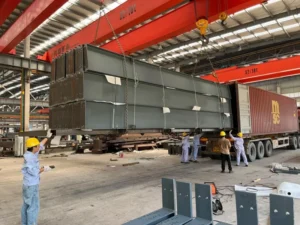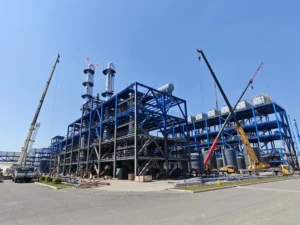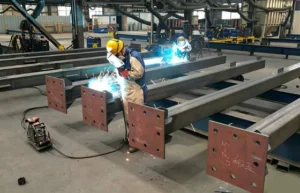
Equipment support structures are critical for petrochemical plants, but selecting or fabricating these steel structures is not as straightforward as many buyers assume. From load distribution to thermal expansion—and even certification requirements—every structure must be tailored for specific equipment. Let me share what I’ve learned about these unique structural systems to help clear the confusion.
Equipment support structures for petrochemical plants differ drastically from standard building steel structures. They must account for varied factors, such as vibration, weight loads, wind resistance, and precise tolerances, which differ for reactors, heat exchangers, or towers. Buyers should carefully vet their suppliers, especially for certification, fabrication precision, and quality control.
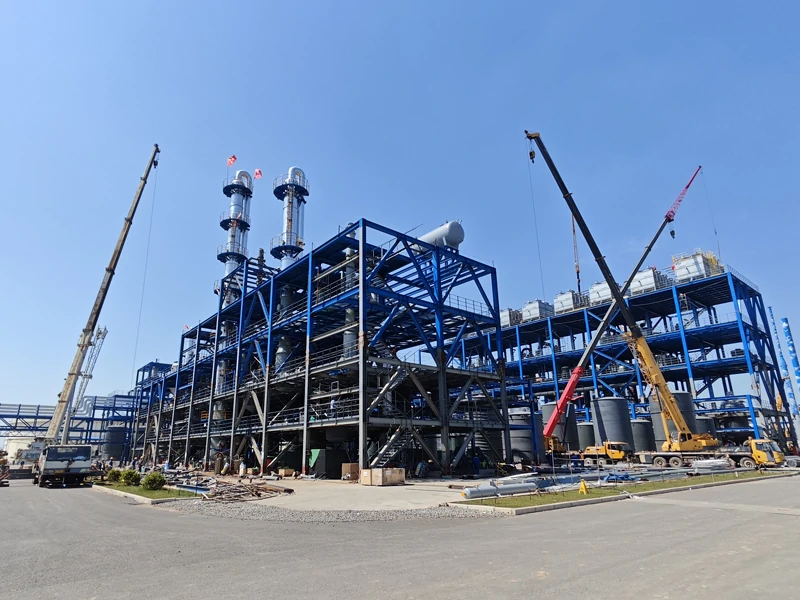
Unlike building steel structures, these supports are custom-designed and demand expert manufacturing that aligns with project specs and international standards to avoid risks like installation delays or rework. Below, we’ll break down the types, designs, materials, and applications in detail.
Why are equipment support structures customized for petrochemical plants?
When you look at petrochemical equipment, it’s obvious that their steel supports can’t be “one-size-fits-all.”
Steel structures for reactors, towers, and heat exchangers must accommodate unique operating conditions. For example, reactors are heavy and often subjected to seismic loads1, while towers need precise height-related stability to account for wind forces and dynamic vibrations.
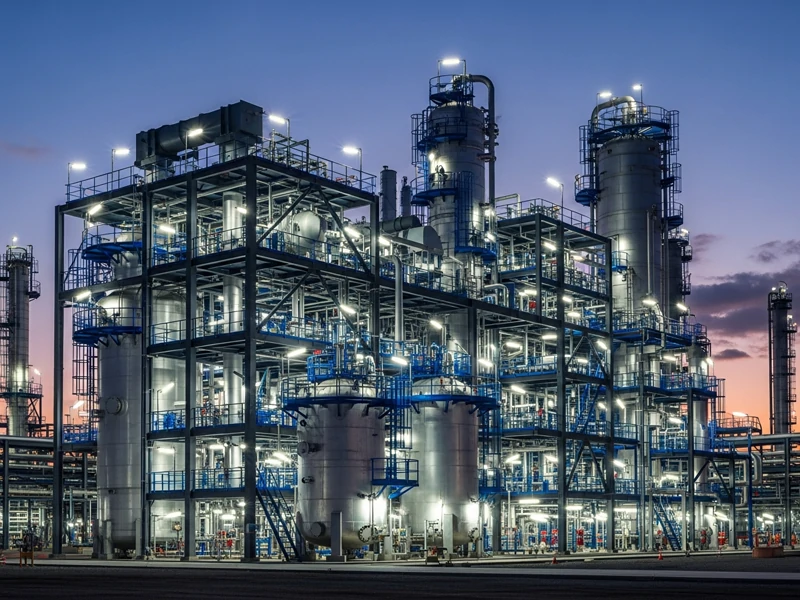
What makes petrochemical plant structures fundamentally different?
Conventional building or warehouse systems focus on strength and basic load-bearing. Meanwhile, petrochemical equipment is tied to precision engineering, requiring:
- Material Compatibility: High-strength low-alloy steels or stainless steel often used2. The chemical environment determines this.
- Vibration Resistance: Many petrochemical processes involve dynamic machinery, which means damping forces need to be factored into design.
- Thermal Expansion: For high-temperature equipment like heat exchangers, the steel frame expands and contracts over time, requiring specific connection designs3.
When clients request quotes, their assumptions often reveal a misunderstanding here. I often hear, “Is there a universal solution for support brackets?” My answer? Every project is unique. What works for one reactor in a tropical region won’t suit a distillation tower in a colder environment.
What are the major types of equipment requiring steel supports?
Each piece of process equipment requires a different support strategy. Let’s look at common examples.
Reactors: How are these structures designed?
Reactors are heavy, bulk equipment often subjected to intense forces during operation.
Steel supports for reactors must ensure stability under both static loads and external forces like seismic activity and wind. They also need ultra-precision welds to avoid dimensional deviations during installation.
-
Examples of reactor requirements:
- High horizontal stiffness for stability during earthquakes4.
- Ultra-heavy load capacity.
-
Key procurement consideration: Verify the supplier performs UT inspections to rule out weld imperfections.
Heat exchangers: Why does thermal expansion matter?
Heat exchangers transfer energy between fluids, which means they’re constantly exposed to temperature changes.
Without proper support structures, expansion and contraction stress can deform the equipment and affect operations. Fabrication tolerance here needs to be tighter compared to traditional construction structures.
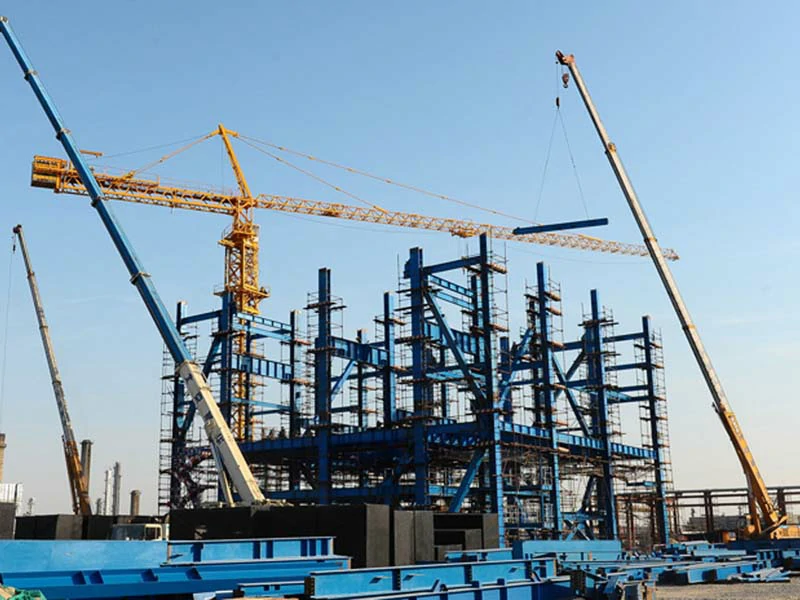
Towers: How do height and wind forces complicate design?
For tall equipment, stability becomes the priority. Steel support structures here must account for vertical dynamic forces, like wind and vibration caused during processing.
Why are certifications crucial for petrochemical equipment supports?
Certifications like EN1090 or ISO compliance5 aren’t just paperwork—they directly impact procurement safety.
If a steel fabricator lacks EN1090 EXC3 certification, it can cause project acceptance issues during an international EPC audit. Similarly, MTR (Material Test Report) traceability is crucial6 for ensuring equipment meets chemical property requirements.
Choosing the right material: What should buyers know?
Material selection depends on the chemical environment, load stress, and longevity demands. Common materials include:
| Material Type | Application |
|---|---|
| Carbon Steel | General load-bearing supports, cost-efficient |
| Stainless Steel | Corrosive environments (e.g., coastal refineries) |
| High-Alloy Steels | Precision installations, extreme conditions |
How can poor supplier choice lead to project risks?
Misjudging supplier capabilities can create bottlenecks or failures in petrochemical projects:
- Dimensional Deviations: Structures that don’t align with engineering specs cause installation delays.
- Inadequate Weld Quality: Poorly controlled welding leads to defects, increasing maintenance costs.
- Missing Certifications: Lack of EN1090 or ISO compliance blocks access to international EPC pipelines.
These issues directly translate to higher project costs, delays, and potential rework.
Frequently Asked Questions
Are equipment support structures standardized designs?
No, they are always customized according to the specific equipment and operating environment. Engineering calculations drive unique requirements for each project.
How important are welding inspections?
Critical! Ultrasonic inspections (UT process) ensure weld precision7 and help avoid installation failures.
Can building structure manufacturers handle petrochemical designs?
Rarely. Manufacturers for petrochemical projects must follow stringent certifications, traceability rules, and high-tolerance requirements beyond typical building systems.
Conclusion
Equipment support structures for petrochemical plants demand customization, precise fabrication, and strict adherence to industry certifications like EN1090. The structural requirements for reactors, heat exchangers, or towers simply can’t be fulfilled by generic building steel systems. Manufacturers like MEICHEN STEEL STRUCTURE (or others with similar expertise) help EPC contractors reduce risks by delivering quality fabrication tailored to project specs.
When evaluating suppliers, prioritize experience in industrial projects and certification compliance over price. Submitting an RFI with detailed project requirements is a great first step! Reach out to learn how experienced fabricators can ensure a smooth process—from sourcing to delivery.
"SEISMIC ANALYSIS OF THE NUCLEAR REACTOR ...", https://repository.lib.ncsu.edu/bitstreams/daa27ca6-5746-4e20-b319-ec68326b6490/download. Seismic design codes for industrial facilities require that support structures for pressure vessels and reactors be designed to withstand earthquake forces based on site-specific seismic hazard assessments. Evidence role: general_support; source type: research. Supports: seismic design requirements for process equipment in petrochemical facilities. ↩
"Mechanical properties of structural steel", https://www.govinfo.gov/content/pkg/GOVPUB-C13-8620f9e60cbfd1c3ac9e0bf55ba3770c/pdf/GOVPUB-C13-8620f9e60cbfd1c3ac9e0bf55ba3770c.pdf. Material specifications for petrochemical facilities identify high-strength low-alloy steels and corrosion-resistant stainless steels as suitable materials for equipment support structures depending on environmental conditions and load requirements. Evidence role: general_support; source type: research. Supports: common steel grades used in petrochemical structural applications. ↩
"Thermal stresses and movements in bridges - Scholars' Mine", https://scholarsmine.mst.edu/cgi/viewcontent.cgi?article=7713&context=masters_theses. Structural steel design codes require that connections for equipment operating at elevated temperatures incorporate provisions for thermal expansion, such as slotted holes or sliding bearings, to prevent thermal stress accumulation. Evidence role: mechanism; source type: research. Supports: thermal expansion considerations in steel structure connections. ↩
"Earthquake-Resistant Design Concepts", https://www.fema.gov/sites/default/files/2020-07/fema_earthquake-resistant-design-concepts_p-749.pdf. Seismic design principles indicate that adequate lateral stiffness in support structures helps control displacement during earthquakes and influences the structure's natural period, affecting seismic force distribution. Evidence role: mechanism; source type: research. Supports: the role of lateral stiffness in seismic structural performance. Scope note: Optimal stiffness depends on multiple factors including equipment mass, foundation conditions, and site seismicity ↩
"EN 1090 Certification: Complete Guide for Steel Structures", https://xtdsteel.com/blogs/en-1090-certification-guide/. EN1090 is a European standard for the execution of steel structures and aluminum structures, establishing requirements for conformity assessment including factory production control, with EXC3 representing execution class 3 for structures requiring higher reliability. Evidence role: definition; source type: institution. Supports: the scope and requirements of EN1090 certification. Scope note: EN1090 is primarily a European standard and may not be universally required in all petrochemical projects globally ↩
"ASME VIII Div. 1 SA-193 Traceability", https://www.eng-tips.com/threads/asme-viii-div-1-sa-193-traceability.362206/. Quality assurance standards for pressure vessel and structural fabrication require material test reports to provide traceability from raw material to finished component, documenting chemical composition and mechanical properties to verify specification compliance. Evidence role: general_support; source type: research. Supports: material traceability requirements in industrial construction. ↩
"Process Specification for Ultrasonic Inspection of Welds", https://www.nasa.gov/wp-content/uploads/2023/03/prc-6510-current.pdf. Ultrasonic testing is a non-destructive examination method capable of detecting internal weld discontinuities such as lack of fusion, porosity, and cracks, providing volumetric inspection that helps ensure structural integrity. Evidence role: mechanism; source type: research. Supports: the capability of ultrasonic testing to detect weld defects. Scope note: UT effectiveness depends on operator qualification, equipment calibration, and proper procedure selection ↩