The process of transforming steel drawings into fabricated structures may seem standardized, but critical differences between manufacturers can heavily impact delivery timelines and quality outcomes. Structural steel fabrication for high-demand industries like petrochemical and LNG requires precision, discipline, and visibility into risk-critical stages. Without understanding these nuances, procurement managers risk supplier selection mistakes that invite project delays.
Structural steel fabrication involves sequential stages of design review, material procurement, cutting and shaping, assembly, welding, inspection, and shipment.1 Each of these stages exposes a manufacturer’s capability gaps, making it essential for buyers to verify specific processes beyond certifications.
Critical to reliability is knowing which bottlenecks and checkpoints affect quality control and schedule adherence. Let’s break down the fabrication process step-by-step to uncover where risks hide—and how procurement managers can evaluate suppliers effectively.
What happens in the design review phase?
Even before material procurement begins, the design review phase sets the tone for the entire fabrication process. Misalignment here can ripple through every remaining stage.2
The design review ensures precise interpretation of steel drawings, compliance with project specifications, and feasibility in manufacturing. Quality manufacturers use this step to identify conflicts, clarify requirements, and optimize production methods.

Why does this phase matter for procurement managers?
Because suppliers differ radically in their collaboration during initial reviews. Some rush through approvals, while others proactively resolve conflicts. Delays often stem from poor communication during this stage, as misinterpreted designs lead to downstream rework or delivery issues.3 For petrochemical and industrial projects, this phase reveals whether the supplier truly prioritizes precision and project alignment.
- Verification tips: Look for suppliers with structured design review protocols (e.g., 3D modeling, clash checks, and design sign-offs4). Ask past clients about responsiveness during this phase.
Example spotlight: Avoiding rework through proactive collaboration
I’ve observed how manufacturers can save weeks simply by asking clarifying questions upfront. One notable case involved an industrial column design requiring unexpected adjustments for custom bolting. Early detection saved the EPC contractor 15% on schedule costs.5 Conversely, when another supplier bypassed this step, misaligned parts required re-fabrication—delaying shipment by two months6.
Why is material procurement critical for timeline control?
Material procurement forms the backbone of structural steel fabrication, focusing on the acquisition of traceable, certified raw materials. Delays here cascade into every subsequent phase.
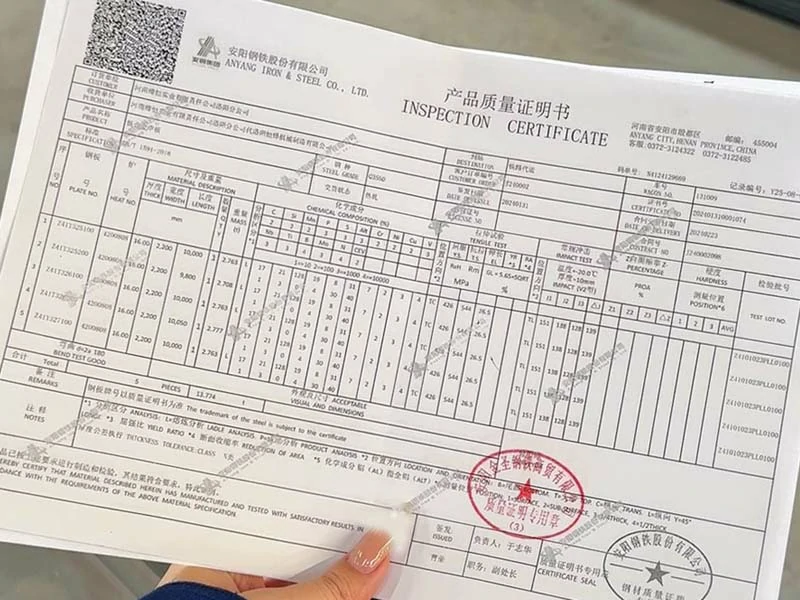
A robust material procurement process ensures consistent supply of high-grade steel with traceability to international standards7. Lead times, material certifications, and supplier management are key performance indicators during this stage.
What procurement managers often overlook:
Suppliers offering "fast quotes" might deflect questions around material traceability or stock availability. Yet, EPC contractors rely on raw materials meeting strict specifications (e.g., heat numbers, tensile strength reports). Backorders and lead time fluctuations show whether a supplier prioritizes just-in-time ordering or buffers stock with high-risk flexibility.
- Verification tips: Request sample material traceability reports and inquire about supplier redundancy systems. Delve into certifications like EN 1090 EXC38—but remember that certifications alone won’t mitigate supply chain delays.
How do cutting and shaping processes reveal manufacturing rigor?
The fidelity of steel shapes and cuts directly influences assembly and welding quality in later stages. Poor cutting tolerances can compromise fitment and increase weld rework.
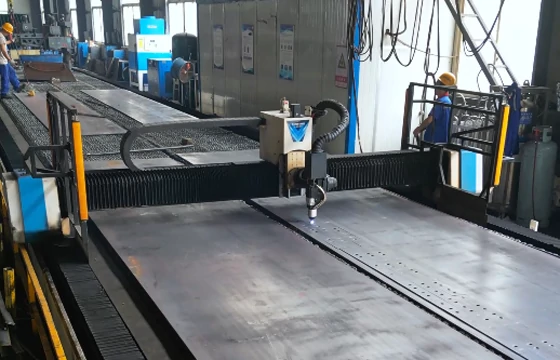
Cutting and shaping involve advanced machinery like laser cutting systems and CNC lines to produce geometrically precise components. Manufacturers’ equipment type, production rates, and tolerance capabilities here dramatically affect fabrication consistency.
Why attention to this phase matters:
Cutting inefficiencies aren’t just small mistakes—they ripple into welding gaps or misaligned assemblies. I’ve noticed EPC procurement managers focus too little on asking suppliers about equipment capacity audits or comparative data during their evaluations. Misaligned cuts cause knock-on scheduling inefficiencies during fitment.
- Verification tips: Prioritize shops with automated laser cutting systems capable of maintaining <±1 mm tolerances9. Confirm machine age and maintenance as part of supplier audits.
What distinguishes advanced welding controls?
Welding is where steel components begin transforming into industrial frames, equipment supports, and modular systems. Precision welding makes or breaks both structural integrity and inspection success.
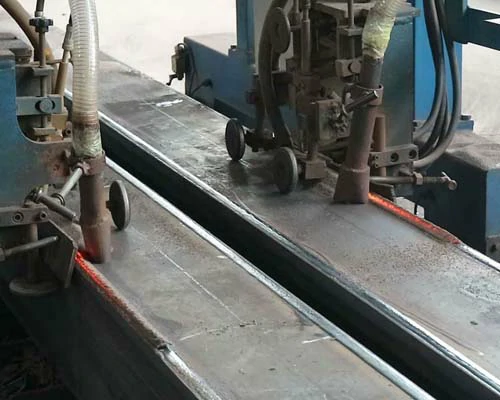
Welding controls involve qualified welders, automated systems, and documented adherence to international standards (AWS D1.1, ISO 3834, etc.)10. Manufacturers relying heavily on manual welding should trigger questions about repeatability and flaw detection.
What procurement managers can identify:
Suppliers at or above standard certifications (like EN1090 EXC3) still differ in their focus on ultrasonically detected flaws. These differences translate into inspection results, repair frequency, and structural performance risks.
- Verification tips: Ask manufacturers how they document welding defects as part of project transparency. Inquire about robotic welding systems and flaw detection scale under rush scenarios.
How does inspection define final quality benchmarks?
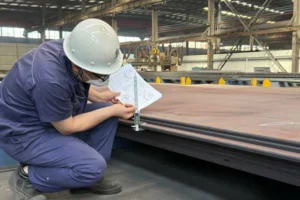
Inspection ensures that every fabricated structure meets stringent safety and dimensional requirements before shipment.
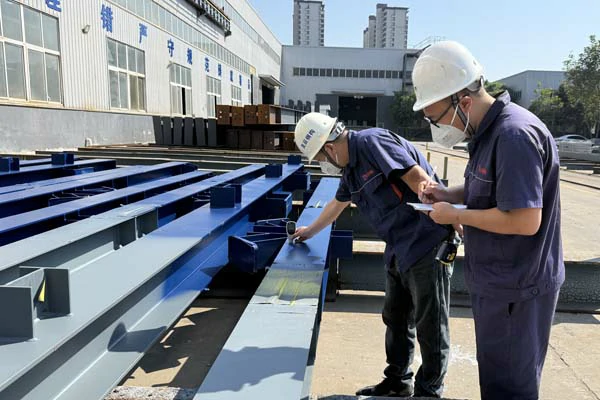
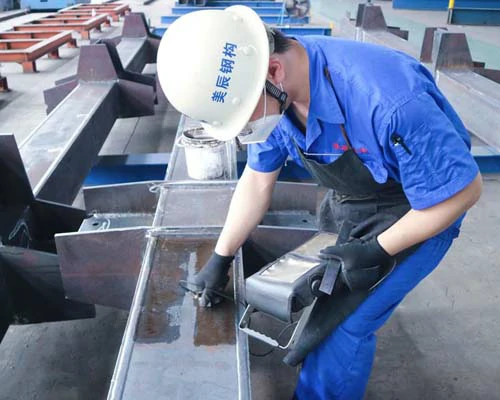
Leading manufacturers conduct non-destructive testing (NDT) like ultrasonic testing (UT)11, compliance checks via ISO systems, and traceable inspections through Quality Records. High-end manufacturers see inspections as proactive quality gates rather than post-manufacturing corrections.
Common buyer mistakes:
Buyers often assume all manufacturers pass UT reports evenly. In practice, however, differences in reporting transparency, equipment sophistication, and upfront quality controls lead to cumulative shipment defects.
- Verification tips: Request sample NDT reports pre-contract and ask detailed questions about ultrasonic capacity under peak production loads. Inspect certification overlap (e.g., SA2.5 compatibility or EN compliance signaling).
How does shipment execution test reliability?
The shipment phase consolidates every preceding stage into timed logistical precision.
Structural steel shipment involves load testing, modular packing, and strict adherence to transport safety standards. For international EPC projects, shipping errors compound operational delays.
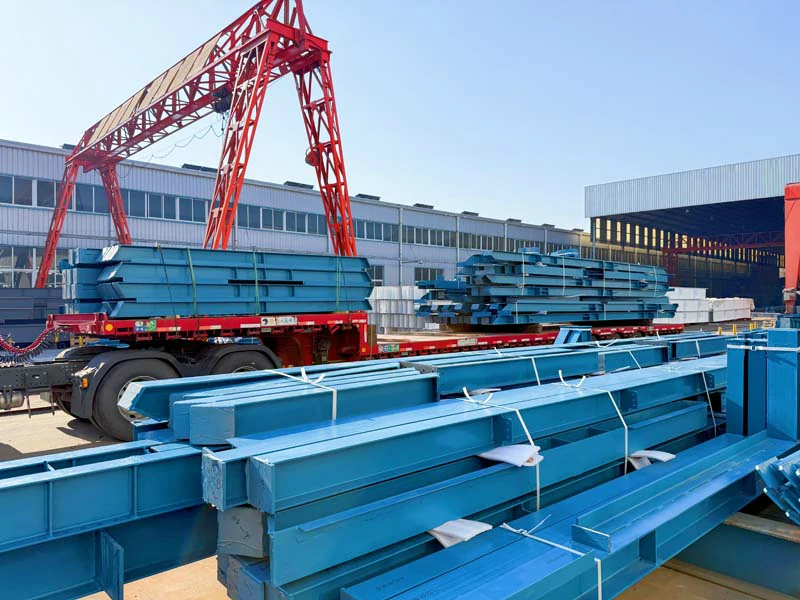
What EPC buyers assume:
Assuming that certified facilities execute shipment evenly often leads to logistics errors. Instead, inquire about manufacturers’ history managing international transport complexities.
- Verification tips: Look for clear communication chains post-inspection toward delivery finalization.
Frequently Asked Questions
How can EPC managers differentiate between certified vs competent facilities?
Certifications like EN1090 EXC3 are minimum floors, not ceilings. Long-term reliability depends on consistency across bottlenecks like welding flaw detection, cutting tolerances, and material traceability — ask suppliers specific process questions during evaluations.
What’s the most common delay cause across stages?
Material procurement lead times often compound downstream disruptions. Visibility into stock redundancy or proactive supplier sourcing helps mitigate risks during high-volume contracts.
Does robotic work always mean better results?
Robotic systems enhance repeatability and precision, but human talent remains vital for complex or high-strength customizations. Balance supplier questions between equipment capacity and team qualification.
Conclusion
Structural steel fabrication moves through critical stages—design review, material procurement, cutting, welding, inspection, and shipment—all revealing hidden capability gaps between manufacturers. Procurement managers evaluating suppliers for petrochemical and industrial projects must focus on specific process details rather than certifications alone. By asking targeted questions about traceability, flaw detection, and tolerances, buyers can reduce risks and ensure project success.
Contact Meichen Steel Structures Co., Ltd at info@meichensteel.com to learn how our disciplined workflows delivered success in challenging industrial environments worldwide!
"Materials Fabrication Inspector 2 - 04344", https://das.iowa.gov/media/3148/download. Industry standards from organizations like the American Institute of Steel Construction (AISC) describe structural steel fabrication as a sequential process encompassing design review, material procurement, cutting and shaping, welding, inspection, and delivery stages. Evidence role: general_support; source type: institution. Supports: Industry standards documenting the typical sequential stages in structural steel fabrication. Scope note: Standards may describe variations in sequencing or terminology across different fabrication contexts ↩
"(PDF) IRJET- Design Errors in Building Construction Projects", https://www.academia.edu/44313885/IRJET_Design_Errors_in_Building_Construction_Projects. Construction management research indicates that errors identified during design review cost significantly less to correct than those discovered during fabrication or assembly, with correction costs increasing by factors of 10-100x in later stages. Evidence role: general_support; source type: research. Supports: Research demonstrating that design-phase errors result in exponentially higher correction costs in later manufacturing stages. Scope note: Studies typically examine construction broadly rather than steel fabrication specifically ↩
"Construction project delay statistics: data every builder ...", https://www.openspace.ai/blog/construction-project-delay-statistics/. Construction management research identifies poor communication and coordination during design phases as leading causes of rework, with studies showing that communication-related issues contribute to 30-50% of project delays and cost overruns. Evidence role: general_support; source type: research. Supports: Research linking communication quality to project outcomes in construction. Scope note: Research typically examines construction projects broadly rather than steel fabrication specifically ↩
"Construction Industry", http://www.osha.gov/construction. Building Information Modeling (BIM) protocols widely adopted in construction include 3D modeling and clash detection as standard design coordination practices to identify conflicts before fabrication begins. Evidence role: general_support; source type: institution. Supports: Industry guidance on design coordination methodologies in steel fabrication. ↩
"Design errors and construction costs", https://www.smay.pl/en/expert-blog/design-errors-and-construction-costs-causes-consequences-and-mitigation-strategies/. Studies on construction project economics show that early design coordination and error detection can reduce overall project costs by 10-20%, with schedule-related savings forming a significant component. Evidence role: general_support; source type: research. Supports: Research on cost savings from early-stage design interventions in construction. Scope note: Savings percentages vary widely based on project complexity, error severity, and detection timing ↩
"Steel Fabrication Rework Handling and Correction Process", https://xtdsteel.com/steel-structure-fabrication/steel-fabrication-rework-handling/. Studies on manufacturing rework indicate that re-fabrication of structural components typically requires 4-12 weeks depending on complexity and production capacity, with delays compounded by material re-procurement and schedule re-sequencing. Evidence role: general_support; source type: research. Supports: Research on typical rework durations in manufacturing and construction. Scope note: Actual rework duration varies significantly based on component complexity, shop capacity, and material availability ↩
"Mill Test Reports and Steel Material Traceability | MTR Guide", https://lmcic.com/material-traceability-andmtr-protocols-structural-steel-fabricators-follow/. International standards such as ISO 3834 and EN 1090 require full material traceability for structural steel, including documentation of heat numbers, mill test certificates, and chemical composition to ensure compliance with specified material grades. Evidence role: general_support; source type: institution. Supports: Industry standards requiring material traceability in steel fabrication. ↩
"EN 1090", https://en.wikipedia.org/wiki/EN_1090. EN 1090 is the European standard for execution of steel structures, with EXC3 (Execution Class 3) representing the second-highest classification level, requiring stringent quality control, welding procedures, and traceability for structures with moderate to high consequence of failure. Evidence role: definition; source type: government. Supports: Official definition and scope of the EN 1090 EXC3 certification standard. ↩
"TOLERANCE HANDBOOK", https://fpg.phys.virginia.edu/fpgweb/useful_info/tolerances_steel.pdf. Industry standards such as ISO 9013 specify tolerance classes for thermal cutting of steel, with modern CNC laser systems typically achieving tolerances in the ±0.5-1.0 mm range for structural steel applications. Evidence role: general_support; source type: institution. Supports: Industry standards for dimensional tolerances in steel cutting operations. Scope note: Achievable tolerances depend on material thickness, cutting speed, and equipment calibration ↩
"List of welding codes", https://en.wikipedia.org/wiki/List_of_welding_codes. AWS D1.1 is the American Welding Society's structural welding code for steel, while ISO 3834 establishes quality requirements for fusion welding of metallic materials; both are widely recognized standards for ensuring welding quality in structural fabrication. Evidence role: definition; source type: institution. Supports: Official scope and purpose of these welding standards. ↩
"A Review of Non-Destructive Testing (NDT) Techniques for ...", https://pmc.ncbi.nlm.nih.gov/articles/PMC9147555/. Ultrasonic testing (UT) is a non-destructive testing method that uses high-frequency sound waves to detect internal flaws in materials, commonly employed in steel fabrication to identify weld defects, cracks, and discontinuities without damaging the component. Evidence role: mechanism; source type: encyclopedia. Supports: Technical explanation of ultrasonic testing as a non-destructive inspection method. ↩