Pipe rack structures look simple from the outside, but they hide complex manufacturing variables. Many buyers assume a standard building steel approach will work. Then they hit inspection hold points, nonconformances, or coating disputes. The fix is not more drawings. It is a clear decision framework for selecting and auditing the right fabricator.
Pipe rack structures for petrochemical plants are fabricated successfully when buyers verify five variables upfront: QA traceability, welding/NDE alignment, tolerance and interface control, transportation-to-field assembly strategy, and coating/fireproofing compatibility. Treat pipe racks like industrial equipment structures, not general building steel, and lock these variables in your procurement and ITPs.
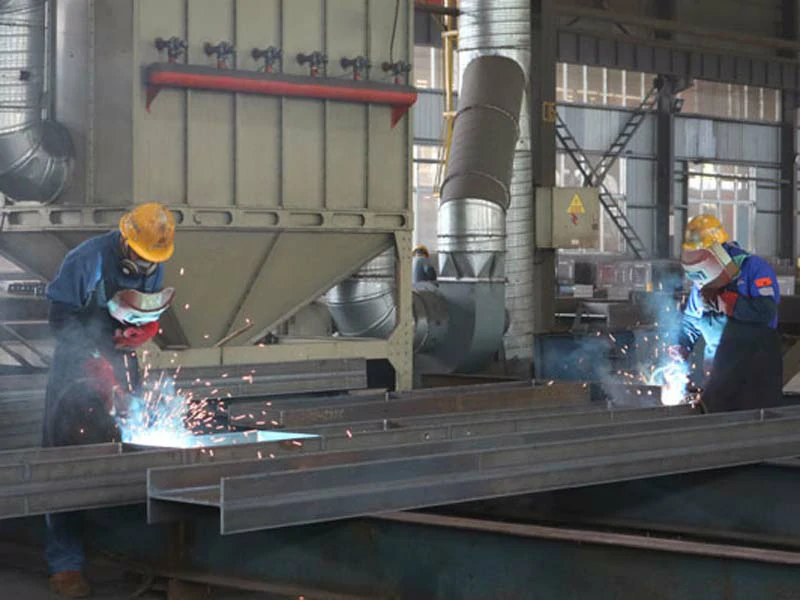
You already know the basics: cut, weld, blast, coat, ship. The risk hides in the gaps between specification and shop reality. Let me unpack the decisions I see buyers miss, and how those choices change cost, schedule, and inspection outcomes for pipe rack structures.
Which manufacturing variables actually decide whether pipe rack structures pass petrochemical compliance?
You might get a low price and a confident yes. Then the first TPI visit fails the shop. That pain usually comes from a few overlooked variables. Clarifying them early protects schedule and avoids scope drift inside the shop.
A practical answer: prioritize five checks that correlate with compliance. Confirm EN 1090 EXC3 or equivalent quality level1, welding procedure qualifications, NDE scope and acceptance class, document traceability (EN 10204 3.1), coating/PFP compatibility, and a module strategy that respects transport limits and site weld risk. Align these before award.
The compliance levers buyers control
In our coordination with EPC clients, I see two kinds of shops: construction-steel oriented and petrochemical-grade. Both can “fabricate,” but only one can carry pipe rack structures through the full audit trail and field-fit. Here is how I differentiate them during pre-award:
- Certifications and scope
- EN 1090 EXC3 (or equivalent) for structural steel
- ISO 9001 with a live, auditable QA system
- Welding program with WPS/PQR aligned to project codes
- NDE personnel certified (e.g., ISO 9712), Level 2/3 oversight
- Document traceability
- EN 10204 3.1 MTCs for all plates and profiles
- Heat number traceability engraved or hard-stamped into members
- PMI for alloy sections where specified
- ITPs with defined hold/witness points for TPI
- Tolerances and interfaces
- Known tolerance scheme (e.g., specific project tolerances or ISO 13920 Class)
- Jigs and fixtures for repeatable alignment
- Survey points and match-marking strategy for modules
- Coating system and PFP compatibility
- Blast to SA 2.5 with recorded profile (e.g., 50–75 μm)2
- Coating DFT records and cure logs
- Compatibility between zinc-rich primers and PFP top systems
- Logistics and modularization
- Transport envelope aligned to destination rules
- Field weld vs bolted split decisions with quantified risk
A short comparison helps:
| Factor | Construction Steel Shop | Petrochemical-Grade Fabricator |
|---|---|---|
| Certification | Often EXC2 or local | EXC3 + ISO 9001 with audit trails |
| WPS/PQR | Limited scope | Qualified to EN/ASME project specs |
| NDE | Visual + spot UT | Defined UT/MT/PT scope, Level 2/3 sign-off |
| Traceability | Partial | Full EN 10204 3.1 with heat mapping |
| Coating | Basic primer | System per spec, PFP compatibility managed |
| Fixtures | On-the-fly fit-up | Dedicated jigs, survey control |
| Records | Minimal | Complete ITP, NCR, calibration, DFT logs |
If a bidder cannot show evidence in these columns, I recommend treating the quote as construction steel pricing, not petrochemical-grade delivery.
How should buyers validate QA traceability for pipe rack structures?
Everyone says “we have ISO 9001.” That tells me very little. The gap is usually in the chain of traceability and the discipline in records. Pipe rack structures fail audits when material identity or inspection evidence breaks.
The short answer: demand a sample document pack before award. Verify 3.1 MTCs tied to heat numbers on members, a live ITP with hold/witness points, inspector qualifications, calibration records, and a sample weld map/NDE report packet. QA that is real shows up in paperwork that is consistent and traceable.
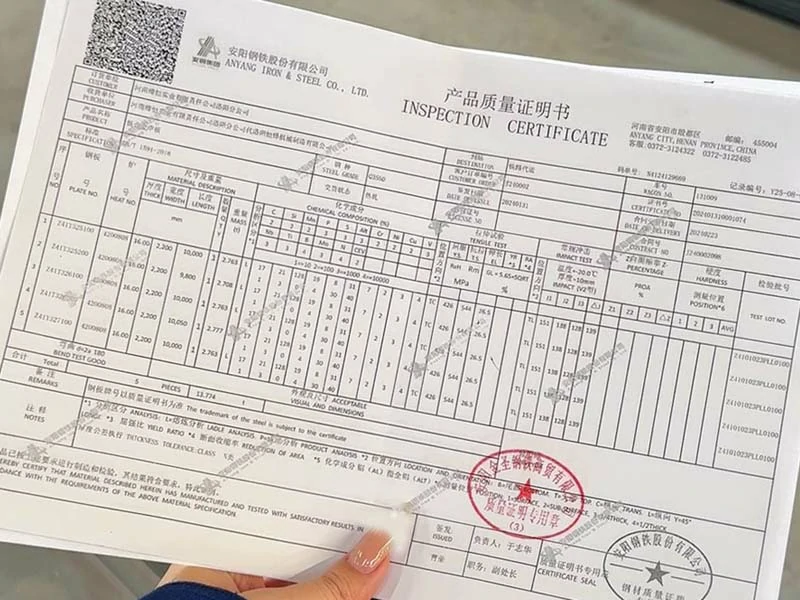
What traceability looks like when it works
I like to review a “mock dossier” during pre-qualification. It quickly separates marketing from systems. For pipe rack structures, I ask for:
- A sample ITP with these elements:
- Reference to project specs, codes, and acceptance criteria
- Defined hold/log points (material receipt, fit-up, welding, NDE, blast, DFT)
- TPI attendance points and sign-off space
- Material control examples:
- EN 10204 3.1 certificates for steels and bolts
- Heat number marking method (hard stamp, paint stick with clear map)
- MTC-to-part mapping sheet for a real job (redacted)
- PMI plan for alloyed steels if required
- Welding/NDE sample:
- WPS/PQR set with essential variables highlighted
- Welder continuity records
- Weld map for a fabricated assembly
- UT/MT reports with Level 2 signatures and Level 3 procedure approval
- Coating quality records:
- Blast profile readings
- DFT charts with environmental conditions
- Holiday test where applicable
- Measuring and calibration:
- Calibrated tools list (UT machines, DFT gauges, torque wrenches)
- Recent calibration certificates
I have seen lovely binders with empty content. Focus on how records tie together:
- Does the ITP reference the same weld map numbers that appear on NDE reports?
- Do heat numbers appear on member piece marks and the MTC log?
- Do DFT readings reference the same area IDs shown on the paint plan?
If the fabricator cannot walk you through a real, coherent dossier, you will end up doing forensic QA later—on your schedule.
What welding procedures and NDE really matter for pipe rack structures?
On paper, many welding programs look similar. In production, small differences in WPS/PQR and NDE cause rework, especially with heavy sections and full-penetration joints common in pipe rack structures.
A concise answer: align acceptance classes, NDE percentages, and process variables early. Confirm WPS/PQR fit project specs, preheat/interpass, filler metal classification, and UT acceptance level. Lock visual, MT/PT, and UT scopes into the ITP with clear drawings and weld maps.
The pitfalls I see in welding and NDE
I am not a design engineer, so I won’t tell you what to calculate. I will tell you what trips shops up:
- WPS/PQR misalignment
- WPS qualified on thinner plates than the job requires
- Different positions or heat input windows than site allows
- Missing backing/consumable equivalence to your spec
- Preheat and interpass discipline
- Inadequate control on 40–60 mm plates
- Poor documentation of heat logs
- Weld details and fabrication aids
- Missing run-off tabs for full-pen welds, leading to edge defects
- Lack of distortion control for long girders—camber not addressed
- NDE scope creep
- Spec calls for 100% UT on full-pen butt welds, shop budgets for 10%
- Acceptance criteria mismatch (e.g., EN ISO 5817 Level B vs C)
- Level 2 personnel available, but no Level 3 oversight for procedures
- Records and traceability
- Weld maps not matching fabricated reality
- NDE reports not tied to exact weld IDs
To avoid surprises:
- Define acceptance classes and NDE percentages explicitly in the PO and ITP.
- Request PQRs that match the thickness, processes, and joint types.
- Clarify welding sequence and back-gouging requirements in fabrication notes.
- Ensure UT operators are certified and that equipment calibration is current.
- Plan for hold points at fit-up and after back-gouging on critical joints.
When pipe rack structures interface with equipment stools or preinstalled cable trays, I recommend adding an extra visual/MT pass after final machining or drilling. It is cheaper than rework after paint.
How do transportation and site assembly trade-offs affect pipe rack structures?
Bigger modules cut site work. Oversized loads add logistics risk. Pipe rack structures live in this tension. I have seen beautifully fabricated modules that could not legally leave the yard.
The fast answer: define the transport envelope first, then split pipe rack structures at logical interfaces with survey datums and match-marks. Balance oversize shipments against site welding risk. Validate field bolt-up tolerances with trial fit or jig-based controls.
Building modules that actually arrive and fit
Two realities shape module decisions:
- Transport rules by route, port, and country (width, height, weight, escort)
- Site conditions (crane size, welding permissions, fireproofing sequences)
I push for a module strategy workshop early with logistics, site, and fabrication. Here is the framework:
- Define the transport envelope
- Typical sea container limits: ~12 m length, ~2.3 m width, ~2.6 m height3
- Breakbulk allows more but adds crating and handling risks
- Road transport in many regions caps width around 3.4–4.0 m without escorts
- Decide split points
- Split at nodes that preserve alignment: column-beam bolted nodes, expansion joints
- Keep bracing lines intact where possible to control geometry
- Use sleeves or temporary bracing for stability until final bolt-up
- Interface control
- Establish survey datums and punch-mark lines visible after blast/paint
- Match-mark all bolted interfaces with redundant marks
- Coordinate hole tolerances and bolt class (e.g., slip-critical vs bearing4)
- Shop pre-assembly vs trial fit
- Full trial fit is costly but de-risks complex joints
- For repetitive bays, use controlled fixtures and gauge blocks
- Measure and record diagonals and node offsets
A comparison helps clarify:
| Strategy | Larger modules | Smaller modules |
|---|---|---|
| Transport | Escort, special permits | Standard trucks/containers |
| Site work | Less welding/bolt-up | More bolt-up and adjustment |
| Risk | Logistics complexity | Field tolerance stack-up |
| Coating/PFP | More repair after cuts | Better coating continuity |
| Schedule | Fewer lifts | More lifts, simpler logistics |
There is no single right answer. I have watched teams swing too far either way. The key is to quantify the risk: if the region has strict transport controls, shift to smaller assemblies and invest in tighter jigging. If site welding is restricted, spend on logistics and keep modules bigger.
Which coating and fireproofing constraints must align for pipe rack structures?
Coating disputes consume weeks. Zinc-rich primers that fight with PFP, DFT out of spec, or holiday test failures—all avoidable if you treat coating like a system, not paint on top.
The quick answer: lock the coating system early and test compatibility with PFP. Specify blast cleanliness and profile, DFT ranges, cure windows, and inspection methods. Decide what is shop-applied vs field-applied for pipe rack structures and document touch-up protocols after assembly.
Making coatings and PFP work together
From a manufacturing standpoint, these are the coating/PFP topics that cause rework:
- Surface preparation
- Blast to SA 2.5 with a measured profile suitable for the primer
- Control contaminants (salt testing for marine shipments)
- System compatibility
- Zinc-rich primers under epoxy intumescent can be sensitive5
- Alkyds often conflict with high-solids epoxies—avoid mixed systems
- Galvanizing and PFP are often incompatible without special primers
- DFT and inspection
- Record DFT layer-by-layer; avoid single heavy coats that crack
- Measure environmental conditions (dew point, humidity, temperature)
- Holiday testing for high-build systems where required
- Shop vs field application
- Decide if PFP applies in shop or on site; consider transport damage
- Plan for masking of bolted interfaces to ensure torque and slip factors
- Define touch-up procedures after site welds (abrasive prep, spot prime)
- Fireproofing specifics
- Cementitious vs epoxy intumescent behave differently during handling
- Edge protection and reinforcement around bolt heads and brackets
- Curing times and handling windows must be respected
For pipe rack structures, I recommend a coating pre-production meeting:
- Align the paint manufacturer’s technical data sheets with the spec.
- Agree on DFT targets and acceptable ranges per layer.
- Establish hold points for blast inspection, stripe coat, DFT per coat, and final holiday test.
- Plan packing and transport supports that limit coating damage.
I have seen spare bolts glued by overspray or PFP intruding into bolt seats. Simple masking and a short checklist prevent that headache.
Do production capacity and fixtures impact schedule risk for pipe rack structures?
Capacity is not just tons per year. It is the ability to push heavy members, complex nodes, and repeatable geometry through the line without bottlenecks. Pipe rack structures miss dates when the shop improvises fixtures or queues long members behind smaller jobs.
Answer in brief: yes, capacity and fixtures matter a lot. Validate beam handling, fit-up fixtures, straightening capability, and precision drilling of bolted nodes. Confirm the shop can keep camber and alignment within tolerance while meeting NDE and coating hold points on schedule.
What I watch in the shop, and why it matters
When I walk a shop to assess readiness for pipe rack structures, I look for evidence that geometry will be consistent:
- Material handling
- Roller lines that can handle long heavy beams without damage
- Lifting fixtures that avoid flange dents where bolted connections land
- Fixtures and jigs
- Dedicated jigs for common bay assemblies
- Adjustable fixtures for diagonal bracing to hold angles repeatably
- Stops and gauge blocks to keep hole centerlines true
- Drilling and hole quality
- CNC drilling lines for bolt holes; minimal hand drilling on critical nodes
- Slip-critical connection prep if specified (surface class, roughness)
- Hole tolerance control to avoid field reaming
- Straightening and camber
- Presses or heat-straightening procedures for distorted flanges
- Documented camber introduction where needed and measured verification
- Measurement and survey
- Laser trackers or total stations for large modules
- Recorded diagonals and node checksheet per assembly
- Schedule integration
- NDE staged to avoid rework delays
- Paint shop throughput matched to steel output to avoid stockpiles
- Packing and dispatch that protect marked interfaces
Pipe rack structures depend on small alignment deltas to fit valves, trays, and pipe supports. Tiny fixture shortcuts become big field-fit headaches. I once saw a team shave a day by skipping a bracing jig; the cost landed three weeks later in field rework. Put your attention on fixtures, not just tonnage.
Frequently Asked Questions
Which certifications should I require for pipe rack structures?
Ask for EN 1090 EXC3 or equivalent quality level, ISO 9001 with active QA, and qualified WPS/PQR aligned to your project codes. Verify NDE personnel certifications (e.g., ISO 9712) and make sure the supplier can produce EN 10204 3.1 MTCs. Treat certificates as documents to verify, not just checkboxes.
How much NDE is typical for pipe rack structures?
It varies by spec, but full-penetration butt welds often require 100% UT, with MT/PT on fillet or attachment welds at defined percentages. The acceptance class (e.g., EN ISO 5817 B or C) must be clear. Lock this in your purchase order and ITP, with weld maps and TPI hold points.
What tolerances should I expect at bolted interfaces?
Project-specific tolerances dominate. As a practical range, many EPCs call for tight hole alignment and node offsets within a few millimeters. Confirm hole tolerances for high-strength bolts, any slip-critical prep, and survey datums. Ask the fabricator how they measure and record these nodes before paint.
Can I galvanize pipe rack structures and still use fireproofing?
Hot-dip galvanizing can conflict with some PFP systems. If galvanizing is needed, involve the coating manufacturer early to select compatible primers and PFP products. Many projects choose zinc-rich primers plus epoxy systems instead. Always confirm compatibility and the required surface preparation.
What documents should I request before awarding a contract?
Request a sample ITP, WPS/PQR set, MTCs with mapping, NDE report samples, coating DFT logs, and a proposed module split plan with transport limits. Ask for a one-page tolerance plan and example weld maps. This preview tells you if the shop can deliver the traceability you need.
Conclusion
Fabricating pipe rack structures for petrochemical plants is less about the steps and more about controlling variables that drive compliance and risk. Focus on QA traceability, welding and NDE alignment, interface tolerances, transport-versus-field splits, and coating/PFP compatibility. If you want a practical checklist or a second opinion on a supplier’s dossier, reach me at info@meichenfabrication.com or +86 133 5379 8270. Let’s de-risk your next package before steel hits the line.
"The structural basis of estrogen receptor/coactivator ... - PubMed", https://pubmed.ncbi.nlm.nih.gov/9875847/. EN 1090 defines execution classes for structural steel fabrication, with EXC3 representing stringent requirements for consequence class 3 structures including enhanced quality control, welding procedures, and inspection protocols. Evidence role: definition; source type: encyclopedia. Supports: the definition and requirements of EN 1090 execution class 3. ↩
"What is Sa 2.5 blast surfacing level ? Provisions of ISO 8501-1 ...", https://www.youtube.com/watch?v=-M7Y9hymQFE. SA 2.5 (also designated as ISO 8501-1 grade Sa 2½) specifies very thorough blast cleaning where at least 95% of the surface is free from visible residues, representing near-white metal cleanliness commonly required for protective coating systems. Evidence role: definition; source type: encyclopedia. Supports: the definition of SA 2.5 blast cleaning grade. ↩
"ISO 668", https://en.wikipedia.org/wiki/ISO_668. ISO 668 defines standard freight container dimensions, with 40-foot containers having internal dimensions of approximately 12.03 m length, 2.35 m width, and 2.39 m height, though high-cube variants offer greater height. Evidence role: statistic; source type: institution. Supports: the standardized internal dimensions of common shipping containers. Scope note: The cited dimensions are approximate and vary slightly by container type and manufacturer within ISO tolerances. ↩
"Slip-critical joint", https://en.wikipedia.org/wiki/Slip-critical_joint. Slip-critical connections are designed to transfer loads through friction between clamped surfaces with high-strength bolts, preventing slip at service loads, while bearing-type connections transfer loads through bolt shear and bearing on the connected material, permitting minor slip but requiring less stringent surface preparation. Evidence role: definition; source type: education. Supports: the engineering definitions and load transfer mechanisms of slip-critical and bearing connections. ↩
"Fire-Resistant Coatings: Advances in Flame-Retardant ... - PMC", https://pmc.ncbi.nlm.nih.gov/articles/PMC12251703/. Zinc-rich primers can exhibit compatibility issues with some coating systems due to zinc reactivity, saponification reactions with certain binders, or hydrogen evolution, requiring careful system selection and surface preparation to ensure adhesion and performance. Evidence role: mechanism; source type: research. Supports: the compatibility challenges between zinc-rich primers and certain topcoat systems. Scope note: Compatibility depends on specific product formulations, and manufacturers often develop compatible systems through testing. ↩