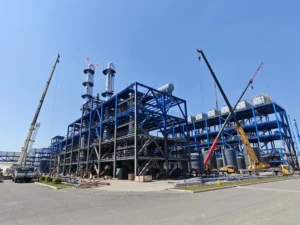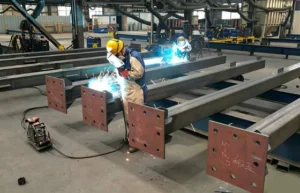
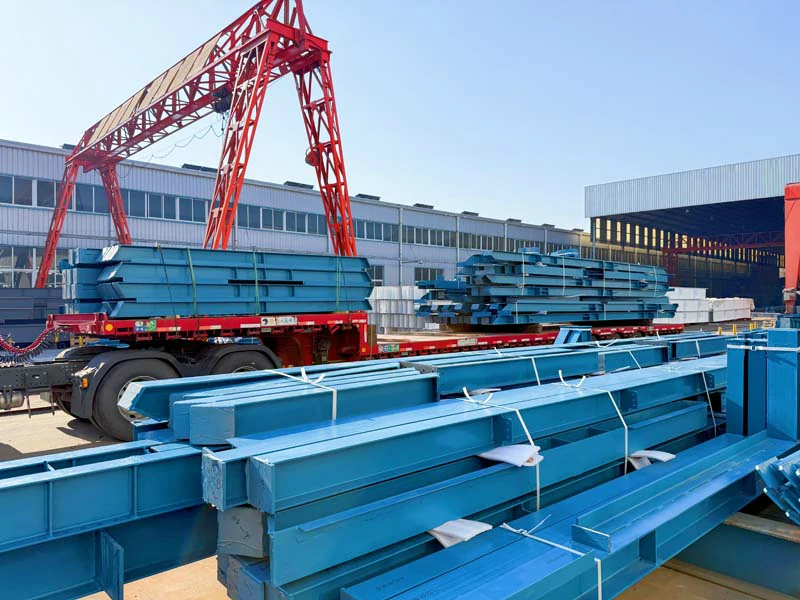
Here's a question I hear all the time from procurement teams: "Why did our qualified supplier miss the delivery date even though they had all the right certifications?" After coordinating dozens of EPC inquiries and watching module fabricators struggle with mismatched suppliers, I've realized something important. Choosing an equipment support structure supplier isn't really about comparing prices or checking certificate boxes. It's about figuring out who can actually deliver what your project needs—and who's going to create problems you didn't see coming.
Equipment support structure supplier selection comes down to matching your project requirements with a fabricator's proven industrial capacity—not just their certifications or quoted price. The suppliers who succeed are the ones with relevant petrochemical project experience, verified production capacity for your tonnage range, and engineering coordination capabilities that prevent fit-up failures during installation. Price differences over 20% usually signal either inadequate scope understanding or corners that will be cut during execution1.
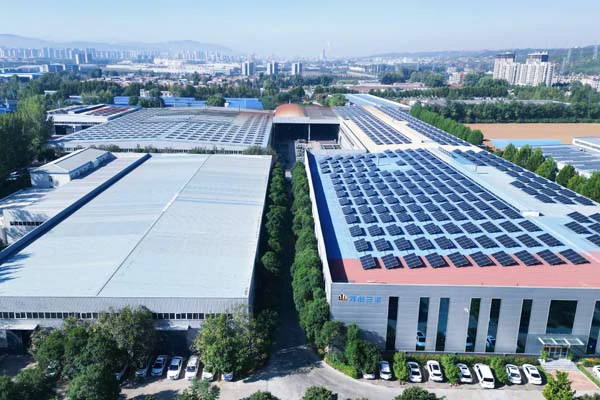
Let me walk you through what really matters when you're comparing suppliers. I'm not going to tell you which supplier to choose—that's your call based on your specific project. But I can show you what questions separate fabricators who can handle serious industrial work from those who'll cause you headaches later.
Why Does Building Steel Experience Not Transfer to Industrial Equipment Supports?
I get it—steel is steel, right? If a company can weld H-beams for a warehouse, they should be able to handle equipment supports for a petrochemical plant. But here's what I've learned from watching this play out: it doesn't work that way.
Building steel fabricators work with standardized member sizes, simple connection details, and relaxed dimensional tolerances2. Industrial equipment supports require interpreting piping stress loads, coordinating with seismic coupling requirements, and meeting dimensional tolerances that directly affect equipment alignment3—none of which appear in typical building steel projects.

What Makes Industrial Fabrication Different
The gap isn't about metal cutting. It's about everything that happens around the cutting. When we receive drawings from EPC contractors or module fabricators, they're covered with notes about interface points, thermal expansion allowances, and inspection hold points. Building steel drawings? They mostly show member sizes and connection types.
Here's what changes when you move from building steel to industrial supports:
Engineering coordination requirements:
- Interpreting piping stress analysis requirements
- Understanding how equipment thermal growth affects support design
- Coordinating fit-up requirements with offshore module yards
- Managing interface dimensions with process equipment packages
Quality control protocols:
- Third-party inspection hold points during fabrication4
- 100% ultrasonic testing on critical welds instead of sampling5
- Material traceability linking every piece to mill certificates6
- Dimensional inspection reports before shipping, not after installation
Welding standards:
- Following ASME Section IX or AWS D1.1 procedures, not just general welding codes7
- Preheating and post-weld heat treatment documentation8
- Welder qualification for specific joint configurations
- NDT acceptance criteria stricter than structural steel standards
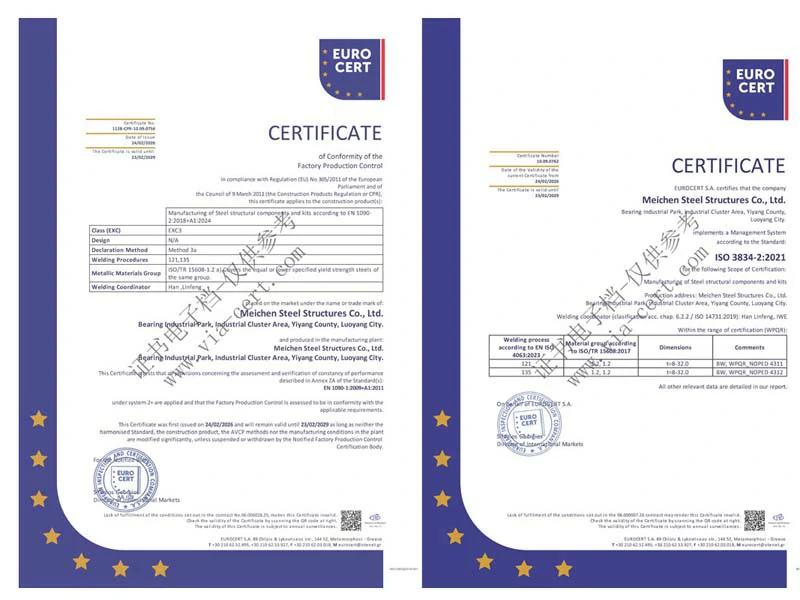
I've seen building steel fabricators hold EN1090 EXC3 certificates but struggle when an inspector asks for the WPQR covering a specific joint detail. The certificate proves they have a quality system—it doesn't prove they've executed the type of work your project requires.
The Real Experience Gap
When clients ask us about our project history, they're often looking at total tonnage or project count. That's not the right filter. What matters is whether the fabricator has handled projects similar to yours in complexity, not just size.
Relevant experience indicators:
- Projects completed under third-party inspection (not just internal QC)
- Heavy welded structures meeting ASME or API dimensional tolerances
- Coordination experience with offshore module yards on fit-up requirements
- Successful delivery of equipment supports in operating petrochemical environments
The fabricators who succeed in industrial work aren't necessarily bigger—they're the ones who've learned how to coordinate with engineers, handle inspection protocols, and understand that dimensional accuracy isn't just a spec requirement, it's what prevents expensive field modifications.
How Do You Verify Real Production Capacity Beyond Certificates?
This is where a lot of procurement decisions go wrong. ISO 9001 proves a supplier has a quality management system. EN 1090 proves they can fabricate structural steel to European standards9. But neither certificate tells you whether they can handle your 5,000-ton project or juggle multiple EPC schedules at the same time.
Real production capacity reveals itself through workforce scale, production line availability during peak season, and demonstrated experience executing projects matching your tonnage and delivery timeline—not through certification listings.
Looking Beyond the Certificate Wall
Every supplier can send you a folder full of certificates. I'm not saying those don't matter—they absolutely do. You need suppliers with proper quality systems. But certificates are your starting point, not your finish line.
Here's what actually tells you about capacity:
| Capacity Indicator | What It Reveals | Questions to Ask |
|---|---|---|
| Workforce count | Whether they can staff your project without pulling resources from other jobs | How many welders are currently available? What's your typical crew size for projects in our tonnage range? |
| Production line setup | If they have dedicated equipment for industrial work vs. general fabrication | How many production lines run simultaneously? Can you show photos of similar structures you've fabricated? |
| Shop floor area | Physical space for staging, assembly, and pre-delivery inspection | What's your covered fabrication area? Where would our structures be assembled and inspected? |
| Peak season availability | Whether they'll delay your project when other orders arrive | What's your current backlog? How do you handle schedule conflicts between projects? |
The 5,000-Ton Reality Check
Projects often experience delays when procurement teams select suppliers based on their ability to handle 500-ton jobs, then award them 5,000-ton contracts. The math looks simple—it's just ten times bigger—but the execution doesn't scale like that.
What changes at larger tonnage:
- Material procurement lead times that can't be compressed when schedules slip
- Quality inspection durations that triple because every structure needs documentation
- Shop coordination complexity when you're managing multiple work fronts simultaneously
- Transportation logistics requiring specialized equipment and route planning
When someone quotes significantly lower than competitors on a large project, they're often underestimating these scale-up factors. They're pricing based on their typical 500-ton experience, not recognizing how coordination hours multiply on bigger jobs.
I've watched this pattern too many times: the low bidder wins the contract, then starts sending change orders or missing milestones because they didn't account for the engineering support time or inspection hold durations that industrial projects require.
What Project History Actually Tells You About Industrial Capability?
"We've completed 200 projects" sounds impressive. But if those 200 projects were warehouse frames and canopy structures, that experience tells you nothing about whether they can handle equipment support fabrication.
The relevant project history isn't total project count—it's whether the supplier has fabricated heavy welded structures under third-party inspection, met dimensional tolerances required for equipment alignment, and coordinated with offshore facilities on fit-up requirements.
The Experience That Matters
When we're talking with potential clients about our project history, I don't lead with tonnage numbers. What EPC contractors and module fabricators really need to know is: have we dealt with the specific challenges their project will face?
Critical project experience factors:
Third-party inspection coordination:
- Has the supplier worked with SGS, TÜV, or other third-party inspectors?
- Do they understand inspection hold points and documentation requirements?
- Can they provide reference projects where third-party inspection occurred?
Dimensional tolerance achievement:
- Have they met ±2mm tolerances on critical interface dimensions10?
- Do they have measurement equipment and protocols for verification?
- Can they show dimensional inspection reports from previous projects?
Module yard coordination:
- Have they shipped structures to offshore fabrication yards?
- Do they understand fit-up requirements for modular construction?
- Can they provide interface control documentation from past module projects?
Reading Between the Project Lines
When suppliers list their project experience, you're looking for specific indicators, not just names and tonnage. Here's what tells you whether their experience is relevant:
Projects that required ASME compliance or API standards—not just structural codes—show they understand industrial equipment requirements.
Projects that included equipment support platforms or pipe racks—not just building frames—prove they've worked with the interface complexity you're dealing with.
Projects delivered to petrochemical, LNG, or refining facilities—not general industrial parks—mean they've met the quality expectations your project demands.
The Reference Project Trap
Here's something that trips up buyers: impressive project lists that don't include contact information. If a supplier completed major projects successfully, they should be able to provide client references or project manager contacts. When that information isn't available, it often means the projects weren't completed smoothly or the client relationship didn't end well.
Ask for:
- Client company name and project manager contact
- Specific scope of work (not just "steel structure supply")
- Third-party inspection company involved (if applicable)
- Any challenges that occurred and how they were resolved
The suppliers confident in their track record will provide these details. The ones who dodge these questions are usually hiding something.
Why Do Large Price Differences Signal Risk Rather Than Value?
Let me tell you what happens when quotes vary by 30% on the same scope. Procurement teams naturally gravitate toward the lower number—it makes the project budget look better and the buyer look smart. But in industrial steel fabrication, big price gaps don't usually mean you found a great deal. They mean someone misunderstood the scope or is planning to cut corners you won't see until inspection.
When equipment support structure quotes vary by more than 20%, the low bidder is typically either underestimating engineering coordination hours, planning to use relaxed inspection protocols, or betting that specification details won't be enforced—all of which transfer schedule risk and quality problems to the EPC contractor.
What Low Bids Actually Cost
The cheapest supplier doesn't reduce your costs—they just move those costs somewhere else in your project. I've seen this pattern enough times to recognize it immediately now.
Where low-bid savings disappear:
Engineering coordination time:
- Suppliers who underbid often lack engineering staff to review drawings properly
- You end up answering repeated questions that should have been resolved during quote review
- Interface problems emerge during fabrication that require engineering revisions
- Your engineering team spends hours fixing issues the supplier should have caught
Inspection failures and rework:
- Low bidders sometimes plan to use internal QC instead of proper third-party inspection
- Weld repairs multiply when structures fail UT or MT testing
- Dimensional corrections require complete disassembly and re-fabrication
- Your inspection delays cascade through the entire project schedule
Field modification costs:
- Structures that pass shop inspection but don't fit during installation
- Field welding and cutting that should have been done in the shop
- Equipment installation delays while supports are corrected
- Your construction team charging time and materials for fixes
The Real Cost Structure
Industrial steel fabrication isn't a commodity product where everyone makes the same thing and competes on efficiency. The actual work includes components that can't be compressed without sacrificing quality:
| Cost Component | Typical Percentage | What Happens When Cut |
|---|---|---|
| Material | 40-50% | Substituting thinner plates or lower-grade steel that won't pass inspection |
| Direct labor | 25-35% | Reducing welder qualifications or rushing work that creates defects |
| Engineering support | 8-12% | Skipping proper drawing review, causing interface problems during installation |
| Quality control | 5-8% | Using sampling instead of 100% inspection, missing defects until final inspection |
| Overhead and margin | 10-15% | Squeezing profit so thin that any problem bankrupts the project |
When someone quotes 30% below market, they're planning to cut one or more of these areas. The question isn't whether you'll pay for it—it's whether you'll pay through project delays, field rework, or schedule penalties.
The Middle Quote Strategy
The suppliers who understand industrial project requirements usually quote in the middle range—not highest, not lowest. They've calculated what the work actually requires and priced it accordingly.
Here's what I tell people when they're comparing quotes: the highest price isn't always better quality, but the lowest price is almost always higher risk. You're looking for suppliers who clearly understand your scope, have relevant experience, and priced the work realistically.
Red flags in low bids:
- Vague qualifications or exclusions buried in footnotes
- Missing items like engineering support or inspection coordination
- Assumptions that contradict your specification requirements
- Delivery schedules that don't account for inspection hold points
When you find these gaps, don't assume you can enforce the full scope later. The supplier bid low because they planned to skip those items—trying to add them back during execution turns into painful change order negotiations.
What Engineering Coordination Capabilities Prevent Installation Problems?
This is the part that doesn't show up on capability statements or certification lists, but it's what actually determines whether your structures fit during installation or need field modifications. Equipment support fabrication isn't just about cutting steel—it's about understanding how your structure interfaces with piping, equipment, and the rest of the module or plant.
Suppliers with engineering coordination capability can interpret piping stress requirements, manage dimensional interfaces with equipment packages, and adjust fabrication sequences to prevent fit-up problems—capabilities that separate industrial fabricators from building steel suppliers regardless of certification level.
The Interface Complexity Nobody Sees
When procurement teams evaluate suppliers, they're usually focused on welding capacity and quality certifications. But the problems that blow up projects usually come from interface misalignment, not weld defects.
Critical interface challenges:
Piping interface points:
- Support locations must match pipe routing exactly
- Dimensional tolerance stackup affects where clamps or guides attach
- Thermal expansion allowances can't conflict with support stiffness
- Field adjustment provisions need to be built in, not added later
Equipment mounting surfaces:
- Bolt hole patterns must align with equipment baseplates
- Elevation and levelness directly affect equipment operation
- Interface loads need proper distribution across support members
- Grouting surfaces require specific finish requirements
Module connection points:
- Lift points must align with crane capabilities and module center of gravity
- Connection plates must match with mating module surfaces
- Shipping separations need coordination with transportation limits
- Installation sequence affects which dimensions are critical
Suppliers who've only done building steel don't think about these details because warehouse structures don't have these interfaces. The equipment sits on a concrete slab, pipes route wherever's convenient, and nothing needs to align with offshore components.
What Engineering Coordination Looks Like
When I talk about engineering coordination capability, I'm not saying the fabricator needs to design your supports—that's your engineering team's job. What they need is the ability to understand your design intent and catch problems before fabrication starts.
Effective coordination includes:
- Drawing review meetings where the supplier asks about critical dimensions and tolerances
- RFI responses that show they understand why certain details matter
- Shop drawing submissions that clarify interfaces before cutting steel
- Dimensional control plans that identify how they'll verify critical measurements
The suppliers who have this capability will point out potential problems during quote review. They'll ask about interface requirements, question dimension tolerances that seem too tight, and identify where the drawings don't match the specification. That might seem like extra work during procurement, but it's what prevents expensive surprises later.
The Cost of Missing Coordination
Projects often experience installation delays when suppliers fabricate exactly to the drawing dimensions without understanding how those dimensions relate to the rest of the project. The structure passes shop inspection because it matches the drawings—but it doesn't fit on site because nobody caught the interface conflict.
Common coordination failures:
- Support platforms that can't accommodate actual pipe routing
- Bolt holes that don't line up with equipment baseplate patterns
- Elevation mismatches that create step changes between modules
- Connection plates that interfere with adjacent structures during installation
Fixing these problems in the field costs 3-5 times more than getting them right in the shop11. You're paying construction crews to stand around while someone engineers a solution, then doing hot work on painted structures, and delaying equipment installation while supports get modified.
The fabricators who prevent these problems aren't necessarily more expensive—they're the ones who invest time up front understanding your project instead of blindly cutting steel.
How Do You Evaluate Quality Systems That Actually Function?
Every supplier will send you their ISO 9001 certificate and quality manual. What you're really trying to figure out is whether those documented systems actually function during production—or whether they're just paperwork that gets dusted off for audits.
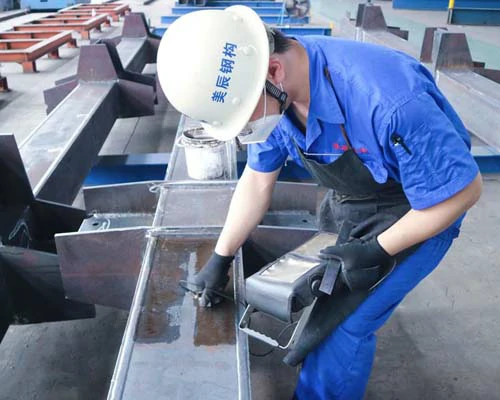
Functioning quality systems show themselves through documented welder qualifications, material traceability procedures that link fabricated pieces to mill certificates, inspection hold point protocols that prevent work from proceeding without approval, and corrective action records that prove problems get identified and addressed.
Beyond the Quality Manual
When procurement teams evaluate quality systems, they often request the quality manual and consider the matter closed. But quality manuals describe what should happen—they don't prove what actually happens during production.
What functioning systems look like:
Welder qualification records:
- Verify that welders are qualified for the welding processes, positions, and joint types required by the project.
- Check that qualification records are current and traceable to the welders assigned to the work.
- Confirm that welding is performed in accordance with the approved welding procedures and applicable project specifications.
Material traceability:
- Check whether material certificates can be linked to the corresponding steel grades, plate thicknesses, and fabricated components.
- Verify how material identification is maintained during cutting, marking, fabrication, and assembly.
- Confirm that material substitutions require approval in accordance with the project requirements.
Inspection and testing records:
- Review the inspection and test plan (ITP) before fabrication begins.
- Confirm the required visual inspection, dimensional inspection, and non-destructive testing (NDT) methods and acceptance criteria.
- Check how inspection hold points and witness points are managed and documented.
- Verify that inspection reports are available for review before shipment.
The required inspection methods and testing extent should follow the applicable design codes, project specifications, approved ITP, and contractual requirements. Do not assume that every weld requires the same level of testing.
Non-conformance and corrective action:
- Ask how the supplier records and reports non-conformities.
- Check whether weld repairs and dimensional corrections follow approved procedures.
- Confirm that corrective actions are documented and verified before the affected work is accepted.
- Review a representative example of a completed non-conformance report (NCR), where disclosure is permitted.
A functioning quality system does more than identify defects. It provides a documented process for controlling affected work, obtaining the necessary approvals, completing corrective actions, and verifying the results.
How to Verify Quality Before Awarding the Contract
Procurement teams do not need to audit every production activity before placing an order. However, they should establish a clear understanding of the supplier's quality responsibilities before the contract is awarded.
Use the following questions during technical evaluation:
| Evaluation item | What to verify |
|---|---|
| Welding procedures | Are the required WPS and supporting qualifications available and applicable to the project? |
| Material control | Can steel materials and certificates be traced to fabricated components? |
| Inspection planning | Is there an agreed ITP with defined inspection stages and responsibilities? |
| NDT arrangements | Are testing methods, extent, personnel qualifications, and acceptance criteria defined? |
| Dimensional control | Are critical dimensions identified, measured, and recorded before shipment? |
| NCR management | Is there a documented process for reporting, correcting, and closing non-conformities? |
| Final documentation | Can the supplier provide the agreed inspection and manufacturing records in the required format? |
The objective is not simply to collect documents. It is to establish whether the supplier can demonstrate that the required controls are implemented throughout fabrication.
What Supplier Evaluation Checklist Should EPC Contractors Use?
A structured evaluation checklist helps procurement teams compare suppliers against the same technical and commercial requirements.
Before making a final decision, review five areas:
1. Relevant industrial experience
- Has the supplier fabricated equipment support structures, pipe racks, or comparable industrial steelwork?
- Can the supplier demonstrate experience with similar project specifications and inspection requirements?
- Are project references and examples of completed work available, subject to client confidentiality?
2. Production capacity
- Does the available workforce and workshop capacity match the proposed production schedule?
- Can the supplier explain how material procurement, fabrication, inspection, and delivery will be coordinated?
- Is the proposed schedule realistic given the current production workload?
3. Engineering coordination
- Will the supplier review drawings and identify unclear dimensions or interface requirements before fabrication?
- Is there a defined process for technical queries, drawing revisions, and approvals?
- Are critical interface dimensions identified for verification?
- Are welding procedures, material traceability, inspection activities, and non-conformance controls documented?
- Can the supplier meet the applicable project and contractual requirements?
- Are the required quality records included in the proposed scope?
5. Commercial and delivery reliability
- Does the quotation clearly define the fabrication scope, exclusions, inspection requirements, packaging, and delivery terms?
- Are material prices, delivery assumptions, and technical deviations transparent?
- Does the proposed delivery schedule include realistic time for inspection, documentation, and shipment preparation?
A supplier evaluation matrix can help teams document the results consistently. Weightings should reflect the project's actual priorities rather than applying the same scoring model to every procurement package.
A low quotation should trigger a detailed scope review, not an automatic rejection. Likewise, a high quotation should not be treated as evidence of superior quality without supporting information.
Frequently Asked Questions
What certifications should an equipment support structure supplier have?
The required certifications depend on the project location, applicable standards, contractual requirements, and the supplier's scope of work. Evaluate the relevance and validity of each certificate, together with the supplier's actual procedures, qualifications, inspection arrangements, and project experience.
Is EN 1090 certification enough for petrochemical steel fabrication?
EN 1090 certification may be relevant when the work falls within its applicable scope, but it does not automatically demonstrate compliance with every petrochemical project requirement. Confirm the required execution class, applicable product and design standards, welding qualifications, inspection requirements, and project-specific documentation.
How can buyers verify a steel fabricator's production capacity?
Review the supplier's available workforce, workshop and equipment capacity, current workload, production schedule, and experience with comparable projects. Where practical, arrange a factory audit or request evidence from similar completed orders.
What documents should be requested before fabrication begins?
Depending on the contract, the document package may include approved-for-construction drawings, material documentation, applicable WPS and supporting qualification records, an inspection and test plan, dimensional inspection requirements, and an agreed manufacturing document register. The final list should be established in the project specification and contract.
Should procurement teams always choose the lowest-priced supplier?
No. Compare quotations against the same technical scope, material requirements, inspection obligations, documentation, packaging, and delivery terms. A lower price may be commercially attractive, but any exclusions, assumptions, or unresolved technical requirements should be clarified before award.
Conclusion: Choose a Supplier That Can Demonstrate Its Capability
Selecting an equipment support structure supplier requires more than comparing certificates, project counts, or quoted prices. EPC contractors and industrial project teams need evidence that a fabricator can meet the project's technical requirements, coordinate interfaces, control fabrication quality, and deliver within the agreed schedule.
Before awarding a contract, verify three things:
- Relevant capability: The supplier has experience that matches the complexity and requirements of the work.
- Documented control: Its production, welding, inspection, and material traceability processes meet the applicable project requirements.
- Reliable execution: Its capacity, schedule, scope assumptions, and coordination arrangements are clearly defined.
A structured evaluation process helps procurement teams identify potential risks before fabrication begins and makes supplier comparisons more consistent.
Planning an industrial steel fabrication project?
Meichen Fabrication supports industrial steel structure fabrication based on customer-provided design drawings and project specifications. Contact our team to discuss your drawings, fabrication scope, quality requirements, and delivery expectations.
"MCC Procurement Guidance Note: Price-Reasonableness ...", https://www.mcc.gov/resources/doc/guidance-price-reasonableness/. Studies in construction procurement have documented that bids significantly below market averages correlate with increased risk of scope gaps, quality issues, and project delays, though the specific threshold varies by project type and market conditions. Evidence role: general_support; source type: research. Supports: Research on construction procurement showing correlation between abnormally low bids and project risks. Scope note: Research may not establish the specific 20% threshold or focus exclusively on equipment support structures ↩
"Specification for Structural Steel Buildings", https://user.eng.umd.edu/~ccfu/ref/a360-16-spec-and-commentary.pdf. Professional engineering organizations document that building steel typically follows less stringent dimensional tolerances and standardized connection details compared to industrial applications requiring equipment interface coordination and tighter tolerances. Evidence role: general_support; source type: institution. Supports: Engineering standards documentation comparing tolerance and complexity requirements across fabrication types. ↩
"Building Code Guide 17-11: Seismic Certification", https://www.portland.gov/ppd/code-policy/commercial-building-code-guides/bcg-17-11-seismic-certification. Industrial design codes specify that equipment support structures must accommodate piping stress loads, seismic forces, and maintain dimensional tolerances critical for equipment alignment and operational integrity. Evidence role: mechanism; source type: institution. Supports: Engineering standards governing equipment support design requirements in industrial facilities. ↩
"Construction and Materials Quality Assurance - Construction", https://www.fhwa.dot.gov/construction/cqit/qa.cfm. Industrial quality assurance protocols commonly incorporate inspection hold points where fabrication must pause for third-party verification before proceeding, ensuring critical quality checkpoints are independently verified rather than relying solely on manufacturer self-inspection. Evidence role: mechanism; source type: institution. Supports: Quality standards documentation of inspection hold point protocols. ↩
"STANDARDIZED PERFORMANCE TESTING OF ...", https://hammer.purdue.edu/ndownloader/files/45869436. Industrial quality standards for critical applications often mandate 100% non-destructive examination of welds rather than statistical sampling approaches used in less critical structural applications, though specific requirements vary by code and application. Evidence role: general_support; source type: institution. Supports: Quality standards documentation regarding inspection intensity for critical industrial applications. Scope note: The exact threshold for requiring 100% versus sampling may depend on specific project codes and criticality classifications ↩
"Steel Mill Quality (QC Process and Issues)", https://www.pa.gov/content/dam/copapwp-pagov/en/penndot/documents/programs-and-doing-business/construction/qaw/2018_qaw_presentations/metals/steel%20mill%20quality%20qc%20process%20and%20issues.pdf. Industrial quality codes require material traceability systems that link fabricated components to original mill test reports and material certificates, ensuring material properties and chemistry can be verified throughout the fabrication and service life. Evidence role: mechanism; source type: institution. Supports: Quality standards requiring material traceability in industrial applications. ↩
"Introduction to ASME Section IX Online Training | AWS", https://www.aws.org/certification-and-education/education/online-instructor-led-learning/introduction-to-asme-section-ix/. ASME Section IX provides welding and brazing qualification requirements widely used in pressure vessel and industrial applications, while AWS D1.1 establishes structural welding code requirements, both representing more stringent standards than general fabrication codes. Evidence role: definition; source type: institution. Supports: Official documentation of ASME Section IX and AWS D1.1 as welding standards. ↩
"msfc-spec-3679.pdf", https://standards.nasa.gov/sites/default/files/standards/MSFC/A/0/msfc-spec-3679.pdf. Welding codes for industrial applications specify preheating and post-weld heat treatment requirements based on material thickness, chemistry, and service conditions, with mandatory documentation to verify proper thermal cycles were achieved to ensure weld integrity and material properties. Evidence role: mechanism; source type: institution. Supports: Welding code requirements for thermal treatment and documentation. ↩
"EN 1090", https://en.wikipedia.org/wiki/EN_1090. ISO 9001 specifies requirements for quality management systems applicable across industries, while EN 1090 specifically addresses execution of steel structures and aluminum structures, establishing requirements for conformity assessment of structural components. Evidence role: definition; source type: institution. Supports: Official definitions of ISO 9001 and EN 1090 certification scopes. ↩
"Specifications, Tolerances, and Other Technical ...", https://www.nist.gov/document/nist-hb-44-2024-appendix-fundamental-considerations. Industrial fabrication standards for equipment-critical interfaces specify dimensional tolerances significantly tighter than building steel, with critical interface dimensions sometimes requiring tolerances in the ±2mm range to ensure proper equipment alignment and fit-up. Evidence role: general_support; source type: institution. Supports: Engineering standards documentation of tight dimensional tolerances for industrial equipment interfaces. Scope note: Specific tolerance requirements vary by equipment type, interface criticality, and applicable design codes ↩
"Field Services vs. In-Shop Fabrication: the Right Approach", https://www.ansgarindustrial.com/blog/2025/04/07/field-services-vs-in-shop-fabrication-the-right-approach/. Construction management studies have documented that field modifications and corrections typically cost several times more than equivalent shop work due to factors including mobilization, site constraints, reduced productivity, and schedule impacts, with multipliers varying by project type and complexity. Evidence role: statistic; source type: research. Supports: Construction industry research on cost differentials between shop and field work. Scope note: The specific 3-5x multiplier may vary based on project conditions, location, and type of modification required ↩