I've been in the steel structure fabrication business for over two decades, and I keep seeing the same procurement mistake. EPC contractors looking for industrial steel structure suppliers often treat the selection process like shopping for building steel—comparing tonnage capacity and price per ton. Then six months into the project, they're facing delivery delays, quality rework, and finger-pointing about who's responsible for the schedule slippage.
Large-scale industrial steel structure fabrication requires manufacturing capability fundamentally different from building steel production. The supplier you need isn't the one with the cheapest quote or the biggest factory—it's the one with proven experience handling non-standard structural complexity, tight fabrication tolerances, and strict traceability requirements without causing project delays. EPC contractors reduce procurement risk by verifying three critical capabilities: EN1090 EXC3 execution class qualification1 (not just certification), documented experience with process equipment support structures, and project management systems that handle engineering changes without schedule impact.
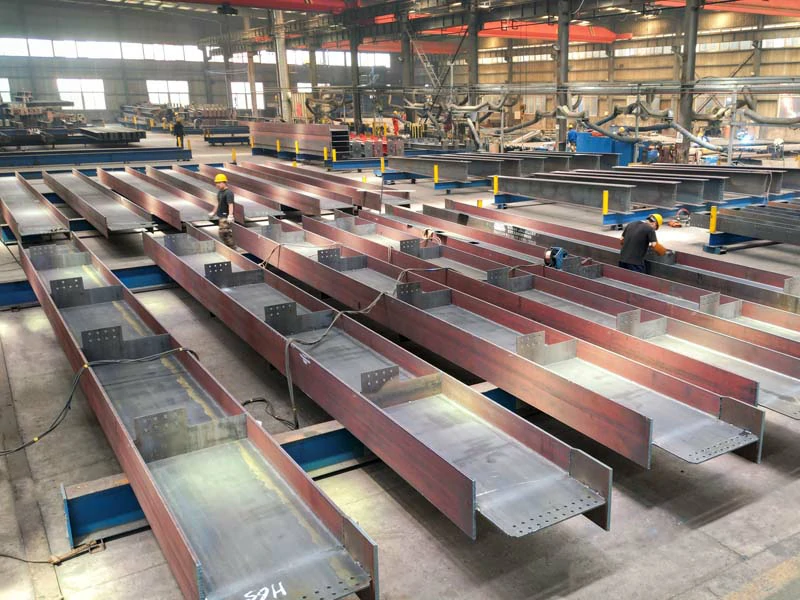
Here's what most procurement managers don't realize until it's too late: industrial projects demand a different animal than commercial construction. When a customer calls asking about our capacity to produce 5,000 tons of steel structures, my first question isn't about tonnage—it's about what type of structures they need and what their engineering tolerance requirements are. Because capacity means nothing if the manufacturer can't hold ±2mm assembly tolerances on a 12-meter welded box column2.
What Makes Industrial Steel Structure Fabrication Different from Building Steel?
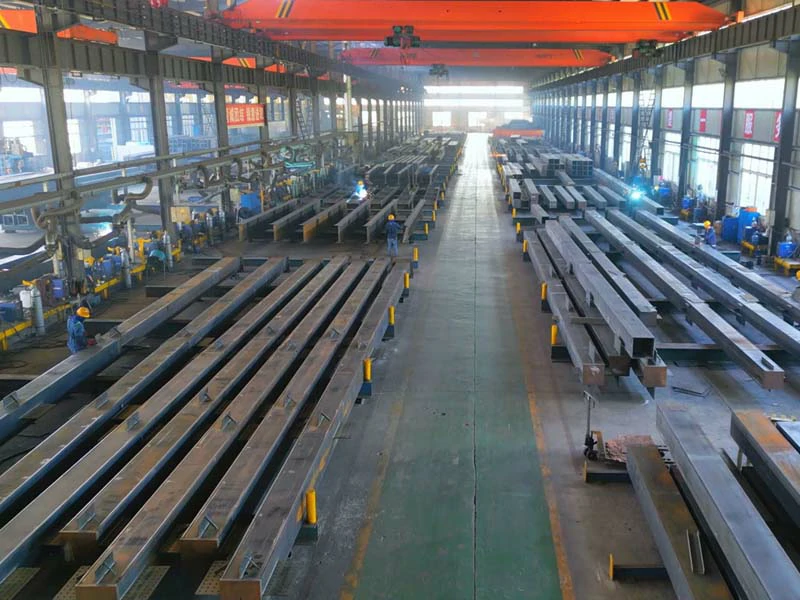
Walk into most steel structure factories in China, and you'll see production lines churning out H-beams and columns for high-rise buildings. High volume, standardized sections, repetitive welding patterns. That's building steel fabrication, and it's a completely different game from industrial steel structure manufacturing.
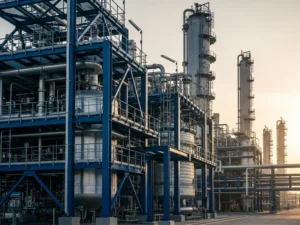
Industrial steel structure fabrication serves process plants, refineries, LNG terminals, and petrochemical facilities3—projects where structural components must integrate with process equipment, piping systems, and strict safety standards. Unlike building steel, industrial structures are almost entirely non-standard, requiring custom engineering for equipment support loads, thermal expansion allowances4, and maintenance access requirements.
I've had customers transfer projects to us after their previous supplier failed qualification inspections. The supplier had impressive capacity—30,000 tons annual output, modern equipment, ISO 9001 certification. But when the customer's third-party inspector arrived for EN1090 welding procedure qualification and found the factory had never actually executed EXC3 requirements, the entire order got rejected.
Technical Requirements Building Steel Manufacturers Usually Can't Meet
Here's what separates industrial steel structure fabrication from building steel production:
-
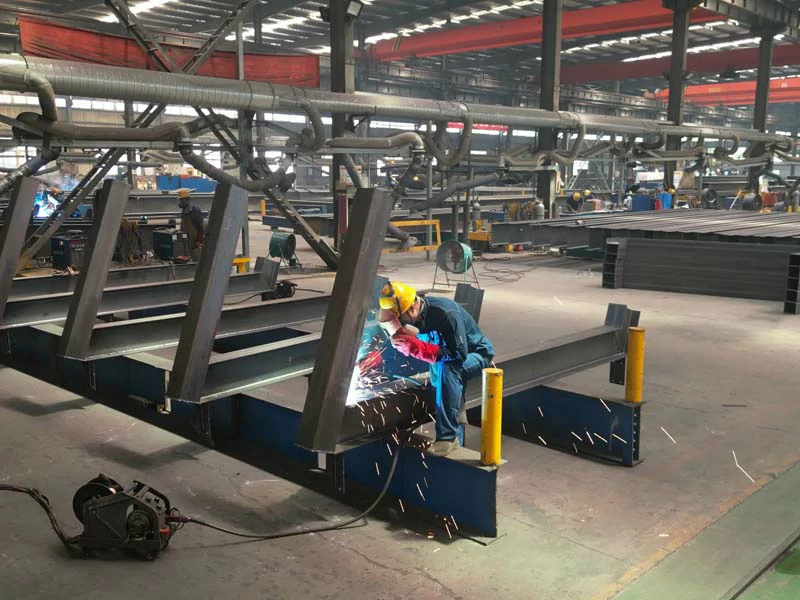
Welding procedure qualification records (WPQRs) for EXC3 execution class – This isn't just paperwork. EXC3 means the manufacturer has qualified welding procedures for structural connections subject to fatigue loading5 and low-temperature service. Building steel manufacturers typically work to EXC2, which doesn't require the same level of weld quality verification.
-
Material traceability systems – Every plate, every welding consumable, every bolt must have traceable mill certificates and heat numbers. When a process plant inspector asks to see the material traceability for a specific column section fabricated three months ago, you need systems that can pull that data in 10 minutes.
-
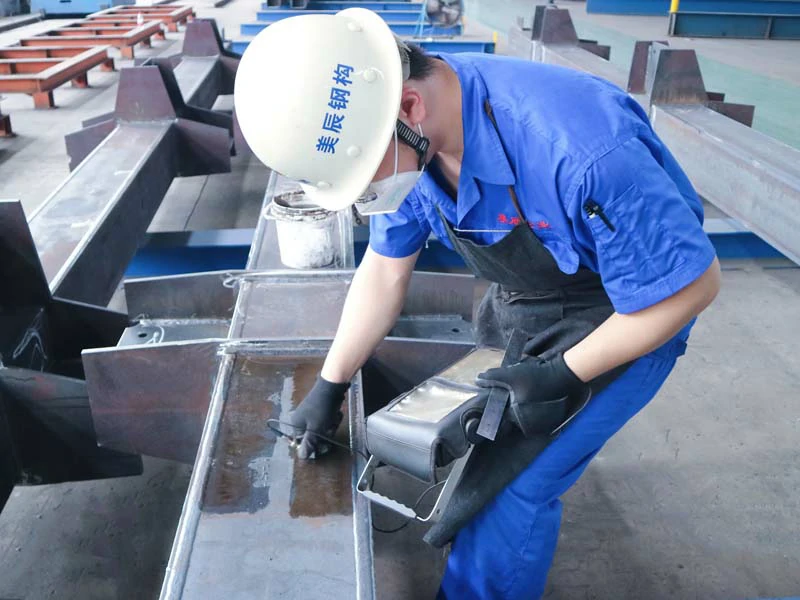
Non-destructive testing (NDT) capability – Industrial projects require ultrasonic testing for critical weld joints, magnetic particle testing for surface defects, and sometimes radiographic testing6. Building steel factories rarely have qualified NDT technicians on staff.
-
Dimensional tolerance control – Process equipment support structures often require ±2mm tolerance on anchor bolt hole locations over 10+ meter spans. Building steel typically works to ±5mm, which sounds close but creates major installation problems.
Structural Complexity Building Steel Lines Can't Handle
| Building Steel Structures | Industrial Steel Structures |
|---|---|
| Repetitive beam-column connections | Custom equipment support configurations |
| Standard connection details | Engineering-specific weld details |
| Predictable loading patterns | Dynamic loads, thermal expansion, vibration |
| Uniform coating requirements | Zone-specific coating systems |
| Assembly sequence flexibility | Critical lift sequence coordination |
Last year we fabricated structural modules for a refinery heating furnace project. The main support structure incorporated 47 different connection types, thermal expansion joints on three axes, and embedded anchor assemblies that had to align with pre-set foundation bolts within 3mm tolerance. A building steel manufacturer quoted 60% lower than us. Six months later, the customer came back because that manufacturer couldn't figure out the assembly sequence—they'd welded components in the wrong order and created geometric conflicts that made field installation impossible.
How Do You Verify a Manufacturer's Industrial Steel Structure Capability?
When EPC procurement managers visit our factory, I can usually tell within 20 minutes whether they know what to look for. Some immediately ask about our annual tonnage capacity and welding speed. Others walk straight to the QC office and ask to see our EN1090 welding procedure specifications and welder qualification records.
Verifying industrial steel structure manufacturing capability requires examining three documentary layers: execution class certification (not just ISO), traceable project experience with structural complexity similar to your scope, and quality control systems that demonstrate control over fabrication tolerances and material traceability.
EN1090 Certification vs. EN1090 Execution Capability
Here's the problem: Almost every steel fabricator in China now claims EN1090 certification. But EN1090 has four execution classes—EXC1, EXC2, EXC3, and EXC4. Most building steel manufacturers hold EXC2, which is fine for commercial buildings but inadequate for process plant structures.
EXC3 execution class qualification means:
- Welding procedures qualified for fatigue-loaded structures
- Full penetration welds verified by ultrasonic testing
- Welder qualification for critical structural connections
- Hardness testing for high-strength steel welds
- Impact toughness testing for low-temperature service
When a supplier says "we have EN1090," your follow-up question should be: "What execution class, and can I see your welding procedure qualification records for EXC3?" About 70% of suppliers claiming industrial capability can't produce those documents7 because they've never actually executed to EXC3 requirements.
Project Experience: Tonnage Doesn't Tell the Story
Industrial steel structure project experience means documented delivery of process equipment support structures, modular structural assemblies, or petrochemical plant structural systems—not just high tonnage output.
Here's what I recommend verifying:
-
Ask for specific project references – Not just company names, but actual project types. "Guangzhou Sinopec refining project" tells you something. "Various industrial projects" tells you nothing.
-
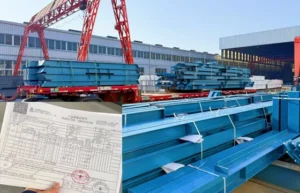
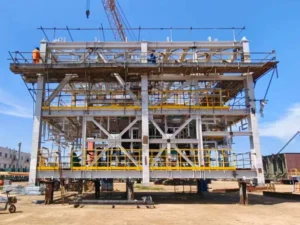
Request photos showing structural complexity – Look for equipment support platforms, process module frames, structural assemblies with integrated piping supports.
-
Check whether projects involved third-party inspection – Industrial projects typically require third-party inspection by companies like SGS, TUV, or Lloyd's.
-
Verify project steel consumption was actually large-scale – A "large project" should involve at least 2,000-3,000 tons of structural steel.
Quality Control Systems: Documentation Proves Capability
The biggest difference between building steel factories and industrial steel fabricators shows up in the QC office. If you visit a supplier and their QC documentation consists of Excel spreadsheets and hand-written inspection reports, walk away. Industrial projects require digital traceability systems that can produce complete fabrication records for every structural component.
| Quality Control Element | What to Verify |
|---|---|
| Material traceability | Can they pull mill certificates by heat number for components fabricated 6 months ago? |
| Welding procedure control | Are WPQRs posted at welding stations? Do welders have current qualification cards? |
| NDT documentation | Do they have in-house NDT technicians with valid certification? |
| Dimensional inspection records | Are critical dimensions recorded with actual measurement data, not just "pass/fail"? |
| Non-conformance tracking | Can they show you how they handled fabrication defects on past projects? |
We use a digital quality management system that assigns QR codes to every major structural component8. Scan the code, and you get the complete fabrication history—material source, welder ID, NDT results, dimensional inspection data, coating batch number.
What Fabrication Capabilities Actually Matter for Large-Scale Industrial Projects?
Tonnage capacity gets discussed in every supplier meeting, but it's usually the wrong metric. I've seen 50,000-ton-capacity factories fail to deliver 3,000-ton projects on schedule because they couldn't manage fabrication complexity.
Large-scale industrial steel structure projects require four manufacturing capabilities that have nothing to do with welding speed: heavy section fabrication capability, tight tolerance control systems, multi-project coordination ability, and engineering change management processes.
Heavy Section Fabrication and Assembly Capability
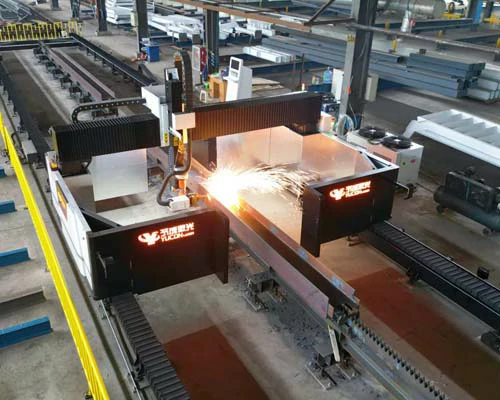
Industrial structural components often involve heavy plate sections—40mm, 50mm, sometimes 80mm thick plates for major load-bearing columns and equipment support beams. Welding thick sections requires preheating, interpass temperature control, and post-weld heat treatment9 capability.
Heavy section capability requirements include:
- Plasma or laser cutting equipment that can handle 80mm+ plate thickness
- Welding equipment with preheating and interpass temperature control
- Heat treatment facilities for stress relief when required
- Heavy-duty assembly fixtures that maintain alignment during welding
Dimensional Tolerance Control Across Large Assemblies
Industrial projects don't forgive dimensional errors. When you're setting equipment support structures that must align with pre-installed foundation anchor bolts, being 10mm off means field rework, schedule delays, and cost overruns.
Tolerance control requires:
- Assembly jigs designed for specific project geometries
- Measurement systems capable of verifying dimensions over 10+ meter spans
- Welding sequence procedures that minimize heat-induced distortion
- Experience with camber and pre-set calculations for long-span members
We build project-specific assembly fixtures and use laser measurement systems to verify critical dimensions before releasing components for shipment.
Project Management Capability: Handling Multiple Projects Simultaneously
A building steel manufacturer takes on an industrial project, commits to a delivery schedule, then discovers they can't manage it alongside their normal building steel production. Industrial projects involve custom engineering details, strict inspection requirements, and coordination with customer engineering teams.
Effective industrial project management requires:
- Dedicated project coordinators who interface with customer engineering teams
- Production planning systems that accommodate engineering changes without destroying the master schedule
- Quality teams that understand third-party inspection requirements
- Logistics capability for oversized component transportation
Engineering Change Management: The Hidden Schedule Killer
The single biggest cause of industrial steel structure project delays: poor handling of engineering changes. Customer engineering teams issue revised drawings. Fabrication is already 30% complete. The manufacturer doesn't have systems to assess which components are affected, what needs rework, and how to adjust the production schedule.
Engineering change management requires:
- Document control systems that track drawing revisions
- Production status visibility so you know exactly what's been fabricated
- Rework assessment procedures to determine whether components can be modified or must be scrapped
- Schedule impact analysis and customer communication protocols
We maintain digital document control with automated alerts when revised drawings arrive. Our production planning system shows real-time status for every component, so when engineering changes come through, we can assess impact within 24 hours.
How Should EPC Contractors Structure Supplier Evaluation for Industrial Steel Projects?
Effective supplier evaluation for industrial steel structure fabrication must verify execution capability, not just claimed capability. This requires documentary evidence review, technical discussion with manufacturing and QC personnel, and reference checks with past customers on actual project delivery performance.
Phase 1: Documentary Evidence Review (Before Site Visit)
Don't waste time visiting suppliers who can't demonstrate basic industrial qualification. Request documentation upfront:
-
EN1090 Certificate with Execution Class Specification – If they can't provide EXC3 certification, they're not an industrial steel fabricator.
-
Recent Project References (Last 3 Years) – Minimum 3 projects, each over 2,000 tons, with customer contact information and project descriptions.
-
Quality Management System Documentation – Request sample welding procedure specifications, material traceability procedures, and inspection record formats.
-
Facility Capability Summary – Equipment list with cutting capacity, welding equipment specifications, NDT capability, and coating systems.
Phase 2: On-Site Technical Evaluation
Factory tours show you physical capability, but technical discussions reveal execution competence. I recommend bringing an engineering team member who understands structural fabrication, not just a procurement specialist.
During the site visit, verify:
-
Welding Procedure Qualification – Ask to see the actual WPQRs, not just certificates. Check whether procedures cover your project's material grades and thickness ranges.
-
Welder Qualification Currency – Spot-check welder qualification cards. Are they current? Do welders working on critical connections have appropriate qualification levels?
-
NDT Staff Certification – If the project requires ultrasonic testing, ask to see NDT technician certification.
-
Material Storage and Traceability – Walk through the material storage area. Are materials properly identified with heat numbers?
-
Quality Control Office Review – Spend time in the QC office reviewing actual inspection records from recent projects.
Phase 3: Reference Checks with Past Customers
Don't just ask "were you satisfied?" Ask:
- Did the supplier deliver on the committed schedule? If there were delays, what caused them?
- How did they handle engineering changes? Were schedule impacts assessed promptly?
- What was the rework rate after third-party inspection? Did components pass inspection the first time?
- How was communication during the project? Did you have a dedicated project contact?
Decision Framework: Price vs. Capability Trade-offs
If the lowest bidder is 25-30% below other qualified suppliers, there's a reason—and it's not superior efficiency.
Low-price suppliers usually cut corners in:
- Material sourcing (using non-traceable materials or lower-grade steel)
- Quality control (skipping NDT or using unqualified inspection personnel)
- Engineering support (no dedicated project management or technical coordination)
- Production scheduling (over-committing capacity without buffer for complications)
What Should Project Specifications Include to Ensure Quality Fabrication?
Effective fabrication specifications must define execution class requirements, material traceability expectations, inspection protocols, and dimensional tolerance criteria—not just reference code standards and expect manufacturers to interpret intent.
Welding and Fabrication Requirements
Don't just write "fabrication shall comply with EN1090." That's insufficient for industrial projects. Specify:
- Execution Class – State explicitly: "All structural fabrication shall be executed to EN1090 EXC3 requirements."
- Welding Procedure Qualification – Require WPQRs covering your project's material grades, thicknesses, and welding positions.
- Welder Qualification – Specify minimum qualification levels for different connection types.
- Preheat and Interpass Temperature Control – For thick sections or high-strength steels, specify temperature control requirements.
Material Requirements and Traceability
| Specification Element | What to Define |
|---|---|
| Material grades and standards | Specify steel grades (e.g., S355J2, ASTM A572 Gr. 50) with impact toughness requirements |
| Mill certificate requirements | Require EN 10204 Type 3.1 certificates10 with full chemical composition and mechanical property test results |
| Traceability documentation | Specify that all structural members must have traceable heat numbers recorded in fabrication documentation |
| Welding consumable requirements | Define electrode or wire specifications and require manufacturer certificates |
Inspection and Testing Requirements
Inspection specifications should define:
- Third-party inspection requirements – If you're using an inspection company like SGS or TUV, state this upfront and define inspection hold points.
- Non-destructive testing scope – Specify which weld joints require UT, MT, or RT testing, and define acceptance criteria.
- Dimensional inspection protocol – Define critical dimensions that require documented inspection and acceptable tolerance ranges.
- Surface preparation and coating inspection – Specify blast cleaning standards and coating system verification requirements.
Delivery and Documentation Requirements
- Shipping documentation – Define packing requirements, component identification marking, and shipping manifests.
- Fabrication records – Specify exactly what QC documentation must be delivered (mill certificates, welding records, NDT reports, dimensional inspection records, coating reports).
- As-built drawings – Require submission of marked-up drawings showing actual fabricated dimensions and any approved deviations.
- Spare parts and touch-up materials – Specify requirements for spare bolts, touch-up coating, etc.
Frequently Asked Questions
What's the typical lead time for large-scale industrial steel structure fabrication?
For projects ranging from 3,000-5,000 tons with moderate complexity, typical fabrication lead times run 16-20 weeks from engineering approval to completion11. This includes material procurement (4-6 weeks), fabrication and assembly (8-12 weeks), surface preparation and coating (2-3 weeks), and final inspection. Projects requiring special materials or complex geometries may need 24+ weeks.
How do you handle engineering changes during fabrication?
When revised drawings arrive, we halt production on affected components, assess whether work-in-progress can be modified or must be scrapped, calculate schedule impact, and communicate revised delivery dates within 24-48 hours. The key is maintaining real-time production status data.
What certifications should industrial steel structure manufacturers actually have?
The minimum credible qualification set includes EN1090 EXC3 certification (not just EXC2), ISO 9001 quality management system certification, and national steel structure contractor/manufacturer qualification. However, certifications only prove documentation systems exist—more important is reviewing actual welding procedure qualification records, checking current welder qualification cards, and confirming in-house NDT capability.
How much does industrial steel structure fabrication cost per ton?
Simple equipment support frames might cost $800-1,200/ton fabricated and coated12. Complex process modules with tight tolerances, multiple connection types, and strict traceability requirements typically run $1,500-2,500/ton. Quotes varying by 30%+ usually reflect differences in scope interpretation or quality system capability.
What causes most industrial steel structure project delays?
The three leading delay causes: inadequate manufacturing capability assessment during supplier selection, poor engineering change management, and material procurement complications. Most delays are predictable through thorough supplier capability verification and realistic production scheduling.
Conclusion
Industrial steel structure fabrication for large-scale projects isn't about finding the manufacturer with the biggest factory or the lowest price per ton. It's about identifying suppliers who have the manufacturing capability, quality systems, and project experience to deliver complex structural components on schedule without rework.
MEICHEN STEEL STRUCTURE has delivered large-scale structural fabrication for projects ranging from 3,000 to 5,000 tons, including work for Sinopec, PetroChina contractors, and multiple international LNG terminal module fabricators. Our EN1090 EXC3 certification, documented welding procedure qualification records, in-house NDT capability, and digital quality traceability systems represent the execution capability industrial projects actually require.
If your project involves process equipment support structures, structural modules for refineries or petrochemical plants, or custom industrial steel frameworks requiring tight fabrication tolerances and strict quality documentation, let's discuss your specific requirements. Contact us at info@meichensteel.com or +86 13383791128 to review your project scope and determine whether our manufacturing capability aligns with your delivery requirements.
"EN 1090", https://en.wikipedia.org/wiki/EN_1090. EN 1090-2 defines execution class EXC3 as requiring qualified welding procedures for fatigue-loaded structures, full penetration welds with ultrasonic testing verification, and impact toughness testing for low-temperature service applications. Evidence role: definition; source type: government. Supports: the technical requirements and quality criteria defined by EN 1090 execution class EXC3. ↩
"Eight major types of steel fabrication structures for industrial buildings", https://www.facebook.com/groups/2282644702027457/posts/4166272826997959/. Fabrication tolerance requirements vary by application, with process plant structures often requiring ±2-3mm tolerances for equipment interface points, compared to ±5-10mm tolerances typical in commercial building construction. Evidence role: general_support; source type: education. Supports: that industrial steel structures typically require tighter fabrication tolerances than commercial building structures. Scope note: Specific tolerance requirements depend on project specifications and equipment interface requirements rather than universal standards ↩
"Step By Step Process of Structural Design of Building", https://www.tejjy.com/step-by-step-process-of-structural-design-of-building/. Process plant structural systems must accommodate equipment-specific loading conditions including vibration, thermal cycling, and maintenance access requirements that differ substantially from gravity and wind loads governing commercial building design. Evidence role: general_support; source type: research. Supports: that process industry facilities require structural designs accommodating dynamic equipment loads, thermal expansion, vibration, and maintenance access. Scope note: Requirements vary significantly by process type and equipment specifications ↩
"Structural Design Challenges and Implications for High Temperature Concentrating Solar Power Receivers", https://www.osti.gov/servlets/purl/2427295. Process equipment and piping systems operating at elevated temperatures undergo significant thermal expansion, requiring structural support systems designed with expansion joints, sliding connections, or calculated flexibility to prevent induced stresses that could cause structural failure or equipment misalignment. Evidence role: mechanism; source type: education. Supports: why thermal expansion is a critical design consideration for process plant structures. ↩
"Steel Factory Design Under Continuous Vibration Loads", https://xtdsteel.com/steel-structure-factory/factory-continuous-vibration/. Fatigue loading results from repeated cyclic stresses caused by rotating equipment vibration, pressure cycling, or thermal expansion-contraction cycles, which can propagate microscopic weld defects into cracks over time, making weld quality critical for structures supporting process equipment. Evidence role: mechanism; source type: education. Supports: what causes fatigue loading in industrial structures and why it requires higher weld quality. ↩
"A Comparison of Ultrasonics and Radiography for Weld Inspection", https://dr.lib.iastate.edu/bitstreams/3711a8f3-3b9a-472c-b788-5f6412ec06cc/download. Ultrasonic testing detects internal weld discontinuities through sound wave reflection, magnetic particle testing reveals surface and near-surface defects in ferromagnetic materials, and radiographic testing provides permanent records of internal weld quality through X-ray or gamma ray imaging. Evidence role: mechanism; source type: education. Supports: the purposes and detection capabilities of different non-destructive testing methods for structural steel welds. ↩
"EN 1090 Explained: A Guide to Structural Steel Compliance", https://www.jaydeesteel.com/en-1090-explained-a-guide-to-structural-steel-compliance/. Industry experience suggests that certification claims often exceed actual execution capability, with procurement audits frequently revealing gaps between stated qualifications and documented welding procedures or quality records. Evidence role: general_support; source type: other. Supports: that many manufacturers claim certifications they cannot fully demonstrate through documentation. Scope note: The specific 70% figure appears to be based on the author's professional experience rather than systematic industry research ↩
"An Industry 4.0 example: real-time quality control for steel-based mass production using Machine Learning on non-invasive sensor data", https://arxiv.org/html/2206.05818v1. Digital quality management systems with component-level traceability enable real-time access to fabrication records, material certifications, and inspection data, supporting quality assurance requirements in industries with strict documentation and traceability standards. Evidence role: general_support; source type: research. Supports: that digital traceability systems improve quality management in manufacturing. Scope note: While digital systems offer advantages, many successful fabricators still use paper-based systems that meet project requirements; the necessity of QR code systems depends on project-specific traceability requirements ↩
"Interpass Temperature: Why Heat Control Matters", https://arclabs.edu/interpass-temperature-heat-control/. Preheating reduces cooling rates to prevent hard, brittle microstructures in the heat-affected zone; interpass temperature control maintains consistent weld metal properties across multiple passes; and post-weld heat treatment relieves residual stresses that could cause cracking or distortion in thick-section welds. Evidence role: mechanism; source type: education. Supports: why thermal control procedures are necessary when welding thick steel sections. ↩
"What is the Difference Between EN 10204 3.1 and 3.2 Inspection Certificates?", https://hollandapt.com/what-is-the-difference-between-en-10204-3-1-and-3-2-inspection-certificates/. EN 10204 Type 3.1 certificates are inspection certificates validated by the manufacturer's authorized inspection representative, documenting that materials meet specified requirements through test results for chemical composition and mechanical properties, providing higher verification than manufacturer's test reports (Type 2.2) but not requiring independent third-party inspection (Type 3.2). Evidence role: definition; source type: government. Supports: what EN 10204 Type 3.1 certificates verify and how they differ from other certificate types. ↩
"Structural Steel Lead Times: What to Expect in 2026", https://www.madfab.com/post/structural-steel-lead-times. Fabrication timelines for large structural steel projects depend on material availability, fabrication complexity, and coating requirements, with industry experience indicating that projects of several thousand tons typically require 4-6 months from order to delivery when including procurement, fabrication, quality control, and finishing operations. Evidence role: general_support; source type: other. Supports: that large-scale structural steel fabrication projects require several months from material procurement through final delivery. Scope note: Actual lead times vary significantly based on material specifications, fabrication complexity, supplier capacity, and project-specific requirements ↩
"An Analytical Method to Estimate the Total Installed Cost of Steel Frames during Early Design - Stacks are the Stanford", https://stacks.stanford.edu/file/druid:yb503ws4475/TR220.pdf. Structural steel fabrication costs depend on material grades, fabrication complexity, tolerance requirements, coating specifications, and quality documentation needs, with more complex industrial structures commanding higher per-ton costs than simple repetitive building steel due to engineering coordination, specialized welding procedures, and extensive quality control requirements. Evidence role: general_support; source type: other. Supports: that fabrication costs vary significantly based on structural complexity and quality requirements. Scope note: Specific pricing varies by region, market conditions, material costs, and project timing, making the stated figures contextual rather than universal ↩