Every energy project comes with relentless deadlines, weather setbacks, and cost worries that threaten to spiral out of control. Over decades on real project sites, we’ve seen how modular steel pipe racks can cut through these hurdles, changing how things get built from the ground up.
Modular steel pipe racks dramatically reduce installation time—by 50% or more—thanks to off-site fabrication, parallel workflows, and rigorous quality checks. If your focus is keeping the schedule tight and costs down, modular racks deliver results you can depend on.
When we arrive at job sites facing mud, unpredictable labor, and mounting pressure from project owners, the difference with modular racks is obvious. There’s less scramble, more control, and sites feel less chaotic. Let me share some real-world lessons and walkthroughs you won’t find in textbooks.
How Does Off-Site Fabrication Slash On-Site Work?
Think back to the last time bad weather held up your steel assembly. We’ve been there, watching crews wait for rain to stop or searching for skilled welders on short notice. With modular racks, the bulk of work shifts away from the field and into clean, controlled factories.
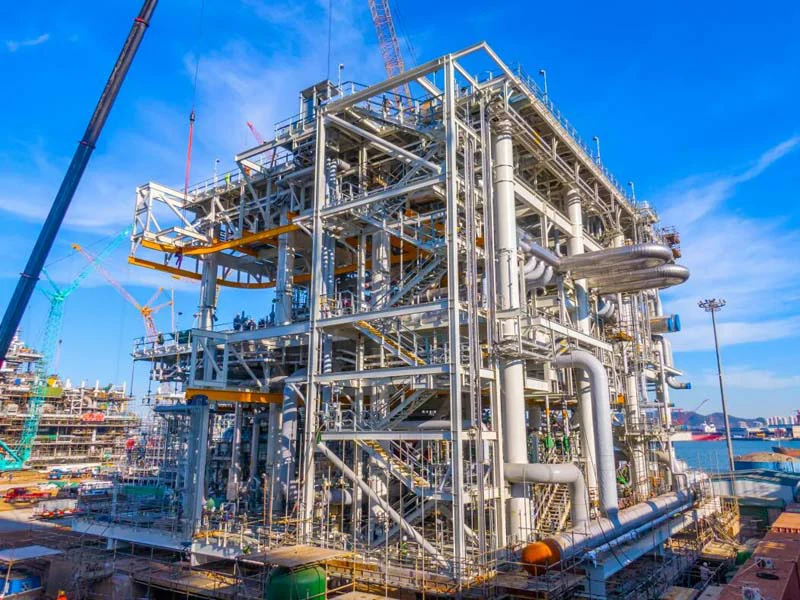
Factory-built pipe racks ready for delivery can cut field assembly times by 50%–70%. That means your crews aren’t stuck welding in muddy pits or scrambling for missing bolts. In our own projects, racks were test-fitted and clearly labeled in the factory, so installation felt like snapping together building blocks instead of wrestling with unknowns.
Having racks arrive pre-assembled helped everyone relax—there were fewer mistakes, less fatigue, and almost no overtime. Here’s a clear comparison:
| Aspect | Factory Build | Field Build |
|---|---|---|
| Weather Risk | Minimal | High |
| Labor Dependency | Reduced | Heavy |
| Weld Consistency | Controlled | Variable |
| QA Inspections | Frequent, thorough | Sporadic |
| Assembly Time | Predictable, quick | Uncertain, slow |
Instead of worrying about every site headache, we focused on efficient logistics and safety. Getting modules test-fitted and numbered in the factory before shipment sped up our jobsite work, making the biggest difference on projects with tight deadlines.
Why Do Parallel Construction Schedules Unlock Time Savings?
Usually, site construction follows a strict sequence—civil teams pour foundations first, then mechanical teams install racks. With modular racks, these schedules overlap. While foundations are poured, racks are built off-site, ready to go as soon as the concrete cures.
For one refinery project, we ran civil and modular fab teams together. When foundations were ready, racks came straight off the trucks and onto supports. This overlap shaved several weeks off the critical path, and project managers were thrilled to see actual progress instead of empty waiting.
Getting everyone in the same room early—civils, mechanical, modular suppliers—solved interface issues before they became delays. Here’s how the two approaches compare:
| Step | Sequential Approach | Parallel (Modular) |
|---|---|---|
| Foundation Preparation | Start-to-finish | Overlaps with fab work |
| Rack Fabrication | After foundation | Off-site, at same time |
| Installation | After fabrication ends | Immediate, as ready |
| Schedule Impact | Long, disjointed | Short, synchronized |
We made sure to schedule joint pre-construction reviews. This single step often saves weeks by preventing clashes and eliminating costly rework. When time is money, parallel scheduling with modular racks is a game changer.
How Does Enhanced Quality Control Improve Project Results?
On traditional sites, we’ve wrestled with inconsistent weld quality, missed bolts, and rushed paint jobs. Factory conditions, on the other hand, let us set up strict QA routines—no piece leaves until it’s checked and signed off.
One time, a client asked for ISO-certified QA and third-party inspections for every rack delivered. It was a big demand, but when we unpacked the racks on site, every weld and surface was spot-on. We spent almost no time fixing errors—this alone pushed our schedule ahead.
Factory-based QA ensures every rack matches the design. Our teams could trust that what arrived would fit and perform, reducing onsite uncertainty. Here’s what you get:
| Feature | Modular Factory | On-site Assembly |
|---|---|---|
| QA Standard | ISO, third-party | Variable/limited |
| Weld Inspection | Frequent | Spot checks only |
| Surface Corrosion Control | Controlled | Sometimes overlooked |
| Error/Defect Rate | Near zero | High |
Verifying supplier QA certification before the project starts helps avoid expensive fixes after delivery. We always recommend asking for detailed QA logs—it’s a smart way to ensure your racks are built right the first time.
How Does Modularization Optimize Safety and Labor?
Installing steel racks on-site means heavy equipment, ladders, and lots of risk. Modular racks cut down the number of workers needed and the time spent up high or in tight spaces.
On several oil and gas sites, where skilled welders were scarce, modular racks transformed the installation. Instead of big teams, we used smaller crews, mostly for bolting—and safety incidents dropped rapidly. We didn’t need as many supervisors either, which helped save costs.
For remote projects, modularization isn’t just convenient—it’s strategic. We spent less time recruiting, training, and supervising. Here’s how the numbers break down:
| Risk/Safety Aspect | Traditional Build | Modular Build |
|---|---|---|
| Crew Size | Large | Small |
| Exposure Hours | High | Reduced |
| Incident Rate | More frequent | Lower |
| Skilled Labor Demand | Intense | Minimal |
Where labor is hard to find or the site is hazardous, modular racks make a noticeable improvement. Less risk and fewer people mean fewer worries for us—and for you.
How Do Modular Pipe Racks Offer Predictable Costs and Faster ROI?
Energy projects face massive cost uncertainty—weather delays, missed milestones, and extra site expenses. Modular racks help keep costs predictable and let project teams reach mechanical completion earlier.
On our jobs, we consistently asked for total cost breakdowns, including site labor, equipment rentals, and delay penalties. Modular racks sped up commissioning, letting clients start production sooner—a win for their bottom line, especially when every day lost costs thousands.
Many are worried about the “modular premium,” but that extra upfront spend usually pays for itself in indirect savings. Here’s the comparison we use:
| Cost Area | Traditional Build | Modular Build |
|---|---|---|
| Site Labor | High | Lower |
| Equipment Rental | Longer, costly | Short, efficient |
| Delay Penalties | Possible | Rare |
| Commissioning Date | Often late | Early/on time |
Project owners love the faster ROI—earlier start-up means quicker revenue. When budgets are tight and speed matters, modular racks prove their value every time.
How Flexible Is Modular Pipe Rack Design for Future Changes?
No two energy sites stay the same; expansions are inevitable. Modular racks are designed with future changes in mind—they’re not just fixed solutions. You can add process lines or shift routing with minimal downtime.
In a recent chemical plant job, we worked with the client’s engineers to specify extra space and bolt-on connections for potential upgrades. When the expansion came, their operations barely paused. This level of flexibility means our clients don’t face the heavy cost and disruption of tearing out old racks.
Here’s what modular racks provide versus conventional steelwork:
| Design Flexibility | Modular Rack | Conventional Rack |
|---|---|---|
| Expansion Capability | Planned, easy | Limited |
| Detachable Connections | Yes | Rare |
| Reusability | High | Low |
| Upgrade Downtime | Minimal | Significant |
If you’re thinking about future growth, ask your supplier for flexible features at the design stage. It’s an investment that pays off for years.
Conclusion
Modular steel pipe racks aren’t just a product—they’re a strategy. With factory fabrication, parallel schedules, and flexible design, they help energy projects save time, improve safety, lock in quality, and boost ROI. Our experience proves that modularization is the smartest way to build on schedule and budget.