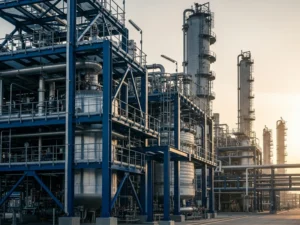
When heavy equipment support steel goes wrong, the damage does not stay in the steel frame. We often see the problem spread into piping, rotating equipment, access systems, and then into schedule and safety.
Steel structures for heavy equipment support in petrochemical plants are engineered systems that carry equipment loads, control vibration and movement, resist corrosion and fire, and keep equipment stable for safe long-term operation. Good support steel protects uptime, safety, and total project cost.
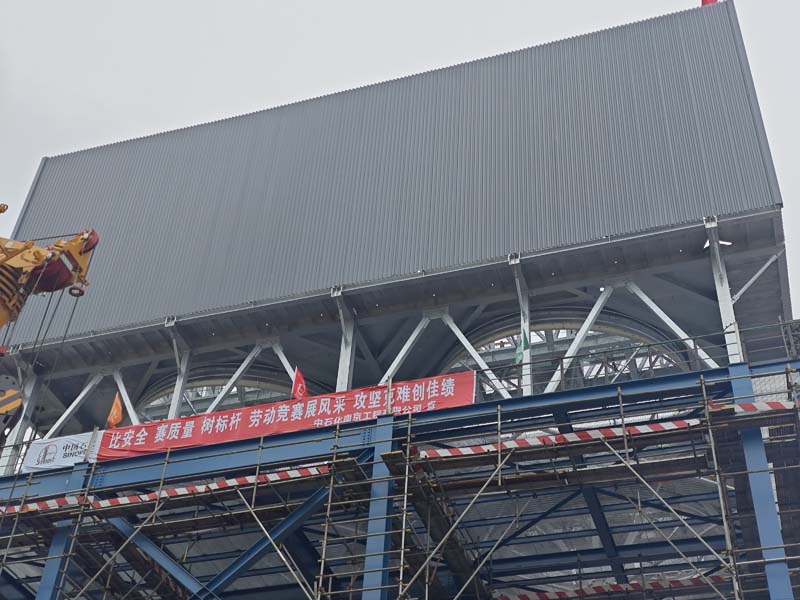
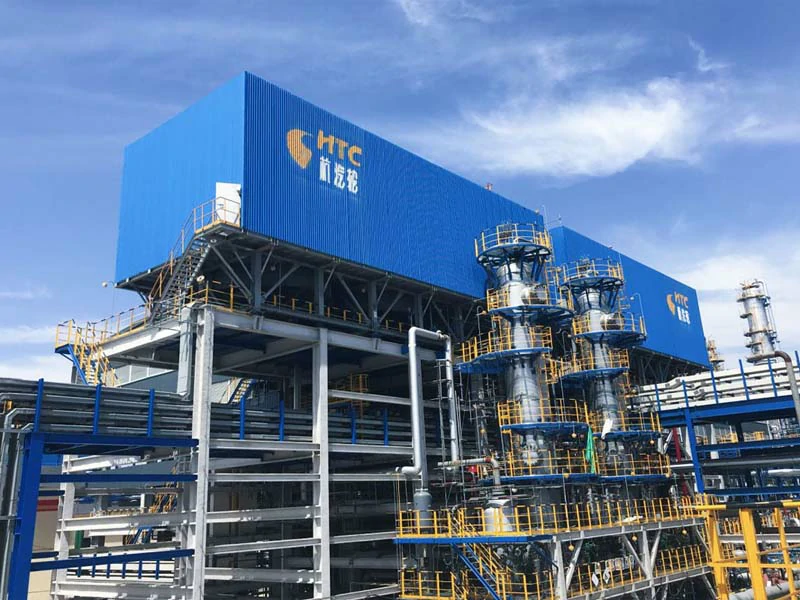
In real petrochemical projects, support steel is easy to underestimate. On a drawing list, it may look like one more package under structural scope. On site, it becomes the thing that holds alignment, keeps vibration under control, supports operator access, and takes the punishment of weather, heat, load changes, and maintenance activity year after year. We have seen expensive equipment perform badly not because the machine itself was poor, but because the steel under it was too flexible, badly detailed, or hard to maintain. That is why we always treat support steel as part of the process reliability system, not just as fabrication tonnage.
Why Are Heavy Equipment Support Structures So Critical in Petrochemical Plants?
A lot of plant equipment is heavy, but weight alone is not the real challenge. The real challenge is that the support must carry weight, resist movement, keep geometry, and survive a harsh plant environment at the same time.
Heavy equipment support structures matter because they transfer all equipment loads safely to the foundation, maintain alignment, limit vibration, provide safe access, and protect the plant from failures such as piping stress, base damage, corrosion, and unplanned shutdowns.
In petrochemical plants, we usually support equipment such as pressure vessels, reactors, distillation columns, heat exchangers, air coolers, pumps, compressors, process skids, flare structures, storage tanks, and modular units. Each of these has a different support behavior. A vertical vessel may need lateral stability and anchor force control. A compressor support may need high stiffness and vibration separation. A skid base may need to survive lifting, transport, installation, and then long-term operation without twist or distortion.
This is why support steel cannot be treated as a standard frame copied from old drawings. The support has to match the equipment type, operating condition, location, and maintenance method. If that match is poor, the hidden cost shows up later.
We have seen support-related problems lead to:
| Support issue | What happens next | Impact on project or operation |
|---|---|---|
| Poor alignment control | Equipment and piping do not fit well | Site rework, delay, nozzle overstress |
| Low stiffness | Frame moves too much during operation | Vibration, fatigue, rotating equipment issues |
| Weak connection details | Local cracking starts early | Repair work, shutdown risk |
| Poor drainage and detailing | Water stays in joints and crevices | Corrosion, coating breakdown |
| Bad base support practice | Uneven load transfer to anchor bolts and grout | Settlement, plate distortion, misalignment |
| Inadequate access planning | Operators and maintenance crews cannot work safely | Higher maintenance time and cost |
From our experience, the biggest mistake is not usually a dramatic design error. It is more often a series of small practical misses. A bracing connection is hard to weld properly. A stiffener traps water. A platform blocks exchanger removal. A base plate detail looks fine in the shop but does not tolerate anchor deviation on site. These are the kinds of issues that make support steel expensive later.
What Types of Steel Support Structures Are Common for Heavy Equipment?
Support steel in petrochemical plants is not one single category. Different equipment needs different support forms, and each form has its own design and fabrication focus.
The most common heavy equipment support structures include equipment support frames, pipe-rack-integrated supports, access platforms, skid base structures, and tower or vessel support systems. Each type must match the equipment load path, operating condition, and maintenance needs.
We usually see five main support categories in petrochemical work. The first is the equipment support frame. This is the classic structural frame made of columns, beams, bracing, base plates, and equipment mounting interfaces. It is common under elevated vessels, exchangers, packaged process units, and some air coolers. What matters here is clear load transfer and good connection detailing.
The second is the pipe-rack-integrated support. This type often causes coordination trouble. In many projects, equipment support and pipe rack steel are designed by different parties. Then one side assumes the other side will absorb extra piping load, thermal force, or maintenance load. If that interface is not managed well, stress transfer becomes messy very fast.
The third is the access structure. This includes platforms, ladders, stair towers, operator decks, and maintenance working areas. Some people still treat these as secondary steel. We do not. If access is poorly planned, even a technically sound equipment support system becomes difficult to inspect and maintain.
The fourth is the skid base structure. This is very important in modular and packaged projects. A skid must be rigid enough for lifting and transport, but it also has to stay dimensionally stable after installation. We have seen skids arrive at site with enough distortion to create alignment trouble across piping and equipment interfaces.
The fifth is the support structure for towers and vessels. These may include skirts, saddles, steel frames, and elevated support systems. Tall equipment adds more concern about lateral behavior, anchor forces, and erection sequence.
The table below shows the main differences:
| Support type | Typical equipment | Main design concern | Main fabrication concern |
|---|---|---|---|
| Equipment frame | Vessels, exchangers, skids | Load transfer and stiffness | Connection fit-up and dimensional control |
| Pipe-rack-integrated support | Small equipment, utility modules | Interface load coordination | Multi-trade tolerance control |
| Access structure | Platforms, stairs, ladders | Safe use and maintenance reach | Site fit and practical layout |
| Skid base | Packaged units, pumps, process modules | Transport and lifting rigidity | Distortion control and trial assembly |
| Tower or vessel support | Columns, separators, vertical vessels | Lateral stability and anchor load | Base plate accuracy and heavy connection welding |
When we review these support types, we do not ask only whether the steel can stand up. We ask whether the support will still work after shipping, erection, thermal cycling, maintenance use, and years of plant exposure.
What Design Factors Matter Most in Practice?
Many support frames look acceptable in a basic structural check. The real question is whether they will behave well during operation. That is where practical design judgment matters most.
The most important design factors are complete load definition, stiffness, vibration behavior, thermal movement, corrosion detailing, fire protection, and maintenance access. In petrochemical service, practical behavior matters as much as theoretical strength.
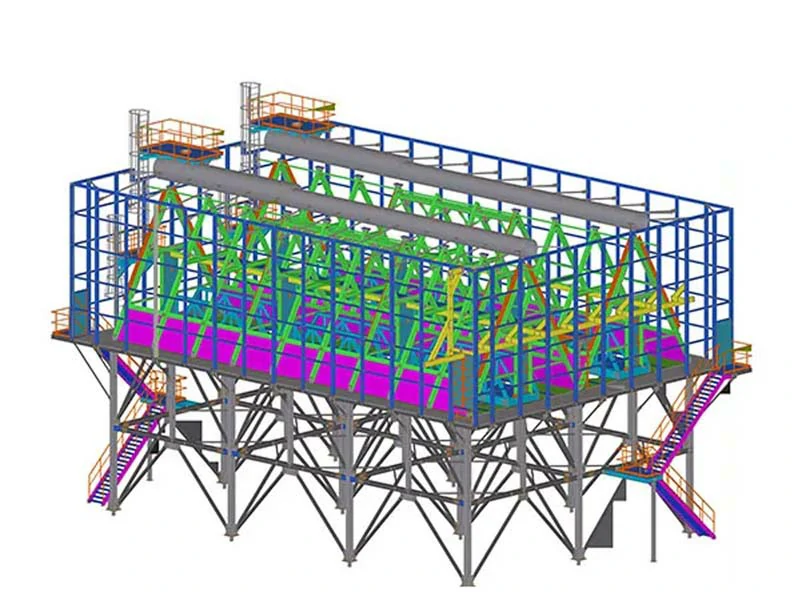
We always start with load analysis, but we do not stop at dead load and operating load. We also want hydrotest load, wind load, seismic load, thermal load, impact load, maintenance load, transport load for skids, and lifting load for modules if needed. In our experience, disputes often begin because the early load data is incomplete. The support frame gets designed around a partial picture. Then later, nozzle loads increase, piping loads shift, operating temperature changes, or a lifting case is added. At that point, redesign becomes painful and expensive.
Stiffness is another area where experience matters. A support frame can pass a stress check and still perform badly. We have seen this under pumps and compressors more than once. The frame was strong enough, but it was not stiff enough. That difference is huge. A flexible frame can magnify vibration, loosen bolts, fatigue welds, and create alignment problems.
We also pay close attention to thermal expansion. In petrochemical plants, steel, piping, and equipment all move with temperature. If the support system restrains that movement in the wrong place, stress builds up where nobody wants it. Then we start seeing distorted connections, anchor tension problems, and nozzle overload.
Corrosion protection is also more than a paint line item. Good corrosion life starts with detailing. If a support has water traps, narrow crevices, inaccessible surfaces, or bad drainage, even a premium coating system will struggle.
The practical design checks we value most are shown below:
| Design factor | What we review | Common mistake |
|---|---|---|
| Load definition | Dead, operating, test, thermal, wind, seismic, dynamic | Bidding on incomplete load data |
| Stiffness | Deflection and frame rigidity | Focusing only on member strength |
| Dynamic behavior | Natural frequency and resonance separation | Ignoring rotating equipment behavior |
| Thermal movement | Expansion path and restraint logic | Creating hidden secondary stress |
| Corrosion detailing | Drainage, sealing, inspectable surfaces | Relying only on coating specification |
| Fire resistance | Required fireproofing and support detail compatibility | Adding fireproofing late without coordination |
| Access and maintainability | Clearance for operation and removal | Saving steel weight but blocking maintenance |
We have learned to ask a simple field question during design review: if this structure stands in service for fifteen years, where will the first problem most likely appear? That question often leads us to the true weak point much faster than a long design note.
Why Are Vibration, Thermal Movement, and Corrosion So Often Overlooked?
These three issues are easy to underestimate because they do not always show up in a simple visual review of a shop drawing. But in service, they are often the reason a “good-looking” support system starts to fail.
Vibration, thermal movement, and corrosion are often overlooked because they build damage slowly. Yet in petrochemical plants, they are among the main causes of fatigue cracks, bolt loosening, coating failure, and long-term support instability.
Vibration is especially important under compressors, pumps, and other rotating equipment. If the natural frequency of the support frame is too close to the machine operating frequency, resonance can happen. When that happens, the frame is no longer just carrying load. It is repeatedly cycling stress through welds, bolts, and local connections. We have seen very small weld details become repeated repair points because the original design focused on strength but ignored dynamic behavior.
Thermal movement is quieter, but it is just as serious. Hot equipment expands. Connected piping moves. Support steel itself changes length. If all these parts are restrained in the wrong way, the load finds another path. Often that path is through anchor bolts, nozzle connections, or stiff but brittle local details.
Corrosion is even more deceptive. Many people think corrosion protection starts and ends with coating thickness. We do not see it that way. We have found that detail geometry often decides whether coating survives. If water sits in a channel toe, behind a clip, or under a poorly shaped plate edge, the coating loses the fight early. Then corrosion grows in the exact spots that are hardest to inspect.
The table below shows how these risks usually appear in the field:
| Risk | Early sign | Later result |
|---|---|---|
| Vibration | Bolt loosening, noise, small crack lines | Fatigue failure, misalignment, repeated repairs |
| Thermal restraint | Distorted connection, unexpected bolt stress | Nozzle overload, plate cracking, piping stress |
| Corrosion | Blistering coating, rust staining at joints | Section loss, connection weakening, access repair |
From our side, the lesson is simple. If a support frame is for sensitive equipment or harsh service, we do not wait for problems to prove themselves in operation. We try to remove the usual failure paths in the design and fabrication stage.
What Fabrication and Quality Control Points Matter Most?
Even a good design can fail in the field if fabrication control is weak. Support steel for heavy equipment needs much tighter discipline than many buyers expect.
The most important fabrication and quality control points are material verification, dimensional control, welding quality, base plate accuracy, coating preparation, and documentation. In heavy equipment support steel, small shop errors often become major site problems.
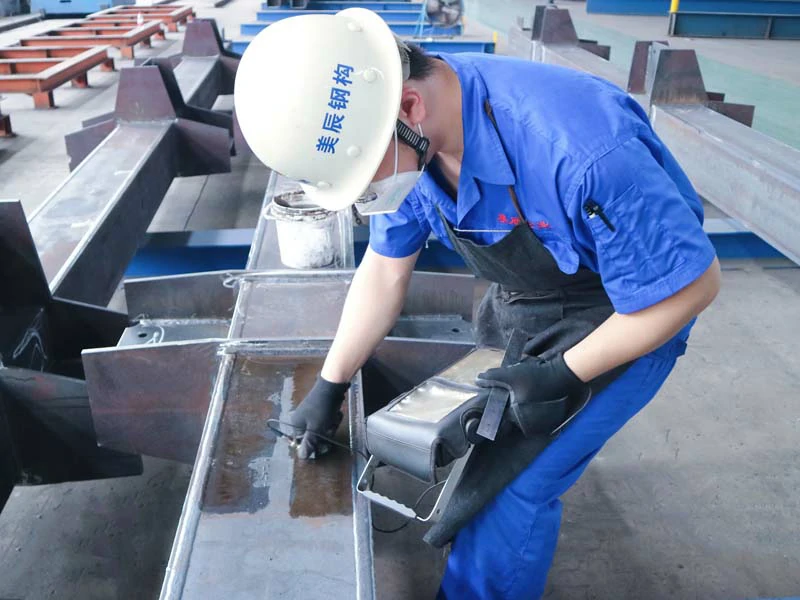
We always pay close attention to material traceability first. In petrochemical work, the steel grade on the purchase order is not enough by itself. We want to know that the actual material matches the project requirement and that the records are clear. That becomes more important when the project has special toughness, welding, or client documentation requirements.
Then we look at dimensional control. Heavy equipment supports often have very little tolerance for error at anchor bolt interfaces, mounting plates, and connection points to nearby structures. A few millimeters of deviation in the wrong place can turn into major field cutting, shimming, or forced fit-up. We prefer fabricators who check dimensions through hold points, not just at the end.
Welding quality is another big point. In our experience, a weld repair in the shop is manageable. A weld repair after blasting, painting, shipping, and site erection is costly and frustrating. That is why disciplined fit-up and pre-shipment inspection matter so much.
For coating, we focus on preparation as much as on the paint system itself. Surface cleanliness, edge treatment, dry film thickness checks, and protection of hard-to-reach areas all matter.
We normally look for the following controls:
| QC item | Why it matters | What we like to see |
|---|---|---|
| Material verification | Prevents wrong steel use | MTC control and identification records |
| Fit-up inspection | Reduces weld and dimension problems | Hold-point checks before welding |
| Welding control | Protects fatigue and structural integrity | Qualified WPS, qualified welders, NDT records |
| Base plate flatness | Ensures proper load transfer | Measured flatness reports |
| Bolt hole accuracy | Prevents erection problems | Template or precision drilling control |
| Surface preparation | Supports coating life | Blast records and inspection reports |
| Final dimensional check | Protects site installation | As-built measurements or 3D check for critical items |
When the structure is part of a module or skid, we also like trial assembly if the geometry is complex. It takes time in the shop, but it often saves far more time at site.
Why Do Connections and Base Supports Cause So Many Failures?
Main beams get attention because they are large and easy to calculate. Connections and base details cause trouble because they are local, complicated, and easy to oversimplify.
Connections and base supports are common failure points because they concentrate stress, take vibration, face erection tolerance issues, and often suffer from poor drainage or hard-to-inspect details. Many service failures begin in these small areas, not in the main members.
We have seen many cases where the primary members were more than adequate, but the support still developed problems. The reason was usually hidden in a local detail. A stiffener ended at a poor location. A bracing joint had difficult weld access. A clip angle became a corrosion pocket. A base plate weld saw repeated vibration. An anchor bolt group was forced to take load it was never detailed for.
Base support zones deserve special care. The equipment load comes down through the steel, then passes through the base plate, grout, anchor bolts, and foundation. If any part of that path is uneven or poorly executed, the support no longer behaves as intended. We have seen uneven grout or poor leveling create stress concentrations that were never considered in design.
The usual weak points are shown here:
| Detail zone | Why it fails | What helps |
|---|---|---|
| Bracing joints | Local stress and difficult fit-up | Clear geometry and weld access |
| Stiffener ends | Stress concentration | Better termination detail |
| Clip angles and small attachments | Corrosion and fatigue | Simpler connection shape and drainage |
| Base plate welds | Repeated load and restraint | Good weld profile and plate fit |
| Anchor bolt zones | Tolerance and thermal stress | Early anchor coordination and accurate setting |
| Grout interface | Uneven bearing and moisture exposure | Proper leveling and grout practice |
Our rule is simple: if a detail looks small, we do not assume it is low risk. In petrochemical support steel, the small detail is often where the real story begins.
How Should Buyers Choose the Right Steel Structure Supplier?
Price matters, but in support steel for heavy equipment, a low price can hide a lot of future cost. We prefer suppliers who think early, ask questions, and understand field reality.
Buyers should choose a supplier based on petrochemical project experience, technical review ability, fabrication discipline, dimensional control, coating knowledge, and documentation systems. A supplier that clarifies risks early is often safer than one that quotes fast and cheap.
When we evaluate a supplier, we want to know whether they have built similar support steel before. That does not mean only general structural steel experience. We want experience with refinery or petrochemical conditions, with heavy equipment interfaces, with coating systems used in corrosive areas, and with the tolerance demands of EPC projects.
We also pay attention to the supplier’s attitude during inquiry stage. A reliable supplier usually asks a lot of practical questions. They ask about finalized loads, equipment vendor data, nozzle forces, vibration concerns, fireproofing requirements, and modular lifting cases. A weak supplier often skips these questions and gives a fast number. That may feel convenient at first, but it usually creates variation claims or field problems later.
The supplier review table below is close to what we use in practice:
| Supplier review point | What we ask | Why it matters |
|---|---|---|
| Similar project record | Have you built support steel for similar equipment? | Reduces technical guesswork |
| Load review ability | Can you review vendor loads and interfaces? | Prevents design mismatch |
| QA/QC system | What welding, inspection, and hold-point system do you use? | Controls hidden fabrication risk |
| Dimensional control | How do you verify anchor and equipment interfaces? | Protects site fit-up |
| Coating experience | How do you treat crevices and hard-to-reach areas? | Improves corrosion life |
| Modular capability | Can you support trial fit-up and transport review? | Helps complex packaged scope |
| Documentation | What records will you submit? | Supports EPC compliance and traceability |
| Change handling | How do you manage revisions after IFC? | Limits confusion and delay |
In our experience, the best suppliers do not just answer questions. They also raise the questions that others missed. That habit alone can save a project from very expensive surprises.
What Best Practices Help Support Steel Last Longer?
Long service life rarely comes from one perfect design choice. It comes from many good decisions that work together from engineering through installation and maintenance.
The best way to improve long-term reliability is to finalize load data early, design for stiffness and drainage, control fabrication accuracy, protect corrosion-prone details, verify base installation quality, and inspect vibration-sensitive zones during operation.
We have found that long-term reliability improves when the fabricator is involved early enough to comment on real fabrication and transport issues. That does not mean handing design away. It means using shop experience before details are frozen. A good fabricator can often spot inaccessible welds, unrealistic tolerances, poor drainage shapes, and transport weak points that are easy to miss in office review.
We also strongly prefer to complete load information before final release. It sounds obvious, but it is often rushed. Once steel is fabricated, late load changes become very expensive.
For long-term service, we rely on a few practical habits:
| Best practice | Why it works |
|---|---|
| Finalize the load matrix before approval | Reduces late redesign and hidden risk |
| Design for stiffness, not only strength | Improves vibration and alignment behavior |
| Detail for drainage and access | Extends coating life and makes inspection easier |
| Protect connection zones carefully | Many failures start there |
| Check base plate, grout, and anchor installation | The support system depends on this interface |
| Coordinate with piping and equipment teams | Prevents stress transfer surprises |
| Inspect vibration-prone areas during operation | Finds fatigue early |
| Use suppliers with petrochemical experience | Improves execution quality from the start |
If we had to give one piece of advice from experience, it would be this: do not judge support steel by weight alone. A lighter frame is not always a better frame. A cheaper quote is not always a cheaper project. The real value comes from support steel that fits, performs, and stays reliable without becoming a maintenance headache.
Conclusion
We see heavy equipment support steel as part of plant reliability, not just structural scope. When design, detailing, fabrication, and installation all work together, the plant runs safer, smoother, and longer.