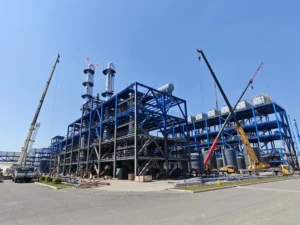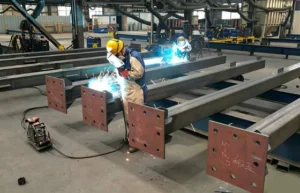
Industrial steel structure export packaging isn't about following a standard checklist. It's about designing a protection system that matches your structure's geometry, the transport mode's specific risks, and your client's jobsite unpacking requirements. You need to understand load concentration points, predict handling sequences, and document every quality checkpoint—because EPC projects demand traceable process control, not just "it arrived intact."
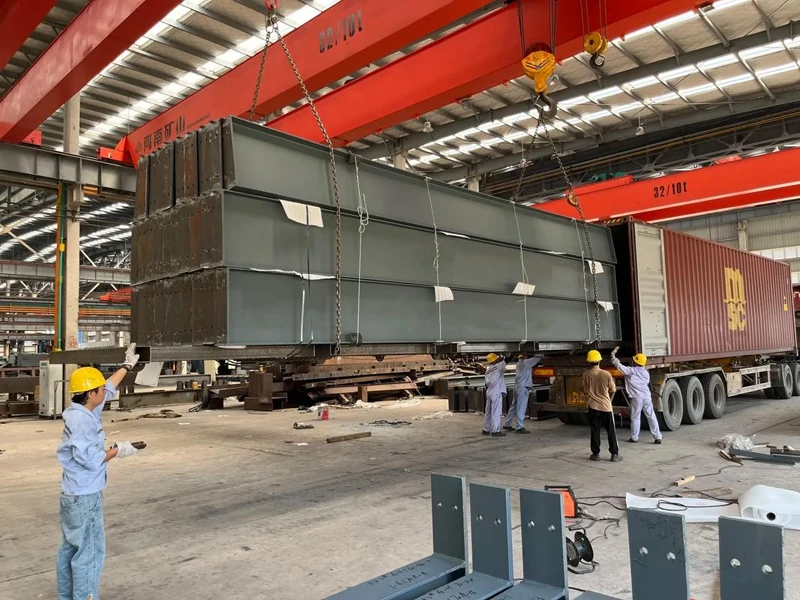
Here's what most fabricators miss: they treat packaging as the last step before shipment, something you rush through after final inspection. But packaging design needs to start during fabrication planning—especially for non-standard industrial structures where lifting points, stacking logic, and unpacking sequences directly affect packaging strategy.
Why Does Standard Packaging Fail on Industrial Steel Structures?
Most fabricators rely on generic packaging methods because that's what worked for their last shipment. They assume standard palletizing, basic rust inhibitors, and uniform crating will protect everything from simple H-beams to complex equipment platforms.
Standard packaging workflows fail on industrial steel structures because they ignore structural geometry differences, load concentration mechanics, and the compound maritime risks that damage protective layers long before physical impact occurs.
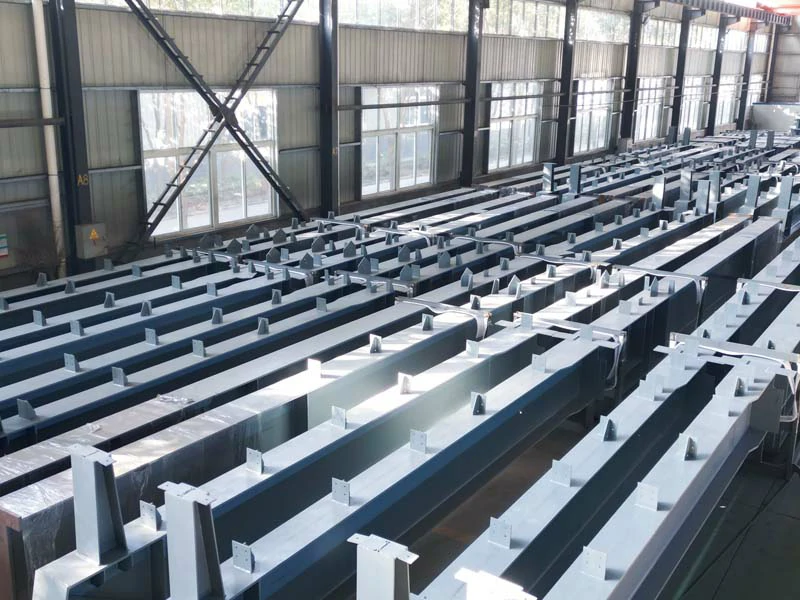
When we fabricated a 12-ton heating furnace platform for a Middle East project, the client's packaging spec said "export standard wooden crates." But this structure had cantilever supports, asymmetric load distribution, and welded connections that couldn't handle point pressure during stacking. Standard crating would have transferred container stacking loads directly onto cantilevered members, risking weld fatigue before the ship even left port.
The Compound Risk Problem
Maritime shipping exposes steel structures to layered environmental attacks:
- Salt spray penetrates protective wrapping through micro-gaps
- Temperature cycling (30°C swings) causes condensation inside sealed packaging
- Stacking pressure creates sustained compression loads
- Handling shocks during crane lifts and truck transfers generate impact forces
- Extended transit times (30-45 days typical) multiply exposure duration
Standard packaging addresses maybe two of these risks. It doesn't account for how they interact—salt spray accelerates rust, condensation compromises coating adhesion, and stacking pressure concentrates loads onto unprotected edges.
The Non-Standard Structure Challenge
| Structure Type | Packaging Complexity |
|---|---|
| Welded H-beams | Low - standard bundling works |
| Box columns with internal stiffeners | Medium - need internal bracing |
| Equipment support platforms | High - asymmetric geometry |
| Process module frames | Very high - multiple lift points |
| Truss assemblies | Very high - irregular load paths |
Complex structures have protruding connection plates that concentrate stress, cantilevered members vulnerable to bending, pre-assembled components with specific orientation requirements, and multiple surfaces requiring different protection levels. You can't just wrap it and crate it—you need to engineer the packaging around the structure's actual mechanics.
What Pre-Shipment Preparation Steps Actually Matter?
Effective pre-shipment preparation means validating dimensional accuracy against shipping container dimensions, confirming coating integrity meets maritime exposure standards, and documenting load-bearing points that dictate handling procedures—all before you design the first crate.
In our factory, pre-shipment preparation starts three weeks before the loading date.
Dimensional Verification Against Transport Constraints
We re-measure critical dimensions after final assembly because welding distortion happens. A 12-meter beam might grow 8mm longer after multi-pass welding—that matters when container internal length is 12,032mm and you need 50mm clearance for padding. We check overall dimensions against container internals, protruding elements affecting stacking, and weight distribution for trailer balance.
Coating and Surface Protection Verification
We use coating thickness gauges to verify dry film thickness (DFT) meets specification—typically 80-120 microns for shop primers. We check edge coverage on flame-cut edges (most common rust failure point), weld seam coating integrity, surface cleanliness, and moisture level before applying protection.
One Middle East project was rejected because rust appeared at beam ends within 10 days of arrival. Flame-cut edges had only 40 microns coating—half the specified thickness. Salt spray penetrated during a 42-day voyage1.
Load Point Documentation
We photograph and document every lifting lug, support point, and stacking surface. EPC clients use these documents to plan jobsite crane operations before containers arrive. Missing documentation causes unloading delays costing $500-1000 per hour in mobilized crane time.
Regulatory Compliance Preparation
- ISPM 15 compliance for wooden crate materials (heat treatment + certification stamps)
- Destination country quarantine requirements
- Customs documentation accuracy (HS codes, material certificates, packing lists)
- Dangerous goods classification if protective coatings contain flammable solvents
Shipments held at port for 2 weeks because wooden crates lacked ISPM 15 stamps are entirely avoidable. This is non-negotiable for export crating.
How Do You Design Custom Packaging for Complex Structures?
Custom packaging design means analyzing structural load paths, selecting protection methods that address specific vulnerability points, and creating handling sequences that maintain structural integrity from factory floor to final installation.
Load Path Analysis
During container stacking: Top containers impose 4-6 tons distributed load; load concentrates at corner posts2; unbraced spans can buckle under sustained compression.
During crane handling: Lifting creates dynamic loads 1.5-2× static weight3; asymmetric geometry causes rotational moments; sudden stops generate horizontal shear forces.
We design packaging to redirect forces away from vulnerable elements. For a cantilever platform, that meant adding steel support beams underneath the crate floor to carry stacking loads around the cantilevered section—not through it.
Protection Layer Selection
| Surface Type | Primary Risk | Protection Method |
|---|---|---|
| Coated flat surfaces | Coating abrasion | Cardboard + plastic film |
| Flame-cut edges | Edge rust | Rust inhibitor oil + seal wrap |
| Weld seams | Moisture penetration | VCI paper + shrink wrap |
| Machined surfaces | Corrosion | Cosmoline + sealed barrier |
| Connection holes | Debris accumulation | Plugs + protective caps |
Moisture Control Strategy
This is where most packaging failures originate. What actually works:
- VCI (Vapor Corrosion Inhibitor) paper between steel surfaces and outer wrapping
- Desiccant packs sized to container volume
- Breathable wrapping at top surfaces to prevent condensation accumulation
- Drainage gaps at crate bottoms so condensation can escape
Completely sealed plastic wrapping doesn't work. Temperature cycling causes air inside to condense, moisture accumulates on steel surfaces, and rust forms within days4.
Handling Sequence Design
For a multi-piece process module frame, we packaged components in reverse installation order—the last piece to install went deepest in the container, the first piece nearest the door. This eliminated jobsite restacking and reduced crane double-handling.
What Documentation Actually Matters for EPC Projects?
Effective export documentation means providing traceable quality records that demonstrate process control at every packaging stage, meeting both regulatory compliance requirements and project-specific acceptance criteria.
For Customs and Regulatory Authorities
- Commercial invoice with accurate HS codes
- Packing list with gross/net weights and dimensions
- Material test certificates (mill certificates for steel)
- ISPM 15 certificates for wooden packaging materials
- Certificate of origin
- Dangerous goods declaration if applicable
Common mistakes causing customs delays: HS code mismatches, missing ISPM 15 stamps, incomplete material certificates, weight discrepancies between documents and actual cargo.
For EPC Project Quality Assurance
- Final inspection reports with dimensional measurements
- Coating inspection records with DFT readings at specified grid points
- Photographic evidence of packaging at key stages
- Non-conformance reports with corrective actions
- Traceability records linking components to material certificates
- Third-party inspection reports if required
Missing links in this documentation chain trigger quality holds that delay acceptance—even if physical cargo is perfect.
For Jobsite Unpacking Teams
- Unpacking sequence instructions with photographs
- Lifting lug location drawings with rated capacities
- Recommended rigging diagrams
- Component orientation markers
- Internal bracing removal sequence to prevent collapse
- Protective coating removal instructions
We learned to include this after a client's riggers spent 4 hours figuring out how to safely unbrace a truss assembly. Clear instructions would have saved half a day of crane rental costs.
Digital Documentation Management
For projects exceeding 100 tons, we provide QR codes on each crate linking to component-specific documentation, digital inspection photo galleries, searchable PDF packages, and cloud access credentials. When containers arrive at jobsites across 3-4 months, teams can retrieve unpacking instructions or certificates on-demand.
How Do Different Transport Modes Change Packaging Requirements?
Transport mode selection dictates packaging design because container shipping, breakbulk cargo, and rail transport impose completely different load paths, handling frequencies, and exposure durations.
Container Shipping (Most Common)
Packaging priorities: vertical load distribution through crate structure, horizontal bracing to resist shifting during ship rolling, secure blocking between cargo and container walls.
Container size selection:
- 40' standard: 12.03m × 2.35m × 2.39m internal
- 40' high cube: 12.03m × 2.35m × 2.69m (most common for steel structures)
- 45' high cube: 13.55m × 2.35m × 2.69m (requires special chassis)
Always leave 50-100mm clearance for padding—never max out container dimensions. We once tried fitting 12.2m beams in a 40' container by angling them. The diagonal stress during stacking bent the beams.
Breakbulk Shipping (For Oversized Components)
Packaging priorities: multiple lifting points, heavy-duty moisture barriers (minimum 200 micron polyethylene), reinforced edge protection against lashing chain abrasion, sealed protective enclosures for machined surfaces.
Breakbulk cargo faces harsher conditions than containerized cargo. We package for worst-case scenarios: 30-day deck exposure with direct seawater spray5.
Rail Transport (Domestic/Cross-Border)
Packaging priorities: longitudinal bracing to resist coupling shocks, vibration isolation between cargo and railcar floor, low center of gravity, flexible securing systems allowing thermal expansion.
Rail transport creates repetitive shocks that container shipping doesn't. We've seen welded connections develop fatigue cracks from inadequate bracing during 2,000km rail journeys6.
What Are the Real Cost Drivers in Export Packaging?
Packaging costs are dominated by labor hours for custom crating, protective material selection, and documentation preparation. Cheap packaging decisions often trigger failures that exceed the entire original packaging budget.
Direct Packaging Cost Breakdown (Typical 50-Ton Shipment)
| Cost Element | Typical Range | Percentage of Total |
|---|---|---|
| Wooden crate materials | $800-1500 | 20-25% |
| Protective materials (VCI paper, desiccants, padding) | $400-800 | 10-15% |
| Labor (carpentry, wrapping, documentation) | $2000-3500 | 50-60% |
| Quality inspection and photography | $300-600 | 5-10% |
| Documentation preparation | $200-400 | 5-8% |
| Total packaging cost | $3700-6800 | 100% |
This represents roughly 1.5-2.5% of total fabrication cost. When clients ask us to cut packaging costs, here's what happens:
Case 1: Rust damage from insufficient protection
- Saved: $600 (skipped VCI paper, used thinner film)
- Rework (sandblasting, re-coating, re-inspection): $4,200 + 2-week delay
- Net loss: $3,600
Case 2: Structural damage from improper crating
- Saved: $1,200 (lighter crate construction)
- Cantilevered section bent; replacement component + air freight: $18,500
- Net loss: $17,300
Case 3: Customs delay from missing documentation
- Demurrage $150/day × 14 days + project penalty: $7,100
- Net loss: $7,100 plus client relationship damage
We also maintain a claims rate below 0.1% through packaging quality, saving roughly 0.2% on insurance premiums—on $5 million annual exports, that's $10,000 in savings. Good packaging pays for itself.
How Do You Handle Packaging for Multi-Phase Project Deliveries?
Multi-phase delivery packaging requires component identification systems that maintain traceability across sequential shipments, packaging consistency that enables standardized jobsite handling, and documentation management that prevents missing components or installation sequence errors.
Component Identification System
Every piece needs unique identification using a hierarchical marking system:
PROJECT-AREA-COMPONENT-SEQUENCE
Example: PETRO-TK01-COL-A12
This marking appears stamped on steel, stenciled on crate exteriors (all four sides), and in all documentation and digital tracking. When container #3 of 4 arrives, crews can identify components without unpacking everything.
Packaging Consistency Standards
Across multiple shipments, we maintain identical crate construction methods, protection material specifications, documentation formats, and QR code placement. Jobsite crews develop unpacking procedures based on the first shipment—if shipment #3 uses different crate construction, those procedures fail.
Phased Delivery Coordination
We maintain a master tracking system integrated with the client's project scheduling, our freight forwarder's booking system, and jobsite receiving documentation. EPC project managers need advance notice of exactly what's arriving when to coordinate crane mobilization, labor allocation, and storage preparation.
Frequently Asked Questions
What's the typical lead time needed for export packaging preparation?
For standard industrial steel structures under 50 tons, allow 10-14 days after final quality inspection. Complex structures or first-time export customers may need 3 weeks. Rush packaging always increases damage risk—compressed timelines skip critical inspection steps and force compromises on crate construction quality.
Do we really need ISPM 15 certification for wooden crates?
Yes, absolutely. Non-compliant crates get rejected at customs, triggering expensive delays for fumigation, re-certification, or complete re-packaging. Use only heat-treated lumber with proper stamps from certified suppliers—never use scrap wood or uncertified pallets for export crating.
How do you prevent rust during long ocean voyages?
Multi-layer protection: proper coating thickness (minimum 80 microns DFT including edges), VCI paper directly on steel surfaces, moisture barriers with proper edge sealing, desiccant packs sized for container volume, and breathable packaging design that prevents condensation accumulation. Single-layer protection always fails on voyages exceeding 30 days.
What documentation do customs officials actually check?
Commercial invoice accuracy (HS codes, values, quantities), packing list consistency, material certificates, ISPM 15 stamps, certificate of origin, and dangerous goods declarations. Inconsistencies between documents trigger inspections that delay clearance—ensure all paperwork matches exactly.
Should we insure steel structure shipments?
Yes. Standard marine cargo insurance costs 0.3-0.5% of cargo value and covers damage, loss, and general average contributions. Even with perfect packaging, maritime transport has unavoidable risks: vessel accidents, container stack collapses, rough weather, and port handling incidents.
Conclusion
Export packaging for industrial steel structures is a risk management system that starts during fabrication planning and extends through jobsite unpacking. Fabricators who engineer packaging around structural load paths, match protection methods to transport mode risks, and provide traceable documentation that meets EPC project standards are the suppliers who actually reduce project delivery risk.
When evaluating steel structure fabricators, ask specific questions: Do they analyze load paths or use standard templates? Can they show coating inspection records with actual DFT measurements? Do they provide component-level traceability documentation? Have they handled multi-phase deliveries with consistent packaging standards?
The fabricator with real export experience won't just say "we package everything export standard." They'll ask about your project's specific requirements, destination country regulations, and jobsite handling capabilities—because that's what actually matters.
"Preventing Coating Defects on Thermally Cut Steel Edges", https://www.hotdipgalvanizing.com/technical-resources/preventing-coating-defects-on-thermally-cut-steel-edges-fabrication-strategies-for-galvanizing. Corrosion protection standards, including ISO 12944, recognize that sharp edges and thermally cut surfaces present elevated corrosion risk due to reduced coating film build and potential metallurgical changes, recommending specific edge preparation and coating thickness requirements to ensure adequate protection. Evidence role: expert_consensus; source type: institution. Supports: Flame-cut and thermally cut steel edges are recognized as high-risk zones for coating failure and corrosion due to geometric and metallurgical factors that reduce coating adhesion and thickness. Scope note: The specific coating thickness failure threshold cited (40 microns) is drawn from a single project case; minimum acceptable DFT values vary by coating system, environment classification, and applicable standard. ↩
"ISO 668", https://en.wikipedia.org/wiki/ISO_668. ISO 1496-1, which governs general cargo container specifications, defines stacking test loads and specifies that vertical compressive forces from container stacking are designed to be transmitted through corner posts and corner fittings, with standard containers rated to withstand stacking loads of approximately 192 kN (roughly 19.6 tonnes) under test conditions. Evidence role: statistic; source type: institution. Supports: ISO standards for shipping containers specify stacking load capacities and define that vertical stacking forces are transmitted through corner posts and corner castings. Scope note: The 4–6 ton figure cited in the article likely refers to the load imposed by a single loaded container above, not the total rated stacking capacity; actual loads depend on container fill weight and stack height. ↩
"How Proper Load Distribution Ensures Safe Crane Operations", https://tntcrane.com/how-proper-load-distribution-ensures-safe-crane-operations/. Rigging and lifting engineering guidelines, including those published by standards bodies such as ASME and OSHA, recognize dynamic load amplification factors of approximately 1.5 to 2.0 times the static load weight when calculating safe working loads for crane operations. Evidence role: mechanism; source type: institution. Supports: Engineering standards for crane and rigging operations specify dynamic load factors typically in the range of 1.5 to 2.0 times static load to account for acceleration, deceleration, and impact during lifts. Scope note: Exact factors vary by lift speed, rigging configuration, and applicable national standard; the cited range is a general engineering approximation. ↩
"Review on metal packaging: materials, forms, food applications, safety ...", https://pmc.ncbi.nlm.nih.gov/articles/PMC7270472/. Corrosion science literature documents that hermetically sealed packaging can trap condensation generated by thermal cycling, producing localized high-humidity conditions that initiate and accelerate electrochemical corrosion on unprotected steel surfaces within short timeframes. Evidence role: mechanism; source type: research. Supports: Sealed impermeable packaging traps moisture released by temperature cycling, creating humid microenvironments that accelerate corrosion on steel surfaces. Scope note: The rate of rust formation depends on steel alloy, existing coating condition, temperature differential magnitude, and initial moisture content; 'within days' is a qualitative claim that may vary significantly by conditions. ↩
"Project logistics: Containerized vs break-bulk selection approach", https://www.ey.com/content/dam/ey-unified-site/ey-com/en-in/insights/supply-chain/documents/ey-project-logistics-containerized-vs-break-bulk-selection-approach.pdf. Maritime cargo handling guidelines and marine insurance literature consistently distinguish between containerized and breakbulk or deck cargo risk profiles, noting that non-containerized cargo faces greater exposure to seawater spray, precipitation, and mechanical handling damage, necessitating more robust protective packaging. Evidence role: general_support; source type: institution. Supports: Breakbulk and deck cargo are exposed to more severe environmental conditions than containerized cargo, including direct precipitation, seawater spray, and greater handling frequency. Scope note: Quantitative comparative damage rate data between breakbulk and containerized steel cargo is limited in publicly available literature; the claim is supported by general maritime industry practice rather than controlled empirical studies. ↩
"Contract NAS-8-11451 Final Report SHOCK AND VIBRATION TRANSPORTATION ENVIRONMENTAL CRITERIA Prepared by Fred E. Ostrem M. L. Rum", https://ntrs.nasa.gov/api/citations/19660025391/downloads/19660025391.pdf. Research on rail freight dynamics has characterized the repetitive shock and vibration environment experienced by cargo during rail transit, noting that cumulative cyclic loading from track irregularities and coupling impacts can induce fatigue damage in welded structural connections when adequate vibration isolation is absent. Evidence role: mechanism; source type: research. Supports: Rail transport subjects cargo to repetitive shock and vibration loads from track irregularities and coupling events, which can induce fatigue damage in welded metal structures over long distances. Scope note: Fatigue crack development depends on weld quality, stress concentration geometry, load magnitude, and journey distance; the cited case is anecdotal and may not generalize to all rail routes or structure types. ↩