Every EPC contractor faces moments when the pressure is sky-high. I’ve been there—phone ringing at midnight, bosses asking about deadlines, and workers waiting on missing steel. Every lesson about fabrication partners was learned the hard way.
Choosing the right fabrication partner is what keeps projects running. From the moment we sign the contract, their expertise and reliability affect our progress, safety, and bottom line1. We can’t afford slip-ups, and neither can our clients.
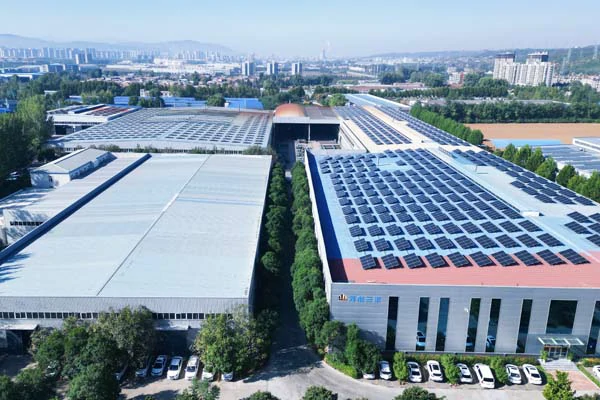
There’s a big difference between a supplier and a partner. The right fabrication partner is more than a company with a good price—they’re a team that understands the stakes. I look for partners who can show their track record. Steel structures, pipe spools, pressure vessels—it takes deep experience to spot jobsite challenges before they become headlines2. We’ve learned that shortcuts never pay off and that visible project experience matters as much as paperwork.
Why Is Picking the Right Fabrication Partner So Critical?
It’s tempting to focus on the lowest bid when budgets are tight. Yet, we’ve seen how this often costs more in the end3.
Working with a reliable fabrication partner protects us from delays, site rework, and surprise costs4. We get components made to spec, delivered on time, and with documentation that stands up to scrutiny5.
One project, we chose a company that “promised” everything but had never worked on a petrochemical plant. The problems started right away—wrong material grades, delayed shipments, and missing certificates. We had to reject the entire batch, pay penalties, and scramble for replacements. Since then, we ask for photos, videos, or even site references from partners. Real evidence trumps marketing brochures. A fabricator’s ability to handle site realities, unexpected changes, and client demands sets them apart. It’s worth paying a little more for proven experience.
| Assessment Criteria | Weak Supplier | Strong Partner |
|---|---|---|
| Technical Experience | Limited to drawings | Proven field success |
| QA/QC Records | Often incomplete | Transparent, traceable |
| Responsiveness | Slow or generic replies | Direct, solution-focused |
| Delivery & Logistics | Outsourced, risky | In-house, flexible |
| Value Engineering | None | Proactive review and ideas |
Which Risk Factors Should We Care Most About in Fabrication?
Risk doesn’t just appear out of nowhere. It’s usually a product of gaps in know-how, weak quality control, missed logistics, or neglected engineering6.
We look for partners who excel in technical skills, robust QA/QC, adaptive logistics, and value engineering7. Each one helps us sleep better at night.
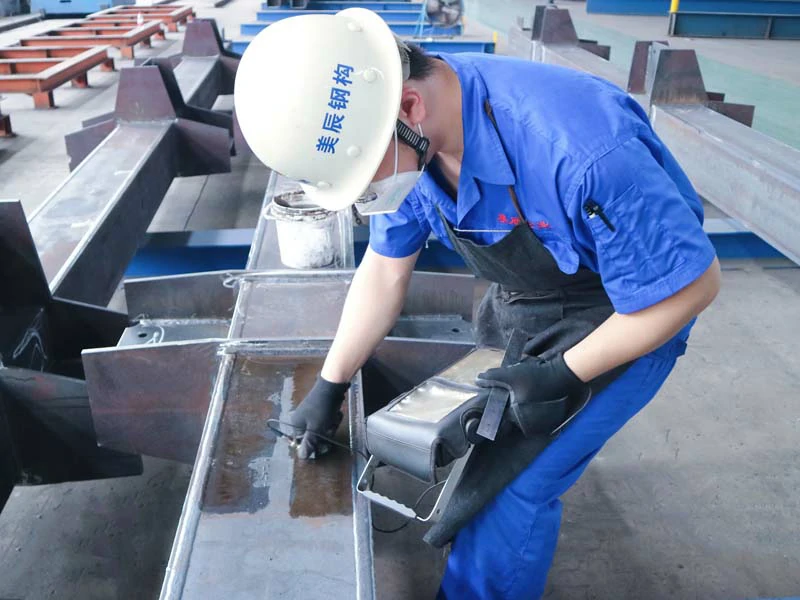
On a complicated refinery expansion, our partner caught a spec error nobody else saw. They flagged it early, fixed the drawings, and avoided a massive onsite weld repair. That kind of skill comes from years in the field. For QA/QC, we insist on random checks and full traceability—mill certificates, weld logs, serial numbers8. The partners we trust welcome our questions. We’ve even walked their shop floor, watched their testing, and talked directly to their QA managers. Logistics is often overlooked, but we’ve seen weather, customs, and transport failures turn an easy job into a nightmare9. Partners with their own vehicles or secure transport contracts keep things moving. Value engineering is where great partners shine. Sometimes, design tweaks from the fabricator save tons of steel, hours of install time, and even reduce site risk10. We invite proposals and look for partners who challenge us to reconsider designs.
| Must-Haves in a Partner | What We Ask For |
|---|---|
| Technical Know-how | Field photos, case studies |
| Quality Assurance | Random check, digital traceability |
| Delivery Management | Direct transport capacity |
| Value Engineering | Proposals before the contract |
| Communication and Flexibility | Progress reports, quick response |
How Does a Real Partnership Reduce EPC Project Risk?
After a few hard projects, we started to realize that relationships matter much more than price tags. Partners who look out for us make the job easier and safer.
A strong partnership with a fabricator gives us insider info, proactive problem solving, and a smoother project flow—things that contracts alone can’t guarantee11.
After working together on several projects, we know who our go-to fabricators are. They don’t make us chase updates or worry about missing paperwork. When something goes sideways—say, a supply delay or a sudden change to design—they reach out with solutions, not excuses. One time, a trusted partner helped us re-engineer a connection detail, saving two weeks on site. That kind of creative problem-solving only comes from people who know our standards and want to build something great, not just fill a PO. The communication is open, direct, and fast. We share progress, flag issues, and work together. That reduces human error, stress, and surprise costs12. We see fewer mistakes, faster change orders, and more reliable schedule management.
| Partnership Benefits | Impact on Our Projects |
|---|---|
| Early Detection of Issues | Less site rework, cost saved |
| Proactive Schedule Management | Fewer delays, better planning |
| Engineering Collaboration | More value, fewer surprises |
| Better Communication | No chasing info, fewer gaps |
| Predictable Outcomes | Confidence, profit, safety |
Conclusion
Choosing a strong fabrication partner isn’t just a procurement decision—it’s how we protect our project, our team, and our reputation. With the right partner, we face fewer risks and build smarter, safer, and more successful projects.
"Improving Safety Performance of Construction Workers through ...", https://pmc.ncbi.nlm.nih.gov/articles/PMC10002101/. Project-delivery research and construction management guidance link supplier capability and reliability with schedule performance, safety exposure, and cost outcomes in capital projects. Evidence role: general_support; source type: research. Supports: A fabrication partner’s expertise and reliability affect EPC project progress, safety, and bottom-line results.. Scope note: Such sources generally support the relationship between partner capability and project outcomes, but they may not isolate fabrication partners as the sole causal factor. ↩
"[PDF] Analyzing the role of risk management in the construction industry", https://digitalcommons.harrisburgu.edu/cgi/viewcontent.cgi?article=1021&context=dandt. Construction risk-management literature treats prior project experience and constructability review as important mechanisms for identifying design and field-execution risks before construction. Evidence role: mechanism; source type: paper. Supports: Experienced fabrication partners are better positioned to identify jobsite challenges early.. Scope note: The evidence supports experience and constructability review as risk-reduction mechanisms, not the informal phrasing that issues become public controversies. ↩
"[PDF] Competitive Tendering Method and its Effect on Project Performance", https://assets.sbs.edu/web/uploads/builder/SBS-WP-2023-02.pdf. Construction procurement studies describe how lowest-price selection can increase total project cost when quality failures, rework, delay, or claims are considered. Evidence role: expert_consensus; source type: paper. Supports: Choosing the lowest bid can cost more over the full project lifecycle.. Scope note: The evidence usually concerns construction procurement broadly, not every EPC fabrication purchase specifically. ↩
"[PDF] THE IMPACT OF REWORK ON CONSTRUCTION & SOME ...", https://www.cmaanet.org/sites/default/files/resource/Impact%20of%20Rework%20on%20Construction.pdf. Construction rework and delay literature identifies supplier quality, incomplete documentation, and fabrication errors as contributors to schedule disruption and additional costs. Evidence role: general_support; source type: paper. Supports: A reliable fabrication partner can reduce delays, site rework, and unexpected costs.. Scope note: The source may identify these factors as common contributors rather than proving that any single partner will prevent them. ↩
"[DOC] MP 24 - QA-QC Review 140828.docx", https://railroads.dot.gov/sites/fra.dot.gov/files/fra_net/14171/MP%2024%20-%20QA-QC%20Review%20140828.docx. Quality-management and construction documentation standards emphasize conformance to specified requirements, schedule control, and traceable records as core elements of acceptable project delivery. Evidence role: expert_consensus; source type: institution. Supports: A dependable fabrication partner helps ensure components meet specifications, arrive on schedule, and have auditable documentation.. Scope note: Standards support the importance of specification compliance and documentation but do not verify the performance of any particular fabricator. ↩
"Assessment of risk factors on construction projects in gondar city ...", https://pmc.ncbi.nlm.nih.gov/articles/PMC9678728/. Project risk frameworks commonly classify technical capability, quality management, logistics, and engineering coordination as sources of construction and industrial-project risk. Evidence role: definition; source type: institution. Supports: Fabrication risk often arises from technical, quality-control, logistics, and engineering-management gaps.. Scope note: Risk taxonomies vary by sector and may use different labels for these categories. ↩
"[PDF] Improving Project Performance by Mitigating Out-of-Sequence Work ...", https://asset.library.wisc.edu/1711.dl/JTCDBOSXPWGBY8Z/R/file-1f9fe.pdf. Construction management and project-delivery guidance identifies technical competence, quality assurance, logistics planning, and value engineering as practices associated with better cost, schedule, and constructability outcomes. Evidence role: expert_consensus; source type: institution. Supports: Technical skills, QA/QC, logistics capability, and value engineering are key criteria for reducing fabrication-related EPC risk.. Scope note: The source would support these practices as generally beneficial, not rank them as the only or most important selection criteria. ↩
"ASME Pressure Vessel Code: Section VIII Requirements Explained", https://qbjohnson.com/asme-section-viii-pressure-vessel-code-compliance/. Welding, pressure-equipment, and quality-management standards require or encourage material identification, inspection records, and traceable documentation to demonstrate conformity of fabricated components. Evidence role: definition; source type: institution. Supports: Full traceability through mill certificates, weld logs, and serial numbers is a recognized quality-control practice in fabrication.. Scope note: Specific traceability requirements depend on the applicable code, material class, and project specification. ↩
"The Impact of the COVID-19 Pandemic on Freight Transportation ...", https://www.usitc.gov/research_and_analysis/tradeshifts/2020/special_topic.html. Supply-chain and construction logistics studies document that weather disruption, customs clearance, and transport interruptions can delay delivery of construction materials and increase project uncertainty. Evidence role: general_support; source type: paper. Supports: Weather, customs, and transport failures can disrupt fabrication delivery and create major project problems.. Scope note: The source would support these factors as recognized logistics risks, not the severity of any particular project impact. ↩
"[PDF] Constructability Effectiveness Review - Connect NCDOT", https://connect.ncdot.gov/projects/research/RNAProjDocs/RP%202020-41%20-%20Final%20Report.pdf. Value engineering and constructability research shows that early review of designs can reduce material use, improve installation efficiency, and mitigate construction risks. Evidence role: mechanism; source type: paper. Supports: Fabricator-led design tweaks can reduce steel tonnage, installation time, and site risk.. Scope note: The evidence supports potential savings from design review generally; actual quantities saved depend on project design and constraints. ↩
"Building trust in construction partnering projects - Academia.edu", https://www.academia.edu/22878967/Building_trust_in_construction_partnering_projects_An_exploratory_case_study. Relational contracting and construction partnering literature finds that trust, collaboration, and information sharing can improve project coordination beyond formal contractual controls. Evidence role: expert_consensus; source type: paper. Supports: Partnership behavior can reduce project risk in ways that formal contracts alone may not guarantee.. Scope note: The literature supports the added value of collaborative relationships but does not imply that contracts are unimportant or ineffective. ↩
"12. Cost Control, Monitoring and Accounting", https://www.cmu.edu/cee/projects/PMbook/12_Cost_Control,_Monitoring,_and_Accounting.html. Human-factors and construction coordination research links clearer communication, timely information exchange, and coordination practices with fewer errors, reduced uncertainty, and better cost control. Evidence role: mechanism; source type: paper. Supports: Open and timely communication with partners can reduce human error, stress, and unexpected costs.. Scope note: The evidence generally addresses communication and coordination in construction teams, not only EPC fabricator relationships. ↩