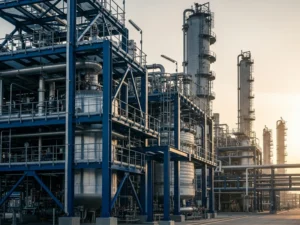
If you’re responsible for steel structures in a petrochemical plant, you know the stakes run high. Hidden risks—from blast pressures to harsh climates—can turn a steel building from asset to liability overnight. We’ve seen costly mistakes and learned hard lessons.
Designing for extreme load conditions means more than checking boxes; it’s about anticipating every threat. First, we evaluate site-specific operational loads, environmental hazards, and accidental events1. Then, we select materials and craft details that toughen the structure against anything—seismic, fire, or explosion. Quality checks and maintenance-friendly design seal the deal.
When we walk a plant site, one thing stands out—no two projects are the same. Sometimes the seismic risk is higher than the code suggests, or a strong wind tunnel forms between towers. The process units themselves can be unpredictable. Learning from real incidents, we discovered that generic standards miss crucial details2. That’s why we insist on custom risk studies and local expert input. This saves change orders and ensures the final design is truly resilient.
How do you quantify extreme loads for petrochemical steel structures?
Missing even one major load can end in disaster. Early in my career, we learned not to rely solely on national standards. Real conditions almost always differ.
We start by mapping out all loads: operational (vessel weights, cranes, pipe racks), environmental (wind, seismic, temperature swings), and accidental (blast, fire, leaks). Site-specific risk means digging into local records, not just using a handbook. For example, we had a plant site exposed to unpredictable wind gusts due to surrounding terrain—something codes missed. A local wind tunnel test provided the data we needed.3
| Load Type | Examples | Tools & Experts | Real-World Story |
|---|---|---|---|
| Operational | Heavy vessels, moving cranes | BIM, process engineers | Crane overloads in shutdown |
| Environmental | Wind, seismic, temp swings | Wind tunnel, seismic maps | Wind gust surprise |
| Accidental | Blast, fire, leaks | FEA, safety engineers | Unpredicted blast pressure |
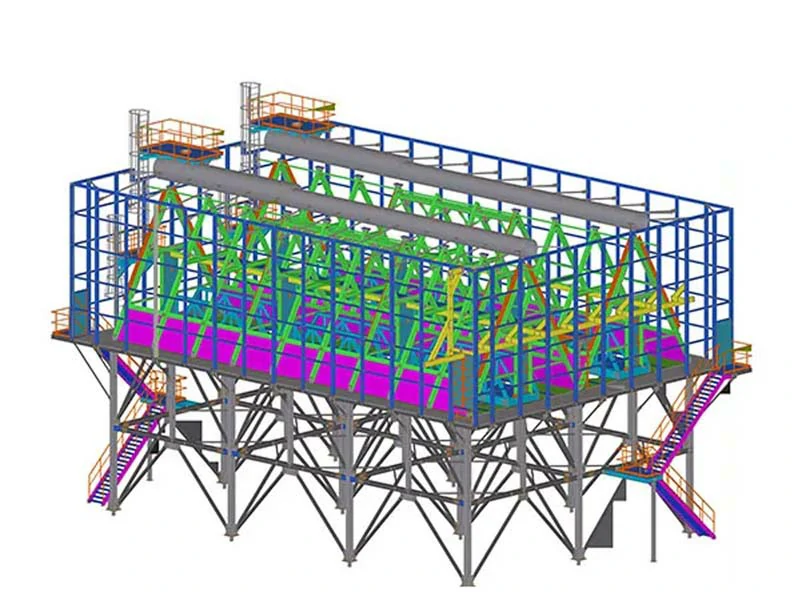
A typical project reviews operational loads with the end-users. Maintenance weights are included, so we don’t get caught off guard during shutdowns. Seismic assessments often uncover hidden risks4—the ground under a plant might seem stable, but detailed mapping has revealed fault lines. For accidental loads, we talk to process safety teams to estimate realistic overpressure scenarios5. This groundwork turns design from a guessing game into a science.
Which steel grades and materials work best under extreme loads?
Choosing steel isn’t just about price or specs—it’s about risk and future maintenance. Once, a client pushed for cheaper grades, then faced a shutdown after early corrosion. We learned, and now we help our partners avoid tempting shortcuts.
For extreme load areas, high-strength grades like Q460, ASTM A572 Grade 50, or S3556 are non-negotiable. In cold zones or process-heavy areas, we use impact-tested steel7. Where the atmosphere is aggressive, weathering or stainless steel8 is best—especially for pipe racks and main columns that see the worst conditions. Smart procurement means spending more upfront, but avoiding expensive, unforeseen repairs later.
| Application Area | Steel Grade/Type | Field Lesson |
|---|---|---|
| Main columns | Q460, S355, ASTM A572-50 | Cheap grade = shutdown |
| Cryogenic areas | Impact-tested (-40℃) | Pipe racks failed early |
| Corrosive zones | Weathering, stainless | Lifespan extended |
| Joints & nodes | Higher grade, thicker | Saved in explosion incident |
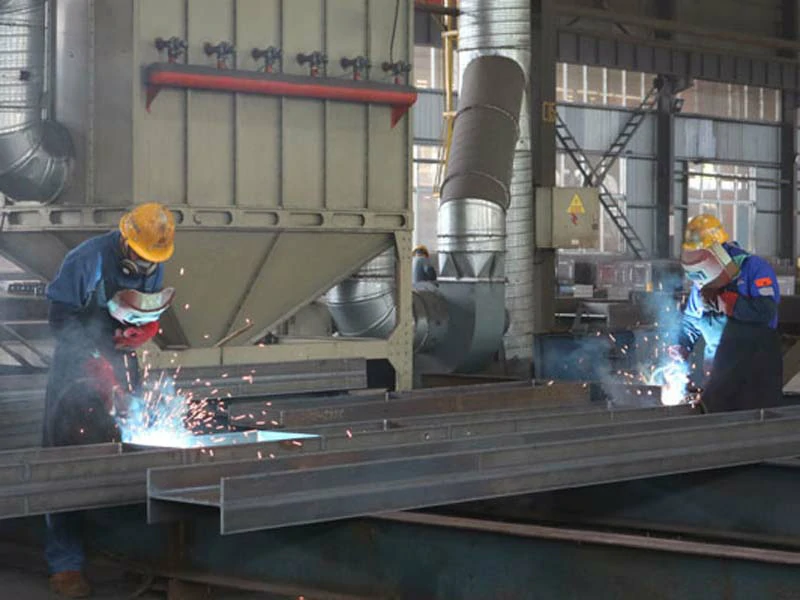
We always balance cost and resilience. If the project is price-driven, we show lifecycle results—generic steel breaks down quicker and causes downtime. The right grade also helps simplify assembly and maintenance. After years of seeing both successes and failures, we know which alloys hold up.
How do structural details improve robustness and ductility?
Steel detailing is where theory meets reality. On one job, a joint failed during a blast drill because value engineering had trimmed critical welds. Since then, we make sure every detail serves a purpose beyond the code.
Robustness means redundancy.9 We double up load paths in critical zones, add cross-bracing, and stay far from “single-point failure” designs. Welds get special attention; high-stress joints need continuous, not intermittent, welds. All key connections are tested with UT to catch hidden flaws10. Ductility comes from using deformable connections—bolted or slotted joints absorb energy better. Fire and blast zones demand even thicker plates and fire-resistant coatings.
| Critical Element | Detailing Method | Lesson from Experience |
|---|---|---|
| Joints | Continuous welds, UT/NDT | Value-engineering cuts fail |
| Load paths | Redundant, cross braces | Redundancy saved structure |
| Blast/fire zones | Heavy plates, intumescent | Extra cost, extra protection |
| Connections | Slotted, bolted, fused | Absorbed shock, saved lives |
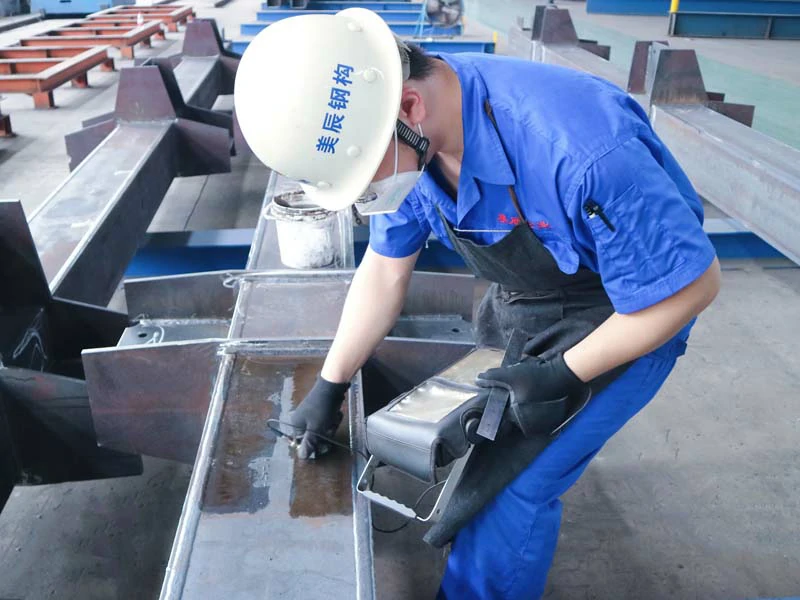
We pay extra for superior welds and inspection. These investments aren’t just for the insurance company; we’ve seen them prevent catastrophic failures. Designing extra load paths means the structure doesn’t depend on one component. When the worst happens, everything holds together.
What special tactics address blast, seismic, and fire loads?
Extreme loads need specialized design. Twice, we witnessed plant shutdowns because secondary steel members—stairs or cable trays—collapsed during an earthquake or blast. Those details matter.
For blast, we use blast-resistant cladding, shear walls, and composite jackets around columns. Seismic risks are managed with base isolation and energy dissipation devices, like dampers11. Flexible joints provide much-needed resilience. Fire risks push us to specify intumescent paint as a standard, and concrete encasement for key beams12. We never forget secondary components—stairs, cable trays, escape routes. They need reinforced detailing just as much as primary structural parts.
| Extreme Load | Design Tactics | Plant Experience |
|---|---|---|
| Blast | Cladding, shear walls | Secondary collapse risk |
| Seismic | Isolation, dampers | Base isolation kept plant safe |
| Fire | Intumescent, encasement | Paint saved structure |
| Escape routes | Reinforced stairs, trays | Insurance required upgrades |
After seeing insurance claims rejected due to overlooked escape paths, we always design these areas with blast and fire protection in mind. Seismic isolation isn’t just theory; we’ve seen dampers protect entire units during a tremor. We share these tactics because we know they work—not just in drawings, but in the field.
How do QA/QC and maintenance design make structures last longer?
Quality assurance is the foundation for structural performance. Early on, we watched misaligned anchor bolts cause weeks of delays and cost overruns. Now, we use 3D scanning every time, before the concrete goes in.
Factory and field welds go through UT, RT, and MT checks, especially in zones with extreme loads. Sometimes, the tolerance is so strict—less than 2mm misalignment—that only special tools work. Maintenance design means giving inspectors easy access to all major joints, adding modular pieces that can be swapped without major shutdowns, and specifying long-life coatings. All bolts and connections are checked with digital tools to prevent installation surprises.
| QA/QC Task | Practice | Project Story |
|---|---|---|
| Welds | UT, RT, MT, hourly checks | Missed weld = downtime |
| Anchor bolts | 3D scan before concrete | Misaligned bolt chaos |
| Coatings | Sa2.5 prep, advanced paint | Corrosion prevented |
| Maintenance | Modular joints, catwalks | Saved inspection time |
We’ve had to live with the consequences of missed QA, so now we overspend on inspection. It pays off every time. If an inspector can’t safely reach every joint, we redesign the access. Keeping steel protected isn’t just for looks—it’s about years of service and peace of mind.
Conclusion
Every steel structure lesson is learned the hard way, in the field. Sharing real-world solutions—like deep risk studies, smart materials, robust details, and complete QA—is how we make projects safer, longer-lasting, and easier to maintain.
---"[PDF] Inherently Safer Design in Plant Layout and Facility Siting - OAKTrust", https://oaktrust.library.tamu.edu/bitstreams/574489a6-5428-4132-89ff-b1a13a20e787/download. Engineering guidance for industrial facilities distinguishes permanent and operating loads, environmental actions such as wind or earthquake, and accidental actions such as explosion or fire as separate design inputs for structural risk assessment. Evidence role: expert_consensus; source type: institution. Supports: Extreme-load design for petrochemical steel structures should evaluate site-specific operational loads, environmental hazards, and accidental events.. Scope note: The source may provide a general industrial or structural-design framework rather than a petrochemical-only procedure. ↩
"[PDF] Research Needs to Support Immediate Occupancy Building ...", https://nvlpubs.nist.gov/nistpubs/SpecialPublications/NIST.SP.1224.pdf. Performance-based and risk-informed design literature notes that prescriptive codes provide minimum generalized requirements and may need supplementation by project-specific hazard assessment for unusual occupancies, local hazards, or high-consequence facilities. Evidence role: expert_consensus; source type: institution. Supports: Generic standards can miss important project-specific risks in petrochemical steel-structure design.. Scope note: This supports the need for supplemental assessment generally; it does not prove that any particular national standard failed in the described project. ↩
"Wind Tunnel Testing | WISE Research", https://faculty.lsu.edu/aly/research/wind-tunnel-testing.php. Wind-engineering guidance and research describe boundary-layer wind-tunnel testing as a method for estimating wind pressures and flow effects for structures affected by complex geometry, terrain, or interference conditions. Evidence role: mechanism; source type: research. Supports: Wind-tunnel testing can provide project-specific wind-load data where surrounding terrain or structures make code estimates insufficient.. Scope note: The evidence supports wind-tunnel testing as an accepted method; it does not verify the specific plant-site example in the article. ↩
"Design Ground Motions | U.S. Geological Survey", https://www.usgs.gov/programs/earthquake-hazards/design-ground-motions. Seismic-hazard assessment guidance from geological agencies emphasizes that local faults, soil conditions, and site response can materially affect earthquake hazard estimates for a specific site. Evidence role: mechanism; source type: government. Supports: Site-specific seismic assessments can reveal risks not apparent from broad code-level assumptions.. Scope note: This supports the general importance of site-specific seismic assessment, not the article’s anecdote about a particular plant location. ↩
"Study on Overpressure Propagation Law of Vapor Cloud ...", https://pmc.ncbi.nlm.nih.gov/articles/PMC8675040/. Process-safety guidance on explosion consequence analysis treats vapor-cloud or confined explosions by estimating overpressure levels and their effects on buildings and equipment for facility siting and structural protection decisions. Evidence role: mechanism; source type: institution. Supports: Process safety teams can estimate realistic blast-overpressure scenarios for petrochemical structural design.. Scope note: The source can support the analytical practice, but the realism of any scenario depends on the selected process assumptions and modeling inputs. ↩
"A572-50 Grade Steel | Metals USA", https://www.metalsusa.com/a572-grade-steel/. Structural-steel standards and material references identify Q460, ASTM A572 Grade 50, and EN S355 as higher-yield structural steels used where increased strength is required in members or connections. Evidence role: definition; source type: institution. Supports: Q460, ASTM A572 Grade 50, and S355 are high-strength structural steel grades relevant to extreme-load applications.. Scope note: A material standard establishes mechanical properties and classification, but it does not by itself determine suitability for every petrochemical extreme-load condition. ↩
"Charpy Machine Verification Program | NIST", https://www.nist.gov/programs-projects/charpy-machine-verification-program. Fracture-control guidance explains that Charpy impact testing is used to assess notch toughness and reduce brittle-fracture risk in ferritic steels, particularly where low service temperatures are expected. Evidence role: mechanism; source type: government. Supports: Impact-tested steel is used in cold zones to address brittle-fracture risk.. Scope note: Impact-test requirements depend on steel grade, thickness, welded detail, and design temperature; the citation would support the principle rather than a universal specification. ↩
"Revealing the Corrosion Resistance of 316 L Stainless Steel by an ...", https://pmc.ncbi.nlm.nih.gov/articles/PMC9920300/. Corrosion-engineering references describe stainless steel as corrosion resistant because of its passive chromium oxide film and weathering steel as forming a protective patina under suitable atmospheric wet-dry exposure conditions. Evidence role: mechanism; source type: education. Supports: Weathering or stainless steels can improve durability in corrosive atmospheric environments when properly selected.. Scope note: Weathering steel is not suitable for all aggressive industrial or marine atmospheres; the support is conditional on environmental compatibility and detailing. ↩
"nistir 7396 - NIST Technical Series Publications", https://nvlpubs.nist.gov/nistpubs/Legacy/IR/nistir7396.pdf. Progressive-collapse and structural-robustness guidance identifies redundancy and alternate load paths as key means of preventing disproportionate collapse after local damage. Evidence role: expert_consensus; source type: government. Supports: Structural robustness is improved by redundancy and alternate load paths.. Scope note: The source supports redundancy as a robustness strategy generally; the amount of redundancy needed must still be determined by project-specific risk analysis. ↩
"A Review of Non-Destructive Testing (NDT) Techniques for Defect ...", https://pmc.ncbi.nlm.nih.gov/articles/PMC9147555/. Nondestructive-testing references describe ultrasonic testing as a volumetric inspection method capable of detecting internal weld discontinuities such as lack of fusion, cracks, or inclusions. Evidence role: mechanism; source type: institution. Supports: Ultrasonic testing can be used to detect hidden flaws in critical steel connections and welds.. Scope note: Detection depends on procedure, inspector qualification, geometry, and acceptance criteria; UT does not guarantee that every flaw will be found. ↩
"Earthquake-Resistant Design Concepts", https://www.fema.gov/sites/default/files/documents/fema_p-749-earthquake-resistant-design-concepts_112022.pdf. Earthquake-engineering literature shows that base isolation lengthens a structure’s natural period and supplemental damping devices dissipate seismic energy, thereby reducing force or deformation demands in many designs. Evidence role: mechanism; source type: research. Supports: Base isolation and dampers are established seismic design tactics for reducing earthquake demands.. Scope note: Effectiveness depends on the structure, seismic hazard, device design, and detailing; the citation supports the mechanism rather than a guarantee of plant safety. ↩
"[PDF] Best practice guidelines for structural fire resistance design of ...", https://nvlpubs.nist.gov/nistpubs/technicalnotes/nist.tn.1681.pdf. Fire-protection guidance for structural steel identifies intumescent coatings and concrete encasement as passive fire-protection systems that delay heat transfer to steel members and help maintain load-bearing capacity for a rated period. Evidence role: mechanism; source type: institution. Supports: Intumescent coatings and concrete encasement are recognized passive fire-protection methods for steel members.. Scope note: Fire rating depends on coating thickness, member section factor, fire exposure, installation quality, and listing or test data. ↩